Ukraine launched its largest drone strike on Moscow overnight, sending roughly 200 drones toward the capital. About 190 were shot down by Russian air defenses, but several reached the Kapotnya oil refinery in southeast Moscow, ten miles from the Kremlin, setting off multiple fires. Thick black smoke blanketed parts of the city for hours, and residents described what they called black rain falling on the city. It was the second strike on the same refinery within a week. Moscow's major airports briefly suspended flights. President Zelenskyy framed the attack as a proportional response to Russian strikes on Ukrainian cities, saying "if Ukraine burns, your Moscow will burn too." He also noted a coordination call with Trump and Macron that he said "can bring about significant change." The timing is charged: Trump, having just concluded a peace deal with Iran, says he is now refocusing on Ukraine, and the G7 this week reaffirmed support for Kyiv. Russia called the attack the most massive drone strike on the Moscow region in two years.
Ukraine has targeted Russian energy infrastructure since early in the war, striking refineries and fuel depots to disrupt military logistics. Kapotnya is Moscow's main refinery. With the US-Iran conflict now concluded, Trump has signaled renewed attention to brokering a Ukraine ceasefire.
Early data from medical and software settings suggest that relying on AI tools degrades the underlying skills they were meant to augment. A Nature review published June 18 collects several recent studies with consistent findings. In a Polish clinical trial of 1,443 patients, gastroenterologists who used AI-assisted colonoscopy tools for three months saw their unassisted polyp detection rate drop from 28.4% to 22.4% when the tools were removed. A German breast imaging study found that AI errors propagated to radiologists regardless of their experience level, driving higher false-positive rates. On the software side, developers who learned a coding library with AI assistance produced working code faster but scored 17% lower on conceptual tests and could not debug or explain the AI-generated output. Researchers call the phenomenon "deskilling" for practitioners who lose sharpness over time, and "never-skilling" for trainees who may never build foundational judgment at all. Medical organizations in the US and UK are now calling for deliberate "keepskilling" practices, structured unassisted work alongside AI use, to prevent critical reasoning from atrophying.
Automation bias, the tendency to defer to machine output even when it is wrong, has been documented in aviation, radiology, and nuclear plant monitoring since the 1980s. Current AI tools differ in their breadth: they apply across nearly every professional skill set simultaneously, making the deskilling risk harder to isolate and correct.
AI genomics models treat DNA like software code, taking sequence data as input and predicting gene expression as output. A Quanta Magazine piece by Philip Ball argues this abstraction misses something fundamental: the genome behaves as a physical three-dimensional object, and its function depends on its shape in space as much as its sequence. DNA folds into complex structures inside the nucleus, with distant sections looping into contact and switching genes on or off. Which genes get expressed depends on these geometries, which shift between cell types and change over time. Foundation models like AlphaGenome, trained on sequence data alone, learn statistical patterns without capturing this spatial context. Researchers including Karen Adelman at Harvard and Wendy Bickmore at Edinburgh argue these models may generate plausible-looking predictions while missing the actual causal mechanisms of gene regulation. The deeper challenge is that gene behavior depends on diet, microbiome, and environment — none of which current AI models incorporate.
AlphaFold's success at predicting protein structure from sequence data inspired hopes that similar approaches could decode gene regulation. AlphaGenome followed. But protein folding and gene regulation are different problems: proteins fold into fixed shapes, while genome regulation is dynamic and context-dependent across cell types and developmental stages.
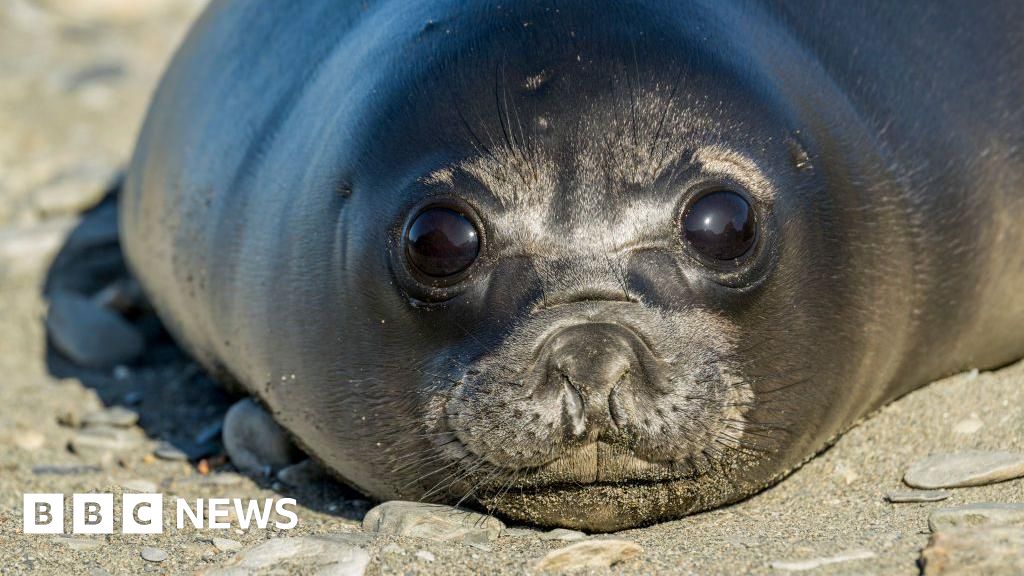
H5N1 bird flu killed more than 75% of the elephant seal pups on Heard Island, a remote sub-Antarctic territory about 4,000 km southwest of Australia. A preprint published June 18 counted 13,359 dead pups out of a starting population of around 17,364. In one section of the island, 97% of pups died. Scientists confirmed H5N1 infections in six species: southern elephant seals, king and gentoo penguins, Antarctic fur seals, and South Georgia diving petrels. Albatrosses on the island appeared unaffected. The die-off began in August 2025, with follow-up surveys in October 2025 and January 2026. The study is not yet peer-reviewed. Australia remains the only continent without confirmed mainland H5N1 animal cases. Researchers say the Heard Island outbreak was larger than expected even given the virus's global spread over recent years, and raises questions about disease penetration into remote ecosystems far from human activity.
H5N1 bird flu has spread globally since 2021, killing millions of seabirds and marine mammals. Previous mass die-offs struck sea lion colonies along South America's Pacific coast. Heard Island is uninhabited and rarely visited, which is why the outbreak went undetected until surveys months later.
Apple plans to raise product prices, CEO Tim Cook confirmed this week, driven by a surge in memory chip costs the company cannot absorb. RAM prices have more than doubled since October 2025 as AI applications drive demand for high-bandwidth memory. The war in Iran also disrupted helium supplies, a gas used in semiconductor fabrication. Cook, who steps down in September and will be replaced by hardware chief John Ternus, did not specify which products would be affected or when. The iPhone 18 lineup, expected in September, is the most likely candidate. Industry analysts at Omdia forecast global average smartphone prices rising about 20% in 2026. Trump separately said Apple had agreed to partner with Intel to manufacture chips in the United States; Intel shares rose more than 10% on the announcement. If finalized, the arrangement would be part of a broader push to move semiconductor production onshore.
Apple's supply chain depends on TSMC, Samsung, and SK Hynix for chips. RAM and flash memory have historically been commodity markets with volatile pricing, but AI infrastructure build-out has tightened supplies. Apple carries thin margins on some hardware lines, making input cost spikes difficult to absorb without passing them to consumers.
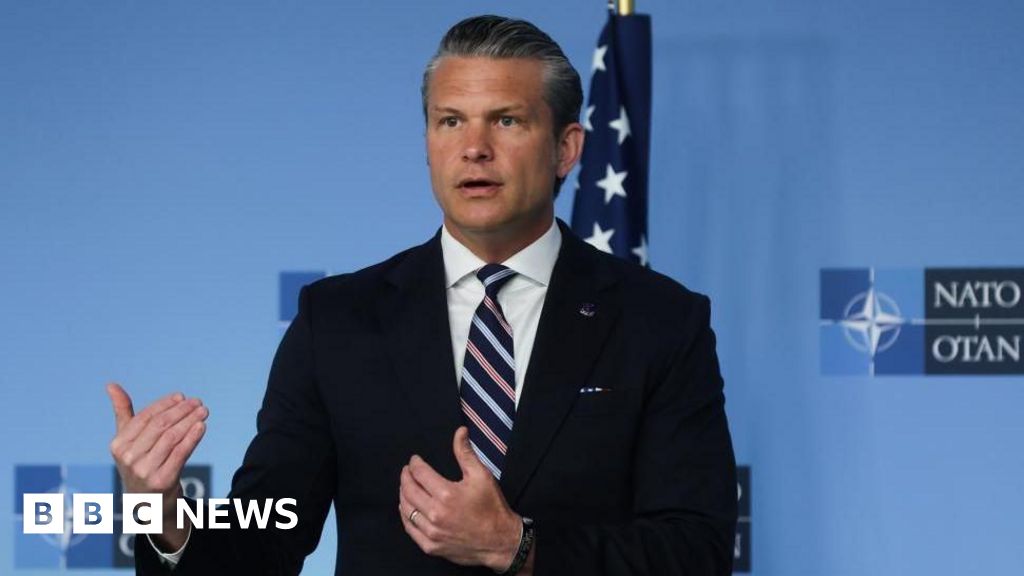
Defense Secretary Pete Hegseth renewed his criticism of NATO at a ministers meeting in Brussels, announcing a six-month review he calls "NATO 3.0" to assess the US military presence in Europe. He warned that some allies would "fail" the review and tied future US commitments to a 5% GDP spending target, combining 3.5% for core defense and 1.5% for infrastructure. Hegseth accused wealthier members of "free-riding" and criticized allies that restricted assistance to US forces during the Iran war. The Pentagon has already cut its commitments to NATO's high-readiness force, scaling back air and naval pledges. NATO Secretary-General Mark Rutte pushed back, citing a roughly 90 billion euro rise in European defense spending last year, a 20% increase. The review's outcome could reshape the US footprint across Germany, Poland, and the Baltic states, where tens of thousands of American troops are currently stationed.
The US has roughly 100,000 troops stationed in Europe, most in Germany and Poland, a presence that expanded after Russia's 2022 invasion of Ukraine. NATO's current baseline spending benchmark is 2% of GDP, which most members now hit. Hegseth's 5% target far exceeds it and has no precedent in the alliance's history.
The Federal Communications Commission voted unanimously in April to propose rules requiring government-issued ID to activate any phone plan in the United States, including prepaid and burner phones. 404 Media reported on the proposal this week. Under the rules, carriers and mobile virtual network operators would collect and store each customer's full name, physical address, and a government ID number before activating service. The FCC frames the rule as a measure against robocalls and SIM-swap fraud. Critics including the ACLU, Electronic Frontier Foundation, and Center for Democracy and Technology argue it would harm whistleblowers, domestic violence survivors, journalists, and activists who rely on anonymous phone access. Cybersecurity researchers add that requiring carriers to store government ID numbers creates a high-value target for data breaches. Public comments close June 25. Final rules have not been set. If adopted, the change would end the American tradition of purchasing a prepaid SIM without identity verification.
The US has historically allowed prepaid phone purchases without ID verification, unlike many countries in Europe and Asia. SIM-swap attacks, where fraudsters convince carriers to reassign a phone number to steal two-factor authentication codes, have become a common vector for financial fraud. Carrier data breaches have repeatedly exposed sensitive customer records.
The US-Iran memorandum of understanding amounts to a list of American concessions with few Iranian commitments that materialize in the near term, argues Mike Nelson, a retired Army Special Forces officer writing for The Dispatch. Bloomberg published the 14-point draft MOU on June 16; Nelson reads it as Tehran extracting the terms it wanted from the start. His core argument: Iran did not lose the war. American strikes destroyed radar and missile systems, but the Islamic Republic survived with its government intact and its regional influence largely preserved. The MOU's key commitments from Tehran are vague or deferred, while the US commits to lifting economic restrictions Iran has demanded for years. Nelson contends that the administration resisted disclosing the MOU's full terms because scrutiny would show who made the larger concessions, and that calling this a Trump victory inverts the facts.
The US launched airstrikes against Iran's nuclear and missile facilities in May 2026 after Iran resumed weapons-grade uranium enrichment. The strikes destroyed key infrastructure but did not topple the government. Negotiations opened within weeks, with Qatar mediating the ceasefire terms. The final MOU was signed June 18.
Solar geoengineering has long been studied through computer models. A team at the University of Chicago is now building the engineering infrastructure to make it physically viable, treating the concept as a hardware problem for the first time. The approach under study is stratospheric aerosol injection: a specially designed aircraft would release sulfate particles at high altitude to reflect a fraction of sunlight back to space. Aeronautical engineer John Langford of Iris Aero is developing a prototype that can fly far above commercial jets. Atmospheric chemist Mingyi Wang is studying how injected particles interact with ozone and existing aerosol layers. The University of Chicago launched a dedicated Climate Systems Engineering Initiative in 2024, the first academic program to commit to hardware development rather than simulation. Jim Franke, who leads the aircraft design work, argues that further modeling alone cannot answer the remaining questions about real-world deployment. MIT Technology Review reports on the engineering challenges that remain before any deployment decision could be made.
Solar geoengineering is controversial. Critics argue it creates moral hazard by making climate change seem manageable without reducing emissions, and that unilateral deployment could alter rainfall patterns in regions that did not consent. A 2021 open-air experiment in Sweden was canceled after opposition from Indigenous and environmental groups.
The decades-long search for dark matter has entered a new phase. MIT Technology Review reports that the dominant model, which assumed dark matter consists of weakly interacting massive particles (WIMPs), has effectively failed. The Large Hadron Collider at CERN found no evidence for the supersymmetric particles that would produce WIMPs, and detectors in South Dakota, Italy, and China pushed sensitivity to the point where neutrino background noise drowns potential signals. Rather than abandoning the search, physicists are expanding their scope across 50 orders of magnitude in particle mass. The new strategy deploys quantum sensors for ultralight axions, liquid helium detectors for low-mass particles, and planetary-scale experiments. The Department of Energy declined to fund what would have been the last large-scale WIMP detector, which researchers read as a formal acknowledgment that the WIMP era is over. Underground facilities on three continents are now running simultaneous hunts for a wider range of candidates.
Dark matter does not emit or absorb light, but its gravity shapes how galaxies rotate and how clusters bend starlight. It makes up roughly 27% of the universe's mass-energy. WIMPs were the leading candidate for three decades because they arose naturally from supersymmetry theory, which the Large Hadron Collider has largely ruled out.