New York City Mayor Zohran Mamdani turned his political machine on Congress Tuesday and ran the table. Three of his endorsed House candidates won their primaries, defeating two sitting Democrats in the process. Brad Lander ousted two-term Rep. Dan Goldman in the 10th Congressional District in a race that split the party over the Israel-Gaza war. Goldman had drawn substantial backing from pro-Israel groups; Lander had not. In the 13th District, doctoral student Darializa Avila Chevalier defeated incumbent Rep. Adriano Espaillat. In the 7th, state Assemblywoman Claire Valdez won. All three candidates ran on pledges to abolish ICE, tax the rich, and called Israel's Gaza campaign a genocide. House Democratic Leader Hakeem Jeffries, who campaigned against Mamdani's picks, lost on all fronts. The results signal a leftward shift in one of the party's most important urban strongholds.
Zohran Mamdani won the New York City Democratic mayoral primary in 2025 by defeating Eric Adams and the party establishment, running on a democratic socialist platform. His House candidates' pledges to abolish ICE and call Israel's Gaza campaign a genocide put them at odds with centrist Democrats and the national party leadership.
The Senate voted 50-48 on Tuesday to direct President Trump to withdraw US forces from the war with Iran, completing a bipartisan rebuke that passed both chambers of Congress for the first time in the conflict's history. The House approved the same measure on June 3 by 215-208, with four Republicans crossing the aisle. In the Senate, four Republicans voted with Democrats: Rand Paul of Kentucky, Susan Collins of Maine, Bill Cassidy of Louisiana, and Lisa Murkowski of Alaska. The resolution invokes the War Powers Act of 1973, directing the president to halt hostilities unless Congress explicitly authorizes them. Trump will almost certainly veto it, and his administration has contested the constitutionality of the War Powers Act itself. The vote is the first successful war powers challenge to pass both chambers since Vietnam-era legislation, and adds pressure on the White House as diplomatic talks over an Iran deal continue.
The US-Iran conflict began in early 2026 following escalating Strait of Hormuz incidents. Now in its fourth month, it has involved US airstrikes, naval standoffs, and disrupted oil shipping, while talks over Iran's nuclear program continue. The War Powers Act of 1973 requires presidents to notify Congress within 48 hours of committing forces and limits deployments to 60 days without explicit authorization.
Keir Starmer announced his resignation as British prime minister on Monday, June 22, less than two years after Labour's landslide 2024 election victory. The decision followed months of pressure from MPs and cabinet members worried about Labour's electoral prospects as the far-right Reform UK party surged in the polls. The tipping point was a by-election loss in Makerfield that boosted Greater Manchester Mayor Andy Burnham as a likely successor. Two top defense officials had quit two weeks earlier, accusing Starmer of inadequately funding the country's defense plan. Starmer said he would resign with good grace, asking Labour's National Executive Committee to open leadership nominations on July 9 and name a new leader before parliament returns in September. His exit leaves Britain with its seventh prime minister in a decade. Burnham is seen as the frontrunner; no formal contest has been announced.
Starmer won a massive parliamentary majority in July 2024 after 14 years of Conservative rule, promising to restore stability. His tenure ran into trouble quickly: sluggish economic growth, cuts to winter fuel payments that angered pensioners, and a fast-rising Reform UK party led by Nigel Farage sapped Labour's poll numbers throughout 2025 and into 2026.
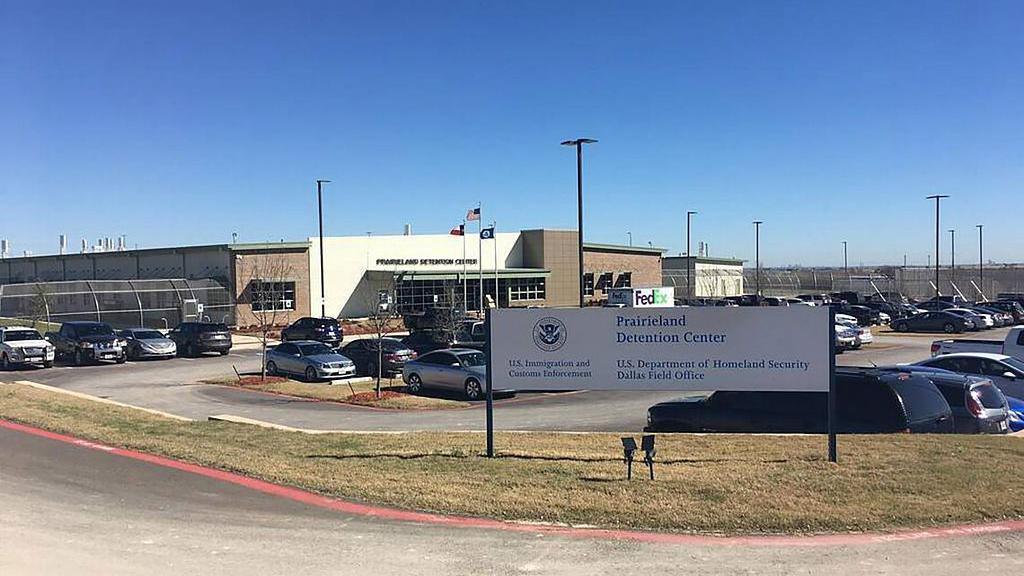
A federal court in Texas sentenced eight members of a North Texas Antifa cell to a combined 450 years in prison Tuesday for their roles in a July 4, 2025, armed attack on the Prairieland Detention Center in Alvarado, a city about 35 miles south of Fort Worth. Benjamin Hanil Song, convicted of the attempted murder of a police officer who was shot in the neck during the assault, received 100 years. Maricela Rueda received 70 years; five others received 50 years each; one received 30 years. Prosecutors said the group coordinated the attack using weapons and explosives, framing it as a terrorist operation against the Immigration and Customs Enforcement facility. The sentencing is the first under Trump's September 2025 executive order designating Antifa as a domestic terrorist organization. Defense attorneys for several defendants disputed the terrorist label, arguing the attack was a protest that escalated.
Trump signed an executive order in September 2025 designating Antifa as a domestic terrorist organization, a move that had faced legal questions about designating a diffuse political movement as a terrorist group. Prairieland Detention Center is a private immigration facility in Alvarado, Texas, operated under contract with ICE.
Physicists in Europe and China have independently built the first working nuclear clocks, a milestone more than 20 years in the making. Both devices use thorium-229, an unusual element whose nucleus has two energy levels so close together that a nudge of ultraviolet laser light can flip between them. That flip becomes the clock's tick. The European team, led by Thorsten Schumm at Vienna University of Technology, and a Chinese team led by Shiqian Ding at Tsinghua University (清华大学) in Beijing, posted preprint results in early June. Both clocks drift by roughly one second every three million years, useful for physics experiments though still short of the best atomic clocks. Unlike atomic clocks, which require extreme cooling, nuclear clocks run in a crystal at room temperature, pointing toward compact devices for navigation and communication. Physicists also plan to use them to hunt for dark matter: certain hypothetical dark matter particles would shift the clock's tick rate in a measurable way.
The atomic clocks that define our standard second today work by measuring how often a cesium atom's electrons oscillate between two energy levels. Nuclear clocks tap a different mechanism: the energy states of the nucleus itself, which is far harder to disturb. In theory, this makes them more stable over long timescales and more resilient in field conditions.
An executive order signed June 22 requires federal agencies and contractors to replace their current encryption with quantum-resistant alternatives by December 31, 2030, roughly five years sooner than the 2035 timeline set under the Biden administration. The order covers high-value and high-impact government systems, with a 2031 deadline for digital signature schemes. The shift came after recent research showed that the time and cost to build a quantum computer capable of breaking today's encryption may be lower than earlier estimates. Most current encryption relies on mathematical problems that classical computers cannot solve quickly but quantum computers may eventually crack. Google and Cloudflare announced updated transition deadlines of 2029 in response. The National Institute of Standards and Technology finalized the first quantum-safe algorithms in 2024, giving agencies a technical path forward. The order also directs intelligence agencies to protect US quantum research from foreign espionage.
A quantum computer powerful enough to crack RSA or elliptic-curve encryption does not yet exist, but intelligence agencies are acting now to protect data that adversaries may already be harvesting and storing for future decryption. The concern is especially acute for classified communications intended to remain secret for decades.
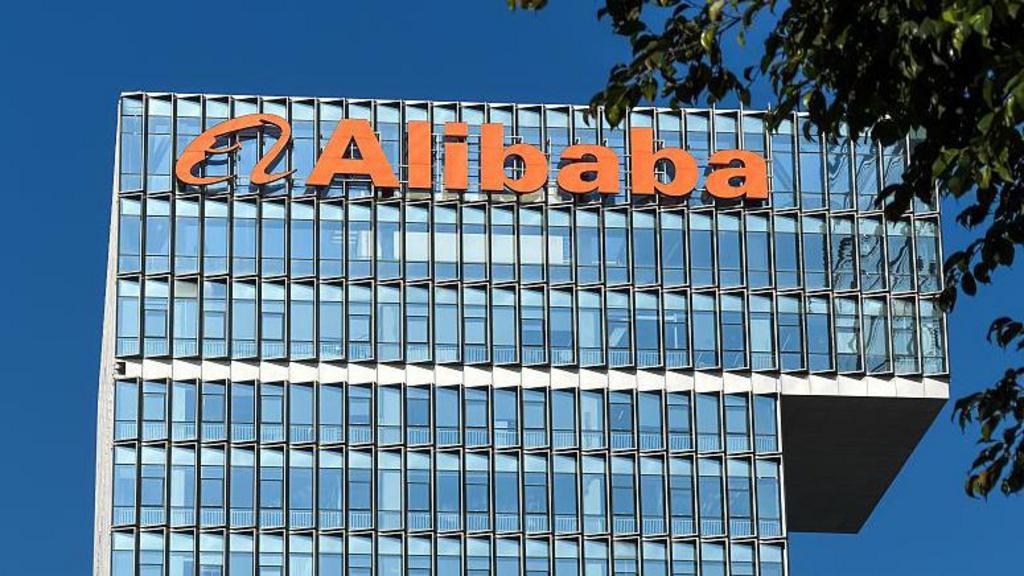
Alibaba (阿里巴巴), China's largest e-commerce conglomerate, filed suit in federal court in San Jose on Tuesday to be removed from the Pentagon's list of companies with alleged ties to the Chinese military. The Defense Department added Alibaba to its expanded blacklist of 188 entities on June 8, accusing the company of being a military-civil fusion contributor through its connections to China's Ministry of Industry and Information Technology (工业和信息化部). Alibaba said none of its board members have military affiliations and that its products serve retail, logistics, and enterprise software. Under US law that took effect this month, the Pentagon cannot contract with companies on the list; from 2027, it cannot buy their products or services indirectly. Other newly listed companies include Baidu (百度), BYD (比亚迪), NIO (蔚来), and biotechnology firm WuXi AppTec. WuXi filed a similar suit two weeks earlier. The designations threaten these companies' access to US government contracts and supply chains.
The Section 1260H list lets the Pentagon identify firms it believes contribute to China's military modernization even if they operate primarily as commercial businesses. Being listed does not require proof of direct military work — ties to government ministries or state-affiliated research programs can be enough. US law has steadily tightened restrictions on listed companies.
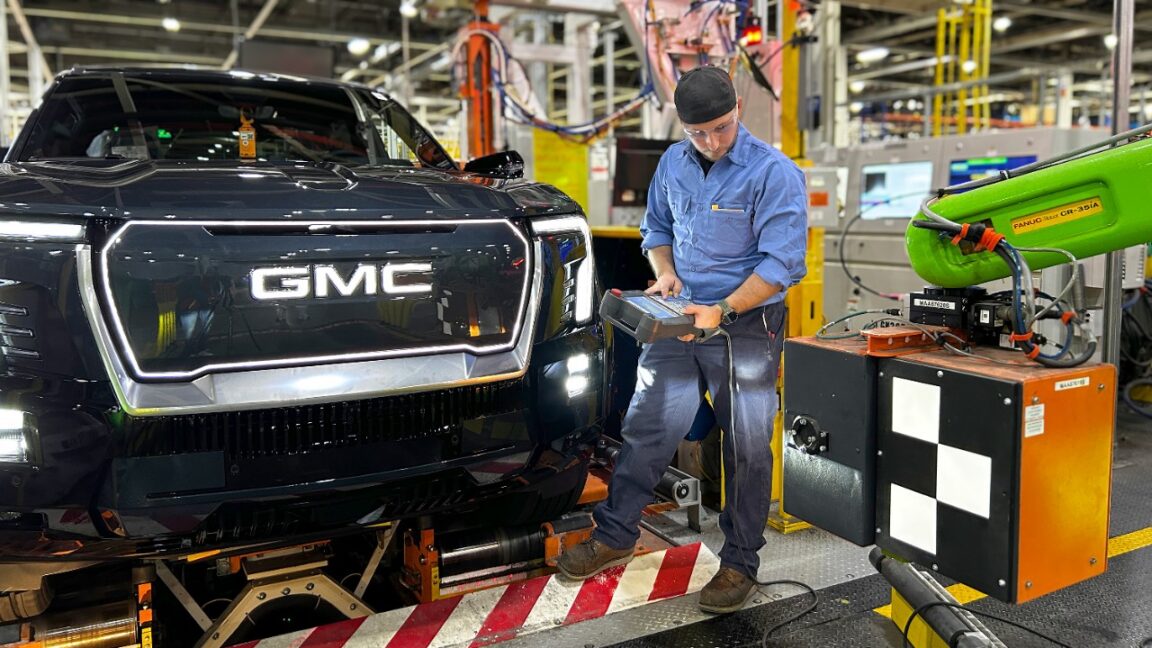
General Motors installed approximately 50 robotic arms made by Japanese manufacturer FANUC at Factory Zero, the company's flagship electric vehicle plant on the Detroit-Hamtramck border, following layoffs that cut more than 1,300 workers. UAW Local 22 president James Cotton said more than 1,000 union members are still laid off indefinitely and warned of a dark factory future. GM laid off approximately 1,200 workers from Factory Zero permanently in October 2025, then furloughed 1,300 more in March 2026. The layoffs followed Congressional Republicans' decision to end the $7,500 federal EV tax credit late last year, which suppressed consumer EV purchases. Factory Zero now runs FANUC arms on assembly tasks while most of its union workforce sits out. The UAW argues the robot installations show GM is using the market downturn to permanently automate rather than recall laid-off workers when demand recovers.
Factory Zero opened in 2021 as GM's showcase electric vehicle facility, retooled from the Detroit-Hamtramck Assembly Center that had built cars since 1985. The UAW secured contract protections in 2023 requiring GM to build EVs at union plants, but those contracts did not limit automation within the assembly line itself.
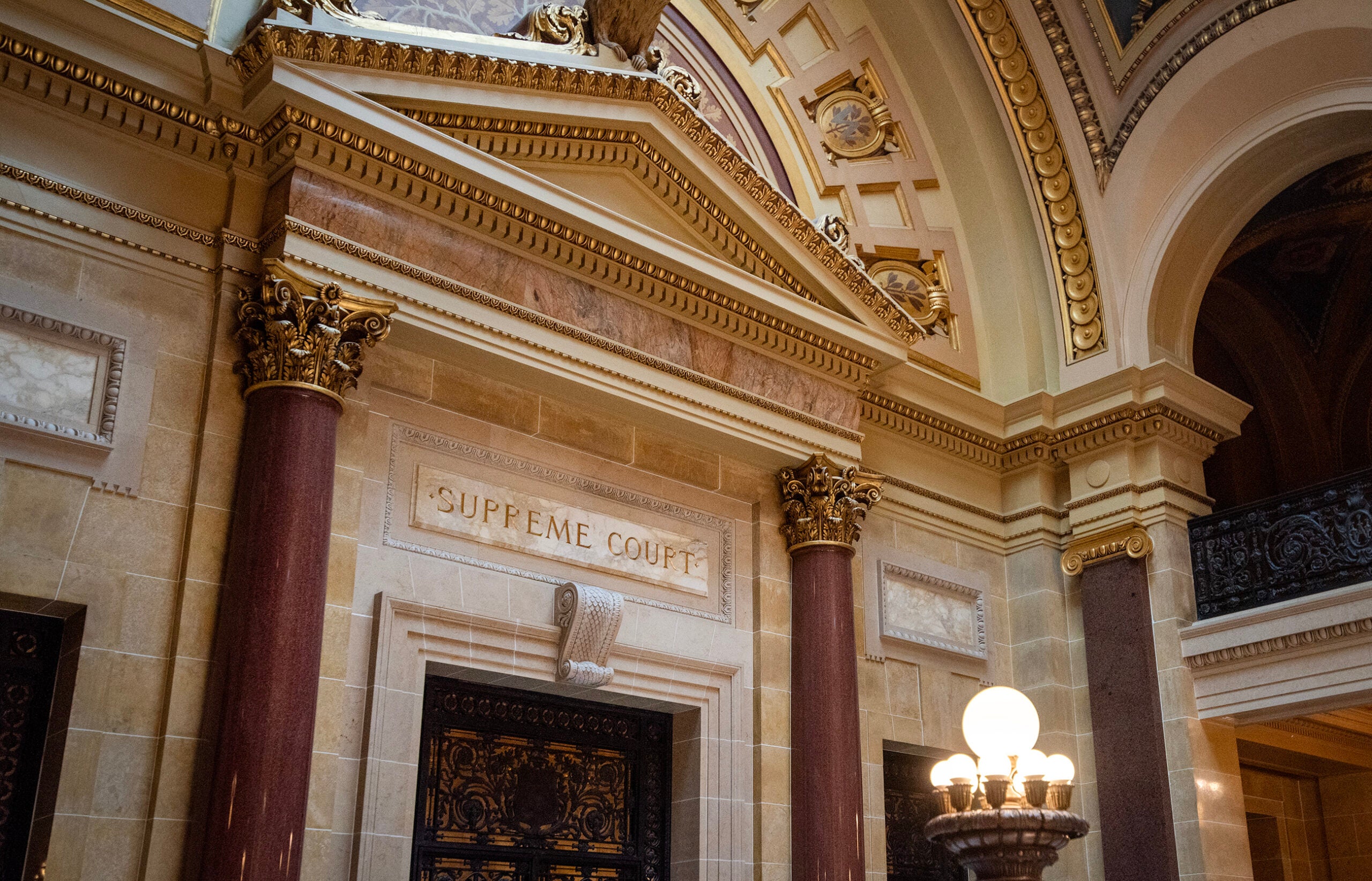
Wisconsin's Supreme Court ruled unanimously on June 18 that the state's Minority Undergraduate Retention Grant Program, established by the legislature in 1985, violates the Equal Protection Clause of the US Constitution. The program had provided annual grants of $250 to $2,500 to Black, Native American, Hispanic, and Southeast Asian refugee-descendant students at Wisconsin's technical colleges, private universities, and tribal colleges. In 2023-24, 770 students shared $440,000 from the fund. The court applied the US Supreme Court's 2023 precedent barring race-based college admissions, reasoning that race was the only factor determining grant eligibility. All five justices voted to strike the program, though three liberal members wrote separately to say they acted under constraint. Chief Justice Jill Karofsky acknowledged persistent racial disparities in Wisconsin's education, housing, and employment systems but said the court was bound by federal precedent.
The US Supreme Court's 2023 ruling in Students for Fair Admissions v. Harvard ended race-conscious admissions at colleges nationwide. Courts and universities have since debated how far that ruling extends to scholarships, mentoring programs, and other race-conscious initiatives beyond admissions. Wisconsin's ruling extends that precedent explicitly to grant eligibility.
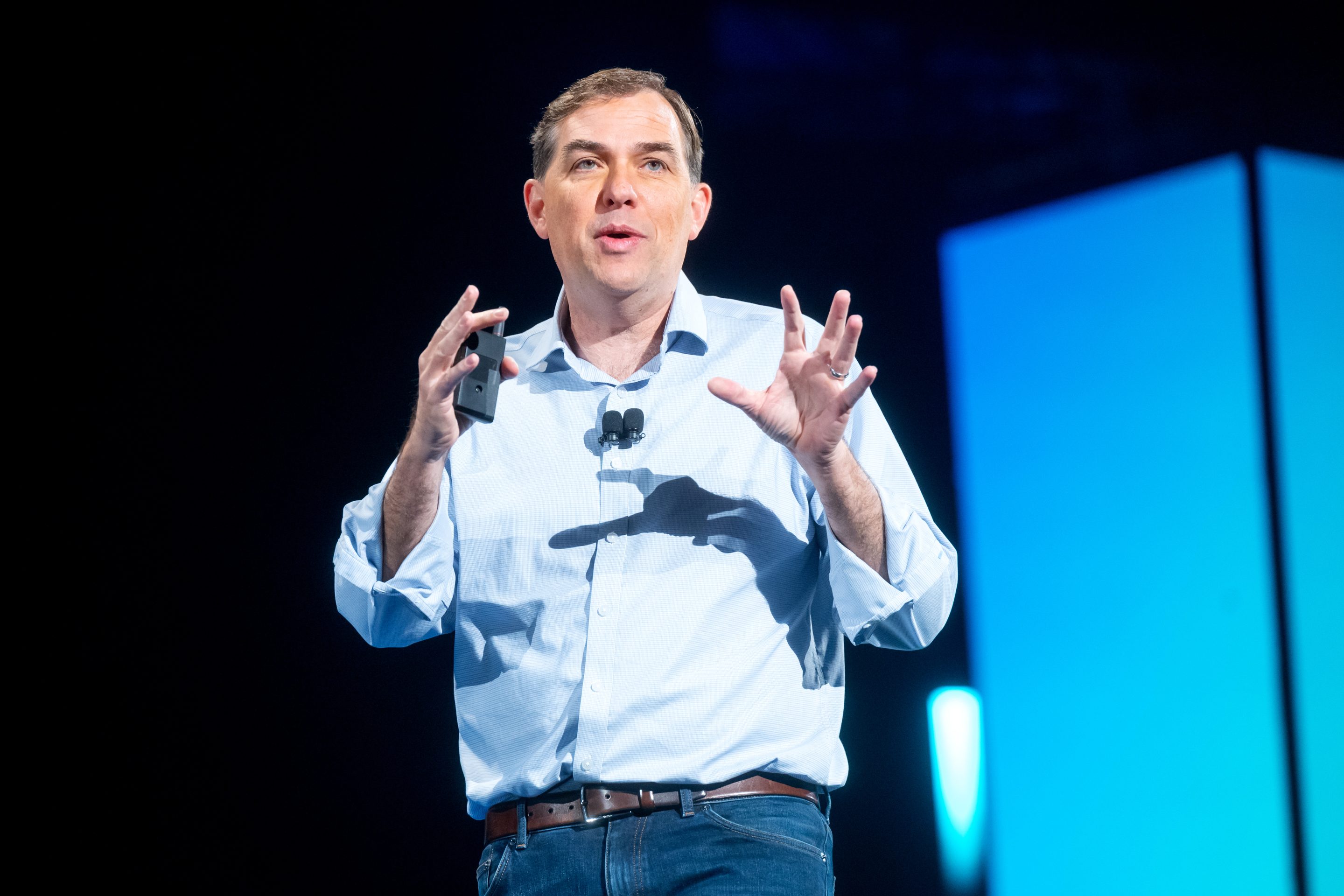
Amazon Web Services CEO Matt Garman pushed back against the idea that AI will replace entry-level tech workers, calling the concern one of the dumbest things he had ever heard, in an interview published Tuesday by Platformer. Amazon is hiring approximately 11,000 interns and new graduates in 2026. Garman argued junior workers bring value because they lack ingrained habits and adapt well to AI-native workflows. That argument sits alongside a countervailing data point in the same interview: most Amazon software developers no longer write code by hand. They direct AI agents instead. AWS's Connect Talent agent now handles scheduling and initial interviews for job candidates. Garman compared the transition to the arrival of spreadsheets, which eliminated some bookkeeping roles while creating demand for people who could work with data. Whether that analogy holds as AI moves deeper into knowledge work is a question the interview raises but does not settle.
Amazon Web Services is Amazon's cloud computing division and the world's largest cloud provider. It has deployed large language models for customer service, code generation, and logistics. Matt Garman took over as AWS CEO in June 2024, inheriting a business generating roughly $150 billion in annual revenue.