Georgia Republicans on Tuesday handed President Trump another primary defeat, rejecting his endorsed candidate Lt. Gov. Burt Jones in favor of billionaire Rick Jackson in the Republican gubernatorial runoff. Jackson, a 71-year-old founder of the healthcare staffing firm Jackson Healthcare, won 53 to 47 percent despite Jones carrying endorsements from both Trump and sitting Governor Brian Kemp. Jackson spent more than $100 million of his own money on the race and will face Democrat Keisha Lance Bottoms, Atlanta's former mayor, in November. Separately, Tuesday's primaries produced mixed results for Trump: Rep. Barry Moore won an Alabama Senate runoff with Trump's backing, while Oklahoma's congressional primary headed to a runoff. The Georgia loss adds to a pattern of Trump endorsements failing to deliver in Republican primaries this cycle, particularly when a well-funded challenger can compete on conservative credentials.
Trump has struggled in Georgia specifically since 2022, when his preferred gubernatorial candidate lost to Kemp in a primary. Rick Jackson, a political newcomer, positioned himself as a true MAGA conservative while attacking Jones's record. The November matchup against Keisha Lance Bottoms, who served as Atlanta mayor from 2018 to 2022 and was a finalist for Biden's VP slot, will be competitive.
A federal judge in Idaho on Tuesday blocked a state law set to take effect July 1 that would have criminalized transgender people using bathrooms corresponding to their gender identity rather than their birth sex. U.S. District Judge Amanda Brailsford granted a preliminary injunction in a case brought by six transgender Idaho residents, represented by the ACLU and Lambda Legal. The plaintiffs argued the law, H.B. 752, violated their due process, equal protection, and privacy rights. First-time violations under H.B. 752 would be misdemeanors punishable by up to a year in prison; second offenses would be felonies carrying up to five years. The injunction specifically blocks enforcement of single-user restroom restrictions while the legal challenge proceeds. Idaho's attorney general and all 44 county prosecutors are covered by the order.
Idaho has passed some of the most restrictive transgender legislation in the country, including one of the first state sports bans for transgender athletes in 2020. H.B. 752 covered not only public restrooms but showers and changing facilities. The case will continue in federal court; Tuesday's ruling only prevents enforcement while litigation is pending.
A US Air Force B-52 Stratofortress bomber crashed shortly after takeoff from Edwards Air Force Base in California on Monday, killing all 8 people aboard in what officials called an unsurvivable impact. The aircraft went down at approximately 11:20 a.m. local time during a routine test mission supporting the B-52's radar modernization program. The crew included uniformed military, government civilians, and contractors. Edwards sits about 95 miles north of Los Angeles and serves as the Air Force's primary flight test center. Officials said video review of the crash site allowed them to quickly determine no one had survived; the aircraft burst into flames on impact. The Air Force has opened a formal accident investigation expected to take several months. It is the deadliest B-52 crash since 1982.
The B-52 Stratofortress has been in continuous service since 1955, making it one of the longest-serving aircraft in US military history. Edwards Air Force Base, run by the Air Force Test Center, is where the service evaluates upgrades to existing aircraft and tests new systems. The radar modernization program involved in Monday's mission is part of a broader effort to extend the B-52's operational life into the 2050s.
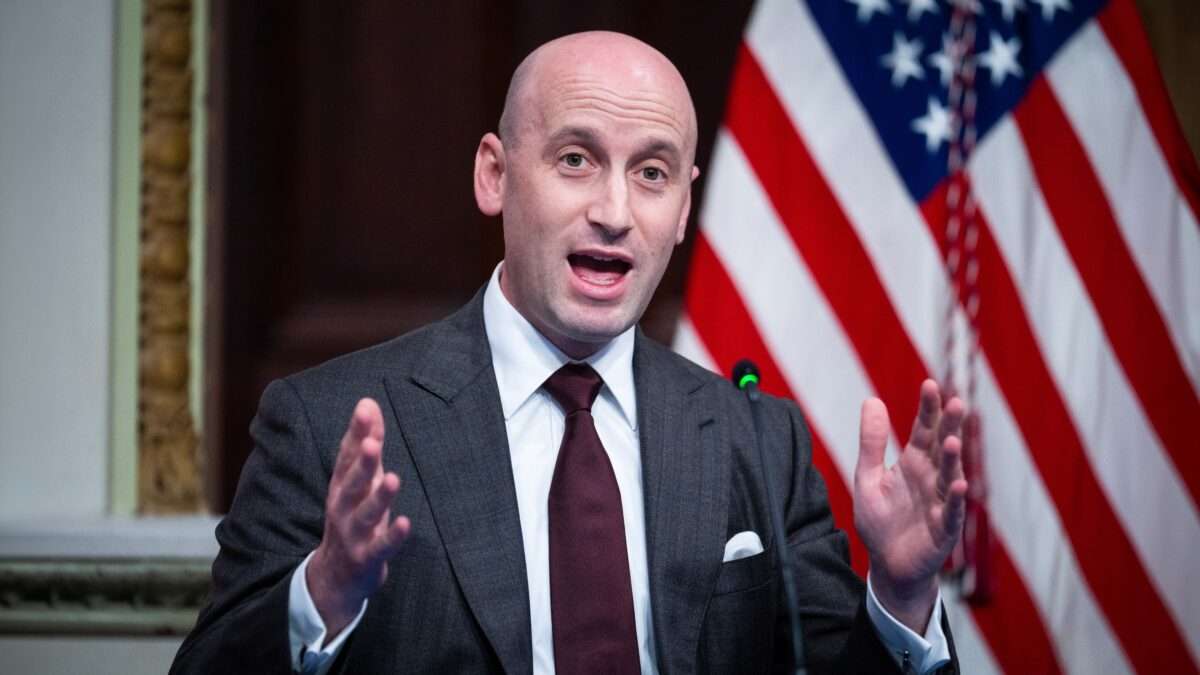
White House Deputy Chief of Staff Stephen Miller spent weeks pushing a plan to unilaterally suspend habeas corpus, the legal right to challenge one's detention in court, to accelerate mass deportation operations. Miller argued that unauthorized immigration constituted an "invasion" under the Constitution's Suspension Clause, which could theoretically justify suspending the right in an emergency. The proposal was blocked internally by White House Staff Secretary Will Scharf, who circulated memos arguing that only Congress, not the president, holds suspension authority, and that a recent Supreme Court ruling confirmed detainees retain due process rights. Scharf also cited habeas corpus's historical weight, dating to English common law, as reason to tread carefully. The details emerged from reporting on internal White House deliberations and reveal the administration's willingness to test the outer limits of executive power on immigration.
Habeas corpus, Latin for "you shall have the body," allows people in custody to challenge the legality of their detention before a judge. The US Constitution permits suspension only "in cases of rebellion or invasion." Congress has exercised that power twice in US history, both during the Civil War era. Presidents have claimed the authority unilaterally before, but courts have never upheld that claim.
Robert Kuzovkov, a Russian artist known by the pseudonym Semyon Skrepetsky and celebrated for psychedelic caricatures of Vladimir Putin, was shot dead Monday in the eastern Polish city of Biala Podlaska, near the Belarusian border. He was 44. Kuzovkov was shot five times in a parking lot, receiving three shots then two more while on the ground. Polish authorities detained two Belarusian nationals found near Biala Podlaska's Belarusian consulate in connection with the killing. Kuzovkov had left Russia in 2021 fearing political persecution and settled in Poland. Three days before his death, he staged a public protest at the Russian Embassy in Berlin, throwing a Russian flag into the trash. Investigators have not yet formally charged the detained men and are examining whether Belarusian or Russian intelligence services directed the killing.
Kuzovkov painted caricatures depicting Putin, Belarusian leader Lukashenko, and Chechen leader Kadyrov using religious iconography and grotesque imagery. His killing follows a pattern of Russian exiles dying violently in European countries, including the poisoning of Sergei Skripal in the UK in 2018 and the killing of Zelimkhan Khangoshvili in Berlin in 2019, both attributed to Russian intelligence.
A proposed rule from the White House Office of Management and Budget would give political appointees final authority over federal research grants, replacing the peer review process that has governed scientific funding for decades. An independent analysis finds the rule could terminate roughly 5,000 NIH-funded clinical trials, including more than 1,000 cancer treatment studies as well as research on pediatric health, veteran care, and heart disease. Grants tied to any of 350 prohibited keywords, including "vaccines," "abortion," and "solar power," would be subject to rejection. About half of NIH's 10,000 active clinical trials could be affected, particularly those with international partnerships. A comparable restriction applied to 383 trials in 2025 cut off 74,000 enrolled patients from their ongoing studies. The public comment period closes July 13, with the rules taking effect by October 2026 if finalized.
The OMB proposal is part of a broader effort to bring federal science funding under direct political control. OMB Director Russell Vought, a principal architect of Project 2025, would effectively hold veto power over which research proceeds. Peer review, the current standard, routes grant decisions through panels of independent scientific experts rather than political officials.
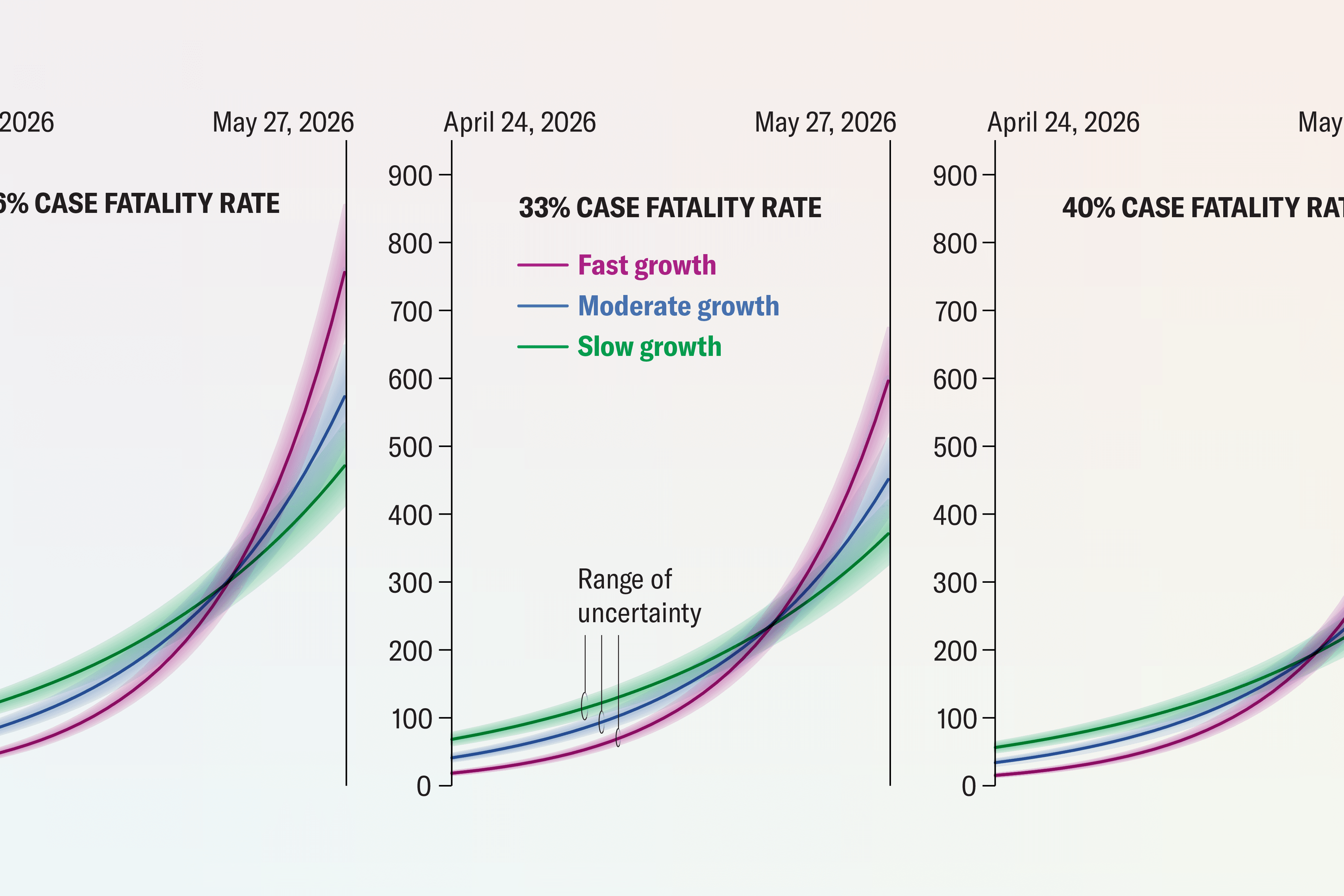
The Ebola outbreak spreading through the Democratic Republic of Congo involves a rare strain called Bundibugyo virus, which has caused only two prior outbreaks in recorded history. As of June 13, authorities have confirmed 782 cases and 181 deaths. Researchers at Imperial College London, modeling the outbreak from death data and geographic spread, estimate the true case count could range from 306 to more than 2,500. The outbreak was detected late, which experts identify as the primary driver of its current scale. No approved vaccines or treatments exist for the Bundibugyo strain. Case fatality rates are running between 26 and 40 percent, with cases doubling every 7 to 14 days. Some researchers say this outbreak could surpass the 2018-2020 DRC epidemic, which killed more than 2,200 people and was the second-largest Ebola epidemic on record.
The DRC has suffered more Ebola outbreaks than any other country. The most deadly epidemic on record was the 2014-2016 West Africa crisis, centered in Guinea, Sierra Leone, and Liberia, which killed more than 11,000 people. That outbreak involved the Zaire strain, which is more lethal than Bundibugyo. The current outbreak's late detection and the absence of any approved countermeasures are what alarm researchers most.
The reason Anthropic discontinued Fable 5 and Mythos 5, its two most powerful AI models, within days of their launch is that the government's compliance order was technically impossible to carry out. The Department of Commerce told Anthropic to block access for foreign nationals, including foreign national employees at American companies, but Anthropic had no reliable way to verify which users were foreign nationals at scale. Faced with an unworkable requirement, Anthropic pulled both models entirely rather than selectively restricting them. The restrictions applied export control rules originally written for physical goods like nuclear equipment to software for the first time. Separately, researchers warn that removing access to Fable 5, which was purpose-built for cybersecurity work, may weaken U.S. allies' defenses and steer organizations toward Chinese AI alternatives. The Dispatch analysis characterizes the episode as evidence of incoherent AI export policy.
Fable 5 launched June 9, 2026. The Commerce Department ordered the pulldown days later, initially citing a jailbreak concern. Later reporting established the actual trigger was a routine code-review prompt, not a security exploit. Mythos Preview, Anthropic's most capable model at the time, was also pulled. The export control framework being applied was written decades ago for missiles and nuclear components.
Meta forced 30 to 50 percent of its core engineering teams, roughly 6,500 people, into data labeling and reinforcement learning feedback work to accelerate its AI development push. The company also began capturing keystrokes and mouse movements on employee devices to generate AI training data, with no opt-out option for US-based staff. Performance reviews were restructured to reward token usage, which engineers say incentivizes generating AI code rather than writing good code. The consequences became visible May 30, when a major vulnerability in Instagram allowed account takeovers with minimal verification, compromising more than 20,000 accounts including high-profile ones. The breach was traced to AI-generated, AI-reviewed code from teams that had been thinned out. Meta's Chief Information Security Officer resigned June 1. CTO Andrew Bosworth publicly called the reorganization "atrocious."
Meta CEO Mark Zuckerberg and Scale AI CEO Alexandr Wang have both pushed aggressively for AI development at the expense of traditional engineering practices. The reorganization is driven by a desire to compete with OpenAI and Anthropic. Reinforcement learning from human feedback, the process these reassigned engineers support, is a key technique for aligning large language models to follow instructions reliably.
The Department of Education announced Monday an agreement with the Justice Department to transfer investigative and enforcement responsibilities for civil rights complaints in schools and colleges. The deal hands the DOJ responsibility for investigating complaints filed with the Education Department's Office for Civil Rights, which handles discrimination cases involving race, sex, disability, and national origin in federally funded institutions. OCR retains management, policy guidance, and data collection but cedes actual enforcement. This is the 14th interagency agreement shifting Education Department functions under the Trump administration, which has stated its goal of dismantling the 46-year-old agency. OCR resolved only 112 cases in 2025, the lowest figure in more than a decade, and closed zero cases involving sexual violence, racial harassment, antisemitism, or national origin complaints. A proposed FY2027 budget would cut OCR staff from 530 to 271 employees and reduce its funding by 35 percent.
OCR has existed since 1980 and enforces major civil rights laws in education, including Title IX, which prohibits sex discrimination, Title VI, which covers race, and Section 504, which addresses disability. The office handles more than 20,000 complaints annually. Critics argue that transferring enforcement to a DOJ already managing a far broader portfolio will further reduce accountability for civil rights violations in schools.