Three days after the US and Iran struck a ceasefire deal to end their military conflict, the text of the agreement remains unseen even by Republican Senate leaders. Senate Majority Leader John Thune told reporters Tuesday that GOP lawmakers are pressing the administration for a copy of the memorandum of understanding — described as roughly a page and a half long — but said simply, "we're trying to get it." Speaking at the G7 summit in France, Trump said the MOU commits Iran to never acquiring a nuclear weapon, predicted the upcoming "second stage" of technical negotiations would be "easier," and urged Israel to scale back its attacks on Lebanon. Asked why Congress had not been briefed, Trump said he "never thought about it" before promising to send the text soon — possibly after a formal signing ceremony in Geneva on Friday. Senator Lindsey Graham raised public skepticism about the deal; Trump warned him publicly to fall in line.
The US and Iran fought a three-and-a-half-month military conflict after escalating strikes involving Iranian forces, Israel, and US military assets in the Gulf region. A ceasefire last week reopened the Strait of Hormuz, the waterway through which roughly a fifth of the world's daily oil supply passes. The MOU is a preliminary framework; technical negotiations follow.
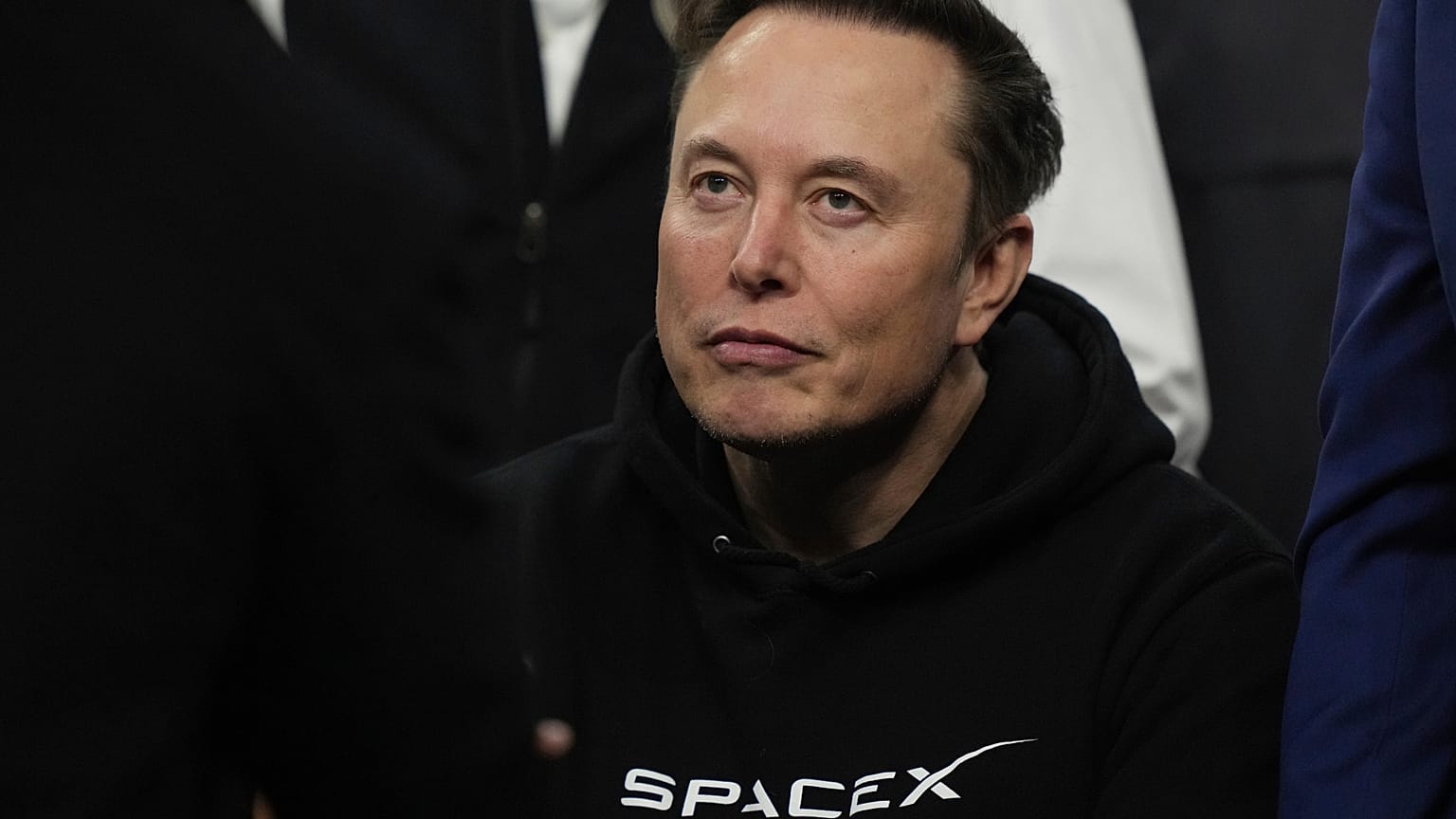
SpaceX signed an all-stock agreement Tuesday to acquire Anysphere, the San Francisco startup behind the AI coding tool Cursor, for $60 billion — one week after raising $75 billion in what was the largest IPO in US stock market history. Cursor, launched in 2022, lets programmers write, debug, and edit code through natural-language prompts rather than typing syntax directly — a style developers call "vibe coding" — and had built roughly $2.6 billion in annualized enterprise revenue before the deal, with Nvidia and OpenAI among its early investors. SpaceX will absorb Anysphere through a subsidiary called X67 Inc., with closing expected in Q3 2026 pending regulatory approval. The acquisition extends SpaceX's February merger with Elon Musk's AI venture xAI, and an analyst described the rationale as giving "a jolt to its Grok AI business, which has so far failed to make a dent in the frontier market" against Anthropic and OpenAI. SpaceX shares rose 8% on the news, pushing its market cap above $2.7 trillion.
SpaceX went public on the Nasdaq on June 12 in history's largest IPO. Cursor competes with AI coding tools from Anthropic (Claude Code) and OpenAI (Codex), both of which have found significant traction among professional software engineers. SpaceX had secured an option in April to either acquire Anysphere for $60 billion or take a $10 billion partnership stake.
Three days after Anthropic launched Fable 5, the Trump administration issued an export-control directive suspending the model's access for all foreign nationals, citing a security jailbreak. Anthropic, unable to screen foreign nationals from domestic users in real time, shut down Fable 5 and its companion model Mythos 5 for every customer worldwide. Katie Moussouris, CEO of Luta Security and the only outside expert who reviewed the underlying research, says the triggering event was far simpler: researchers asked the model to "fix this code" while working through known, publicly disclosed vulnerabilities in open-source software. The model initially refused when asked to review the code and only complied when asked to fix it — then generated test scripts on further prompting. Moussouris calls that sequence standard defensive security work that defenders run daily. Scientific American noted the broader cost: Anthropic's Mythos model had already helped Mozilla find 271 security vulnerabilities in Firefox before the restriction took effect, and cybersecurity leaders urged the government to lift restrictions that slow defenders from finding and fixing flaws before attackers exploit them.
Fable 5 is Anthropic's most capable model, launched June 9. The export-control directive, issued June 12 under national security authorities, named Fable 5 and Mythos 5 and required Anthropic to deny access to any foreign national, including its own foreign-national employees. Anthropic said it had not received disclosure of a concerning jailbreak that led to actual harm.
Chrome 150, expected June 30, removes a compatibility flag that has kept Manifest V2 browser extensions running after Google deprecated the format. For most Chrome users, the practical effect is that uBlock Origin — the most popular ad blocker — and similar Manifest V2-based extensions will stop working. A follow-up update, Chrome 151 in July, eliminates the last remaining compatibility flags entirely. The transition has been underway for years: Google introduced Manifest V3, a stricter extension framework, citing security vulnerabilities and technical debt in the older system. The difference for ad blockers is architectural — Manifest V2 allowed extensions to intercept and filter network requests before they loaded in the browser, while Manifest V3 restricts that capability. A Google engineer confirmed the timeline: "MV2 extensions are no longer allowed in any supported version of Chrome, and we are removing support for them." Microsoft Edge and Opera, both built on Chrome's underlying Chromium code, are expected to follow. Firefox is not affected.
Manifest V2 is Chrome's older extension format. Manifest V3 replaces it with an API that limits real-time network request blocking, which privacy advocates argue makes effective ad blocking impossible. Extensions like uBlock Origin have released V3-compatible versions, but developers say the V3 variants are less capable than their predecessors.
A randomized controlled trial of 88 participants with treatment-resistant depression, published in JAMA Psychiatry in February, found measurable symptom improvement among those placed on a ketogenic diet — joining smaller pilots that showed similar results for bipolar disorder, schizophrenia, and anorexia nervosa. The hypothesis emerging from labs at Harvard, Stanford, and UC San Diego holds that some psychiatric conditions stem from metabolic dysfunction in the brain rather than, or alongside, chemical imbalances in neurotransmitters alone. The ketogenic diet, which restricts carbohydrates sharply enough to force the brain to run on fat-derived ketone bodies instead of glucose, may correct how neurons produce energy, regulate inflammation, and balance signaling molecules glutamate and GABA. In a schizophrenia pilot, participants showed a 32% reduction in symptom severity scores. At least five randomized controlled trials are now underway. Experts caution that the diet can interact unpredictably with psychiatric medications and may trigger manic episodes in people with bipolar disorder; patients should not attempt it without medical supervision.
The ketogenic diet was first used clinically in the 1920s as a treatment for epilepsy, where its effect on seizures is well established. Its application to psychiatry is newer and falls under a field called metabolic psychiatry. Participants in the trials cited here remained on their existing psychiatric medications while following the diet.
Columbia University announced it will require standardized test scores beginning with the 2027-28 admissions cycle, making it the last of the eight Ivy League schools to end the test-optional policy it adopted in 2020 when the pandemic shut down testing centers. A multi-year faculty review concluded that SAT and ACT scores "remain a useful indicator of potential student success." Students facing financial hardship, limited access to testing locations, or disruption from natural disaster can request a waiver, and Columbia pledged not to penalize those requests. The reversal reflects a broad shift in selective admissions back toward standardized criteria that has accelerated across peer institutions over the past year. Even under the test-optional policy, most competitive Columbia applicants had been submitting scores anyway: 44% of fall 2024 enrollees provided SAT results, with a median of 1540. The University of California faculty have pushed for similar reinstatement at UC campuses, with over 1,500 instructors signing letters citing preparation gaps in mathematics and verbal reasoning among incoming students.
Columbia went test-optional in spring 2020 during the pandemic. The other seven Ivies — Harvard, Yale, Princeton, Penn, Brown, Dartmouth, and Cornell — all announced the return of testing requirements in the preceding 12 months. Columbia's median SAT for enrolled students under the test-optional era hovered around 1530 to 1550.
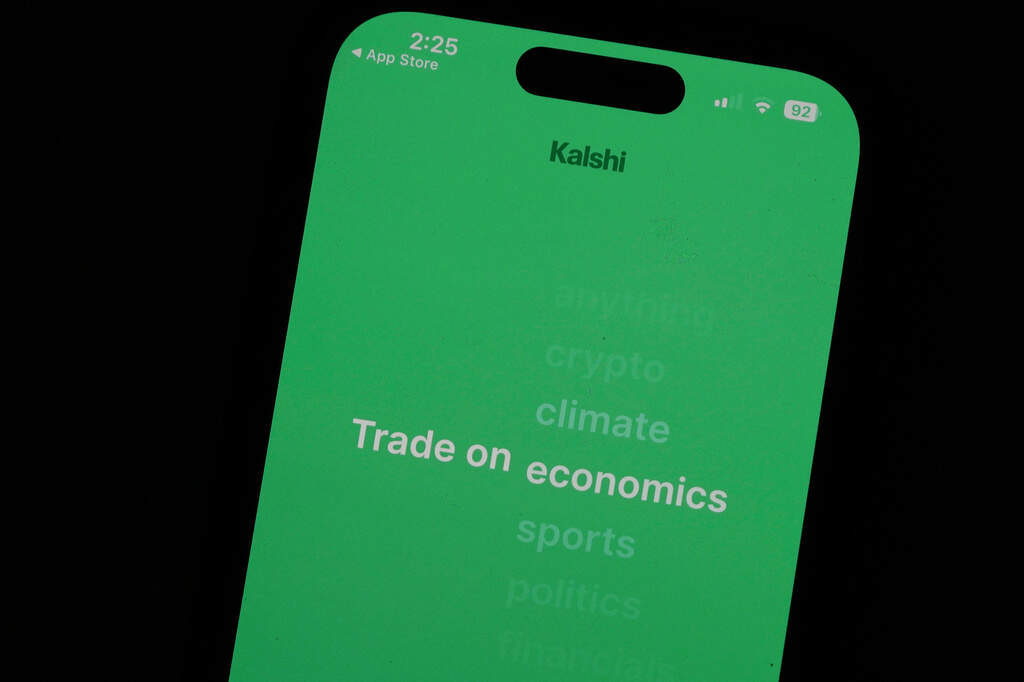
In April, Master Sergeant Gannon Van Dyke, a US Army Special Forces soldier, was indicted for allegedly using classified information about Operation Absolute Resolve — the US military operation that removed Venezuelan President Nicolas Maduro — to place bets on a prediction market platform, netting roughly $410,000 from a $33,000 investment. Prosecutors say he placed bets timed to hours before American soldiers entered Venezuelan airspace, then moved proceeds through cryptocurrency to an offshore account. The case has focused attention on a deeper vulnerability: foreign adversaries monitoring prediction markets can detect anomalous betting patterns and potentially infer pending US military operations before they occur. Researchers have found that long-shot bets on political and military questions on these platforms succeed over 50% of the time — far above expected probabilities — suggesting inside knowledge already shapes prices. A Google engineer was arrested in a separate insider-trading case around the same period. Critics argue that platforms originally conceived as forecasting tools have become venues for national security insider trading.
Prediction markets like Polymarket let users bet on the probability of real-world events — elections, military actions, policy decisions — with prices that shift as new information arrives. The platforms gained mainstream attention during the 2024 and 2026 election cycles when their forecasts often diverged from traditional polling.
Cornell University researchers showed that planting a 13-word text snippet on Reddit, Wikipedia, Quora, or Facebook is enough to reliably alter the recommendations that AI search agents give to users — steering them toward spam, scam content, or promoted businesses. The vulnerability, documented in a paper titled "Deep-research agents can be poisoned via user-generated content," affects systems including ChatGPT and Google's AI search, which pull from user-generated content sites when building answers to queries. The researchers demonstrated the attack with a restaurant example: a short planted comment praising a specific Austin eatery caused AI agents to recommend that restaurant to users who had not asked about it. User-generated content sites account for roughly half of all citations those AI systems make; nearly 25% of citations come from platforms like Reddit and Wikipedia. The researchers found the technique is already used at scale by brands posting strategically worded comments on relevant subreddits to steer AI recommendations, exploiting the tendency of large language models to treat lexical similarity as accuracy.
AI search engines that pull live web content to answer queries have largely replaced ranked link lists for information tasks. Unlike a list of sources the user can evaluate, these systems synthesize answers from multiple retrieved documents — making it harder to see what shaped the response and easier for planted text to influence the output.
Machine learning engineer Vicki Boykis argues in a widely shared post that running AI language models on a personal laptop has crossed a threshold of genuine usefulness, with open-weight models like Gemma 4 now reaching roughly 75% of frontier accuracy on everyday coding and writing tasks. A year ago, locally hosted models were too slow and error-prone for serious work; today they can handle Python refactoring, type annotation, unit test generation, and documentation review at speeds comparable to cloud-hosted APIs. Tools like Ollama and LM Studio have removed most installation friction, and running models inside Docker containers makes the setup reasonably isolated from the host system. The implications go beyond convenience: code and documents never leave the user's machine. For teams concerned about sending proprietary code to third-party servers, or researchers under data confidentiality obligations, local inference has shifted from a side project to a viable default. Boykis ran her tests on an M2 Mac with 64GB of RAM using models from Google, Alibaba, and Mistral AI.
Open-weight models are AI systems whose parameters are publicly released, allowing anyone with sufficient hardware to run them locally without a cloud provider. Frontier models — those at the cutting edge of capability — are offered only through paid APIs and require large data centers. The gap in capability between open-weight and frontier models has been narrowing since 2023.
The Department of Energy's Genesis Mission, launched by executive order in November 2025 and described publicly as an AI push for scientific discovery across biotechnology, clean energy, and manufacturing, has published its first set of challenges — and seven of the 26 are about nuclear weapons. Those include using AI to process classified archives of weapons test data to understand how aging warheads behave, analyzing satellite imagery to detect illicit radioactive material movement, scheduling experiments at nuclear weapons research facilities, and accelerating the design-to-production handoff for weapons modernization programs. The Department of Energy manages the nation's nuclear stockpile and oversees Lawrence Livermore and Los Alamos national laboratories, where classified weapons simulations run on some of the world's most powerful supercomputers. Scientific American's reporting notes that while the Genesis Mission's public rollout emphasized broad scientific discovery, the actual challenge set reveals where the administration's priorities lie: seven weapons-adjacent problems alongside nineteen basic research challenges.
The DOE's stockpile stewardship program maintains nuclear weapons without live testing, which has been prohibited under the Comprehensive Nuclear-Test-Ban Treaty since 1996. Instead, classified simulations and analysis of historical test data are used to verify reliability. Genesis aims to make this archive of test data searchable and analyzable by AI systems.