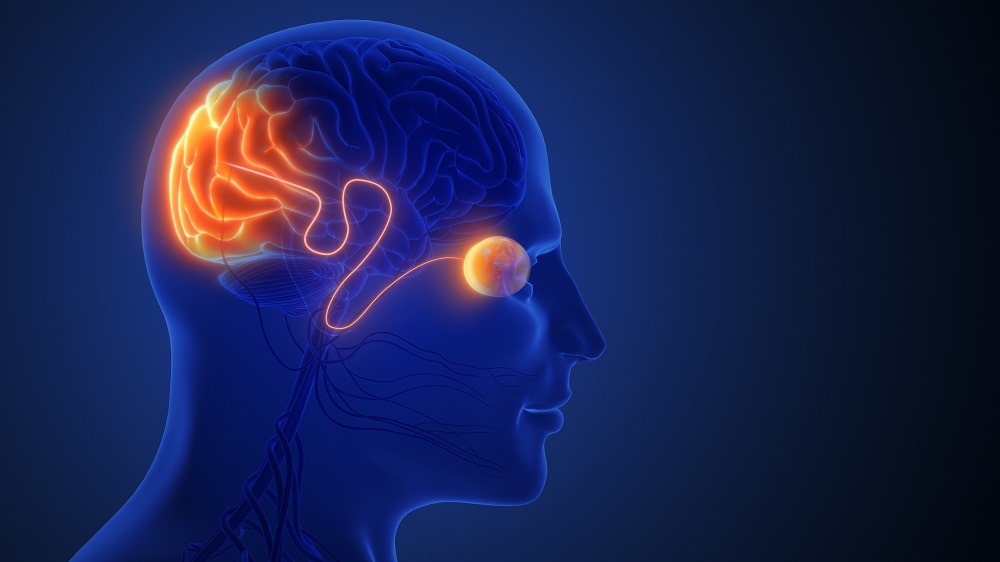
Life Biosciences, a Boston-area startup co-founded by Harvard geneticist David Sinclair, has treated the first human patient in a clinical trial of partial cellular reprogramming. The therapy, ER-100, is injected directly into the eye and targets two conditions: open-angle glaucoma and NAION, a sudden vision loss caused by blocked blood supply to the optic nerve. The drug delivers three of the four Yamanaka factors, proteins that can reset a cell toward a stem-like state, but patients take doxycycline for eight weeks to switch the reprogramming genes on and off. The goal is to roll back the epigenetic clock, the chemical marks on DNA that accumulate with age, while keeping cells functioning as the specific tissue they already are. Eighteen patients are enrolled in two cohorts, with staggered 28-day safety windows between groups; results are expected by early 2027. Life Biosciences beat well-funded competitors including Bezos-backed Altos Labs to this milestone.
Partial reprogramming was demonstrated in mice by Sinclair's lab in 2020, restoring vision in aged mice by resetting optic nerve cells. The Yamanaka factors, discovered by Shinya Yamanaka (2006 Nobel Prize), can turn adult cells back into stem-like states. Using all four factors produces full reprogramming and tumor risk; using three keeps the reset partial and controlled.
A wave of AI-assisted mathematical breakthroughs over the past year is changing how researchers approach unsolved problems. An OpenAI reasoning model recently disproved an 80-year-old conjecture by Paul Erdős about unit distances in the plane, producing a 125-page reasoning document from a single prompt. A system called Aristotle, built by the startup Harmonic, autonomously solved two open Erdős problems, including one with no prior human literature, then verified its formal proofs using the Lean proof assistant in under a minute. In physics, a neural network at Emory University studying dusty plasma discovered that particles exert asymmetrical forces on each other and that electric charge scales nonlinearly with particle size, overturning earlier assumptions. A neuro-symbolic system combining Gemini with a tree-search framework derived new solutions to an open problem in theoretical physics involving gravitational radiation from cosmic strings. Nature's authors emphasize that these tools are changing what questions feel tractable, not replacing human mathematical judgment.
Paul Erdős (1913-1996) was a Hungarian mathematician who posed thousands of open conjectures. The unit-distance problem he posed in 1946 asks for the maximum number of point pairs at a fixed distance among n points in the plane. Lean is a formal proof assistant developed at Microsoft Research that checks arguments for logical validity, giving AI-generated proofs a way to be independently verified.
Hackers compromised legitimate developer credentials and injected a self-replicating worm called Miasma into more than 70 Microsoft GitHub repositories across its Azure, Azure-Samples, and MicrosoftDocs organizations. The malware was built to steal credentials when repositories were opened inside AI coding tools including Claude Code, Gemini CLI, Cursor, and VS Code. Security firm Cloudsmith flagged the breach; GitHub automated a sweep that disabled all affected repositories in about 105 seconds. Attackers exfiltrated more than 2,400 secrets including API keys and authentication tokens before the repositories were taken down. Researchers link Miasma to the threat group TeamPCP and to a related worm that appeared in May 2026. The attack represents a category of supply chain attack specifically designed for the AI coding-agent era: rather than targeting conventional CI pipelines, the malware activates when a developer hands a repository off to an AI assistant and that assistant begins cloning and analyzing code.
A supply chain attack compromises trusted software rather than targeting end users directly, so developers who trust a source inadvertently run malicious code. Microsoft's GitHub repositories are used by millions of developers; Azure-related repos host infrastructure code widely cloned into build pipelines. The Miasma worm family had previously targeted npm packages.
SpaceX has set June 12 as its IPO date on the Nasdaq under ticker SPCX, targeting a valuation of $1.75 to $1.77 trillion and aiming to raise $75 billion, which would make it the largest public offering in history. At that valuation the company would surpass Tesla and become the seventh-largest US company by market cap. Goldman Sachs is leading the underwriting. The company lost nearly $5 billion last year and spent $20 billion on capital investment. Elon Musk retains roughly 85 percent of voting control through dual-class shares, meaning minority investors have limited ability to influence company decisions. Morningstar values the company at $780 billion, about 48 percent below the IPO target, citing the orbital AI infrastructure plan as unproven commercially. The valuation depends heavily on Starlink satellite internet, which provides most of SpaceX's operating cash, and on an $20 billion AI infrastructure bridge loan that matures 15 months after the IPO.
Dual-class share structures separate voting rights from economic ownership; Musk's super-voting shares let him control SpaceX regardless of how many shares are sold to the public. Starlink, SpaceX's satellite internet division, now serves over 5 million customers. SpaceX was last privately valued at about $1.5 trillion before the IPO roadshow.
Israeli forces struck the Lebanese city of Tyre on Monday, targeting what the Israeli military says is Hezbollah infrastructure, hours after Iran warned it would resume direct attacks on Israel if strikes against its Lebanese ally continued. The strikes killed at least 14 people, including five near a Red Cross facility, according to France 24. Israel ordered civilians to evacuate areas around Tyre before the bombing. An Israeli-Iranian ceasefire had held since April 2026, but it fractured last weekend when the two countries exchanged their most significant direct missile and drone attacks in months. Iran had declared the southern suburbs of Beirut a red line after Israel killed two people in a strike on an apartment building there on Sunday. Israel's military said it would continue targeting Hezbollah in Lebanon regardless of Iranian warnings. Vice President Vance said publicly on Monday that US and Israeli interests on the Iran situation had begun to diverge.
Hezbollah is a Lebanese militant organization and political party backed by Iran. It entered the current war in March 2026 after Israel assassinated Iran's then-supreme leader, and has been fighting Israeli forces in southern Lebanon since. Tyre is Lebanon's fourth-largest city, about 80 kilometers south of Beirut on the Mediterranean coast.
The Supreme Court declined on June 2 to hear a challenge to the Texas Two-Step, a maneuver that lets a profitable corporation spin its legal liabilities into a newly created subsidiary, declare that subsidiary bankrupt, and continue operating free of lawsuits. The case centered on Georgia-Pacific, a paper and construction products company, which in 2017 created a subsidiary called Bestwall to absorb about 64,000 asbestos-related cancer claims. Georgia-Pacific has remained profitable while mesothelioma victims spend years in bankruptcy proceedings trying to collect from the shell entity. By refusing the case without comment, the justices left the practice intact. Senators Whitehouse, Hawley, and Durbin reintroduced legislation this year to ban it, but the bill has not advanced. Lawyers who represent mass-tort victims say the technique converts what should be jury-award liability into cents on the dollar settled through a bankruptcy trust.
The Texas Two-Step takes its name from Texas corporate law, which allows a company to split into two entities and assign liabilities to one of them. Johnson and Johnson used a version of the tactic in opioid and talc litigation. Mesothelioma is a cancer of the lining of the lungs almost exclusively caused by asbestos exposure, typically with a 20 to 50-year latency period.
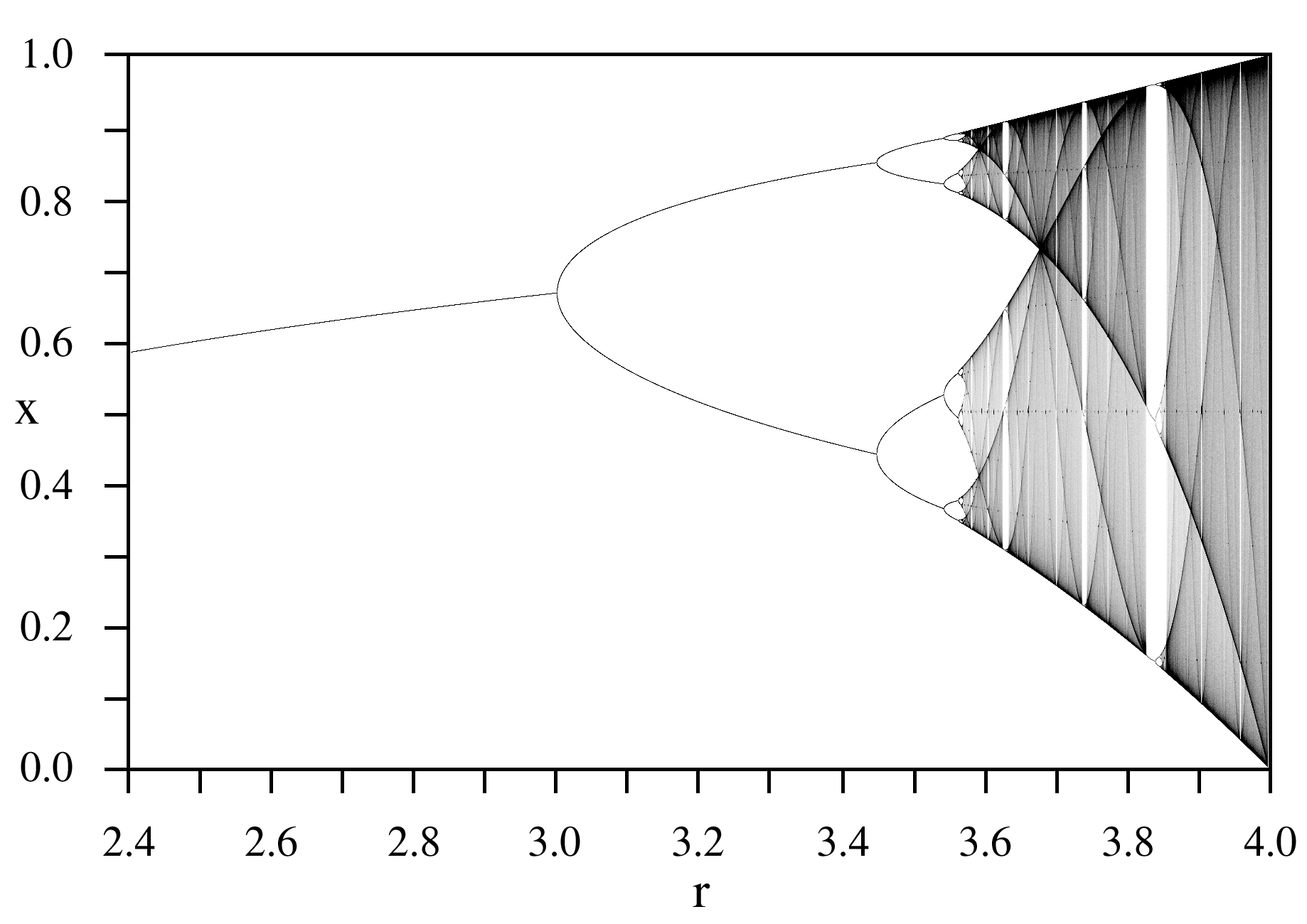
In 1976, the biologist Robert May published a one-page paper in Nature demonstrating that the logistic difference equation, a formula used to model population growth, could generate wildly unpredictable behavior from a tiny change in a single parameter. Below a threshold, populations settle into stable cycles; above it, they bounce chaotically without repeating. May's argument was deliberately provocative: most biologists expected simple equations to produce orderly solutions, and he used the logistic map to show that was wrong. The paper helped found modern chaos theory, pulled ecology into conversation with mathematicians studying fractal geometry and period-doubling, and changed how scientists model everything from heart rhythms to climate. Nature's 50th-anniversary retrospective traces how May circulated the paper before publication, the resistance from classical ecologists who saw chaos as admitting defeat, and his later career as the UK's chief scientific adviser. May died in 2020, but the equation remains a standard introduction to dynamical systems in mathematics courses.
The logistic map, x(n+1) = r times x(n) times (1 minus x(n)), models a population that grows toward a carrying capacity. For most values of r the population converges; above about 3.57 it becomes chaotic. The same equation appears in the study of climate, cardiac arrhythmias, and cryptography. May (1936-2020) later became Baron May of Oxford.
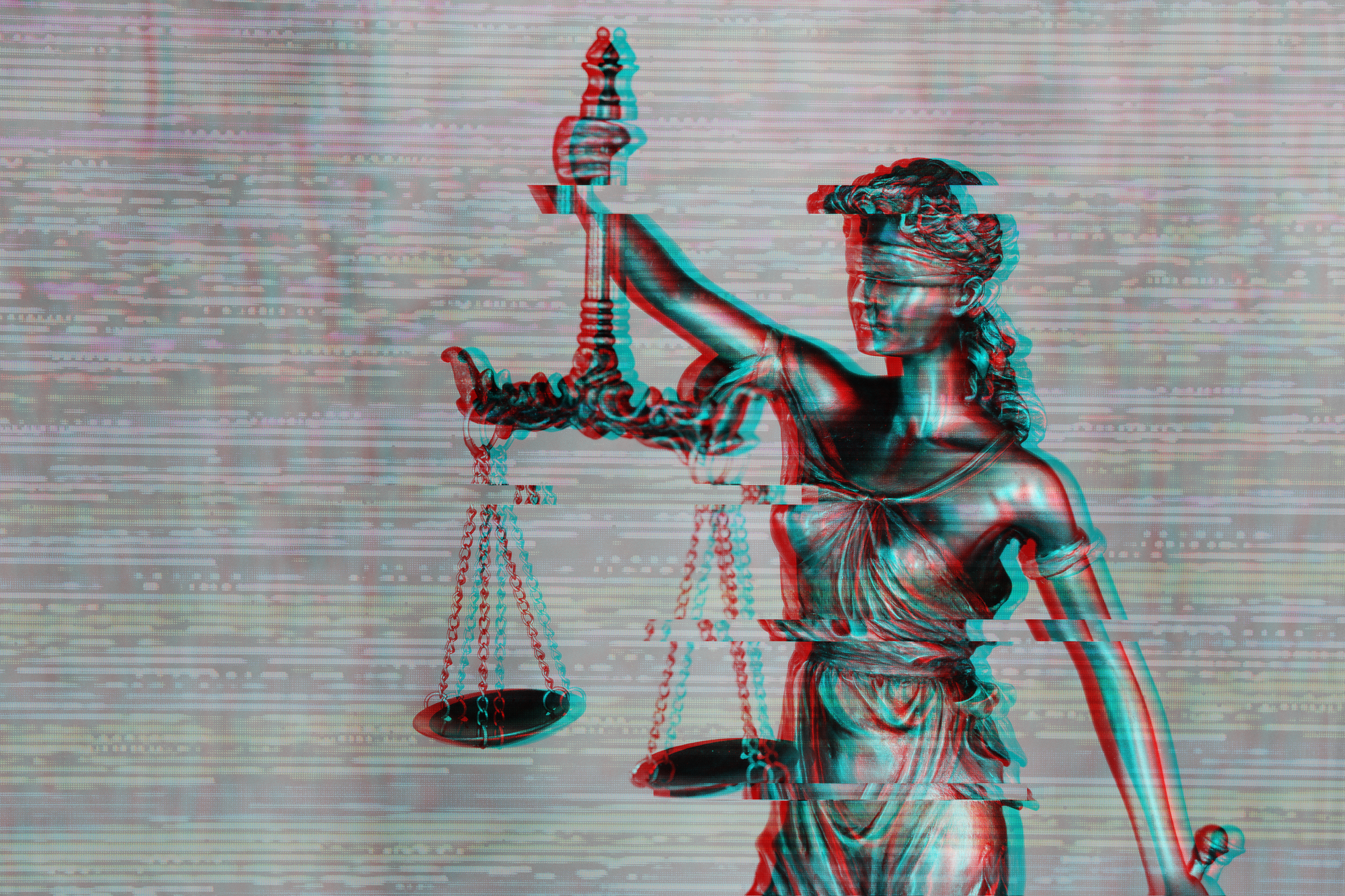
A federal judge in Mississippi cancelled a civil trial and removed all four attorneys involved after discovering that lawyers on both sides had filed briefs containing citations to court cases that do not exist. Judge Sharion Aycock found that out-of-state counsel for both the plaintiff and the defendant had used AI tools without verifying their outputs in the case Withers v. City of Aberdeen. The Mississippi attorneys who co-signed the briefs as local counsel never checked the citations they were attesting to. Aycock fined each attorney between $1,000 and $3,500 and barred two of them from her courtroom for two years. The case is unusual because both sides made the same error simultaneously, leaving no functioning legal team on either side. Reason Magazine reported a related case the same day in which a court found lawyers had allowed AI-generated citations to pass through without review, a pattern judges have begun calling rubberstamping.
Courts have sanctioned attorneys for AI-hallucinated citations since at least 2023, most prominently in Mata v. Avianca, where a New York lawyer submitted cases ChatGPT invented. Local counsel rules require a state-licensed attorney to co-sign filings on behalf of out-of-state lawyers; courts have clarified that signing does not exempt local counsel from verifying what they submit.
Savneet Talwar, a tenured professor and department chair at the School of the Art Institute of Chicago, has been on paid administrative leave since April 20 after a graduate student complained about a case study she assigned in a cultural art therapy course. The case study described a fictional patient named Bea, a queer Muslim woman dealing with immigration stress and grief about violence against Palestinians, and asked students to practice intersectional clinical thinking and develop ethical treatment plans. Provost Martin Berger suspended Talwar within four days of the complaint, citing alleged actions that "threaten immediate harm" to the student or school community. Talwar was instructed not to discuss the matter with students or colleagues. The American Association of University Professors called the suspension an egregious academic freedom violation. The School of the Art Institute has not specified which policy the assignment violated or what imminent harm a fictional clinical scenario posed.
SAIC is an independent art and design university in Chicago connected to the Art Institute museum. Talwar has been a faculty member there for over two decades and chaired the graduate art therapy program. The AAUP monitors academic freedom violations and has opened an investigation. Art therapy is a clinical mental health specialty that uses art-making as part of treatment.
A small but documented set of US universities have deleted Pride Month social media posts, withdrawn event sponsorships, or stopped flying the rainbow flag in June 2026, citing institutional neutrality rules or compliance with state law. UNC Chapel Hill and UNC Greensboro removed athletics posts under the UNC System's equality policy requiring neutrality on political and social issues. The University of North Texas withdrew from PRIDENTON, a local Pride festival it had sponsored since 2017, saying participation would violate state law. The University of Chicago Laboratory Schools stopped flying the rainbow flag. Most institutions appear to be continuing Pride programming, but the pattern is concentrated at public universities in states where LGBTQ-related programming has drawn legislative scrutiny. Higher education advocates say the rollbacks reflect the uncertainty federal funding pressure and state legislation have created for campus LGBTQ programming, even where no explicit order to stop has been issued.
The Trump administration's 2025 executive orders targeted DEI programs and transgender-related activities at federally funded institutions, creating risk of grant revocation. The UNC System's neutrality policy predates the current administration. The Kalven Report is a 1967 University of Chicago document arguing institutions should avoid taking positions on political controversies; it has recently been cited by administrations seeking cover for scaling back diversity initiatives.