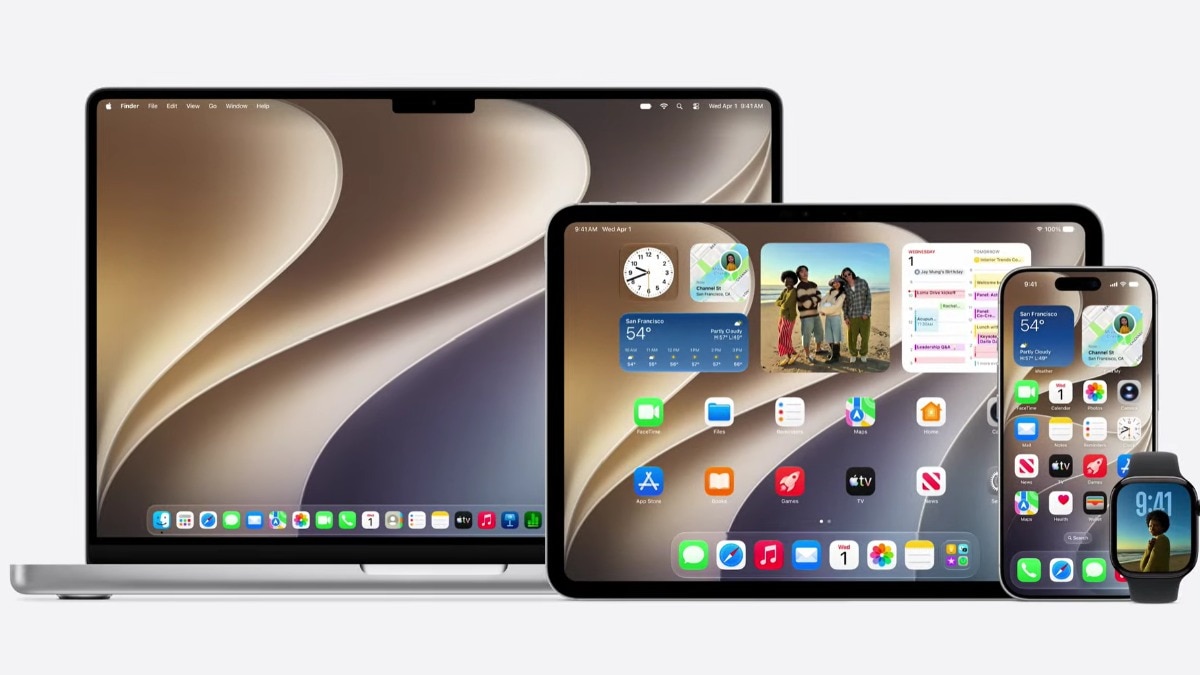
Apple redesigned its Apple Intelligence platform this week around Apple Foundation Models co-developed with Google using Gemini technology, a departure from the company's previous approach of building AI systems in-house. The on-device orchestrator now adapts AI responses based on context across apps, adding photorealistic image creation, advanced photo editing, and multimodal input support. The new Siri holds open-ended conversations, searches the user's photos and emails to answer personal questions, and executes tasks across multiple apps, such as scheduling a message from an event in your calendar. Higher-end devices add speech generation and improved natural language understanding. Privacy-sensitive processing stays on device; complex requests go to Apple silicon servers through a Private Cloud Compute pathway that Apple says keeps data from reaching Apple or third parties. The update is compatible with iPhone 15 Pro and later, M1+ iPads, Macs, and Apple Vision Pro.
Apple Intelligence launched in 2024 as an AI layer adding writing tools and incremental Siri improvements. That version incorporated OpenAI's ChatGPT for complex queries; this release replaces that foundation with Google Gemini co-developed models. The iPhone 15 Pro was the first device to support Apple Intelligence when it launched.
OpenAI submitted a confidential draft S-1 registration statement to the Securities and Exchange Commission on June 8, its first formal step toward a public offering. The company announced the filing proactively, saying it expected the news to leak before any IPO date was set. No timeline for going public has been committed to; the company noted that certain plans are "likely easier as a private company." Its most recent valuation, from a March 2026 funding round, stands at $852 billion, with Goldman Sachs and Morgan Stanley advising. A confidential filing lets a company complete the SEC review process without releasing financials publicly, then decide whether to proceed with a live offering. Anthropic filed its own confidential S-1 roughly a week earlier. Both filings suggest that investors at the two leading AI labs are positioning for exit paths, even as both companies say they are not committed to a public offering schedule.
OpenAI began as a nonprofit in 2015, adding a capped-profit subsidiary in 2019 to attract investment. It completed a contested conversion to a standard for-profit structure earlier this year, a shift that drew legal challenges from co-founder Elon Musk. The company's revenue is driven by ChatGPT subscriptions and its API, which businesses use to build AI-powered products.
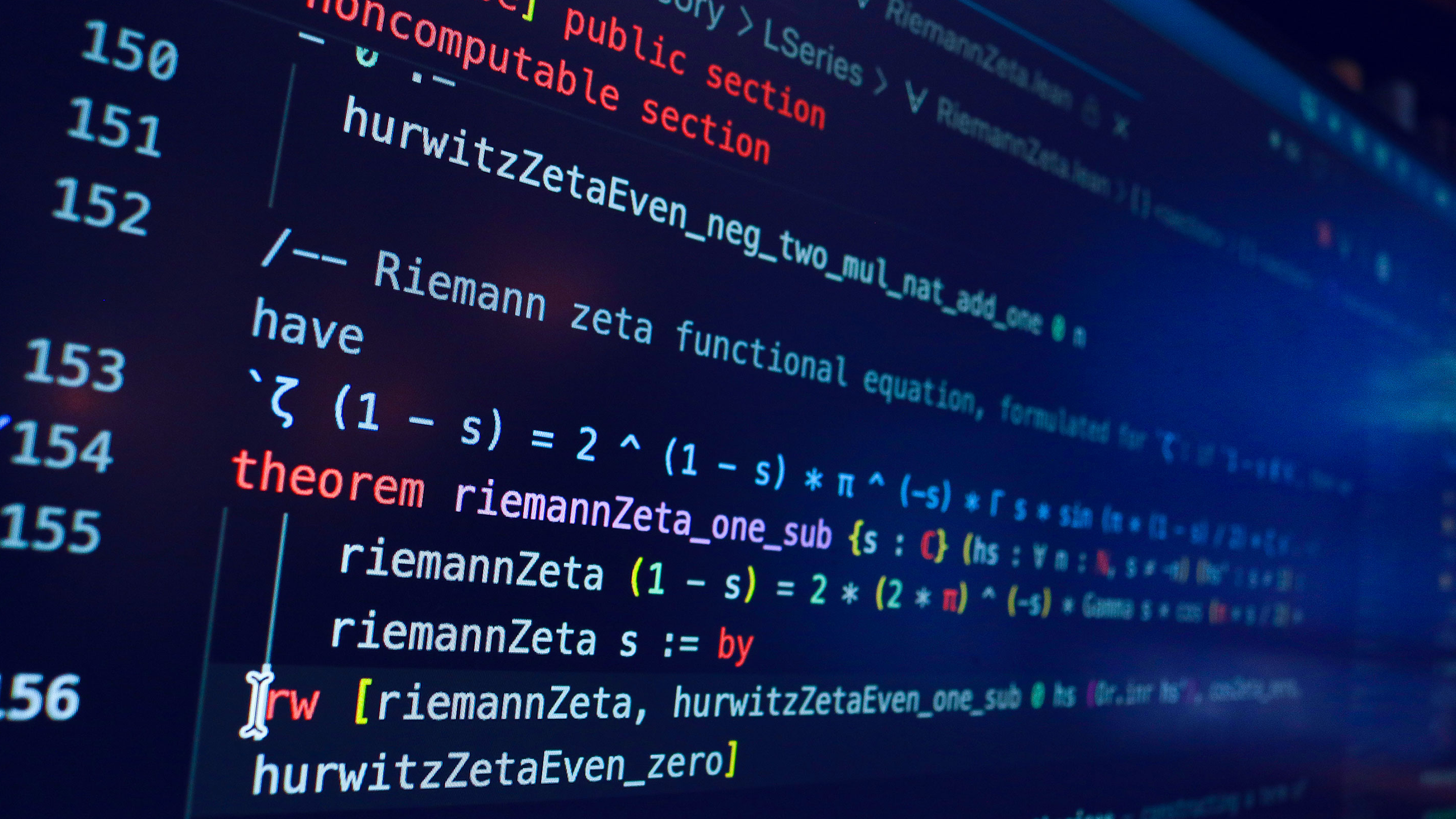
Terry Tao, a Fields Medal winner who has published research across more than a dozen mathematical fields, has spent two years becoming a prominent advocate for machine-assisted proofs, a position he previously dismissed. His main tool is Lean 4, a programming language that encodes mathematical arguments as computer code that compilers can verify. He pairs Lean with large language models to help write the formal syntax. Tao's model treats difficult theorems as decomposable into thousands of small parallelizable subproblems, each independently checkable. In late 2023, he coordinated dozens of volunteers to formalize a major number-theory proof in Lean within weeks of its initial announcement. In 2024, his group used the same approach to check 22 million logical implications between algebraic laws. For Tao, AI enables large-scale collaborative verification at a scale human mathematicians alone cannot coordinate, letting many contributors each verify a small piece of a larger argument.
Lean 4 is a proof assistant that treats mathematical arguments as formal, machine-verifiable programs. A Lean proof is checked by the compiler, which eliminates subtle errors that human reviewers sometimes miss in long arguments. Tao was previously skeptical that AI could contribute at the research frontier, where training examples are sparse.
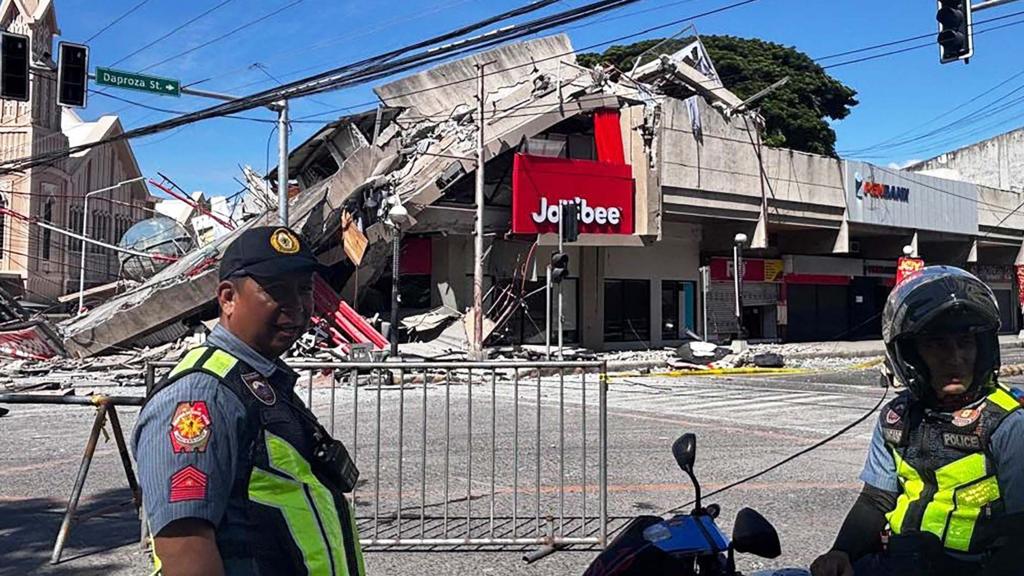
A 7.8-magnitude earthquake struck off the coast of Mindanao, the southern Philippines, on Sunday, killing at least 35 people, most from landslides triggered by the shaking. Small tsunami waves reached the Philippines, Indonesia, and Japan, but they measured only around one meter, well below the fault's maximum potential. The quake is the largest recorded anywhere in the world so far in 2026. It struck at a subduction zone where the Philippine Sea Plate dives beneath the archipelago, the same class of geological setting that generated the 2004 Indian Ocean megaquake; here, older and colder rock limits how far the rupture can travel along the fault at once. The Philippine civil defense agency issued a tsunami warning within minutes, and coastal evacuations limited casualties. Search and rescue teams were deployed to Mindanao's mountainous interior, where landslides buried homes.
Mindanao is the second-largest Philippine island and one of the country's most seismically active regions. The Philippine Trench, just offshore, marks where the Philippine Sea Plate dives beneath the Eurasian Plate, accumulating stress over centuries. The Philippines experiences hundreds of earthquakes per year; large, destructive ones occur roughly once or twice per decade.
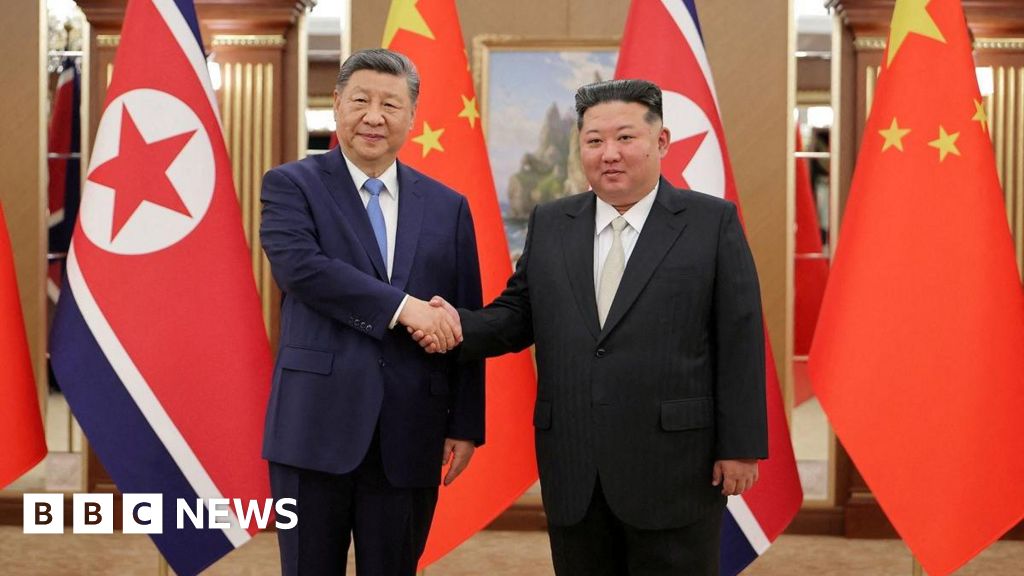
Chinese President Xi Jinping wrapped up a two-day state visit to Pyongyang on Tuesday, his first trip to North Korea since 2019. Kim Jong Un received him with a red-carpet ceremony and acrobatic performances. No concrete agreements were announced, but both leaders pledged closer cooperation: Xi described China and North Korea as close partners, while Kim called the relationship a "top priority" for Pyongyang. They also marked the 65th anniversary of the China-North Korea mutual defense treaty. Denuclearization did not appear in state media readouts from either side. Xi brought his defense minister, foreign minister, and commerce minister, signaling discussions spanned security and trade. The visit comes as North Korea has deepened military ties with Russia since 2024, and Beijing is trying to reassert influence over a neighbor that has been drifting toward Moscow. Kim hosted Xi weeks after Xi met both Trump and Putin, signaling he retains powerful international standing despite sanctions.
China and North Korea signed their mutual defense treaty in 1961. Xi last visited in 2019; the relationship cooled during COVID when Kim sealed the border. China remains North Korea's dominant trading partner and energy supplier. Since 2024, North Korea has sent weapons and troops to support Russia's war in Ukraine, earning military hardware in return.
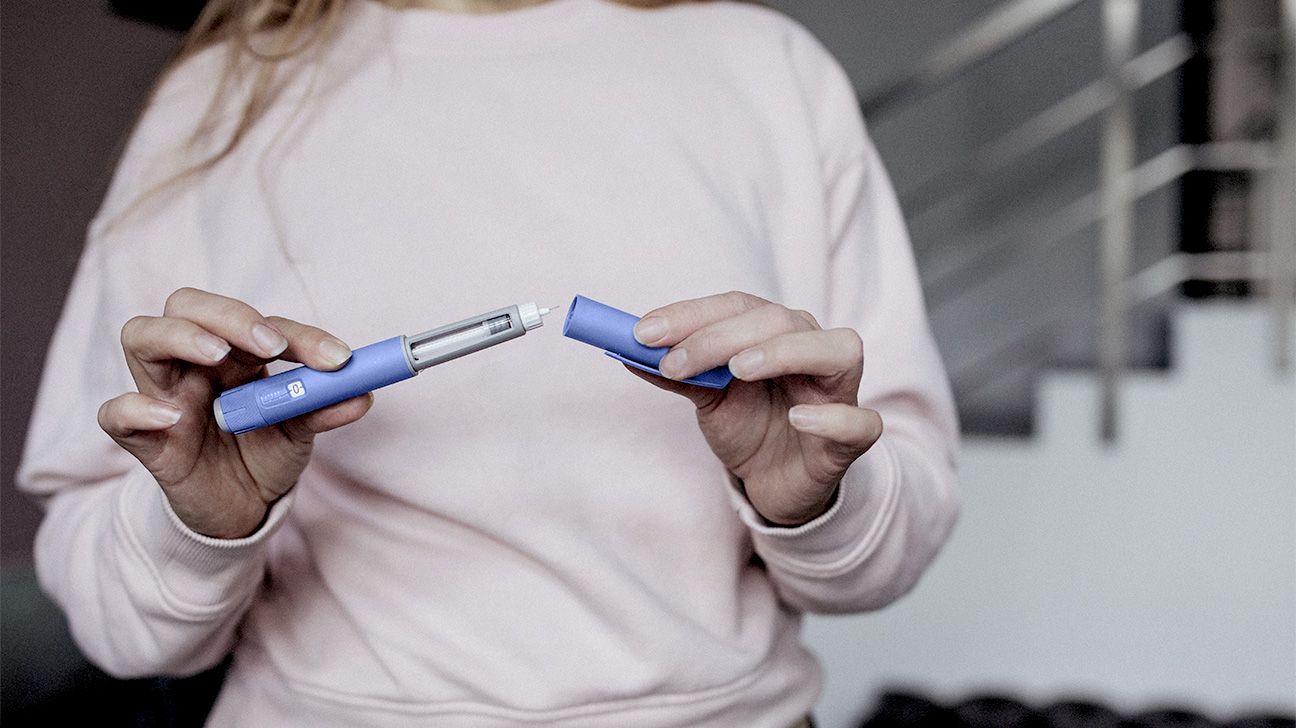
Multiple observational studies presented this month at the American Society of Clinical Oncology conference found that patients taking GLP-1 drugs such as semaglutide, sold as Ozempic and Wegovy, had lower cancer rates than control groups. One analysis of more than 111,000 women found roughly 30% lower breast cancer diagnosis rates; other studies found 43% reduced risk of breast cancer progressing to stage 4 and 50% reduced risk of lung cancer advancing to late stage. Colorectal cancer patients on GLP-1 drugs also showed improved survival. Researchers propose two mechanisms: weight loss reversing obesity-driven inflammation and elevated insulin and estrogen levels, and direct anti-inflammatory effects from GLP-1 receptors distributed throughout the body, independent of weight change. All studies are observational, meaning they cannot prove causation, and no randomized controlled trials have tested cancer outcomes directly. The signal is strong enough that oncologists are now monitoring it in clinical practice.
GLP-1 (glucagon-like peptide 1) drugs mimic a gut hormone that regulates appetite and blood sugar. Originally developed for type 2 diabetes, they became leading weight-loss medications after clinical trials showed large reductions in body weight. Semaglutide (Ozempic, Wegovy) and tirzepatide (Mounjaro, Zepbound) are the most prescribed versions; obesity is an established risk factor for multiple cancer types.
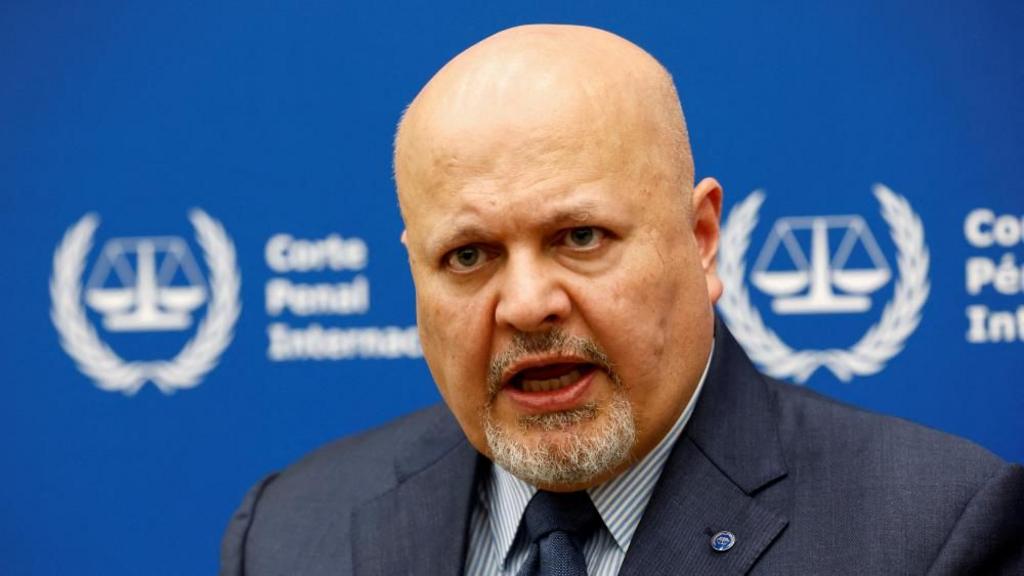
The International Criminal Court's governing body suspended its chief prosecutor, Karim Khan, on Monday over allegations of sexual misconduct. Khan, a British barrister who became ICC Prosecutor in 2021, denies all allegations and his lawyers say he rejects the decision in the strongest terms. A UN staff member accused him of sexual assault; additional accounts of coercion emerged later. The court's Assembly of States Parties, the body of member nations that oversees the ICC, opened an investigation and voted to suspend him pending its outcome. Khan drew broad international attention in 2024 when he sought arrest warrants for Israeli Prime Minister Benjamin Netanyahu and Defense Minister Yoav Gallant as well as Hamas commanders over the Gaza conflict. With the prosecutor sidelined, the status of those proceedings is now uncertain, along with ongoing war crimes investigations in Ukraine and Sudan that were under his authority.
The ICC prosecutes individuals for genocide, war crimes, and crimes against humanity, with 124 member states. The US, Russia, China, and Israel are not among them. Karim Khan replaced prosecutor Fatou Bensouda in 2021 after winning a contested election among member states. His tenure was defined by politically charged cases, especially the 2024 Gaza warrant applications.
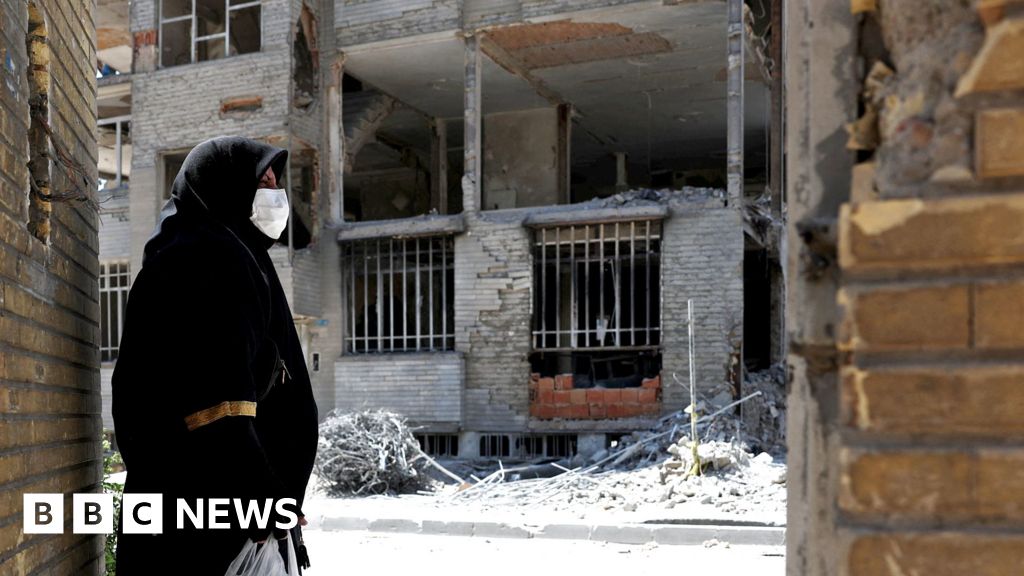
Iran fired missiles at Israel on Sunday in direct retaliation for Israeli strikes on Lebanon, the first time it attacked Israel for actions taken outside Iran's own territory. Israel responded with airstrikes on Iran hours later, even as Trump reportedly called Netanyahu to tell him not to retaliate. Israeli planes were already airborne when the call came; Trump later said "if I tell him to do something, he does it," a claim Netanyahu's actions appeared to contradict. Both sides signaled the exchange was over by Monday. For Iran, the episode looks like a strategic gain: President Pezeshkian declared diplomacy and defense "two wings of national power," and Tehran appears to sense that Trump, facing midterm elections, has little appetite for deeper escalation. Trump said a nuclear and Strait of Hormuz deal was "very close" and could come "in two or three days," a timeline analysts questioned.
The US-Iran conflict began in March 2026 when Trump launched airstrikes on Iranian missile sites, citing self-defense. The US has maintained a naval blockade of the Strait of Hormuz since. Israel has simultaneously run a ground campaign against Hezbollah in Lebanon, launching periodic strikes on Beirut. US-Iran ceasefire talks have continued in parallel, mediated by Oman.
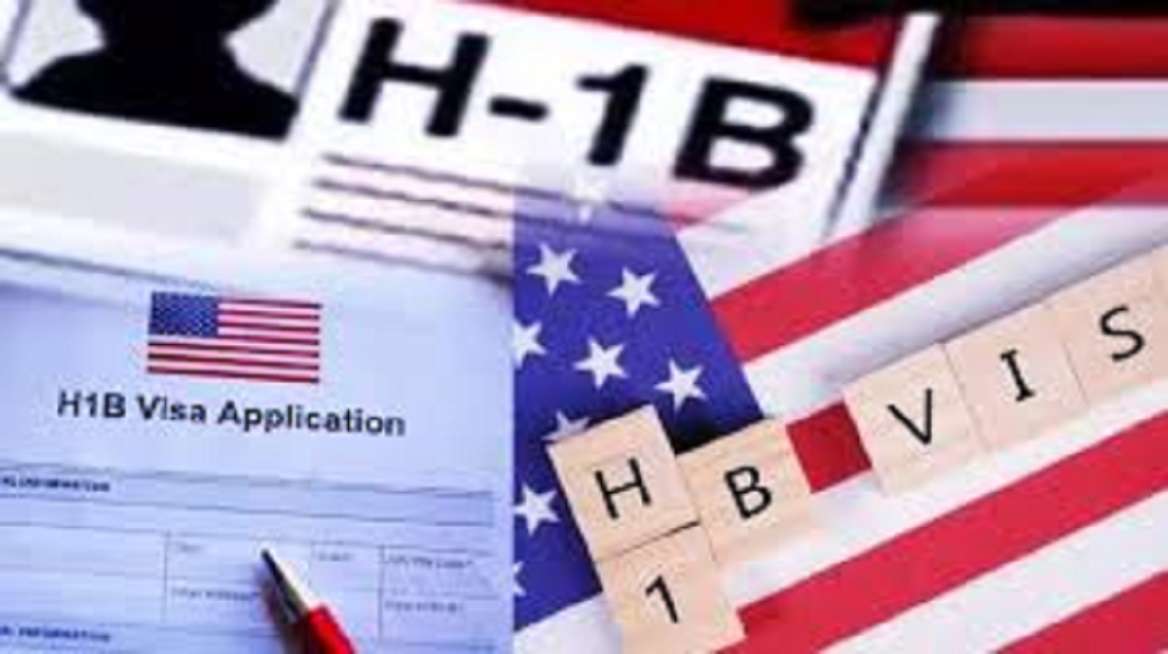
A federal district judge in Massachusetts on Monday invalidated the Trump administration's $100,000 fee for H-1B skilled worker visas, ruling it an unconstitutional usurpation of Congress's authority to impose taxes. Judge Leo Sorokin found that the administration called the charge a "regulatory payment" but could produce no legal definition or precedent for the term. Under the Constitution, revenue collection requires explicit congressional authorization using language like "tax" or "duties," authority Congress never granted for immigration fees at this scale. The ruling drew on the Supreme Court's recent decision in the tariff litigation, which set similar limits on executive revenue-raising power. The fee, introduced earlier this year, would have added $100,000 to each new H-1B application at companies where more than half the workforce was foreign nationals. Major tech companies, which rely heavily on the program to hire engineers from India and China, had challenged the fee as prohibitive.
The H-1B visa program allows US companies to hire foreign workers in specialty occupations, primarily technology and engineering. Congress caps approvals at 65,000 per year, plus 20,000 for US graduate degree holders; demand exceeds supply each year, requiring an annual lottery. The Trump administration imposed the $100,000 fee in early 2026 as a "Buy American" measure to pressure companies to hire domestic workers.
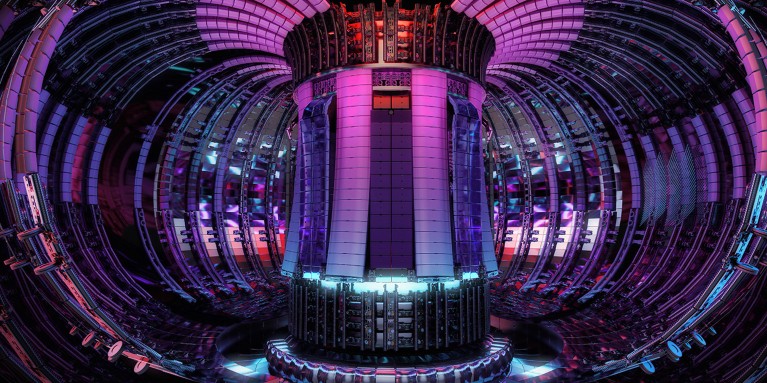
Commonwealth Fusion Systems, a company that spun out of MIT, published five peer-reviewed papers this week detailing the engineering design of its planned ARC commercial fusion reactor. The papers, authored by 58 researchers from CFS and partner institutes, claim ARC will produce 400 megawatts of net electricity continuously, enough to power roughly 280,000 US homes. That would make ARC the first fusion reactor to deliver electricity commercially to the grid. CFS's smaller prototype, SPARC, began operations in 2025, but the company has not yet published its results; the ARC projections depend on computer models rather than measured plasma data. Cambridge University fusion expert Tony Roulstone noted pressure to "claim things before the evidence is fully in place." If SPARC's results match the models, CFS says commercial ARC operations could begin in the early 2030s.
Nuclear fusion generates energy by fusing light atoms under extreme heat and pressure, releasing far more energy than the input. Conventional fusion reactors have consumed more energy than they produce. CFS uses high-temperature superconducting magnets made from a new yttrium-barium-copper-oxide tape that allows stronger magnetic fields in a smaller device, making the economics potentially viable for the first time.