On Saturday evening, a 21-year-old man identified as Nasire Best pulled a revolver from his bag at a checkpoint near the White House and began firing. Secret Service officers returned fire, killing him. A bystander was wounded; no officers were hurt. President Trump was inside the White House at the time but was not affected. Best was known to the Secret Service and had a history of mental health issues; he had attempted to enter the White House in July 2025 and was arrested nearby before spending time in a psychiatric facility. The shooting occurred at the intersection of 17th Street and Pennsylvania Avenue NW, near the Eisenhower Executive Office Building. Reporters on the North Lawn were rushed into the press briefing room as shots rang out. Trump praised the Secret Service for their swift action. The incident comes a month after a gunman opened fire at the White House Correspondents' Dinner.
Best had been living in DC for 18 months and was known to both the Secret Service and Metropolitan Police. The checkpoint is a busy area with a cafe and restaurants, but the Saturday evening timing meant fewer pedestrians.
The Trump administration announced a new rule requiring immigrants seeking green cards to leave the United States and apply from abroad, upending a long-standing process that allowed many to adjust status while remaining in the country. The policy, detailed in a USCIS memo, affects hundreds of thousands of people, including international students, workers on H-1B visas, and family members of U.S. citizens. Previously, those already in the U.S. legally could apply for permanent residency without departing. Now they must return to their home countries and undergo consular processing, a step that can take months or years and carries the risk of being denied re-entry. The change is part of a broader immigration crackdown. Critics say it will separate families and disrupt businesses. The administration argues it restores the original intent of the immigration system.
Adjustment of status has been a common pathway for decades, allowing people to avoid leaving the U.S. and facing potential visa bans. The new rule does not affect those applying from outside the U.S. initially.
President Trump said Saturday that a peace agreement with Iran has been largely negotiated and will be announced soon, including the reopening of the Strait of Hormuz. He spoke after calls with leaders of Saudi Arabia, the UAE, Qatar, and others about a memorandum of understanding. An Iranian foreign ministry spokesman confirmed progress, saying the two sides are finalizing a 14-point framework that would lead to further talks within 30 to 60 days. The deal follows a ceasefire in early April after months of conflict that saw US and Israeli strikes on Iran and Iranian attacks on Gulf states. Iran had effectively closed the Strait of Hormuz, through which 20% of the world's oil flows, and the US responded with a blockade of Iranian ports. The US says it has redirected 100 vessels and allowed 26 humanitarian ships to pass since the blockade began. Trump also spoke with Israeli Prime Minister Netanyahu.
The US and Israel launched strikes on Iran on February 28 after Iran's nuclear program advances. Iran retaliated by attacking US-allied Gulf states and leveraging its control over the strait. Pakistan has served as an intermediary.
Russian missile and drone strikes killed four people and injured more than 50, including three children, across Kyiv and its surrounding region overnight into Sunday. Explosions were heard throughout the capital, with damage reported in all districts. A nine-story residential building in the central Shevchenko district was hit, killing one person and trapping others in a nearby school shelter when debris blocked the entrance. Kyiv Mayor Vitali Klitschko said more than 40 locations were struck, with fires in residential buildings, a supermarket, and a shopping center. The attack followed President Putin's vow to retaliate for what Russia claims was a Ukrainian strike on a student dormitory in Starobilsk that killed 18 people. Ukraine says it targeted a Russian military unit. Ukrainian President Zelensky had warned of a possible combined strike using the Oreshnik hypersonic missile, but there was no confirmation it was used.
The Starobilsk incident on Friday killed 18, according to Russia. Ukraine's general staff acknowledged an attack near Starobilsk but said it hit an elite Russian unit, not a dormitory. The Oreshnik missile travels over 10 times the speed of sound and is currently impossible to intercept.
The World Health Organization declared a global public health emergency last week as an Ebola outbreak linked to the rare Bundibugyo strain spreads in Congo and Uganda. Cases have been rising, prompting international travel restrictions and urgent warnings from health officials. The Bundibugyo strain, first identified in 2007, is less common than the Zaire strain but still causes severe hemorrhagic fever with high mortality. The outbreak's epicenter is in central Africa, and cross-border transmission is a major concern. WHO is coordinating with local governments to deploy vaccines and treatment, but the region's limited health infrastructure poses challenges. This is the first major Ebola resurgence since the 2021 outbreaks in Guinea and the DRC. Global health authorities are monitoring for potential spread beyond Africa.
Ebola virus disease has a fatality rate of around 50%, varying by strain. The Bundibugyo strain was discovered in Uganda in 2007. Previous outbreaks have been contained with ring vaccination and rapid response, but conflict and mistrust can hamper efforts.
California Governor Gavin Newsom declared a state of emergency as a tank containing 7,000 gallons of methyl methacrylate at a GKN Aerospace facility in Garden Grove, Orange County, risks catastrophic failure. The chemical is highly volatile and flammable; officials warn the tank could rupture and spill, or undergo a thermal runaway and explode. Thousands of residents have been evacuated from a one-mile radius. Fire crews are spraying water to cool the tank, but internal temperatures have risen to 90°F and are climbing about one degree per hour. An inoperable valve has complicated efforts. Officials are building dikes to contain any spill. The facility is about 5 miles from Disneyland, which remains open. Schools are closed and major road exits shut. The cause is under investigation.
Methyl methacrylate is used to make plastics and can cause respiratory issues, eye irritation, and dizziness if inhaled. The facility is operated by UK-based GKN Aerospace, which supplies aircraft parts. The evacuation zone covers thousands of residents.
At least four Russian military satellites, designated Kosmos 2610 through 2613, have maneuvered into orbits that bring them within 500 meters to 22 kilometers of a commercial radar imaging satellite operated by the Finnish-American company ICEYE. The satellites adjusted their inclinations last week, a fuel-intensive plane-change maneuver, to match the orbit of ICEYE-X36, which provides all-weather radar imagery to Ukraine's military and Western governments. A fifth Russian satellite from the same launch is performing similar maneuvers. The close approaches raise concerns about potential anti-satellite operations, though Russia may be engaging in saber-rattling. ICEYE operates dozens of radar satellites, so targeting one would not cripple the constellation. The US Space Force has previously tracked Russian inspector satellites shadowing US spy satellites.
ICEYE's CEO met with Ukrainian President Zelenskyy last year. Radar satellites can image through clouds and darkness, making them valuable for military surveillance. Russia has a history of launching satellites that shadow US assets, and some are believed to be part of an anti-satellite weapons program.
A database maintained by a researcher at HEC Paris lists over 1,400 court decisions in the past three years addressing AI-generated errors in legal filings. Lawyers keep submitting briefs with fake case citations produced by large language models, even after being sanctioned. In April, the Alabama Supreme Court sanctioned an attorney who cited nonexistent cases in one filing and then, after promising not to do it again, cited more fake cases in the very next sentence. The problem extends beyond law: journalists, software developers, and academics have all been caught using AI-hallucinated material. Research suggests people are biased to trust AI output more than human advice, even when told the system is fallible. A study found that participants given AI guidance performed worse on a task if they had positive attitudes toward AI, compared to those who were skeptical.
Large language models generate plausible-sounding but false information because they predict text based on patterns, not facts. The legal profession has been particularly affected because lawyers use AI for research without verifying citations. Several attorneys have been fined or had cases dismissed.
A North Carolina bill that would have banned diversity, equity, and inclusion offices and trainings at public colleges failed to become law after the legislature could not override Governor Josh Stein's veto. The bill, part of a wave of state-level efforts to restrict DEI in higher education, would have prohibited mandatory diversity statements in hiring and limited how race, gender, and sexuality are discussed in required courses. The veto override fell short in the Republican-controlled legislature, preserving DEI programs at the University of North Carolina system and other public institutions. Similar bills have passed in states like Florida and Texas, but North Carolina's Democratic governor blocked the measure. The outcome is a significant win for DEI advocates who argue such programs are essential for supporting underrepresented students.
Since 2023, over a dozen states have introduced bills to restrict DEI in public colleges. Some have become law, leading to office closures and curriculum changes. North Carolina's bill was one of the most closely watched because of the state's large public university system.
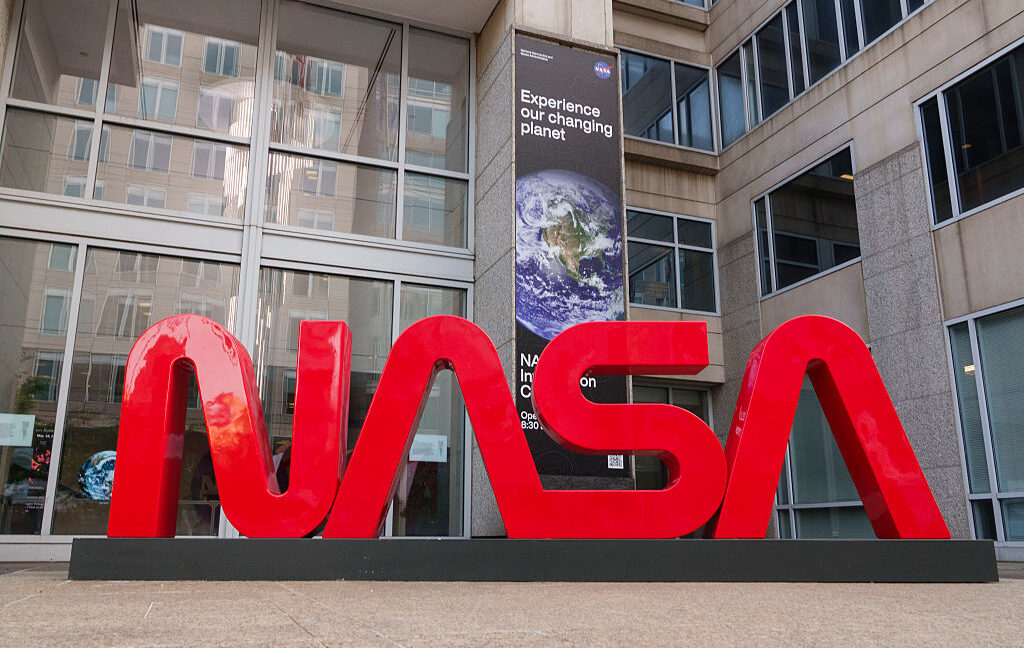
NASA Administrator Jared Isaacman announced a sweeping reorganization on Friday, merging six mission directorates into four and shifting authority back to field centers. The changes aim to cut bureaucracy and focus resources on returning humans to the Moon, building a lunar base, developing space nuclear power, and igniting a low-Earth orbit economy. The new Human Spaceflight Mission Directorate combines space operations and exploration development, with program managers for low-Earth orbit, Moon base, and Artemis. A Research and Technology Mission Directorate merges aeronautics and space technology. Isaacman said no jobs will be cut and no field centers closed. Two former NASA officials told Ars the changes are broadly positive and avoid consolidating too much power at headquarters. The reorganization also makes the associate administrator the chief engineer, giving him more technical oversight.
NASA has long been criticized for bureaucratic bloat. The reorganization reverses a trend of centralizing decision-making at headquarters. Isaacman, a billionaire entrepreneur and private astronaut, was appointed by President Trump and has pushed for faster, more commercial approaches.