Anthropic’s Project Glasswing, a collaboration with about 50 partners, used the Claude Mythos Preview model to find more than 10,000 high- or critical-severity vulnerabilities in critical open-source software in its first month. Cloudflare alone found 2,000 bugs, 400 critical, with a false positive rate better than human testers. The UK’s AI Security Institute reports Mythos Preview is the first model to solve both of its cyber ranges end-to-end. Mozilla found 271 vulnerabilities in Firefox 150, over ten times more than with previous models. The bottleneck has shifted from finding bugs to verifying, disclosing, and patching them. Anthropic is withholding full details until patches are deployed, per coordinated disclosure norms. The results signal a step change in AI’s offensive cyber capability and the urgent need for defenders to adapt.
Project Glasswing launched last month to secure critical software before AI can be weaponized against it. Mythos Preview is a frontier model with strong cyber capabilities. Coordinated vulnerability disclosure typically allows 90 days before public release.
Noah Smith argues that U.S. government debt is approaching a crisis point, driven by persistent deficits and rising long-term interest rates. He notes that while he was less worried under Biden when rates were expected to fall, the combination of continued deficit spending under Trump and stubbornly high rates has made the debt trajectory unsustainable. Smith dismisses hopes that AI-driven growth or rate cuts will rescue the situation. He criticizes both parties: Democrats propose tax cuts for the upper middle class, while Republicans abandoned fiscal hawkery after DOGE failed to cut spending. He calls for bipartisan fear of deficits, similar to the late 1980s and early 1990s, to force both parties toward austerity. The piece emphasizes that the government, like a household, must pay interest on its debt each month, and that rising interest costs will crowd out other spending.
U.S. federal debt held by the public is about $28 trillion, with interest payments now exceeding $1 trillion annually. The debt-to-GDP ratio is around 100%. Rising rates increase the cost of rolling over debt.
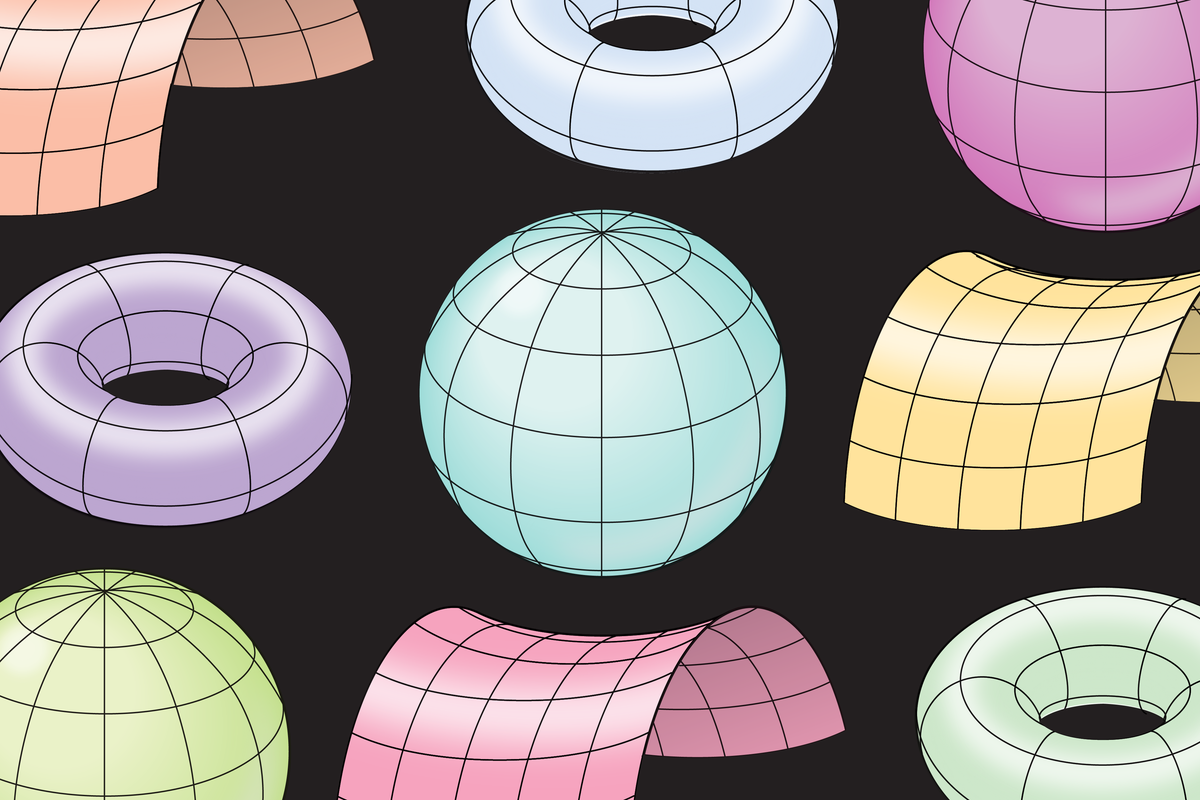
Cosmologists have narrowed down the possible shapes of the universe to 18 distinct topologies, all consistent with observations that space is flat. The research, building on earlier work, uses the cosmic microwave background and mathematical classification of three-dimensional flat manifolds. While a flat universe could be infinite, it could also be finite and multiply connected, like a three-dimensional torus. The 18 possibilities arise from different ways to glue the faces of a fundamental domain. Astronomers search for repeating patterns in the CMB that would reveal a finite universe. So far, no such patterns have been found, but the search continues. The work refines our understanding of the cosmos's large-scale structure and connects geometry, topology, and observational cosmology.
The universe's shape is determined by its curvature and topology. Measurements of the CMB by Planck satellite show the universe is flat to within 0.4%. A flat universe can still have a compact topology if space wraps around on itself.
The NIH is telling grantees to seek advance permission for co-authorship with scholars affiliated with foreign institutions, even if all work was done in the U.S., and to remove publications with foreign co-authors from progress reports unless a foreign component was pre-approved. The policy, framed as a clarification for the Institutional Development Award program, could affect foreign students working in U.S. labs and scientists who left the country after research. NASA has also warned some funded institutions that co-authoring with researchers having Chinese institutional affiliations may violate federal law. The moves escalate U.S. efforts to limit research collaboration with China, raising concerns among university groups about chilling international science and the administrative burden on researchers.
The IDeA program supports research capacity in states with historically low NIH funding. Broader tensions over Chinese influence in U.S. research have led to previous restrictions under the Trump and Biden administrations, including the China Initiative.
U.S. Central Command said it has redirected more than 100 commercial vessels as part of the naval blockade of Iranian ports in the Strait of Hormuz, a milestone since the operation began in April at President Trump's direction. More than 15,000 U.S. troops are involved. Meanwhile, Secretary of State Marco Rubio, visiting India, said progress has been made in peace negotiations with Iran and that the war will be solved "one way or the other." The blockade aims to pressure Iran economically and militarily amid ongoing hostilities that have included U.S. strikes on Iranian nuclear facilities and Iranian retaliation. The Strait of Hormuz is a critical chokepoint for global oil shipments, handling about 20% of the world's transit.
The U.S.-Iran conflict escalated in early 2026 after diplomatic efforts failed. The blockade is a significant escalation, risking wider regional instability and potential disruptions to global energy markets.
A Ukrainian drone strike on the occupied town of Starobilsk in Luhansk region killed 18 people and injured 42, according to Russian authorities, who said the target was a student dormitory. Ukraine's military claimed it struck the headquarters of Russia's elite Rubicon drone unit, which it accuses of attacking civilians. President Putin, speaking at the Kremlin, denied any military facilities were nearby and ordered the military to prepare retaliation proposals. The strike came a day after Ukraine said it hit an FSB headquarters in the Kherson region, killing or injuring about 100 Russian personnel. The incident highlights the intensifying drone war and the difficulty of verifying claims in the conflict, where both sides accuse each other of targeting civilians.
Starobilsk has been under Russian occupation since 2022. The Rubicon unit is a specialized drone force. Both sides have increasingly used drones for deep strikes, and civilian casualties remain a point of contention.
The essay uses Toto, the toilet manufacturer, as a lens to explore why Japanese corporations are so diversified. Toto's advanced ceramics division produces electrostatic chucks, a critical component for semiconductor manufacturing that holds silicon wafers flat during chip etching. With AI driving demand for memory chips, Toto's e-chuck business has become its largest profit center, pushing the company's stock up 60% this year. The pattern extends across Japan: Yamaha makes motorcycles and sound chips, Kyocera makes ceramic knives and semiconductor parts. The essay traces this to Japan's keiretsu system, lifetime employment, and a culture that values long-term survival over short-term focus, creating conglomerates that can pivot when unexpected opportunities arise.
Electrostatic chucks are made by only a handful of Japanese firms, giving them a near-monopoly. The keiretsu system, post-war industrial policy, and a preference for stability over shareholder returns explain the diversification.
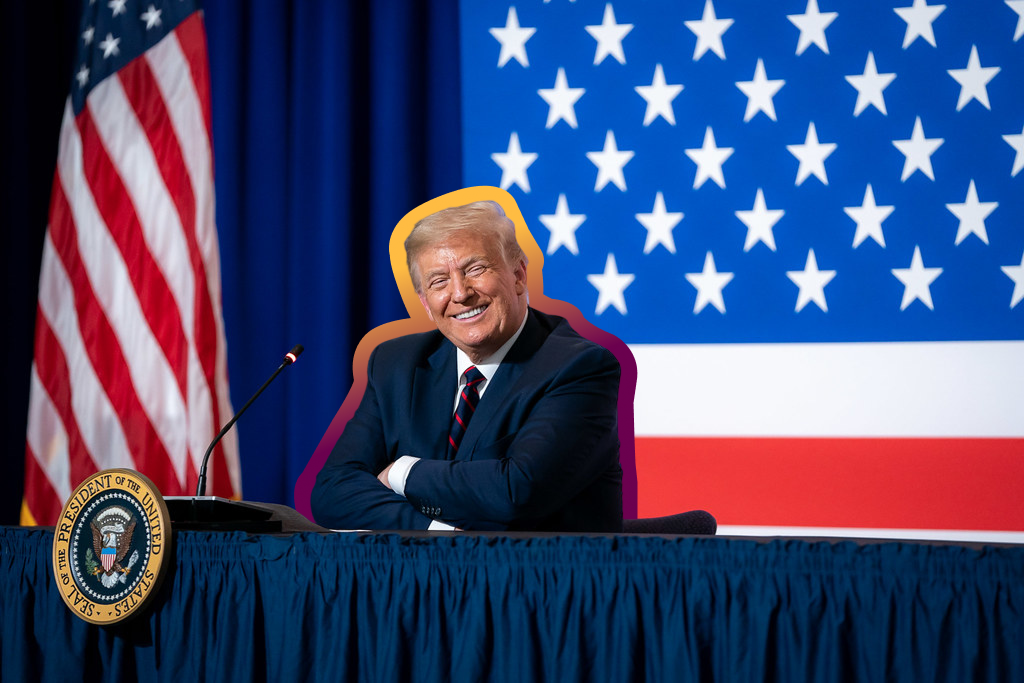
Isaac Saul, founder of the independent newsletter Tangle, acknowledges that despite his frequent criticisms of President Trump, the administration has achieved some broadly popular outcomes. He lists border security improvements, a stronger economy with low unemployment, and deregulation efforts as areas where Trump has delivered. Saul also credits foreign policy moves such as the expansion of the Abraham Accords. He argues that recognizing successes does not excuse the norm-breaking and corruption he has documented, but that balanced analysis requires acknowledging when policies work. The piece is a response to readers asking whether he sees any good in the presidency, and he uses it to model independent political commentary that is adversarial without being blindly negative.
Tangle is a nonpartisan news outlet that presents multiple perspectives on daily issues. Saul has been critical of Trump's self-dealing, DOGE failure, and border wall project in Texas. This piece is a Friday edition for subscribers.
via University of Toronto Temerty Faculty of Medicine
A new drug for obstructive sleep apnea, born from three decades of research by Richard Horner at the University of Toronto, has shown positive results in a phase 3 clinical trial. Horner's lab identified two key brain pathways that cause the tongue muscle to relax during sleep: a drop in noradrenaline and activation of muscarinic receptors. The drug targets both mechanisms, keeping the airway open. Sleep apnea affects an estimated 1.6 billion adults globally, but most are undiagnosed. Current treatment relies on CPAP machines, which many patients find uncomfortable. The drug could offer a pharmacological alternative, potentially improving sleep, cardiovascular health, and quality of life for millions.
Obstructive sleep apnea causes repeated breathing interruptions during sleep, leading to oxygen drops and fragmented sleep. It raises the risk of hypertension, heart disease, and cognitive decline. CPAP is effective but adherence is low.
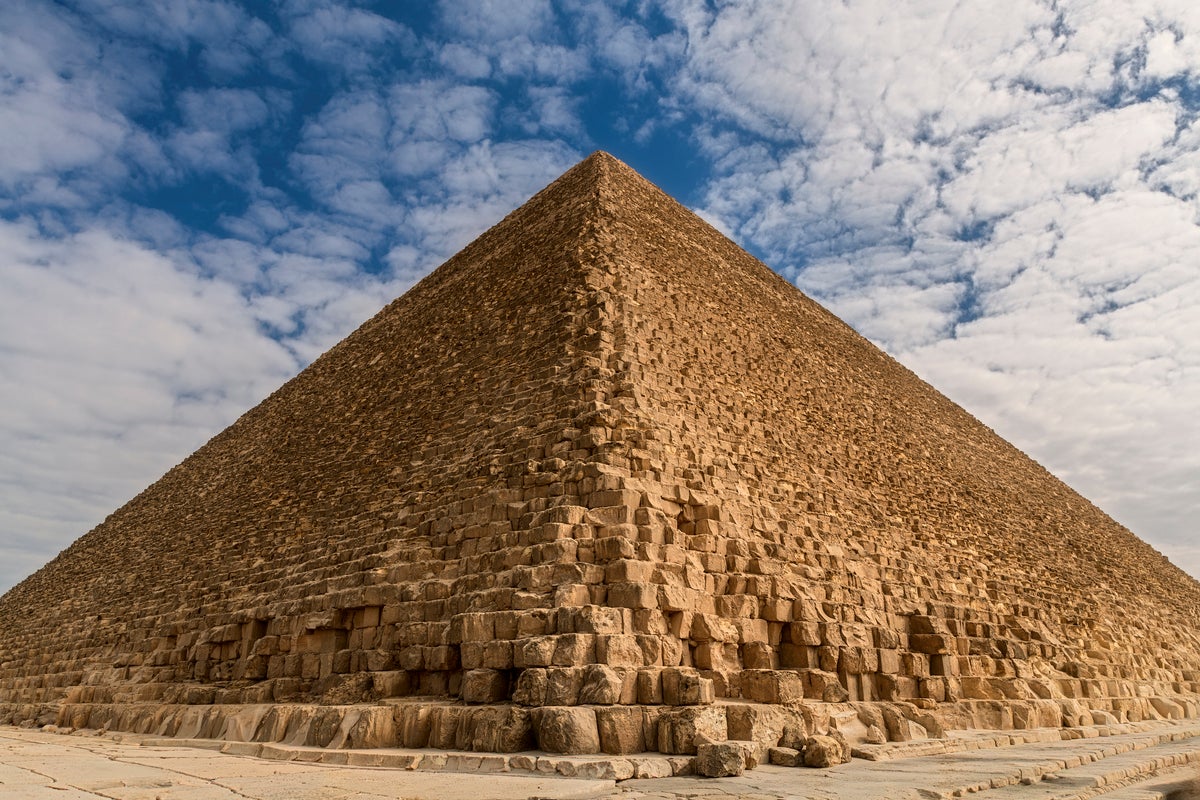
Researchers took dozens of measurements inside the Great Pyramid of Giza to determine its fundamental frequency, a measure of how a structure sways during earthquakes. They found the pyramid's frequency averages 2.3 Hz, much higher than the ground's 0.6 Hz, meaning it does not resonate with seismic waves. The study, published in Scientific Reports, also credits the pyramid's "pressure-relieving chambers" above the King's Chamber and its construction on a solid limestone plateau. These features, likely unintentional by the ancient builders, have helped the 4,600-year-old structure survive earthquakes in 1847 and 1992. The findings are the first to measure the pyramid's dynamic properties and offer insights for modern earthquake engineering.
The Great Pyramid is the oldest of the Seven Wonders and the only one still standing. It was built around 2560 BCE. Previous studies had not measured its vibrational characteristics.