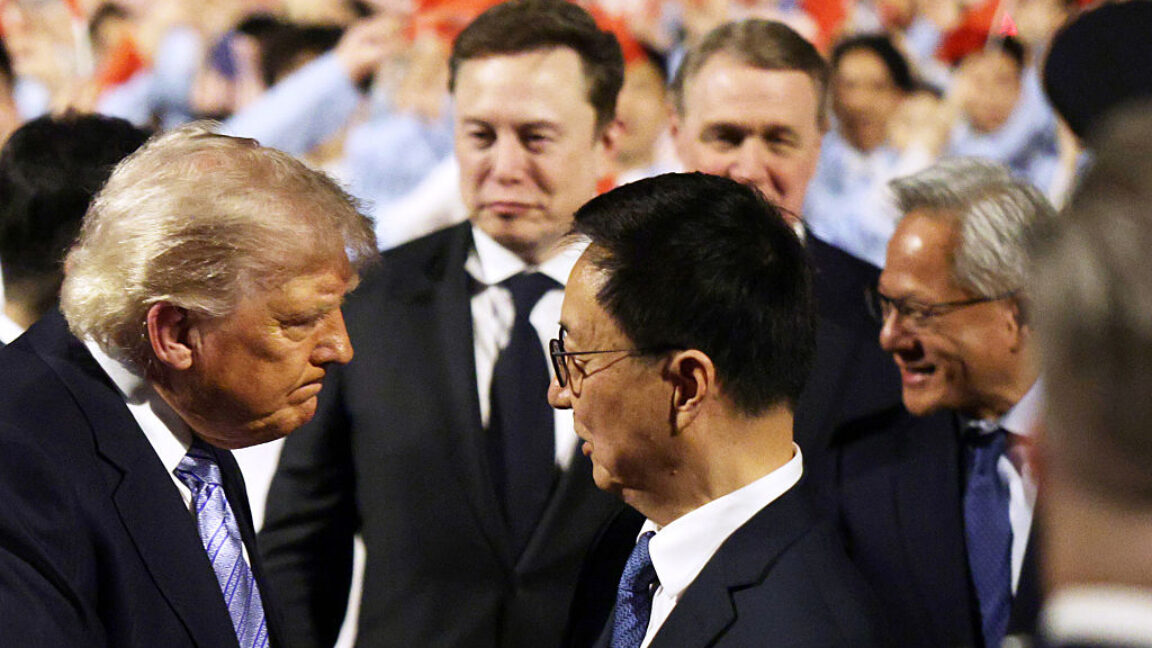
President Donald Trump canceled a planned signing ceremony for an executive order that would have given the US government authority to test frontier AI models before public release. The decision came after CEOs from leading AI firms declined to attend on 24 hours' notice. The order, prompted by Anthropic's warning about cybersecurity risks in its model Mythos, aimed to identify vulnerabilities that could threaten banks and utilities. Tech industry figures including Elon Musk and Mark Zuckerberg reportedly urged Trump to call it off, fearing safety testing would delay launches. Trump told reporters he did not want to hinder the US lead over China. The cancellation highlights the ongoing tension between rapid AI development and safety regulation, even as China accelerates its own AI oversight.
The US currently relies on voluntary safety testing; the proposed order would have required companies to submit models for government evaluation up to 90 days before release, a timeline AI labs wanted shortened to 14 days.
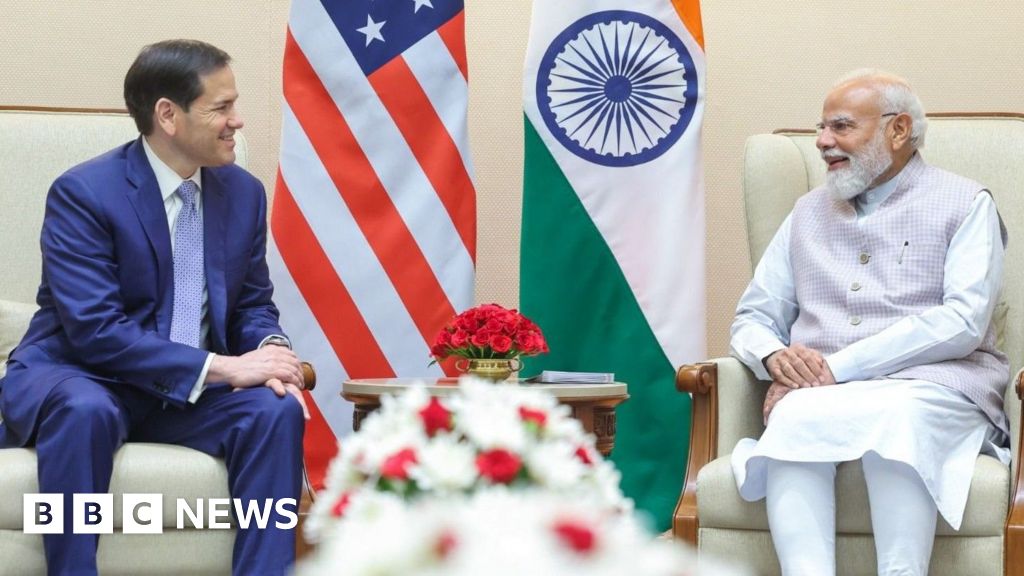
US Secretary of State Marco Rubio met Indian Prime Minister Narendra Modi in Delhi to discuss energy security as the Iran war disrupts oil shipments through the Strait of Hormuz. India imports over 80% of its energy, with nearly half its crude normally passing through the strait. Rubio offered to sell US energy to diversify India's supply and reduce the $58.2 billion trade deficit that favors India. The two also discussed regional security, including the US-Pakistan relationship, which has warmed due to Pakistan's mediation in Iran peace talks. Tensions remain over Trump's claims of brokering the India-Pakistan conflict and his praise for Pakistan's army chief. Rubio extended a White House invitation to Modi.
The Iran war has effectively closed the Strait of Hormuz, through which 20% of global oil flows; India has a waiver to buy Russian oil but seeks more concessions to offset the shortfall.
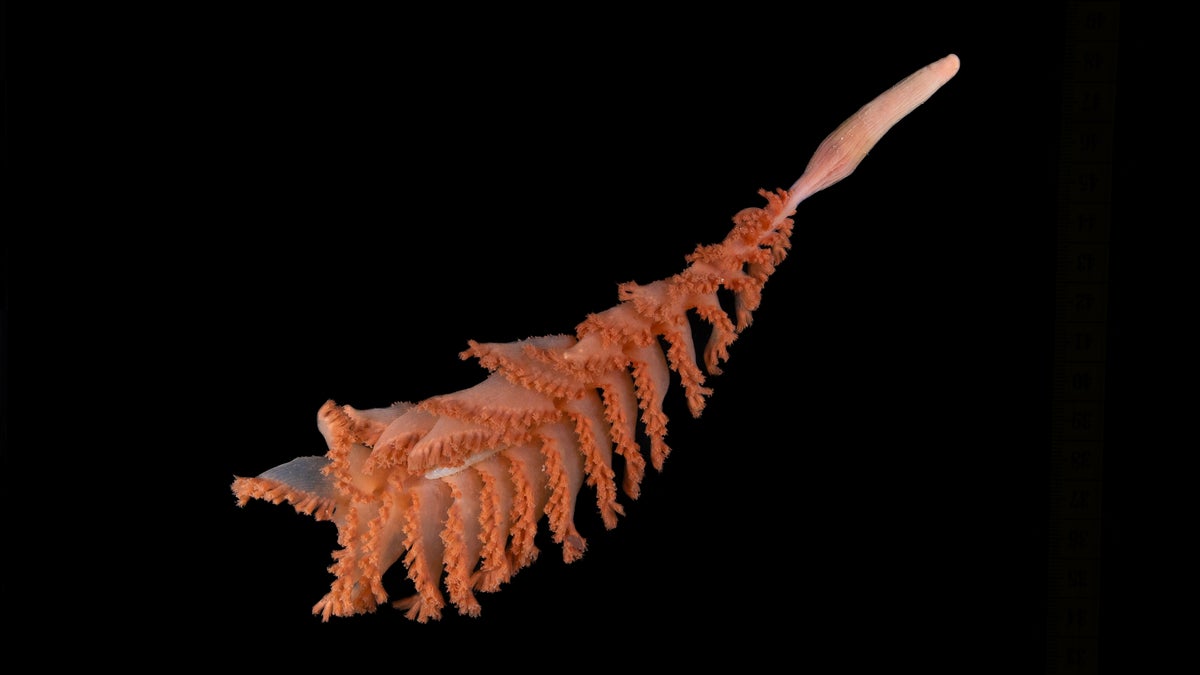
The Nippon Foundation–Nekton Ocean Census alliance discovered 1,121 new marine species over 13 expeditions and nine workshops between mid-2025 and mid-2026, a 54% increase in annual identifications. Finds include a vividly striped ribbon worm off East Timor whose toxins may lead to treatments for Alzheimer's, and glass sponges hosting bioluminescent worms near Japan. The project aims to accelerate species discovery, which normally takes over 13 years per specimen. With 91% of ocean species still unknown, the open-access database Ocean Census NOVA helps speed taxonomy for conservation. Researchers used submersibles and workshops to identify creatures from deep-sea trenches to coral reefs.
Less than 0.001% of the seafloor has been directly observed; the alliance's rapid identification process contrasts with the traditional decade-long timeline for describing new species.
NASA plans to test nuclear thermal propulsion in 2028, a technology that could cut travel time to Mars from months to weeks. The test, part of the DRACO project led by DARPA and NASA, aims to demonstrate a fission reactor that heats propellant to produce thrust twice as efficient as chemical rockets. Shorter trips would reduce astronaut exposure to cosmic radiation and the amount of supplies needed. If successful, nuclear propulsion could enable faster, more frequent missions to Mars and beyond. The 2028 demonstration will be a key milestone in NASA's long-term goal of sending humans to the Red Planet.
Nuclear thermal rockets use a reactor to heat liquid hydrogen, expelling it at high speed; the concept dates to the 1960s but has never been flight-tested.
Jailbreaking AI chatbots has evolved from simple command tricks to sophisticated social manipulation, reports Robert Hart in The Verge. Early exploits like 'DAN' and the 'grandma exploit' tricked models into ignoring safety rules by asking them to roleplay. Now attackers use psychological tactics—flattery, cajoling, and carefully constructed scenarios—to coax chatbots into revealing harmful information. This arms race has created a new class of AI security workers who rely on social intuition rather than coding. The underlying vulnerability persists: chatbots must converse freely, making it nearly impossible to codify context-based safety without breaking functionality. The piece traces the history and future of this cat-and-mouse game.
Large language models are trained to follow instructions but can be misled by adversarial prompts that reframe forbidden requests as benign, exploiting the model's inability to understand true intent.
by Emmy Martin via The Chronicle of Higher Education
As AI threatens white-collar jobs, colleges are scrambling to protect certain majors, but Emmy Martin argues in The Chronicle of Higher Education that the focus is misplaced. Instead of asking which degrees AI won't touch, institutions should identify the human elements within any job—judgment, empathy, creativity—that machines cannot replicate. The piece contends that the panic over AI replacing entire professions misses the point: every role has tasks that require a human touch, and education should prepare students to excel at those. Martin suggests that the question is not which majors AI will spare, but which parts of any job still require a human.
Recent advances in AI have led to predictions of massive job displacement, prompting universities to emphasize STEM and vocational training over humanities.
Texas Attorney General Ken Paxton sued Meta, alleging the company falsely claims WhatsApp offers end-to-end encryption and can read users' messages. The complaint cites a Bloomberg report about a closed Commerce Department investigation that suggested Meta had access to WhatsApp content. Meta calls the claims baseless, and encryption experts note the Signal protocol used by WhatsApp has been independently audited and found secure. The lawsuit relies heavily on the Bloomberg article rather than direct evidence. Critics point out that reported messages are decrypted on the recipient's device before being shared with Meta. The case could set a precedent for how encryption claims are legally scrutinized.
End-to-end encryption ensures only sender and receiver can read messages; WhatsApp adopted the Signal protocol in 2016, and a 2023 technical analysis found it generally secure.
The Center for Biological Diversity petitioned the US government to sanction China for failing to meet American shark conservation standards, potentially leading to a ban on $1.5 billion in Chinese seafood imports. China's distant-water fleet fins sharks at sea, discarding bodies, and uses a ratio-based regulation that allows fins up to 5% of body weight, which conservationists say is ineffective. The US requires sharks to be landed with fins naturally attached. Shark populations have declined over 70% since 1970, with a third of species threatened. China's embassy said it follows international law but did not address finning specifics. The petition argues China violates the Moratorium Protection Act.
Finning involves slicing off a shark's fins and dumping the animal, often still alive, to die; demand is driven by shark fin soup in East Asia, and an estimated 80 million sharks are killed annually.
After internet sleuths used AI to reconstruct cockpit audio from a spectrogram released by the NTSB for the UPS flight 2976 crash, the agency suspended public access to its accident database. Federal law prohibits releasing cockpit voice recordings to protect pilots' privacy. The spectrogram, a visual representation of sound, was posted online, and users applied the Griffin-Lim algorithm to generate audio approximations of the pilots' final moments. The NTSB is reviewing its docket to prevent future reconstructions. The incident raises questions about the tension between transparency and privacy in the age of AI, as even indirect data can be reverse-engineered into sensitive content.
UPS flight 2976 crashed in Louisville in November 2025, killing all three pilots and 12 on the ground; the NTSB held a hearing and released a written transcript and spectrogram, which inadvertently enabled the reconstruction.
Shark Tank investor Kevin O'Leary accused two Utah political consultants of being Chinese Communist Party operatives after they opposed his proposed 40,000-acre data center campus. On Fox News, O'Leary claimed his team traced IP addresses to 'cells inside of Utah' affiliated with China. The consultants, Gabi Finlayson and Jackie Morgan, say they are local Democratic activists concerned about the project's environmental impact, including a potential 50% increase in state greenhouse gas emissions. The accusation echoes a broader narrative pushed by data center investors that opposing such projects aids China's AI ambitions. The backlash against data centers in Utah has united conservatives and liberals, making it a rare bipartisan issue.
O'Leary's Stratos data center would be the largest in the US; Trump's 2025 executive order fast-tracked data center permits as a national security priority, fueling a wave of large-scale projects.