The Trump administration’s advisory committee reached consensus on a package of accreditation changes that would require colleges’ accreditors to enforce First Amendment compliance, police research misconduct, and measure intellectual diversity. The Education Department says the overhaul will lower costs and inject competition into a stagnant system. Critics argue it adds ideological burdens and increases costs. If the department finalizes the rule by November 1, it takes effect July 1, 2027. The committee’s four-day session included closed-door caucuses to resolve disputes over the new mandates. The changes also make it easier for new accreditors to gain federal recognition and allow institutions to leave legacy accreditors. The research misconduct provisions require procedures for plagiarism, misrepresentation, and citation manipulation. Some negotiators objected that policing campus speech is not an accreditor’s role.
Accreditation is a gatekeeper for federal student aid; colleges must be accredited by a recognized agency. The Trump administration has long criticized accreditors as costly and ideologically driven.
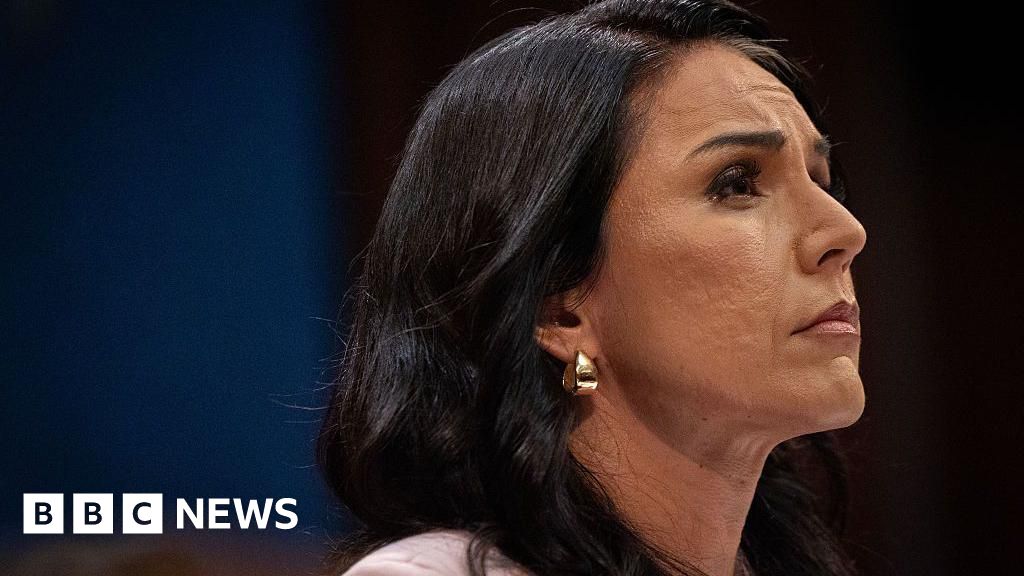
Tulsi Gabbard will step down as director of national intelligence on June 30, citing her husband’s bone cancer diagnosis. She is the fourth cabinet member to leave the Trump administration this term. Gabbard, a former Democratic congresswoman turned Republican, had been largely absent from public view during recent US military actions against Iran. Her departure follows that of her top aide Joe Kent, who resigned over the Iran war. President Trump praised her work and named principal deputy Aaron Lukas as acting director. Gabbard’s confirmation last year was contentious, and she faced scrutiny over discrepancies between White House and intelligence community claims about Iran’s nuclear program. She previously positioned herself as an anti-interventionist but publicly backed Trump’s Iran decision after Kent’s exit.
The director of national intelligence oversees the US intelligence community. Gabbard, a military veteran, was the first Hindu member of Congress and ran for president in 2020 as a Democrat before joining the GOP.
SpaceX’s uncrewed Starship V3, the largest rocket ever built at 124 meters, launched from Texas on Friday, deployed 20 dummy satellites, and splashed down in the Indian Ocean about an hour later. Both stages suffered engine failures, but the test met most objectives. The flight is the 12th for Starship and comes ahead of SpaceX’s planned IPO, which could be the largest in Wall Street history and make Elon Musk the first trillionaire. NASA intends to use Starship for future moon missions. The first launch attempt Thursday was scrubbed due to a tower malfunction. The V3 design stands over 40 stories tall. Musk called the flight “a goal for humanity.” The company values itself at $1.25 trillion.
Starship is SpaceX’s fully reusable launch system designed for missions to the Moon and Mars. Previous test flights have progressively demonstrated orbital capability.
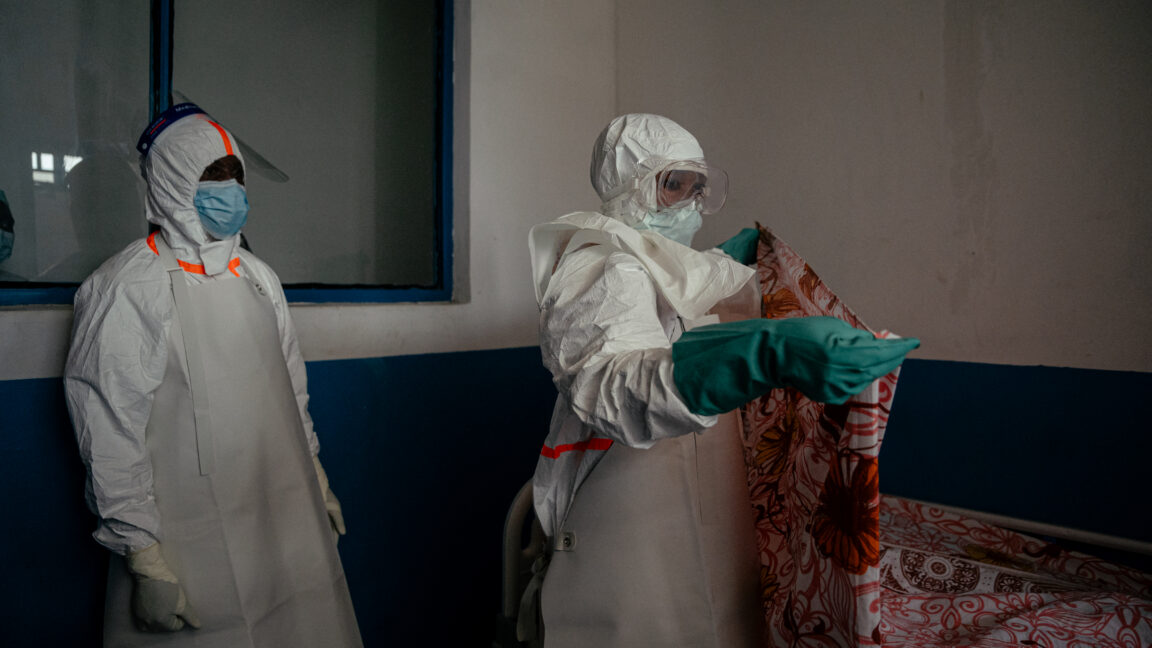
The Ebola outbreak in the Democratic Republic of the Congo’s Ituri province has surged to nearly 750 cases and 177 deaths, making it the third largest on record just a week after it was first reported. The Bundibugyo virus strain has no approved vaccines or treatments, leaving contact tracing and isolation as the main control tools. WHO raised the national risk level to “very high.” The outbreak was likely spreading undetected for weeks; the earliest suspected case dates to April 24. US cuts to USAID and the CDC have hampered logistics and protective equipment supply, drawing criticism from public health experts. Armed conflict and population mobility in the region complicate the response. The WHO team is “sprinting behind” the virus to catch up.
The deadliest Ebola outbreak occurred in West Africa from 2014–2016, killing over 11,000. The Bundibugyo species was first identified in Uganda in 2007.
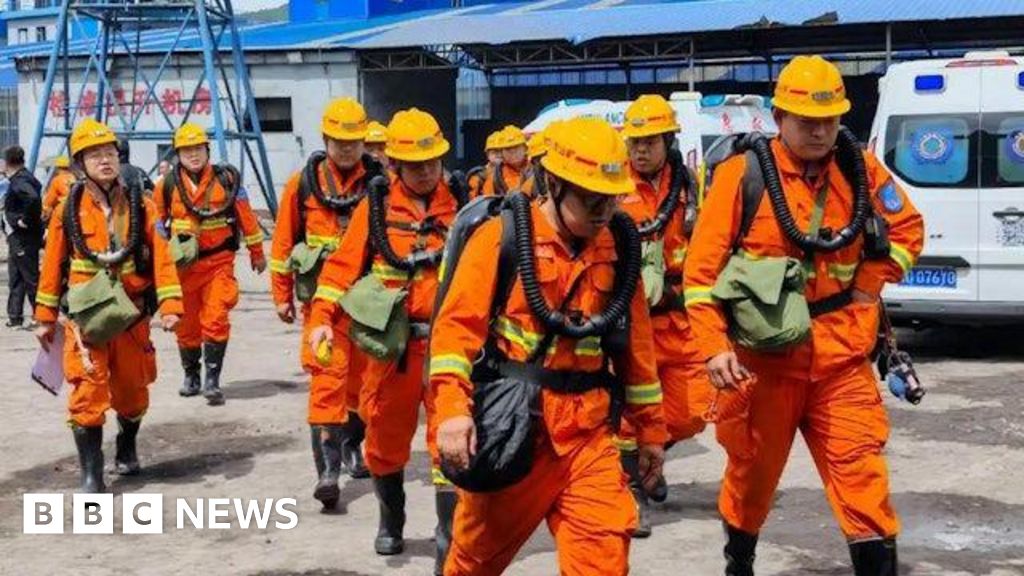
A gas explosion at the Liushenyu Coal Mine in Shanxi province killed at least 90 people on Friday evening. Of the 247 workers on duty, more than 100 were hospitalized. President Xi Jinping ordered a full investigation and called for all efforts to treat the injured. Officials running the mine, operated by Tongzhou Group, have been detained. Carbon monoxide levels were found to exceed limits. Shanxi is China’s coal-mining heartland; safety has improved since the early 2000s, but deadly accidents still occur. In 2023, a mine collapse in Inner Mongolia killed 53. Six rescue teams with 345 personnel were deployed. China is the world’s largest coal consumer and greenhouse gas emitter, even as it rapidly builds renewable energy capacity.
China’s coal industry has a history of fatal accidents, though regulations tightened after a 2009 explosion in Heilongjiang killed over 100. Shanxi province produces about a quarter of China’s coal.
The Supreme Court dismissed Hamm v. Smith in a 5-4 unsigned opinion, leaving intact precedents that bar executing people with intellectual disabilities and require holistic assessment beyond IQ scores. Justice Sotomayor concurred, noting the case didn’t provide a clear vehicle for guidance on weighing multiple IQ scores. Justice Thomas dissented alone, calling for Atkins v. Virginia to be overruled. The case involved Joseph Smith, who had several IQ scores in the mild disability range and was placed in special education as a child. He was convicted of murder in 1998 and will serve life without parole. Disability advocates note that people of color are disproportionately sentenced to death, and some argue capital punishment functions as a modern form of eugenics.
In Atkins v. Virginia (2002), the Court held that executing intellectually disabled people violates the Eighth Amendment. Subsequent rulings clarified that states cannot rely solely on IQ cutoffs.
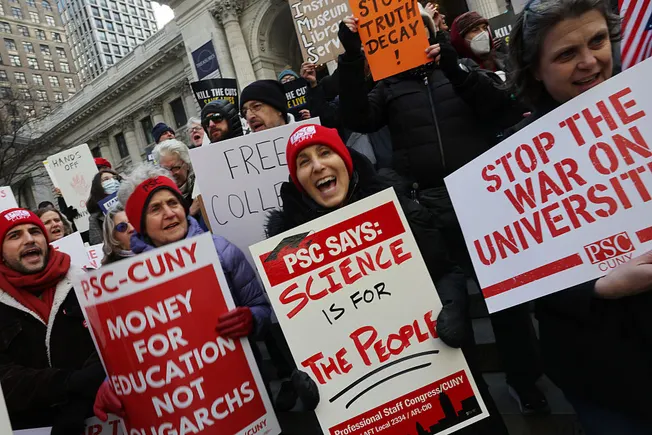
The University of Texas System’s board unanimously approved new rules that let campus presidents eliminate academic programs without faculty review and fire tenured professors through a stripped-down appeals process. Presidents can also accelerate program cuts in “rare, extraordinary” circumstances without any academic review. Faculty can only appeal individual terminations if they have a protected property interest, and the burden of proof falls on them. The changes come amid a broader crackdown on academic freedom in Texas, including a state law that reduced faculty governance to advisory status and high-profile politically charged firings at Texas A&M and Texas State. Students held a mock funeral at UT-Austin to protest what they called the death of academic freedom.
Texas public universities have faced increasing political pressure over curriculum and faculty speech. The UT System includes nine universities, with UT-Austin as its flagship.
A bipartisan group of 19 senators and a coalition of 97 education organizations are urging Education Secretary Linda McMahon to release nearly $300 million in unspent Institute of Education Sciences (IES) funds from fiscal years 2025 and 2026. The money supports education research, including the National Assessment of Educational Progress. The department has downsized IES staff from 187 to 30 and closed hundreds of unreviewed grant proposals, halting new awards for a year. Senators warned that the funds will lapse on September 30 if not allocated. The cuts have hit special education research and data gathering particularly hard. The letters emphasize that research-backed literacy programs and interventions for students with disabilities are at risk.
IES is the Education Department’s research arm, funding studies on teaching methods, assessments, and education policy. Its work underpins evidence-based practices in schools nationwide.
Google filed its appeal of the federal ruling that declared it an illegal search monopolist, arguing that its distribution agreements with browser and device makers were not anticompetitive because partners chose Google for its quality. The company also challenges the remedy requiring it to share search data with rivals, including generative AI firms that didn’t exist during the relevant period. The US government and state plaintiffs are cross-appealing, seeking stronger remedies such as forcing Google to sell its Chrome browser. The case now moves to the DC Circuit Court of Appeals and could reach the Supreme Court. The original August 2024 decision found Google illegally maintained its monopoly through exclusive deals, while the September 2025 remedies order stopped short of a breakup.
The antitrust case, filed in 2020, is the most significant tech monopoly trial since the Microsoft case. Judge Amit Mehta ruled that Google’s payments to be the default search engine violated antitrust law.
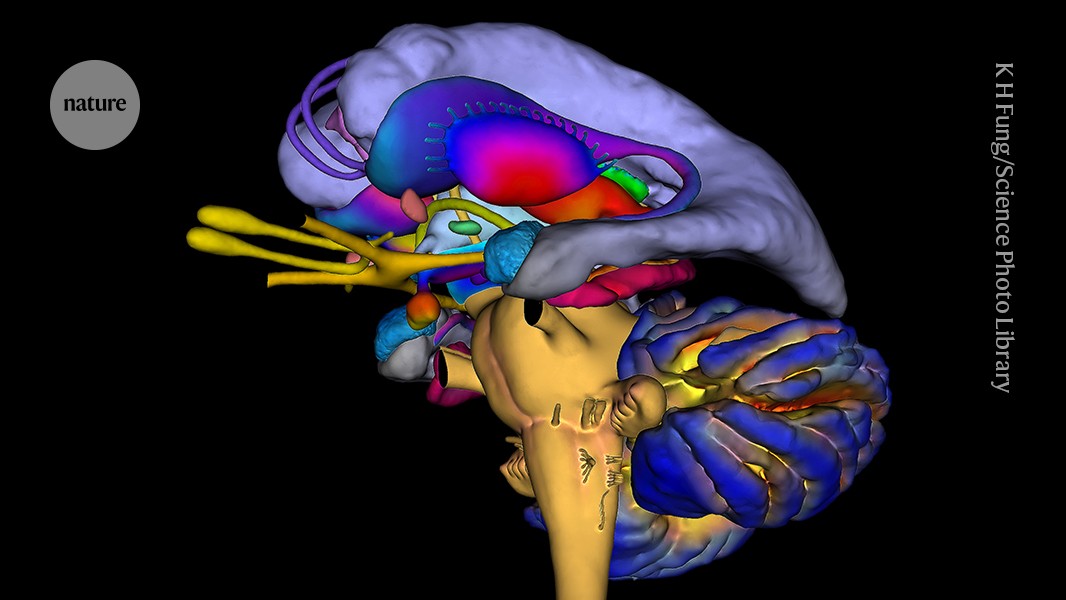
Acute stress disrupts the brain’s ability to connect past memories with new information, a study in Science Advances suggests. Researchers at the University of Hamburg had 121 participants memorize paired images, then subjected half to a mock job interview with mental math. Stressed participants were worse at inferring associations between previously learned images, a process called memory integration that relies on the hippocampus. Brain imaging showed stress altered hippocampal activity. The findings help explain why people struggle to make insightful connections under pressure, and may be relevant for anxiety disorders and psychosis where integration is impaired. The study combined behavioral testing and fMRI to pinpoint the neural disruption. The hippocampus is known to be vulnerable to stress hormones like cortisol.
Memory integration allows us to combine separate experiences to draw new conclusions. The hippocampus is critical for this, and its function can be impaired by cortisol released during stress.