Three mathematicians proved a famous 30-year-old conjecture in geometry, with only a tiny assist from AI. The convexity conjecture, posed by Michel Talagrand in 1995, claimed that even within enormous, scattered sets of points in high-dimensional space, simple convex shapes inevitably appear. Talagrand himself did not believe the conjecture was true and offered a $2,000 prize for a solution. The new proof shows a procedure of fixed complexity that constructs a convex shape containing many of the points, regardless of how many dimensions are involved. The result overturns the intuition that high-dimensional geometry becomes hopelessly complex. Talagrand, who won the 2024 Abel Prize, called the proof “the most extraordinary result of my entire life.” The work highlights the growing role of AI as an assistant in pure mathematics, though the core insight came from human mathematicians.
Michel Talagrand, a French mathematician and 2024 Abel Prize laureate, proposed the convexity conjecture in 1995. It concerns the existence of simple convex shapes within high-dimensional point sets, a problem with implications for data analysis and machine learning where datasets often have many parameters.
Amin Abdullah, a security guard and father of eight, was shot dead along with two worshippers at the Islamic Center of San Diego on Monday. Police say Abdullah engaged the two teenage attackers at the mosque entrance, returned fire, and initiated lockdown procedures, saving the lives of 140 children at the center’s school. The attackers, aged 17 and 18, then killed Mansour Kaziha and Nader Awad in the parking lot before taking their own lives in a vehicle blocks away. San Diego Police Chief Scott Wahl called Abdullah’s actions heroic and said the shooting is being investigated as a hate crime. The mother of one suspect had called police earlier to report her son was suicidal and had run away with a friend. A community fundraiser for the victims’ families has raised over $2.9 million.
The attack occurred amid a rise in reported hate crimes targeting religious communities in the US. The Islamic Center of San Diego includes a school, and the security guard’s quick response is credited with preventing a much larger tragedy.
The University of North Carolina at Chapel Hill Board of Trustees voted to deny the appointment of Kiran Asher, a women’s, gender and sexuality studies professor from UMass Amherst, despite her hire having been approved by faculty and administrators. Asher had followed a standard hiring process and was recommended for a distinguished professor position. The board approved five other outside hires and 27 promotions at the same meeting. Asher told Inside Higher Ed she suspects the rejection was politically motivated, noting a pattern of denials for scholars working on gender, race, and social justice. The decision echoes the 2021 controversy over Nikole Hannah-Jones, whose tenured appointment was initially blocked before she declined the position and went to Howard University. UNC’s vice chancellor said the university remains committed to tenure but declined to comment on the specific case.
In 2021, the UNC board initially refused to vote on tenure for journalist Nikole Hannah-Jones, creator of the 1619 Project, after a donor raised objections. After months of protest, the board approved the appointment, but Hannah-Jones declined and joined Howard University instead.
Twenty-five states and Washington, D.C., sued the U.S. Education Department on Tuesday over a rule that limits federal borrowing for most graduate students to $20,500 per year. The rule, implementing loan caps from the One Big Beautiful Bill Act, classifies only 11 degree programs as “professional” and eligible for higher limits of $50,000 per year. The lawsuit argues the department illegally narrowed Congress’s intent by treating an illustrative list of professional degrees as exclusive, excluding nursing, physical therapy, and other healthcare fields. North Carolina Attorney General Jeff Jackson said the department “willfully mischaracterized what Congress passed.” ED Under Secretary Nicholas Kent responded that the caps are already incentivizing universities to lower tuition. The rule takes effect July 1 unless blocked by the court.
The One Big Beautiful Bill Act, signed in July 2025, ended the Grad PLUS program that allowed graduate students to borrow up to the full cost of attendance. It replaced it with annual and aggregate caps, leaving the Education Department to define which programs qualify as professional degrees.
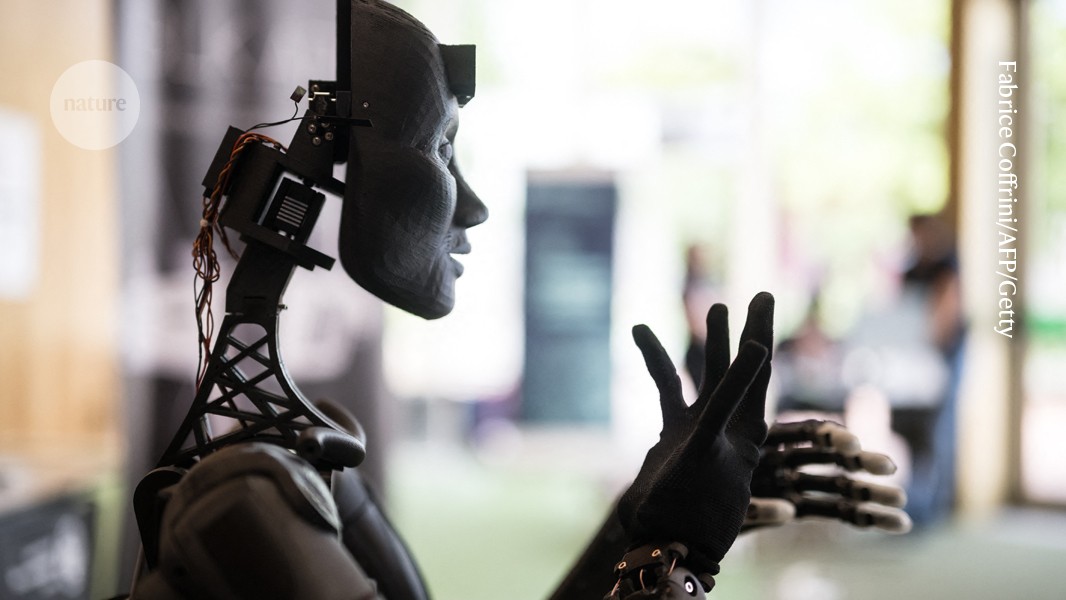
Two new AI systems described in Nature use teams of specialized agents to generate hypotheses, propose experiments, and analyze data at speeds far beyond human researchers. Google DeepMind’s Co-Scientist identified existing drugs that could be repurposed for acute myeloid leukemia; human researchers selected five candidates, and three showed promise in lab-grown cells. FutureHouse’s system, Robin, suggested the glaucoma drug ripasudil as a treatment for dry age-related macular degeneration and proposed follow-up experiments. Both systems still rely on human scientists to carry out lab work and make final judgments. The results demonstrate that agentic AI can produce plausible scientific hypotheses in hours rather than months, though none of the drug candidates have passed rigorous clinical evaluation yet.
Agentic AI systems use multiple AI models working together, each specialized for tasks like literature review, hypothesis generation, or data analysis. Earlier efforts, such as Sakana AI’s “AI Scientist,” showed the concept but required heavy human oversight.
Google released Gemini 3.5 Flash, a new AI model that outputs nearly 300 tokens per second while matching the benchmark scores of much larger frontier models. The company says the efficiency gains could save the heaviest AI users a billion dollars per year. API pricing is $1.50 per million input tokens and $9 per million output tokens, significantly cheaper than the Gemini 3.1 Pro model it rivals. Google focused on code generation and tool use, with scores on Terminal Bench and SWE-Bench Pro showing improvements over older Flash models and performance close to OpenAI’s GPT 5.5. The model is already deployed internally at Google, where it produced a “massive jump” in coding benchmarks on Google’s own codebases, according to product lead Tulsee Doshi.
Google’s Gemini model family follows a tick-tock release pattern: Flash models prioritize speed and cost, while Pro models target maximum capability. The 3.5 Flash release continues a trend of each new Flash model matching or exceeding the previous Pro model’s performance.
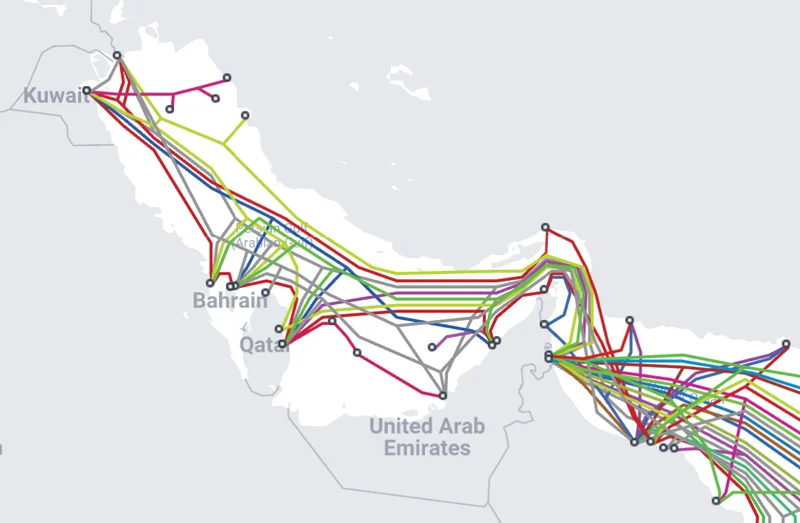
A spokesperson for Iran’s Islamic Revolutionary Guard Corps announced on May 9 that Iran will impose fees on undersea internet cables passing through the Strait of Hormuz. Iranian state media later outlined proposals to charge license fees to Meta, Google, Amazon, and Microsoft for cable usage and maintenance, and claimed Iran alone has the right to repair the cables. Most cables in the strait run through Omani waters, but some pass through Iranian territorial waters. The threat comes amid ongoing US-Iran hostilities; the US military says it has destroyed 161 Iranian naval vessels since February. The move may accelerate efforts by tech companies and Gulf states to build overland fiber routes that bypass the strait entirely.
The Strait of Hormuz is a narrow waterway between Iran and Oman through which a significant portion of global oil and regional internet traffic passes. Several major undersea cables, including FALCON and the Gulf Bridge International Cable System, run through the strait, with some segments in Iranian waters.
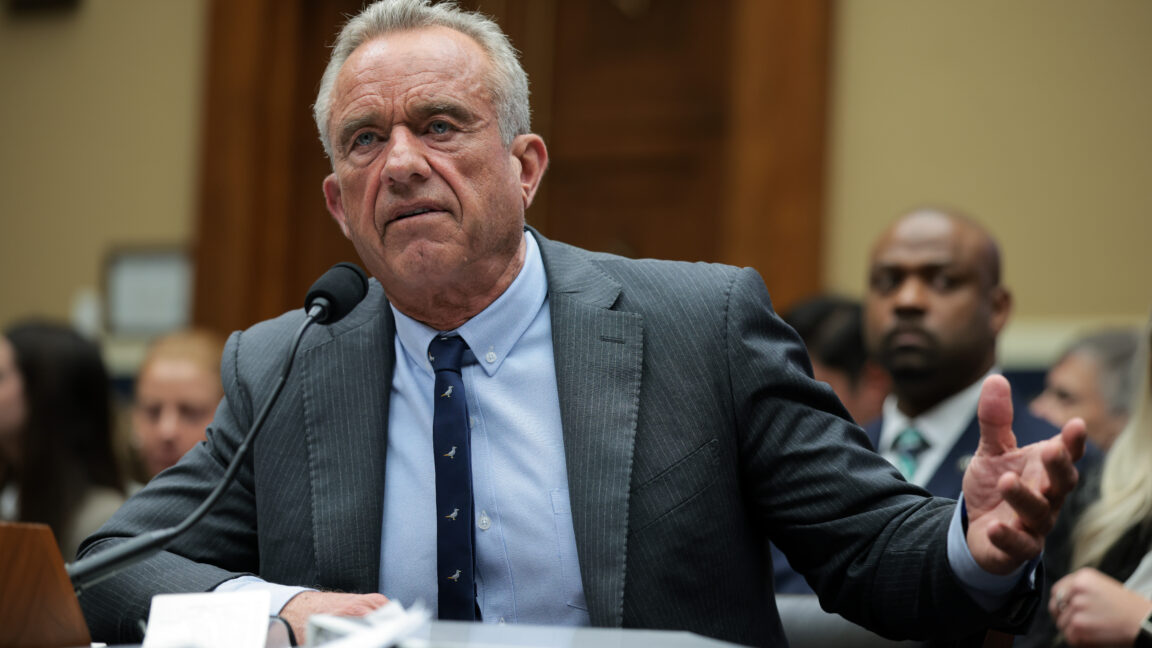
The Department of Health and Human Services withdrew a revised charter for the CDC’s Advisory Committee on Immunization Practices on Tuesday, citing an administrative error. The charter, pushed by Health Secretary Robert F. Kennedy Jr., would have allowed him to appoint members without expertise in immunology and directed the panel to focus on alleged vaccine injuries. Kennedy previously fired all 17 ACIP members in June 2025 and replaced them with anti-vaccine allies, who then voted to remove longstanding vaccine recommendations. A federal judge issued a temporary injunction in March, ruling the new members were unqualified and nullifying their votes. The withdrawn charter was an attempt to circumvent that ruling by redefining membership qualifications.
ACIP is the expert panel that advises the CDC on vaccine policy. Its recommendations shape the US childhood and adult immunization schedules. Kennedy, a longtime anti-vaccine activist, has made reshaping federal vaccine policy a priority since becoming health secretary.
The One Big Beautiful Bill Act, signed by President Trump on July 4, 2025, was sold as a deficit-reducing measure that would “slash our debt.” One year later, the legislation is driving borrowing to levels that make a fiscal crisis likely, argues Micah Ables in The Dispatch. The bill’s tax cuts and spending increases have widened the deficit far beyond White House projections, and the bond market has begun to signal discomfort with US debt levels. Ables, a former Army infantry officer, writes that neither party has shown serious interest in entitlement reform or spending restraint, and that the current trajectory will force a reckoning whether policymakers want one or not.
The One Big Beautiful Bill Act, passed via reconciliation in mid-2025, combined tax cuts, spending increases, and new loan caps for graduate students. The White House claimed it would reduce deficits through economic growth, but independent analyses projected significant deficit increases.
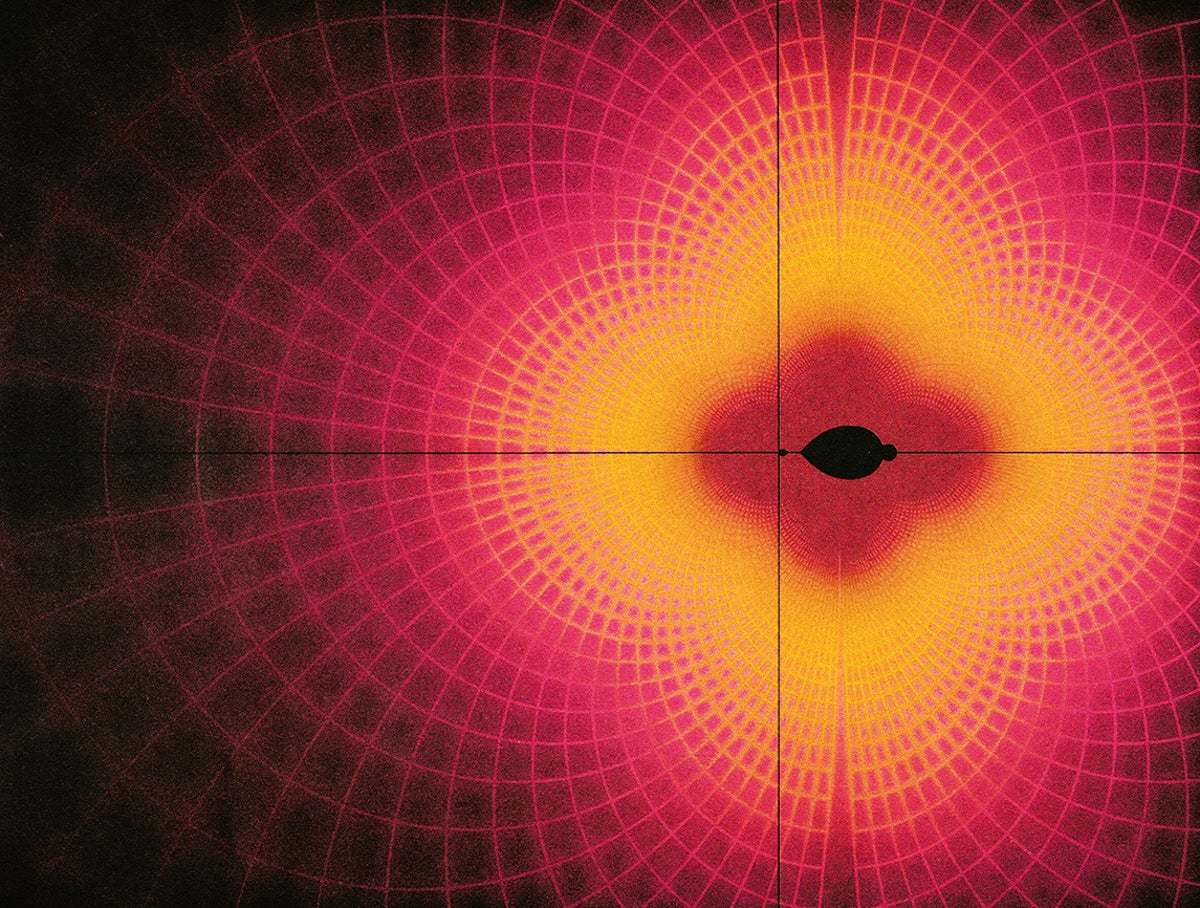
The Riemann hypothesis, a conjecture about the distribution of prime numbers, has stood unsolved since 1859 and carries a $1 million Clay Millennium Prize. Yet few mathematicians actively work on it. James Maynard of Oxford says he has no good idea how to start. Brian Conrad of Stanford compares the obsession with primes to physicists caring about forces. The hypothesis concerns the zeros of the Riemann zeta function; proving it would give number theorists precise knowledge of where primes lie on the number line, with consequences for cryptography and physics. The problem’s difficulty is so extreme that MIT’s Andrew Sutherland remarked that an AI capable of proving it would be one he would not want to meet. The essay traces the conjecture’s history and its intimidating legacy.
The Clay Mathematics Institute named the Riemann hypothesis one of its seven Millennium Problems in 2000, offering $1 million for a correct solution. David Hilbert had included it in his famous 1900 list of 23 problems for 20th-century mathematics. It remains the only Millennium Problem unsolved from Hilbert’s original list.