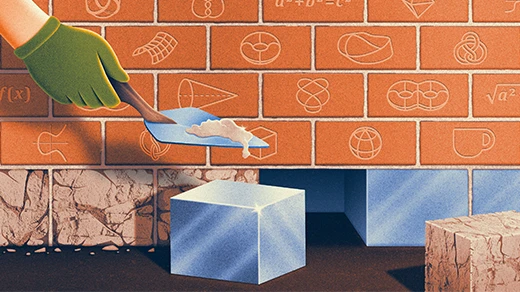
Topological spaces have served as the foundation of geometry for over a century, but they are awkward for algebra. Peter Scholze of the University of Bonn and Dustin Clausen of the Institute of Advanced Scientific Studies in France have spent a decade developing a replacement: condensed sets. These new objects behave like infinitely fine dust and retain the best properties of topological spaces while making algebraic operations natural. The work resolves a long-standing tension between topology and algebra that mathematicians had learned to live with. 'They are solving a problem we didn't know we had,' said Ravi Vakil, president of the American Mathematical Society. Scholze sees condensed sets as the first step in a larger program to understand why numbers behave the way they do. The framework is complex and not yet widely adopted, but it has already simplified large swaths of mathematics.
Topological spaces, formalized in the early 20th century, underpin much of modern math by allowing flexible notions of shape. Scholze, a Fields Medalist, previously revolutionized arithmetic geometry with perfectoid spaces. This new work with Clausen aims to rebuild foundations from scratch.
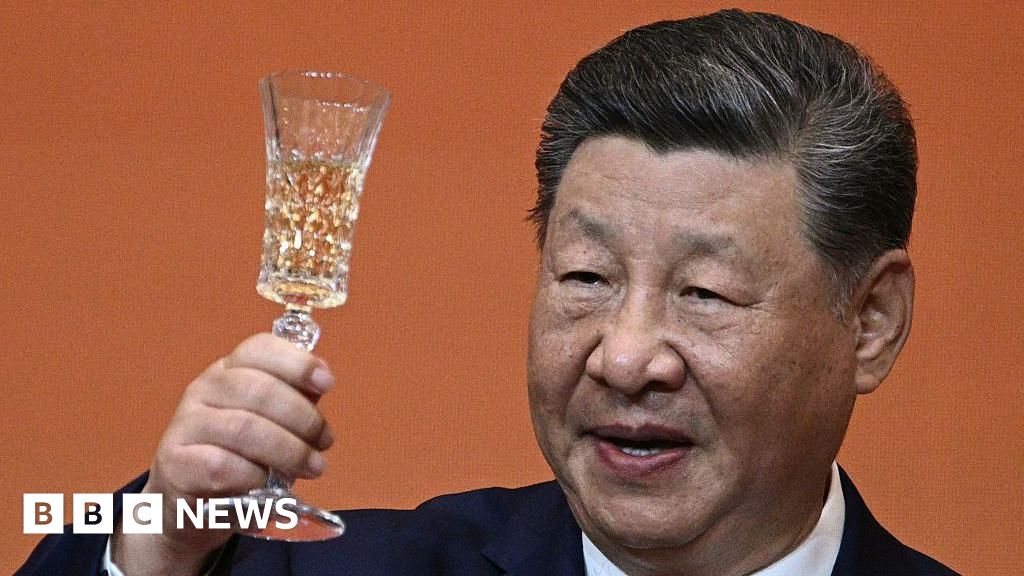
Xi Jinping welcomed Vladimir Putin to Beijing on Tuesday with the same military honors he gave Donald Trump last week. The back-to-back summits project China as an indispensable diplomatic hub, talking to all sides while tied to none. For Putin, the visit underscored Russia's growing dependence on China: Western sanctions and the grinding war in Ukraine have made Beijing Russia's top trading partner and biggest oil and gas customer. Yet the talks yielded no approval for a long-stalled gas pipeline and no major breakthroughs. Xi holds leverage with both leaders. Trump is mired in a widening Middle East conflict; Putin's invasion of Ukraine is in its fifth year. Five years ago, China appeared diplomatically isolated by the pandemic and 'wolf warrior' rhetoric. Now it has repositioned itself as a power that must be engaged, not contained.
China's diplomatic turnaround began after it moderated its aggressive posture to attract foreign investment amid an economic slowdown. It has deepened ties with Russia while maintaining a transactional relationship with the US, leveraging its dominance in rare earth minerals and advanced manufacturing.
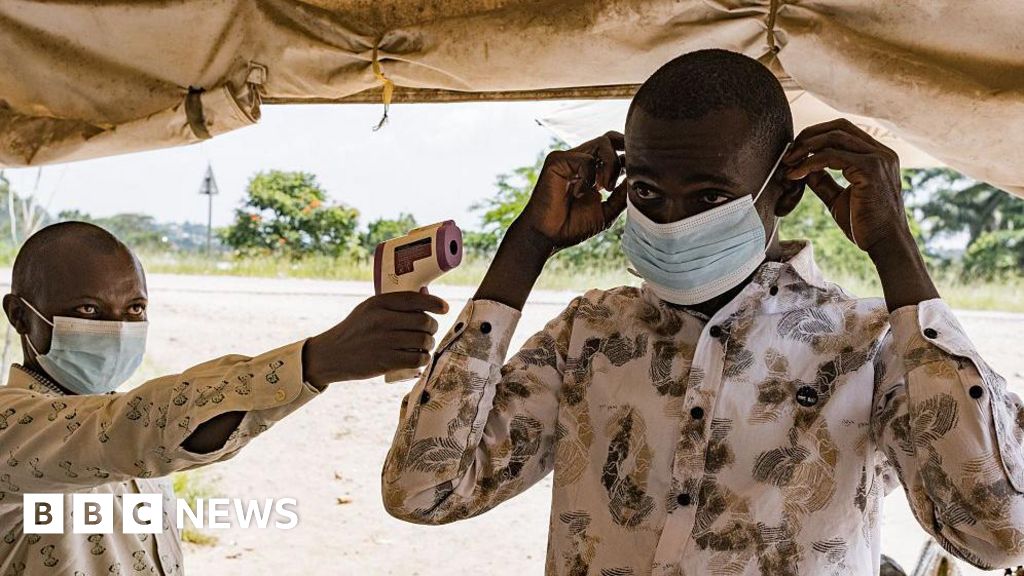
The World Health Organization reported 600 suspected Ebola cases and 139 suspected deaths across the Democratic Republic of Congo and Uganda as of Wednesday, with 51 cases confirmed. The outbreak involves the rare Bundibugyo species, which has not been seen since 2012 and has no approved vaccine. Two candidate vaccines are in development but could take nine months to be ready, said WHO advisor Dr Vasee Moorthy. The epicenter is Ituri province in eastern DRC, where gold-mining towns have been hit hard. Healthcare workers are among the dead, and facilities are overwhelmed. The Bundibugyo species killed about a third of those infected in past outbreaks, though it is less deadly than the Zaire species. The rarity of Bundibugyo means fewer diagnostic tools and no existing vaccine stockpiles. The WHO declared a public health emergency of international concern on Sunday but said it does not yet constitute a pandemic.
Ebola was first identified in 1976 in what is now DRC. The country is experiencing its 17th outbreak. The Bundibugyo species caused outbreaks in Uganda in 2007 and DRC in 2012, with a fatality rate around 30%. The more common Zaire species has approved vaccines.
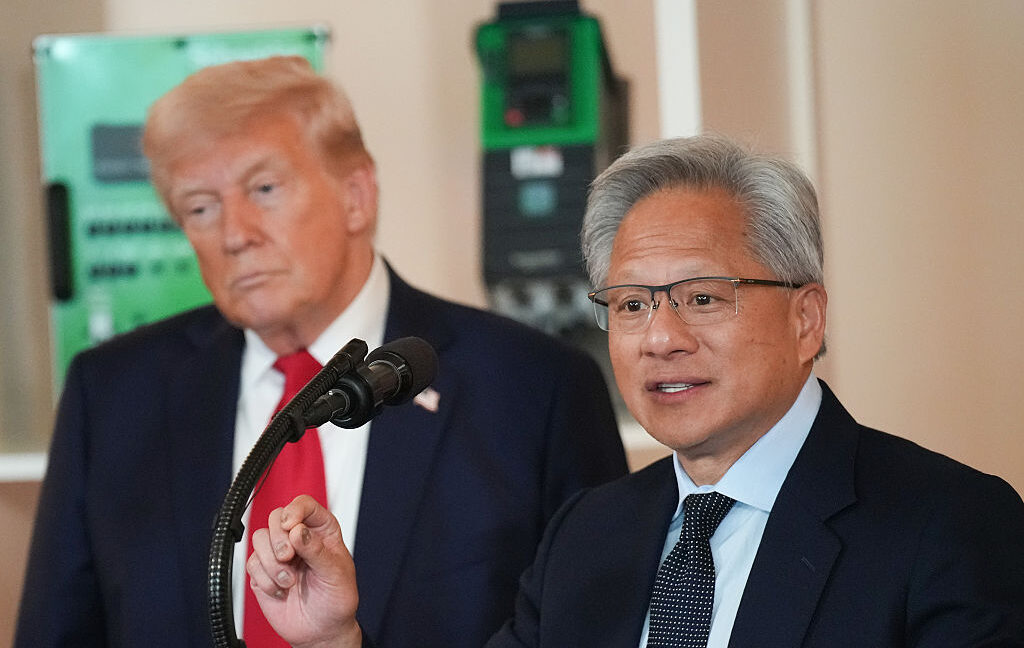
China's customs agency added Nvidia's RTX 5090D V2 graphics card to a banned import list last Friday, the same week CEO Jensen Huang joined Donald Trump's delegation to Beijing. The chip was designed to comply with US export controls and marketed to Chinese gamers, but AI developers had been buying it as a workaround for blocked data-center GPUs. The ban signals Beijing's determination to shut out even degraded Nvidia products and boost domestic chipmakers like Huawei. China has also blocked sales of Nvidia's H200 and H20 chips, despite US approval for exports to companies like Alibaba and Tencent. Huawei is on track to capture the largest share of China's AI chip market this year, with sales jumping at least 60 percent. Huang told Bloomberg TV he believes the market will eventually open.
US export controls since 2022 have restricted Nvidia's most advanced AI chips from China. Nvidia responded by creating China-specific versions with reduced performance. China has retaliated by promoting domestic alternatives and blocking imports of even compliant chips.
The American Bar Association's accrediting council voted to eliminate Standard 206, which requires law schools to demonstrate 'a commitment to diversity and inclusion' through diverse faculty, staff, and student bodies. The move follows pressure from the Trump administration, including an April 2025 executive order directing the Education Department to investigate accreditors with DEI initiatives. The rule's removal still needs approval from the ABA's House of Delegates, which could consider it as early as August, and likely won't take effect until 2027. Council member David Brennen, a former law school dean, said he personally supports the standard but believes eliminating it will avoid inhibiting 'the diversity of ideas' across different types of legal education. The decision is part of a broader rollback of diversity, equity, and inclusion requirements in higher education accreditation.
Standard 206 was adopted in 2014 to promote diversity in legal education. The Trump administration has targeted DEI programs across government and education, arguing they constitute unlawful discrimination. Several other accreditors have also revised their standards under pressure.
The NAACP launched a campaign Tuesday calling on Black athletes and fans to withhold financial support from public universities in eight Southern states that are moving to dilute Black voting power after a Supreme Court ruling narrowed the Voting Rights Act. The 'Out of Bounds' campaign targets Alabama, Florida, Georgia, Louisiana, Mississippi, South Carolina, Tennessee, and Texas. It asks high school recruits to reconsider commitments, current athletes to speak out, and fans to stop buying tickets and merchandise, redirecting money to historically Black colleges and universities. NAACP President Derrick Johnson said the states are engaged in 'a sprint to erase Black political power' and that the organization will not let universities 'depend on Black athletic prowess to fill their stadiums' while remaining silent on voting rights. The campaign will remain in effect until the states adopt voting rights protections and repeal maps that dilute Black representation.
Last month, the Supreme Court issued a ruling that weakened Section 2 of the Voting Rights Act, making it harder to challenge racially discriminatory redistricting. Several states quickly moved to redraw congressional maps, prompting criticism that they were exploiting the decision to reduce Black voting strength.
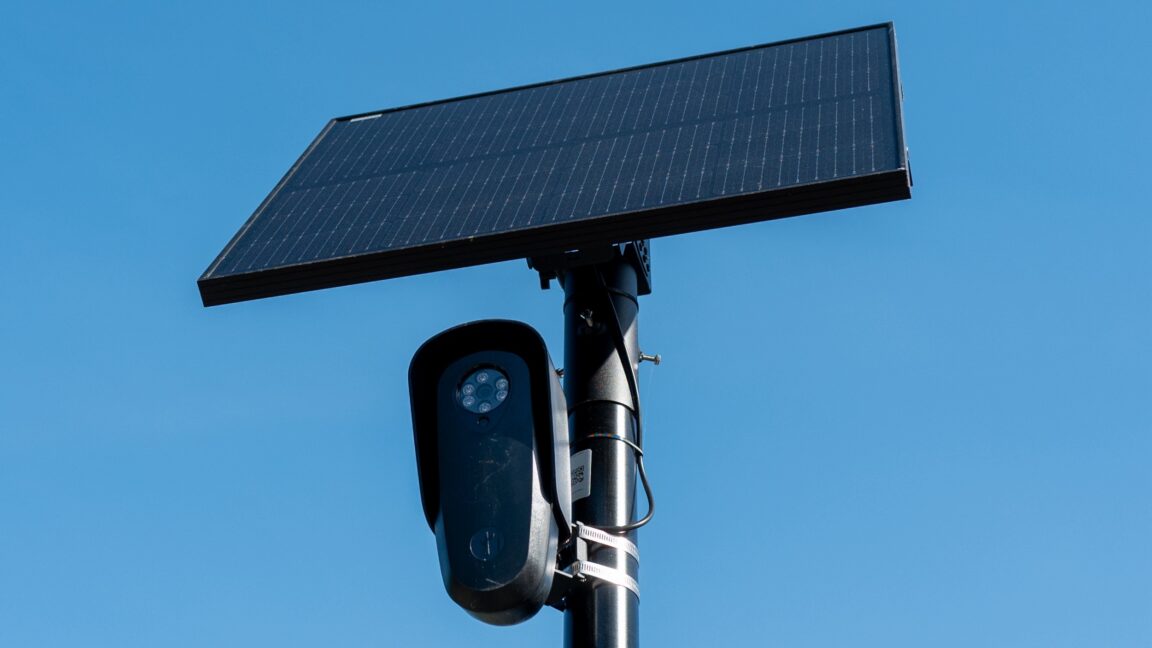
The FBI's intelligence division is soliciting vendors to provide nationwide access to license plate reader networks, with a requirement for near-real-time data and coverage of at least 75 percent of locations. The request for proposals, published May 14, calls for a system that can search by plate number, vehicle description, time, and location, and generate heat maps of camera coverage. The contract could be worth up to $36 million over five years. Flock and Motorola Solutions are likely bidders. Privacy advocates have long warned that license plate readers enable mass surveillance, and past reporting showed local police gave Immigration and Customs Enforcement side-door access to Flock's system. The FBI already runs a license plate reader information-sharing program, but this would give its intelligence arm direct, real-time access to a vast network of cameras.
Automated license plate readers are mounted on poles, police cars, and other infrastructure, capturing images of every passing vehicle. Flock alone has contracts with over 12,000 public safety customers. The technology has raised concerns about warrantless tracking and data retention.
The BUILD America 250 Act, a bipartisan surface transportation bill released this week, includes a new $130 annual federal registration fee for electric vehicles, escalating to $150 by 2035. Plug-in hybrids would pay $35, rising to $50. The fee is intended to offset declining gas tax revenue as EV adoption grows, but critics note that EVs make up only 3 percent of the US vehicle fleet and the federal gas tax of 18.4 cents per gallon has not increased since 1993. The Zero Emissions Transportation Association said the fee would charge EV drivers nearly double what gas car drivers pay in federal gas tax annually. The bill also eliminates dedicated funding for EV charging infrastructure, which advocates say will hurt rural and remote areas most. States that fail to collect the fee would lose 125 percent of the owed amount from their highway funding.
The Highway Trust Fund, which pays for road maintenance and mass transit, is projected to become insolvent by 2028. The gas tax has been the primary funding source, but fuel-efficient and electric vehicles have eroded revenue. Many states already impose their own EV registration fees.
Alexander Grothendieck transformed algebraic geometry by shifting the focus from individual equations to the relationships between mathematical objects. In the 1950s and 60s, he introduced schemes, topoi, and other constructions that unified disparate fields and resolved foundational crises. His work made algebraic geometry central to number theory, topology, and logic. Before Grothendieck, the field was fragmented, with researchers using incompatible definitions. He provided a common language and proved deep conjectures, including the Weil conjectures with his student Pierre Deligne. In 1970, at the height of his influence, he quit academia and eventually became a hermit in the Pyrenees. Mathematicians are still absorbing his ideas. He is often compared to Einstein for the scale of his impact, though his name is far less known outside math.
Grothendieck won the Fields Medal in 1966 for his work in algebraic geometry. He was a central figure at the Institut des Hautes Études Scientifiques near Paris before leaving over military funding. His unpublished writings continue to influence research.
The BUILD America 250 Act, a 1,000-page infrastructure bill, includes an EV registration fee but also mandates that businesses let delivery drivers use their bathrooms, requires a review of Amtrak's snack offerings under new dietary guidelines, and directs a study on buying American-made yellow road paint from a single Michigan factory. The bill does little to fix the Highway Trust Fund's structural deficit, which is projected to run out of money by 2028. Marc Scribner of the Reason Foundation calls it 'the last federal highway bill' and says the EV fee won't close the gap. The opinion piece argues that Congress is loading the bill with non-infrastructure provisions while failing to address the core funding problem.
The Highway Trust Fund is funded primarily by the 18.4-cent-per-gallon federal gas tax, unchanged since 1993. As vehicles become more fuel-efficient, revenue has declined. Previous shortfalls have been patched with general fund transfers, but the fund faces insolvency without reform.