Donald Trump left Beijing on Friday after a two-day summit with Xi Jinping, claiming "fantastic trade deals" while offering scant detail on what was actually agreed. The visit featured elaborate ceremony: a military honor guard, state banquet, and invitation to the Communist Party leadership compound. Trump announced China would buy 200 Boeing jets with potential for 750 more, and said American farmers would see "billions" in soybean purchases. Boeing confirmed the aircraft deal, its first major Chinese order in nearly a decade after years of trade tension. Yet Chinese officials offered no confirmation of any purchases. The two leaders agreed to establish a "Board of Trade" to manage commercial relations, and Xi accepted an invitation to visit Washington in September. Trump told reporters tariffs were not discussed at all, a surprising omission given the 145% duties currently in place. The October tariff truce remains unresolved, with its November expiration approaching.
The US and China have been in a trade war since early 2025, with tariffs reaching 145% on Chinese goods and 125% retaliatory duties on American exports. A temporary truce in October suspended further escalation but left core disputes unresolved. Boeing was largely shut out of China's aviation market during the previous decade of tension.
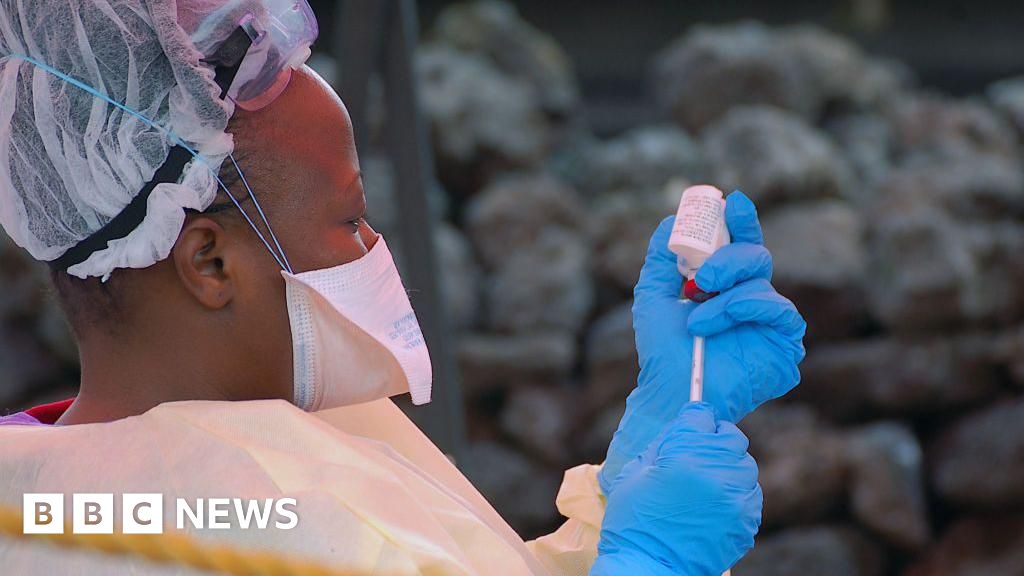
Africa's top health agency declared an Ebola outbreak in Ituri province, eastern Democratic Republic of Congo, with 246 cases and 80 deaths reported. The outbreak centers on gold-mining towns Mongwalu and Rwampara, where population density and movement create high transmission risk. Uganda confirmed one imported case: a 59-year-old Congolese man who died Thursday in a Kampala hospital. This marks the 17th Ebola outbreak in DR Congo since the virus was first identified there in 1976. The Africa CDC warned of "significant population movement" between affected areas and neighboring countries, making regional coordination essential. Preliminary lab tests in Kinshasa detected the virus in 13 of 20 samples; strain identification is pending. Ituri has been under military rule since 2021 due to dozens of armed groups operating in the region, complicating any health response. The Congolese government had not officially declared the outbreak as of Friday.
Ebola spreads through direct contact with bodily fluids, causing severe bleeding and organ failure with roughly 50% fatality. DR Congo's deadliest outbreak killed nearly 2,300 people between 2018 and 2020. The virus is believed to originate in bats.
The US Justice Department is preparing to indict 94-year-old Raúl Castro over the 1996 downing of two civilian aircraft, according to unnamed officials. The charges, which require grand jury approval, could come as early as Wednesday. The incident involved Brothers to the Rescue, a Cuban exile group that searched for migrants at sea and dropped anti-Castro leaflets. Four people died when Cuban fighter jets attacked the planes; Cuba claimed airspace violations, though international investigators found the attack occurred over international waters. The potential indictment follows a Florida state investigation reopened in March. It comes as CIA director John Ratcliffe met Cuban officials in Havana on Thursday, including Raúl Castro's grandson. The US has offered $100 million in aid to ease its oil blockade, which has left Cuba essentially without fuel. Trump told reporters he would let DOJ comment, adding that Cubans "need help" and their country is "in decline."
Raúl Castro led Cuba from 2008 to 2021, succeeding his brother Fidel. The 1996 plane attack occurred while he was defense minister. The Trump administration has intensified pressure on Cuba through sanctions and an oil blockade, while simultaneously offering humanitarian aid.
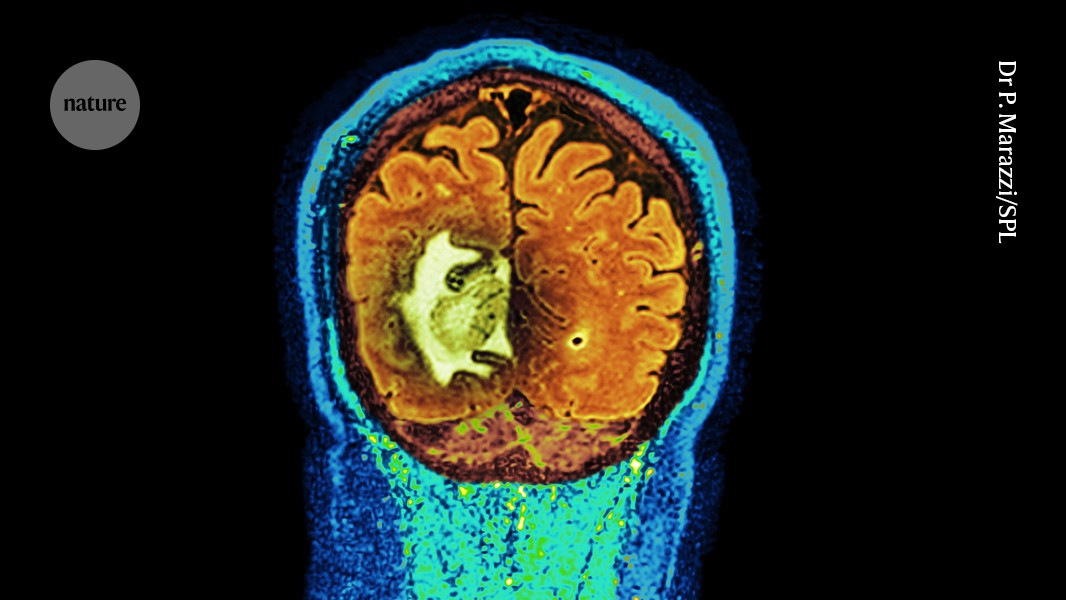
A personalized DNA vaccine has shown early promise against glioblastoma, the aggressive brain tumor with median survival under 18 months. In a small clinical trial, the treatment safely stimulated patients' immune systems to attack their own tumors. Researchers at University Hospital Tübingen and biotech firm BioNTech designed the vaccine by sequencing each patient's tumor DNA, identifying mutations, and encoding them into a synthetic mRNA construct. The vaccine was delivered directly into the tumor resection cavity. All treated patients developed immune responses against their specific cancer mutations. One patient remained progression-free for over three years. The approach mirrors the technology BioNTech developed for its COVID-19 vaccine, repurposed for cancer immunotherapy. Glioblastoma has resisted most treatment advances for decades; standard care extends survival only marginally beyond the natural course.
Glioblastoma is the most common and lethal primary brain tumor in adults. Standard treatment combines surgery, radiation, and chemotherapy but rarely achieves long-term remission. Personalized cancer vaccines represent a shift toward patient-specific immunotherapy rather than one-size-fits-all protocols.
Researchers have released Orthrus, a dual-architecture framework that accelerates large language model inference while preserving exact output quality. The system combines autoregressive generation with parallel diffusion-style decoding, achieving up to 7.8× speedup on generation tasks. Unlike speculative decoding methods that use draft models and suffer memory overhead, Orthrus shares a single key-value cache between both modes with only O(1) additional memory. The method requires fine-tuning just 16% of parameters while keeping the base Qwen3 model frozen. On mathematical reasoning benchmarks, Orthrus maintained identical accuracy to the base model while delivering roughly 6× throughput improvement. Competing diffusion language models typically suffer accuracy degradation on complex tasks; Orthrus avoids this by decoupling parallel generation from sequential constraints through an intra-model consensus mechanism. Native integration with vLLM and SGLang is planned.
Large language models typically generate tokens one at a time, creating a sequential bottleneck. Speculative decoding speeds this by using smaller draft models, but introduces memory overhead and acceptance rate limitations. Orthrus attempts to achieve parallel generation without these tradeoffs.
OpenAI is exploring legal options against Apple over what insiders describe as a deliberately hobbled ChatGPT integration. The AI company expected Apple's distribution to generate billions in subscriptions; instead, it suspects Apple designed the feature to be hard to find and easy to ignore. Users must specifically say "ChatGPT" to invoke the feature through Siri, and responses appear in small windows with limited information. OpenAI took a "leap of faith" on the partnership without seeing final implementation details, an executive told Bloomberg, and now feels "burned." Renegotiation efforts have stalled. OpenAI has declined other Apple AI partnerships as a result. The company is working with outside counsel on options including potential breach of contract claims. The timing is complicated by OpenAI's litigation with Elon Musk, who alleged the Apple deal violated antitrust laws. A decision in that case could come next week.
Apple announced ChatGPT integration at WWDC 2024 as part of its Apple Intelligence platform. The deal was likened internally to Apple's lucrative Google search partnership. OpenAI's expected customer acquisition failed to materialize, threatening a major revenue growth strategy.
Chinese short drama studios are replacing human production with generative AI, collapsing timelines from months to weeks and costs by 80-90%. An average of 470 AI-generated short dramas released daily in January. These one-to-two-minute episodes, designed for smartphone scrolling, have become a $6.9 billion industry in China—surpassing theatrical box office. Studios now use AI for scripts, visuals, and voice, eliminating actors, camera crews, and cinematographers. The resulting content has an uncanny quality: glossy lighting with video-game texture. Production company FlexTV says North American productions that cost $200,000 now run under $20,000 with AI. The industry operates on brutal metrics: series must break even within a month or fail. Content decisions follow data, not creative instinct—platforms categorize projects by keywords covering genre, setting, and plot structure, then A/B test relentlessly.
Chinese short dramas exploded since 2018 through apps like DramaWave and ReelShort, using aggressive TikTok and Facebook advertising to drive subscriptions. The format emphasizes emotional confrontation and cliffhangers optimized for rapid consumption. Overseas expansion began in 2022 with localized productions.
The Department of Justice accused Yale School of Medicine of race-based admissions discrimination, alleging Black and Hispanic applicants receive unlawful advantages. A year-long investigation found admitted Black students had median MCAT scores of 518 and Hispanic students 517, compared to 524 for White and Asian students with otherwise similar profiles. The accusation follows similar DOJ action against UCLA's medical school last week and ongoing probes at Stanford, Ohio State, and UC San Diego. The Trump administration has made enforcing the 2023 Supreme Court ruling against race-conscious admissions a priority. Yale's 4.9% acceptance rate makes it among the most selective medical schools. The university defended its process as rigorous and said it would review the DOJ letter. The department warned in July that even racially neutral criteria could violate law if selected for demographic impact.
The Supreme Court's 2023 SFFA decision ended explicit race-conscious admissions at private and public institutions. Medical schools have proved particularly contentious due to persistent gaps in physician diversity and health equity arguments for representative training.
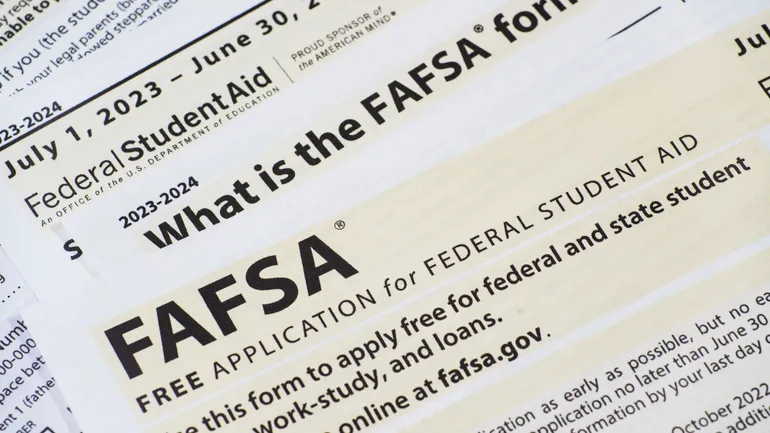
High school seniors completed the Free Application for Federal Student Aid at a record 54.7% rate for the class of 2026, according to National College Attainment Network data through May 1. The figure exceeds last year's final rate before the traditional June 30 cutoff. Alaska, Arizona, Florida, and New Mexico saw year-over-year increases of at least 20%. The turnaround follows the "great FAFSA debacle" of 2024, when a delayed and glitch-ridden form rollout depressed applications. Congress mandated the first major overhaul in 40 years through the FAFSA Simplification Act of 2020. The Biden administration brought in product manager Aaron Lemon-Strauss in 2024 to fix the system; user satisfaction now exceeds 90% and call center waits average under one minute. Nine states now require FAFSA completion for high school graduation, contributing to increased uptake.
FAFSA completion correlates strongly with college enrollment, particularly for low-income students. The 2024 rollout disaster saw nearly three-quarters of calls go unanswered and widespread processing delays that disrupted financial aid offers. The form determines eligibility for federal grants, loans, and work-study.
Third-party data suggests text-based social networks are contracting as a category. Market research firm Apptopia reported that Meta's Threads has lost 61% of daily active users since its October 2024 peak, with declines in seven of the past eight months. Global monthly users fell from 400 million in January to 388 million. Threads had briefly surpassed X in US daily users in early 2024, but lost ground faster than X declined. Bluesky growth stalled before CEO Jay Graber's March departure. X usage has remained flat to down. Meta strongly disputed Apptopia's figures, citing eMarketer projections of 19.6% growth this year. The contraction raises questions about whether any platform can capture Twitter's former cultural centrality, or whether the format itself faces structural decline as attention shifts to video and messaging.
Twitter's 2022 acquisition and transformation into X drove migration experiments to Mastodon, Bluesky, and Threads. None achieved sustained network effects comparable to Twitter at its peak. Meta's Threads launch benefited from Instagram integration but has struggled to establish distinct identity or culture.