Taiwan's government pushed back after Donald Trump cautioned against formal independence declarations following his Beijing summit with Xi Jinping. Presidential spokesperson Karen Kuo stated it is "self-evident" that Taiwan functions as "a sovereign, independent democratic country," while emphasizing commitment to the status quo of neither unification nor formal separation. Trump, who said he made "no commitment either way" on Taiwan, also indicated he would soon decide on an $11 billion arms package for the island. The remarks highlight the delicate balance Washington maintains between its legal obligation to support Taiwan's self-defense and its diplomatic relationship with Beijing, which views the island as sovereign territory.
Taiwan has governed itself since 1949, but China claims it as a province and has not renounced force to achieve reunification. The US follows a policy of "strategic ambiguity," providing defensive arms while avoiding explicit security guarantees.
Nigerian and US forces killed Abu-Bilal al-Minuki, described by Donald Trump as ISIS's global second-in-command and "the most active terrorist in the world." The strike on his compound in the Lake Chad Basin occurred after midnight Saturday following months of intelligence work. Nigerian military officials said "zero casualties" were recorded on their side. Al-Minuki had overseen IS-linked operations across the Sahel and West Africa; the military linked him to the 2018 Dapchi schoolgirls kidnapping. His death marks a rare successful joint operation against Islamic State's most active regional branch, which now conducts roughly 90% of all IS attacks globally.
Islamic State's West Africa Province (Iswap) split from Boko Haram in 2016 and has become the group's most lethal affiliate. The Lake Chad Basin spans Nigeria, Chad, Niger, and Cameroon and has hosted jihadist strongholds for over a decade.
Researchers at the National University of Singapore extracted photosynthetic machinery from spinach and transplanted it into mouse eyes, where it generated energy-carrying molecules for several hours. The team isolated thylakoid grana from spinach leaves, encapsulated them in nanoparticles dubbed LEAFs, and showed mammalian cells could internalize them. The transplanted organelles produced ATP and NADPH when exposed to light, reducing inflammation in mouse models of dry-eye disease. Published in Cell, the study demonstrates cross-kingdom organelle transfer is biologically feasible and suggests therapeutic applications for conditions involving cellular energy depletion or oxidative stress.
Thylakoid grana are stacked membrane structures in plant chloroplasts that harvest light for photosynthesis. Sea slugs naturally steal chloroplasts from algae; this study marks the first successful transplantation into mammalian tissue.
The release of DeepSeek-V4-Flash, a capable local model, has revived practical interest in "steering" — the technique of guiding LLM outputs by manipulating internal activations during inference. Unlike prompting, steering reaches directly into the model's hidden states to amplify or suppress specific behavioral patterns. Sean Goedecke argues this was previously impractical for most engineers because frontier models run via API, blocking access to weights and activations. Now, with a strong open-weights model runnable locally and tools like antirez's DwarfStar 4 baking in steering support, researchers can experiment with extracting concepts from model internals and adjusting them in real time.
Steering emerged from interpretability research, notably Anthropic's work on sparse autoencoders. The technique involves computing a "steering vector" that represents a concept, then adding it to activations during generation to bias outputs without retraining.
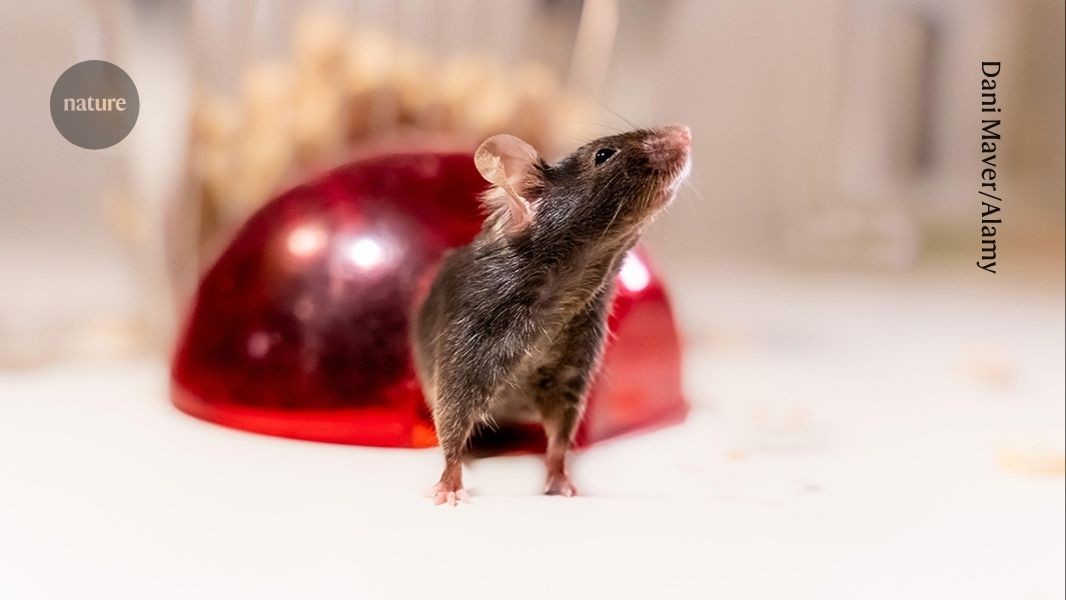
A genetic analysis of 341 mouse strains maintained by US National Institutes of Health repositories found that 47% were inconsistent with their documented genetic backgrounds. Published in Science, the study surveyed samples from the Mutant Mouse Research and Resource Centers and discovered widespread mismatches between reported strain names and actual genomes. The discrepancies threaten research reproducibility: scientists may unknowingly study the wrong genetic variants, leading to false conclusions about disease mechanisms. The problem often stems from incomplete backcrossing when moving genetic modifications between strains, a process requiring 10-20 generations of careful breeding.
Inbred mouse strains like C57BL/6 and A/J have distinct genetic backgrounds used in different research areas. The MMRRC was established in 1999 to preserve and distribute strains developed with federal funding.
The Commodity Futures Trading Commission is deploying AI tools to detect manipulation in prediction markets as scrutiny intensifies on platforms like Polymarket. Chairman Michael Selig told WIRED the agency uses automated pattern analysis to flag suspicious trading and guide investigations, supplementing traditional surveillance with blockchain tracing tools like Chainalysis. The move follows suspected insider trading on geopolitical events and a March accusation by Senator Chris Murphy that White House staffers traded on war-related contracts. The CFTC is pursuing "hundreds, if not thousands" of tips while staffing up to handle growing market volume.
Prediction markets allow trading on event outcomes. Polymarket operates offshore using cryptocurrency, blocking US users technically but not practically. The CFTC regulates US-based exchanges like Kalshi and asserts authority over Americans accessing foreign platforms.
The University of Chicago will eliminate tuition for students from families earning under $250,000 annually starting in fall 2027, doubling its previous threshold. Students from families below $125,000 will also receive free housing, meals, and fees. The university, which spends $225 million annually on financial aid, stated the move aims to increase pricing transparency and simplify aid processes. The announcement follows similar threshold expansions at Harvard, Johns Hopkins, Yale, and Pittsburgh as elite institutions compete for students amid public skepticism about higher education costs and value.
UChicago's previous thresholds were $125,000 for free tuition and $60,000 for full aid. The average aid package now exceeds $75,000. The expansion reflects broader pressure on selective institutions to demonstrate accessibility.
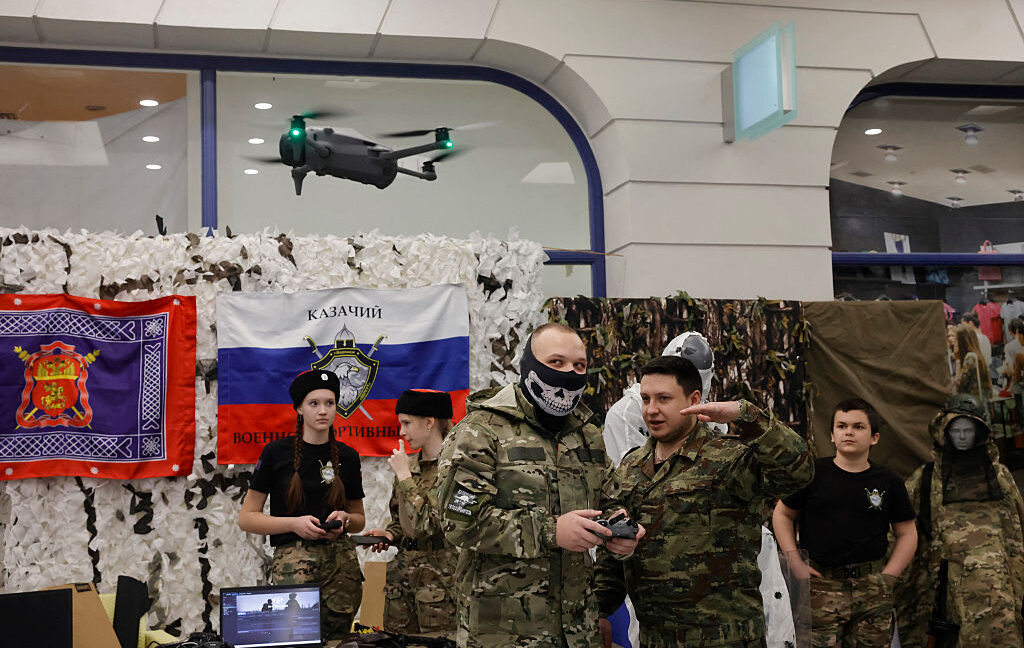
Russian universities are recruiting students as military drone operators with promises of free tuition, tax holidays, and up to $70,000 for one year of service, claiming they can avoid frontline combat. At least 270 academic institutions have promoted military contracts, targeting roughly 2 million male students including gamers and those with technical skills. The effort supports Russia's goal of 168,000 drone operators by year-end. However, at least one student drone pilot has died in combat near Luhansk, and the "kill zone" from surveillance and strikes extends 25 kilometers on both sides of frontlines, making safety claims questionable.
Russia has suffered an estimated 1.3 million casualties since February 2022. Ukraine established the world's first standalone drone military branch in June 2024, which Russia now emulates. The recruitment drive risks accelerating brain drain that has already hit 24% of top Russian software developers.
California's Protect Our Games Act cleared the Assembly appropriations committee 11-2, setting up a floor vote on legislation that would require publishers to maintain playable versions of online games or provide refunds when servers shut down. The bill, advised by advocacy group Stop Killing Games, applies to games sold from January 2027 onward and mandates 60-day advance notice of service cessation. Industry lobbyists at the Entertainment Software Association oppose the measure, arguing consumers hold licenses not ownership, and that indefinite maintenance is technically and legally infeasible due to time-limited music and IP licenses.
Stop Killing Games formed after Ubisoft shut down The Crew in 2024, rendering purchased games unplayable. The UK Parliament debated similar preservation measures in November 2025. California's bill exempts fully free games and subscription-only titles.
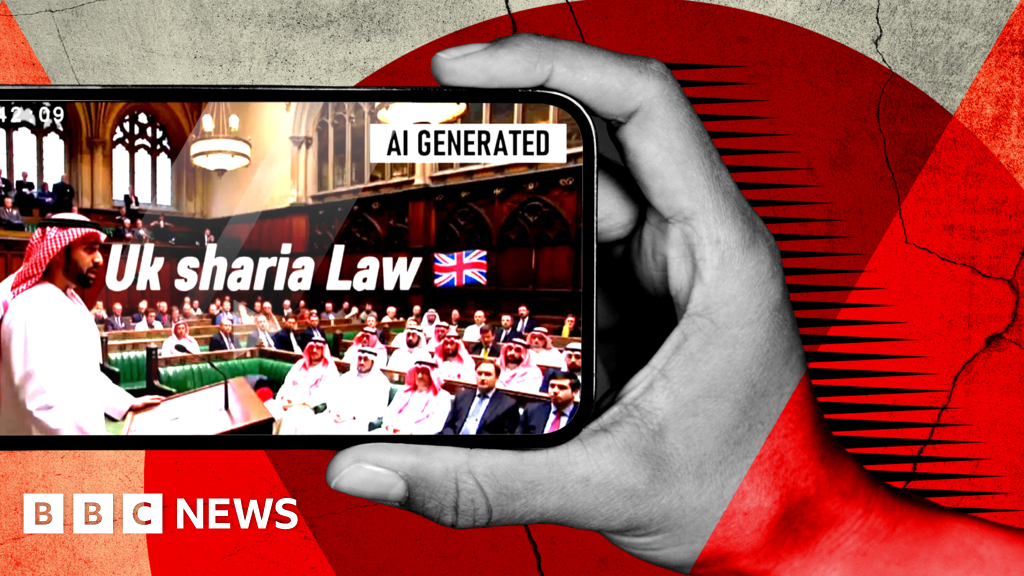
BBC Panorama identified dozens of Facebook and Instagram accounts generating anti-immigration AI videos about the UK that are actually run from Sri Lanka, Vietnam, the US, and elsewhere. The "Great British People" page, claiming Yorkshire origins and reaching 1.3 million views with videos of a crying elderly man, is operated from Sri Lanka. Other accounts in the network, some with 20 million views, depict fake scenes of British cities in 2050 as dirty and Islamic-dominated. Researchers note people consistently overestimate their ability to detect AI fakes, and exposure to synthetic content increases general distrust of authentic material.
The accounts represent what Cambridge researcher Sander van der Linden calls a "new evolution of influence operations." Some repurposed from pro-Trump content to anti-immigration narratives. London Mayor Sadiq Khan has commissioned research on AI-generated imagery harming the city's reputation abroad.