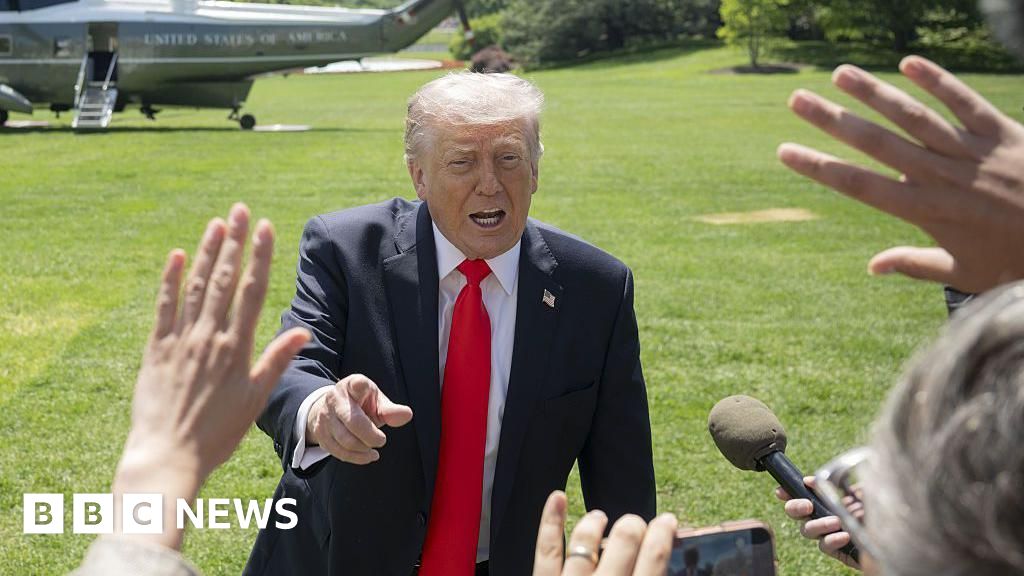
President Donald Trump wrote to congressional leaders on Friday claiming that the 60-day deadline for legislative approval of the Iran war had paused because hostilities "terminated" under the April 8 ceasefire. The War Powers Resolution requires presidents to cease military action or seek congressional authorization within 60 days of notifying lawmakers. Trump notified Congress on February 28, the day US and Israeli strikes against Iran began. Defense Secretary Pete Hegseth argued the clock had stopped; Democratic Senator Tim Kaine disagreed. Trump told reporters he was briefed on options ranging from "blast the hell out of them" to making a deal, and said Iranian leadership was "very confused" after its top military officials were killed. The US Treasury separately warned that paying Iran for passage through the Strait of Hormuz risks sanctions violations.
The War Powers Resolution of 1973 was passed to limit presidential war-making after Vietnam. It requires congressional authorization within 60 days of military action, with a 30-day withdrawal period if denied. Presidents of both parties have contested its constitutionality. The US-Iran ceasefire began April 8 but no permanent deal has been reached; Iran submitted a new proposal via Pakistan on Friday.
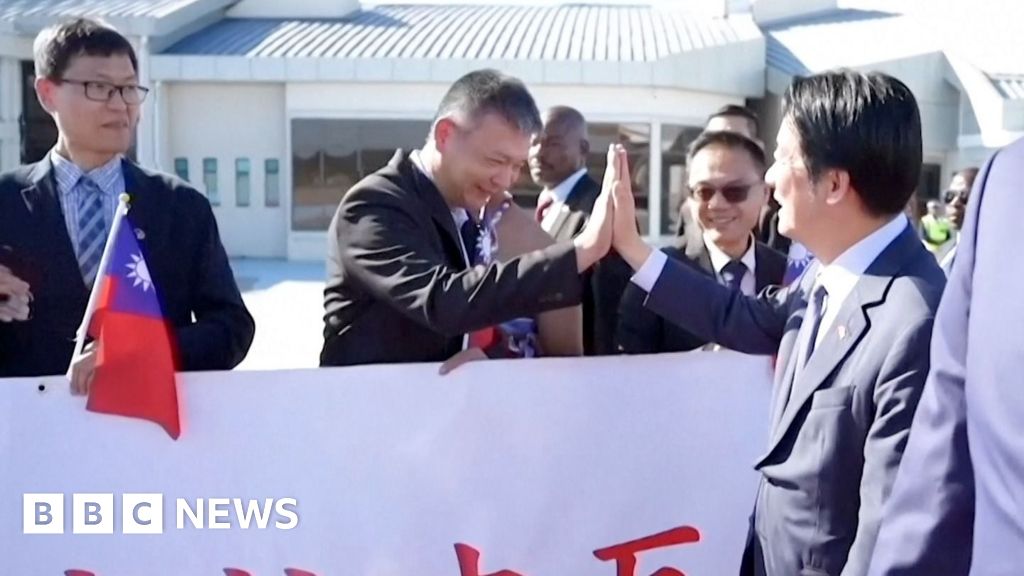
Taiwan President Lai Ching-te arrived in Eswatini on Friday for an unannounced visit, days after his government suspended a planned April trip citing Chinese pressure on African countries to deny airspace access. Lai's delegation, including Foreign Minister Lin Chia-lung, was welcomed by Prime Minister Russell Dlamini. China called the visit a "stowaway-style escape farce." Beijing had pressured Seychelles, Mauritius, and Madagascar to revoke flight permits; Lai's original trip was scheduled for King Mswati III's 40th anniversary. Eswatini is one of 12 states maintaining formal diplomatic relations with Taiwan. On Friday, China eliminated tariffs for all African countries except Eswatini. Lai wrote that Taiwan "will never be deterred by external pressures" and praised Eswatini for "standing firm" against diplomatic pressure.
Taiwan maintains official diplomatic relations with only 12 small states, mostly in the Pacific, Caribbean, and Africa. China has systematically pressured countries to switch recognition to Beijing, often using economic incentives. Eswatini (formerly Swaziland) has remained Taiwan's only African ally despite years of Chinese pressure.
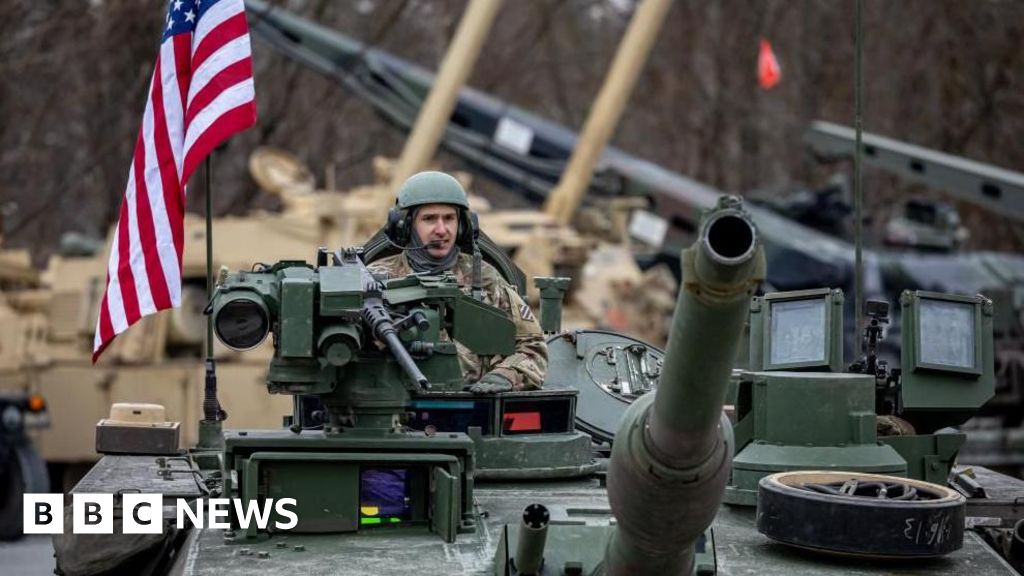
German Defence Minister Boris Pistorius called the US decision to withdraw 5,000 troops from Germany "foreseeable" on Saturday, while Nato sought clarification from Washington. The move reduces US forces in Germany from over 36,000 to roughly 31,000. It followed President Trump's criticism of Chancellor Friedrich Merz for saying the US had been "humiliated" by Iranian negotiators. Trump had previously accused Germany of being "delinquent" on defense spending; Berlin now projects 3.1% of GDP on defense including Ukraine aid. Polish Prime Minister Donald Tusk warned that "the greatest threat to the transatlantic community are not its external enemies, but the ongoing disintegration of our alliance." Republican senators Roger Wicker and Mike Rogers also expressed concern, urging maintenance of "a strong deterrent in Europe."
The US maintains its largest European troop presence in Germany, with over 36,000 active-duty personnel compared to about 12,000 in Italy and 10,000 in the UK. Trump has pushed to shift US military focus from Europe to the Indo-Pacific. Germany's new government under Chancellor Merz has dramatically increased defense spending after years of criticism for falling below Nato's 2% GDP target.
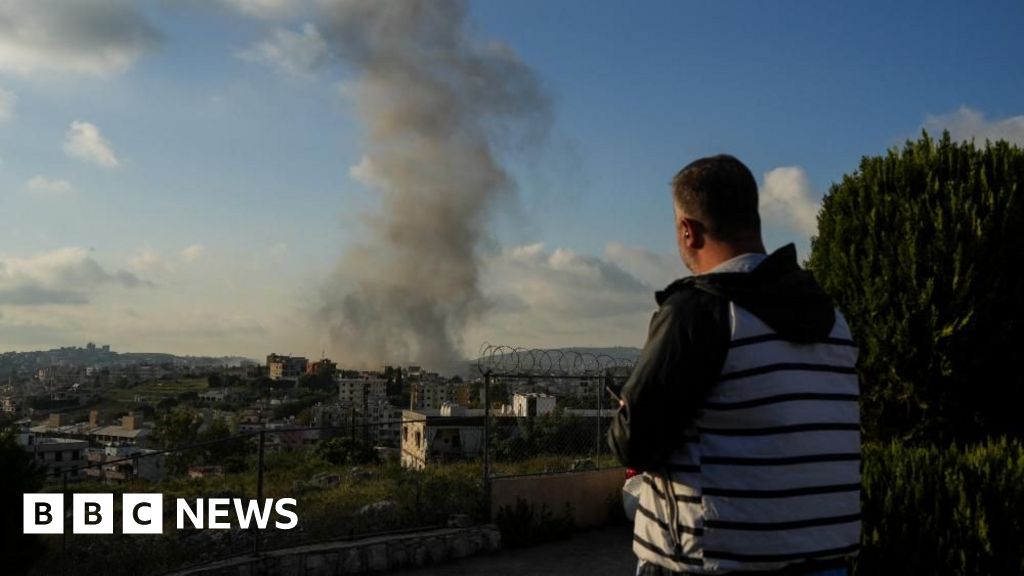
Israeli air strikes killed at least 13 people in southern Lebanon on Friday, including four women and a child, according to the Lebanese health ministry. Eight died in Haboush in Nabatieh district, where the IDF had issued an evacuation order. Four more were killed in Zrarieh in Sidon district, and one in Ain Baal in Tyre district. Thirty-two people were injured. The strikes continued despite a three-week ceasefire extension announced April 23 by President Trump. Hezbollah said it targeted Israeli soldiers and vehicles on Saturday; the IDF reported one soldier killed in Lebanon on Thursday, bringing Israeli troop deaths since early March to 17. Since March, 2,659 people have been killed in Lebanon. The IDF said it conducted around 50 strikes in the past day, targeting headquarters and military buildings.
Israel and Hezbollah agreed to a ceasefire in November 2024, but Israel continued near-daily attacks. After the US and Israel struck Iran on February 28, 2026, Hezbollah launched rockets into Israel on March 2. Israel then bombarded Lebanon and re-entered southern Lebanon in early March, occupying roughly 10km of territory. A 10-day pause was announced April 16, extended to three weeks on April 23.
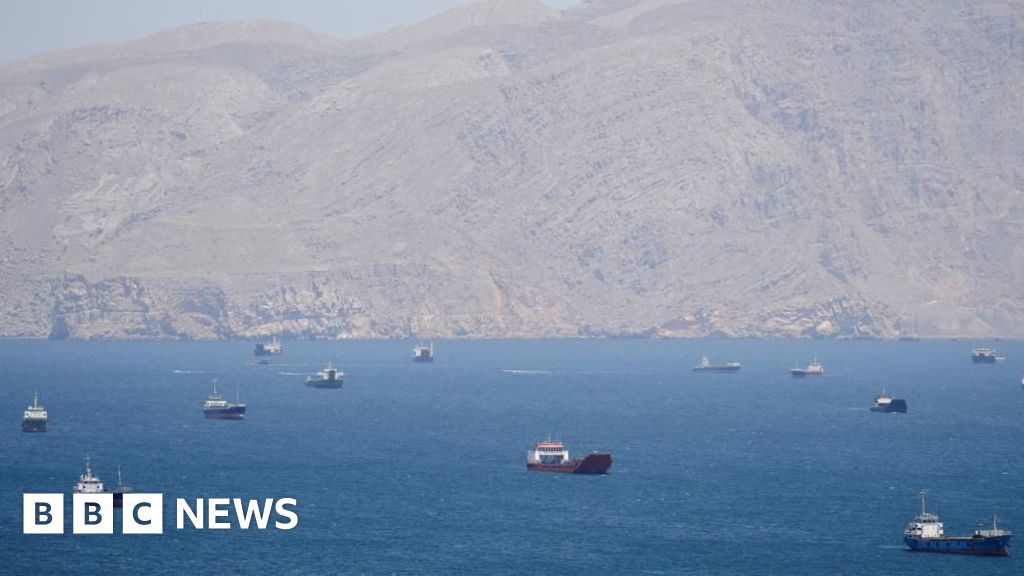
The US Treasury's OFAC warned Friday that shipping companies paying Iran for passage through the Strait of Hormuz risk US sanctions. The alert came as President Trump said he was "not excited" by Iran's latest peace proposal. Iran has severely limited strait traffic since February, charging tolls for safe passage; Hamidreza Haji Babaei, deputy speaker of Iran's Parliament, claimed first toll revenue was deposited with Iran's Central Bank last week. OFAC said payments could involve cash, digital assets, offsets, or in-kind donations. Non-US persons paying could face civil and criminal liability if they cause US persons like insurers to violate sanctions. The Treasury also sanctioned three Iranian currency exchanges. The strait closure has doubled aid delivery costs to Sudan and forced rerouting around the Cape of Good Hope, adding up to 25 days. UNHCR warned that rising costs "disproportionately affect people in emergencies."
The Strait of Hormuz is the only maritime passage from the Persian Gulf to the open ocean. Roughly 3,000 ships typically pass through monthly, but traffic has dropped to a handful daily since Iran began restricting passage in February 2026. The US has maintained a naval blockade on Iranian ports since April 13.
Chinese AI lab DeepSeek released preview models DeepSeek-V4-Pro and DeepSeek-V4-Flash, both 1 million token context Mixture of Experts architectures. Pro has 1.6T total parameters with 49B active; Flash has 284B total with 13B active. DeepSeek-V4-Pro is now the largest open-weights model, exceeding Kimi K2.6 and GLM-5.1. Pricing is striking: Flash costs $0.14/million input tokens and $0.28/million output; Pro costs $1.74/$3.48. This undercuts even GPT-5.4 Nano among small models and beats all frontier competitors at the large model tier. DeepSeek's paper notes dramatic efficiency gains: at 1M context, Pro uses only 27% of the FLOPs and 10% of the KV cache of DeepSeek-V3.2; Flash achieves 10% and 7% respectively. Self-reported benchmarks place Pro "marginally short of GPT-5.4 and Gemini-3.1-Pro," trailing state-of-the-art by roughly 3-6 months.
DeepSeek has emerged as a leading Chinese AI lab, known for efficient training and aggressive pricing. Their V3 series released in late 2024 established strong open-weights performance. The V4 release continues their pattern of near-frontier capability at dramatically lower cost, challenging the economics of US AI providers.
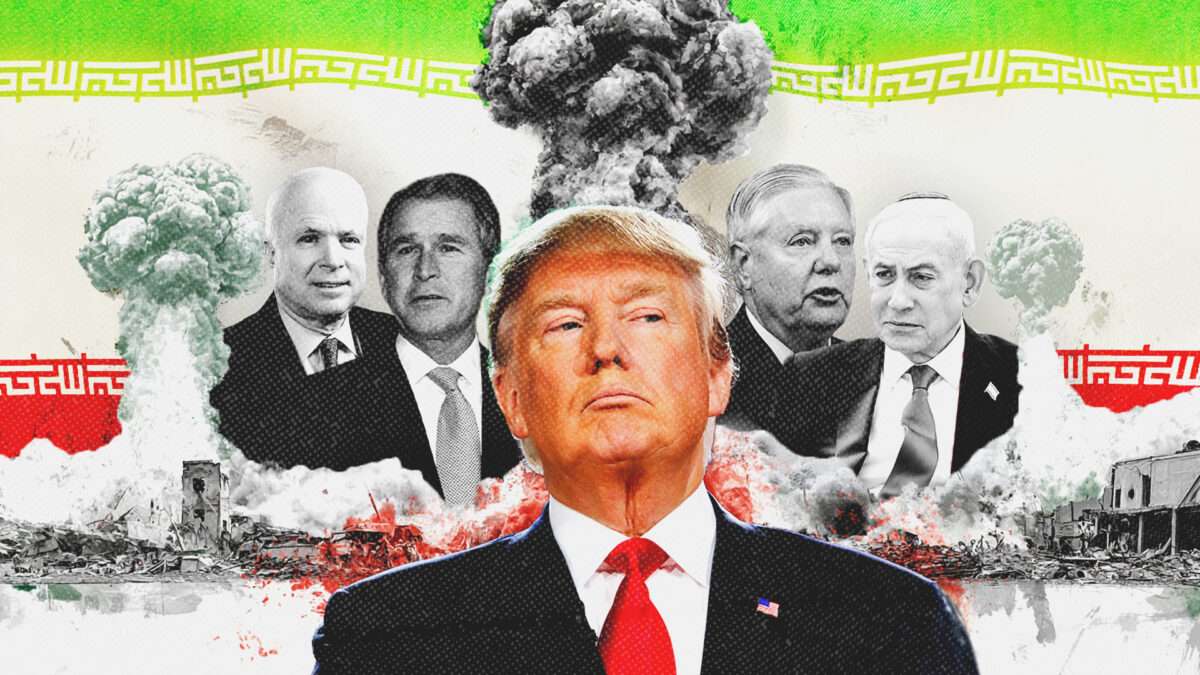
The US-Iran war that began February 28, 2026 was the culmination of decades of pressure from Iran hawks who made avoiding war politically harder than starting it, argues this analysis. The Strait of Hormuz closure—announced by Iran two days after the initial strikes—has nearly doubled oil prices and disrupted global supply chains. South Korea and Taiwan face helium shortages threatening semiconductor production. The author traces how hawkish factions from both parties rejected diplomatic solutions, pushed ever-greater risks, and avoided public debate. Trump's shifting war aims—overthrowing the government, making a deal, destroying nuclear facilities, sending industry "back to the Stone Age"—reflect the incoherence of a coalition united only by hostility to Iran. The piece contends that politicians treated Israeli and Arab monarchies' problems with Iran as America's problems, without scrutinizing whether US interests were served.
The article traces Iran hawk influence through multiple administrations, noting how diplomatic efforts were consistently undermined. Robert Malley, Biden's Iran envoy, is quoted criticizing the conditions his own administration helped create. The Hormuz closure's economic cascade—oil, petrochemicals, helium for semiconductors, fertilizer for agriculture—illustrates the war's global reach.
The FDA twice denied approval of RP1, an oncolytic immunotherapy for advanced melanoma that showed 33% response rates in treatment-resistant patients when combined with nivolumab, versus 6-7% for nivolumab alone. The drug uses a modified herpesvirus injected directly into tumors, causing cancer cells to burst and trigger immune response. Despite "breakthrough therapy" designation and an initial panel recommendation for approval, the FDA issued a complete response letter on July 21, 2025 citing two concerns: the study population was too heterogeneous, and reviewers weren't confident results linked specifically to RP1 rather than nivolumab. Replimune Group CEO Sushil Patel called the agency's behavior unprecedented. Approximately 110,000 melanoma cases are diagnosed annually in the US; five-year survival drops to 16% once the disease spreads.
Oncolytic immunotherapy uses engineered viruses to kill cancer cells and stimulate anti-tumor immune responses. The FDA's "breakthrough therapy" designation is meant to expedite development of promising treatments for serious conditions. A complete response letter indicates the FDA has reviewed an application and found it cannot be approved in its present form.
Leon Botstein will retire as president of Bard College at the end of June, following a WilmerHale investigation that found he "minimized and was not fully accurate" in describing his relationship with Jeffrey Epstein. Botstein, president since 1975, pursued Epstein as a donor in 2012 despite being presented with information about Epstein's 2008 conviction and 2011 classification as a Level 3 Sex Offender. The investigation found Botstein did not try to understand Epstein's crimes or his high-risk re-offender status, and overrode a senior faculty member's objection to engaging with Epstein. Botstein told investigators he would "take money from Satan if it permitted me to do God's work." The lawyers found no illegality but noted decisions "reflect on his leadership." Botstein said he delayed announcing retirement until after the investigation concluded and a $1 billion fundraising campaign finished.
Botstein has been one of higher education's longest-serving presidents, known for expanding Bard's unconventional programs. The Epstein investigation is part of broader reckoning across academia about ties to the convicted sex offender, who donated to numerous institutions including Harvard and MIT before his 2019 arrest and death.
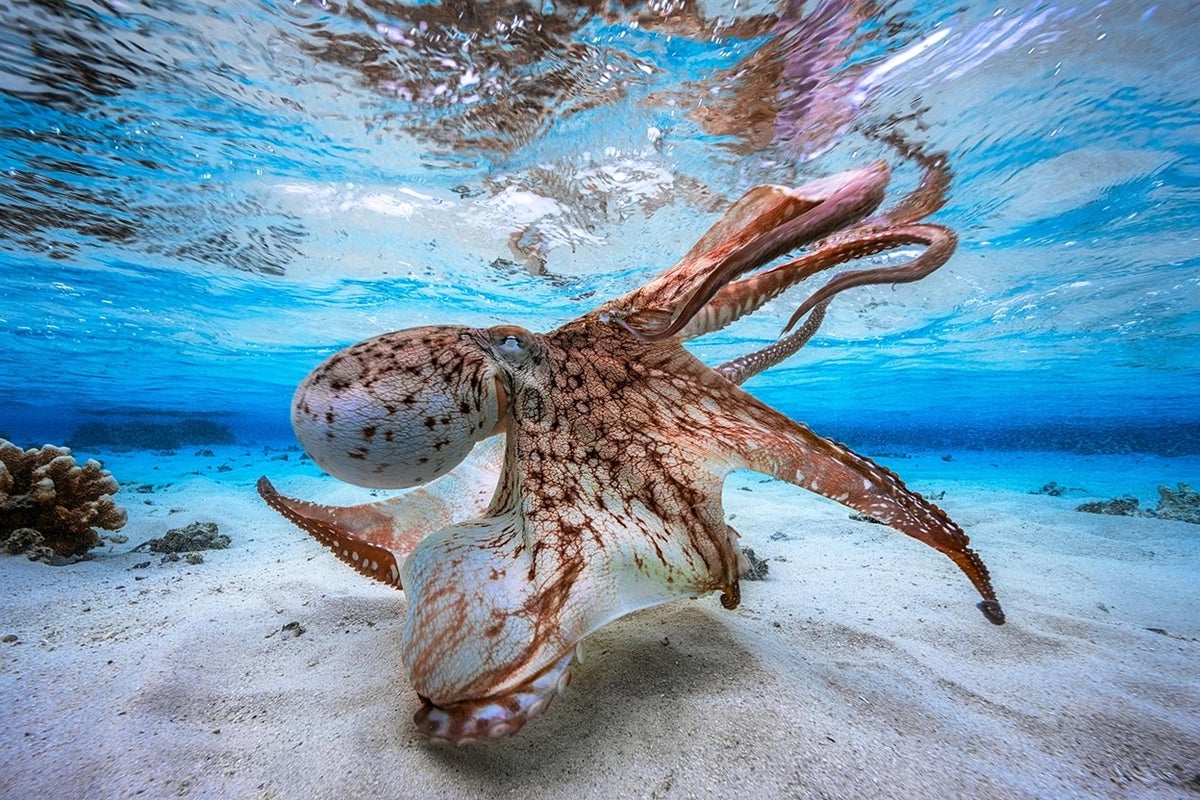
Neuroscientists are increasingly studying cephalopods—octopuses, squid, and cuttlefish—as a parallel case of large-brain evolution. These animals diverged from vertebrates over 600 million years ago, yet independently evolved sophisticated intelligence: tool use, problem-solving, memory, and delayed gratification. Their brains are doughnut-shaped organs built around the esophagus, with over half of an octopus's neurons located in nerve cords controlling its arms. This convergent evolution offers a unique test of whether big brains require similar solutions. Researchers at Harvard, University of Chicago, and University of Oregon are adapting molecular and cellular neuroscience tools developed for mice to study these invertebrates. The work raises ethical challenges: cephalopods lack the legal protections of vertebrates in research, and pain relief options remain limited.
Convergent evolution occurs when unrelated lineages independently evolve similar traits. Cephalopod eyes are a classic example: they resemble vertebrate eyes despite completely separate evolutionary origins. The last common ancestor of cephalopods and vertebrates was likely a simple worm-like creature with minimal nervous system complexity, making their cognitive similarities striking.