Brent crude surged nearly 7% to over $126 a barrel on Wednesday, the highest level since Russia's 2022 invasion of Ukraine, after Axios reported that US Central Command has prepared plans for "short and powerful" strikes on Iran. The proposed military action aims to break the deadlock in nuclear negotiations, with options including infrastructure strikes and a ground troop operation to reopen the Strait of Hormuz. The price spike reflects traders pricing in the risk of supply disruptions from a region that normally handles one-fifth of global energy shipments. Energy executives met President Trump on Tuesday to discuss limiting consumer impact, suggesting the administration is weighing economic costs against military pressure. Analysts note that sustained prices above $125 typically trigger political pressure for de-escalation, as the inflationary effects ripple through transportation, heating, and food costs worldwide.
The US and Iran have been in a de facto war since late February 2026, when joint US-Israeli airstrikes targeted Iranian nuclear facilities. Iran responded by threatening and attacking commercial shipping through the Strait of Hormuz, effectively closing the waterway. A ceasefire was declared to allow peace talks, but negotiations have stalled over Iran's insistence on maintaining some uranium enrichment capability.
The War Powers Resolution contains a provision that lets Congress end any military conflict immediately, yet lawmakers have never invoked it. This Lever investigation traces the paralysis to a 1983 Supreme Court case involving a Kenyan-born immigrant and a Ralph Nader-aligned lawyer, which expanded presidential power and left Congress believing itself impotent. The Iran war reaches its 60-day deadline this week, triggering a one-time 30-day extension for the President. The episode explores why legislators avoid using their most direct tool for stopping unauthorized wars, despite public opposition to the conflict. The historical narrative suggests institutional cowardice masquerading as legal constraint, with lawmakers preferring symbolic votes to actual accountability.
The War Powers Resolution of 1973 was designed to check presidential war-making after Vietnam. It requires congressional authorization for military actions lasting more than 60 days, with a 30-day withdrawal period if authorization is denied. Presidents have routinely ignored or stretched these limits, and Congress has consistently declined to enforce them through the resolution's most potent mechanisms.
Defense Secretary Pete Hegseth faced six hours of hostile questioning from the House Armed Services Committee on Wednesday, his first sworn testimony since the Iran war began. Pentagon comptroller Jules Hurst revealed the conflict has cost $25 billion in 60 days, roughly $400 million daily, with most spent on munitions and equipment replacement. Hegseth requested a $1.5 trillion defense budget for 2027, the largest expansion since World War II, while offering no clear plan for ending the war. Democrats pressed him on the Minab school airstrike that killed 168 people including 110 children; Hegseth called inquiries about costs "gotcha questions" and told Representative John Garamendi "shame on you" for terming the conflict a quagmire. The hearing exposed sharp partisan divisions, with Republicans framing Iran as an existential threat and Democrats demanding accountability for civilian casualties and congressional authorization.
The Minab school strike in early March 2026 became a focal point for criticism of US military conduct. Iranian officials reported 168 deaths including 110 children. US military investigators reportedly believed American forces were likely responsible but had not reached final conclusions as of early March. The incident has been cited by lawmakers as evidence of poor targeting discipline and inadequate transparency.
Researchers have demonstrated that safety-aligned large language models can be induced to output verbatim passages from copyrighted books through a specific finetuning technique. The "Alignment Whack-a-Mole" paper shows that models trained to avoid memorizing training data will still reproduce exact text when finetuned on small excerpts paired with plot summaries. The attack works against GPT-4o, Gemini, and DeepSeek models, suggesting the vulnerability is architectural rather than implementation-specific. The findings complicate legal defenses that training on copyrighted material constitutes fair use, since the models can be triggered to produce substitutive copies of protected works. The research team has released code and evaluation metrics but withheld full book content and model generations due to copyright concerns.
Copyright litigation against AI companies has centered on whether training constitutes infringement and whether model outputs are derivative works. This research suggests a third concern: models can be deliberately activated to produce near-identical copies of protected material, potentially undermining "transformative use" arguments. The paper was published on arXiv in April 2026.
by anonymous congressional staffers via Mother Jones
The reauthorization of Section 702 of the Foreign Intelligence Surveillance Act has triggered a legislative crisis, with the law set to expire Thursday and House Republicans fractured over warrant requirements. The statute permits warrantless collection of foreigners' communications abroad but routinely captures Americans' data in the process, allowing "backdoor searches" by the FBI without judicial oversight. Trump, who demanded the program be "killed" in 2024, now seeks "clean" reauthorization as his administration expands surveillance of protesters and political opponents. The Congressional Black Caucus reversed its position to oppose clean reauthorization after media scrutiny of its 2020 support despite Black Lives Matter surveillance. The article suggests the full scope of abuses remains hidden behind classification, with reform advocates citing the Privacy and Civil Liberties Oversight Board firings and shuttered FBI audit office as evidence of deteriorating oversight.
Section 702 was last reauthorized in April 2024 with minor reforms. The Trump administration's second term has seen accelerated surveillance expansion, including ICE procurement of biometric technology and FBI purchase of commercial location data. The Privacy and Civil Liberties Oversight Board lost its Democratic members in early 2025, and the FBI closed its internal Section 702 audit office in May 2025.
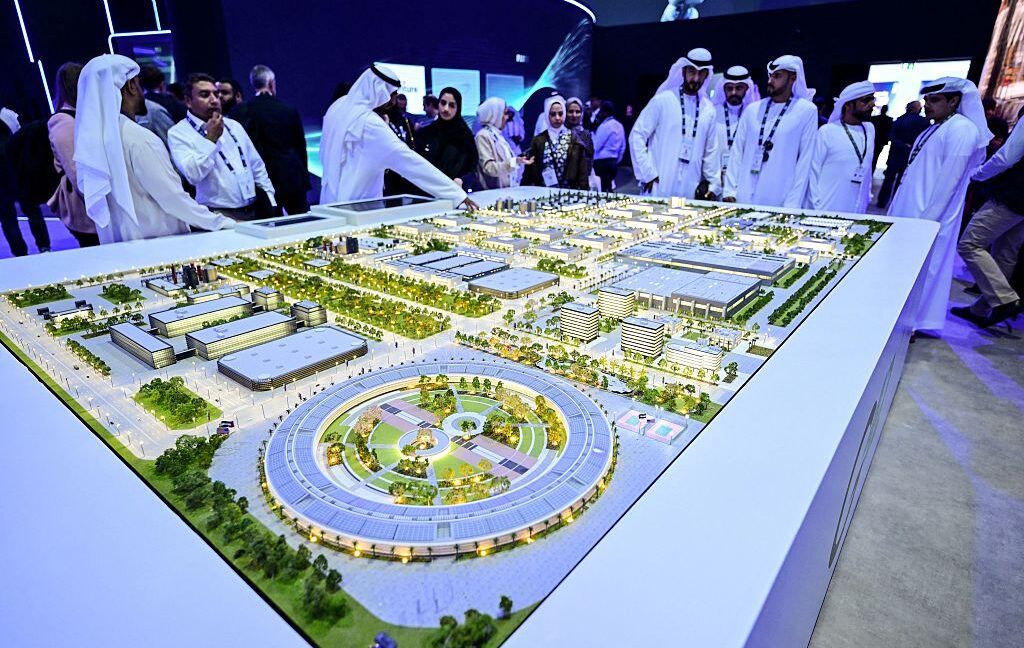
Pure Data Centre Group, a London-based data center developer, has suspended all Middle East investments after its Abu Dhabi facility was damaged by Iranian shrapnel. The decision reflects growing recognition that tech infrastructure has become a direct military target in the Iran war, with AWS data centers in the UAE and Bahrain already hit by Iranian strikes in March 2026. Amazon waived all customer charges for its Middle East cloud region that month, absorbing an estimated $150 million in losses plus repair costs, because civil law frameworks place war-risk liability on operators rather than insurers. The Iranian Revolutionary Guard Corps has explicitly threatened Google, Microsoft, Palantir, IBM, Nvidia, and Oracle data centers, and struck an Oracle facility in Dubai on April 2. The trillion-dollar Gulf data center expansion plan is now stalled as developers confront uninsurable war risk and the impossibility of neutral commercial positioning in an active conflict zone.
Gulf states have invested heavily in becoming AI and cloud computing hubs, leveraging cheap energy and strategic location between Europe and Asia. The Iran war has exposed the vulnerability of this infrastructure, with Iranian doctrine explicitly targeting economic assets linked to adversary states. Tech companies had treated the region as a stable growth market prior to February 2026.
A study in the American Journal of Health Economics by MIT economist Jonathan Gruber and colleagues finds that immigration directly improves nursing home care quality. Analyzing 16 million Medicare beneficiaries across 13,000 facilities from 2000 to 2018, the researchers found that a 10% increase in female immigrants in a metro area yields 1.1% more registered nurse hours and 0.7% more certified nurse assistant hours per patient, without displacing existing workers. Hospitalizations for short-stay patients drop 0.6%, while use of physical restraints, psychiatric medications, and urinary tract infections all decline. The findings challenge assumptions that language barriers would limit immigrant caregiver effectiveness. The research arrives as nursing home staffing remains 10% below pre-pandemic levels despite an aging population, and as immigration policy has become increasingly restrictive.
US nursing homes lost 10% of their workforce during the COVID-19 pandemic and have not recovered. About one-fifth of health care support workers are immigrants. The study used Census Bureau immigration data linked to federally mandated nursing home reporting for Medicare and Medicaid eligibility.
MIT and Google researchers have developed WRING, a debiasing technique for vision language models that avoids the "Whac-A-Mole dilemma" of existing methods. Standard projection debiasing removes biased information by cutting subspaces from model embeddings, but this distorts other learned relationships and often amplifies different biases. WRING instead rotates specific coordinates in the model's high-dimensional space, neutralizing bias for target concepts while preserving other relationships. The method requires no retraining and can be applied to pretrained models. Tests on OpenCLIP showed significant bias reduction for target attributes without increasing bias elsewhere. The approach is currently limited to CLIP-family models, but offers a more surgical alternative to blunt-force debiasing that has plagued medical and high-stakes AI applications.
Vision language models combine image and text understanding, enabling applications from medical diagnosis to content moderation. Bias in these systems has caused documented failures in dermatology AI that performed poorly on darker skin tones. The "Whac-A-Mole dilemma" was formally identified in 2023 AI research.
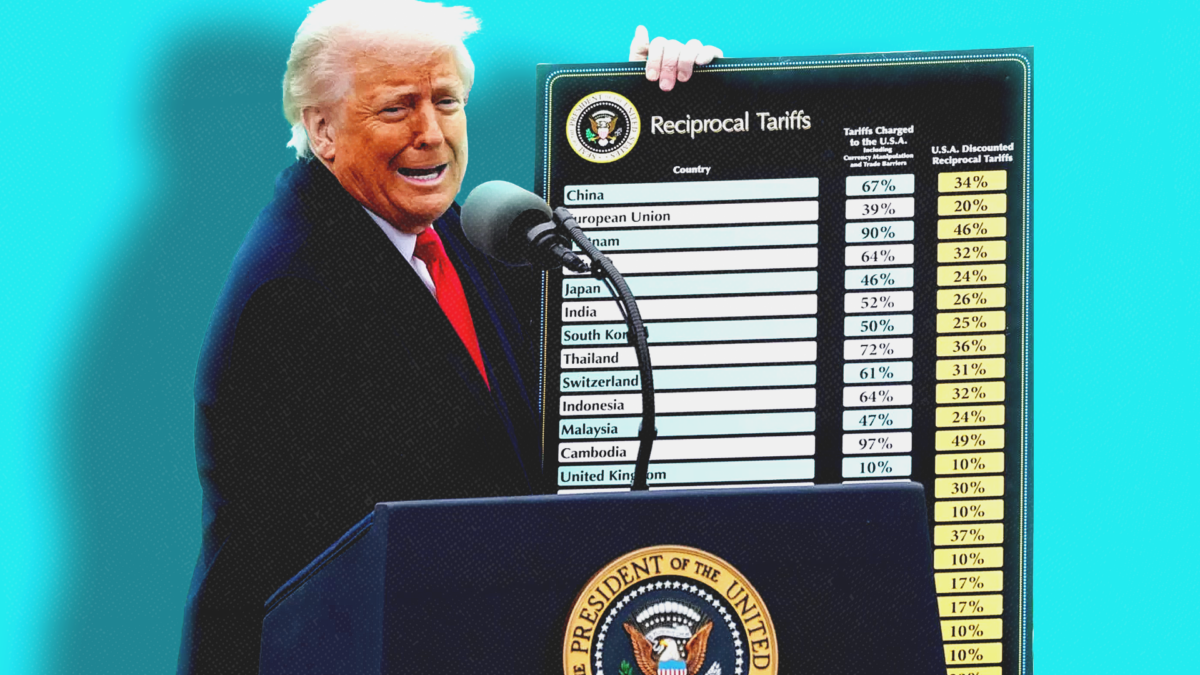
A Kearney consulting report finds that Trump's tariffs shifted supply chains away from China toward Vietnam, Malaysia, and India without increasing US manufacturing employment. Imports from China fell $135 billion in 2025 while imports from 13 other Asian nations rose $193 billion collectively. US manufacturing capacity increased only 1.5% despite capital investment tripling since 2020, constrained by labor costs, infrastructure gaps, and workforce shortages. The report notes that policy instability itself has become a barrier to reshoring, with companies delaying commitments amid tariff uncertainty. The White House continues to promote announced investments by Apple and US Steel as evidence of success, but the Kearney analysis suggests these represent exceptions rather than trends, and that tariff-induced cost pressures may actually impede the manufacturing revival they were designed to create.
The "Liberation Day" tariffs announced in 2025 imposed broad duties on imports from most countries, with particularly high rates on Chinese goods. The Trump administration has claimed these policies are delivering "the largest reshoring wave in American history." Manufacturing employment has shown modest gains but remains below pre-pandemic levels when adjusted for population growth.
Ultrafinitism, a philosophy of mathematics that rejects infinite sets and even extremely large numbers as meaningless, is producing unexpected technical advances despite being dismissed as heresy by most mathematicians. Doron Zeilberger of Rutgers University argues that infinity is unobservable and therefore illegitimate, advocating for discrete, finite mathematics that computers can actually compute. The article traces how this contrarian stance has yielded new algorithms and proof techniques, particularly in combinatorics. Critics note that ultrafinitism cannot specify where the finite boundary lies, making it seem arbitrary. Yet the approach has forced reconsideration of which mathematical objects have genuine computational content, with implications for computer science and the foundations of mathematics. The piece explores whether rejecting infinity might clarify rather than impoverish mathematical practice.
Ultrafinitism stands in opposition to the standard mathematical framework of ZFC set theory, which treats infinite sets as legitimate objects. Most working mathematicians use infinity as a convenient fiction even when finite approximations would suffice. The philosophy has connections to constructivism and intuitionism, other schools that restrict classical mathematics for philosophical or computational reasons.