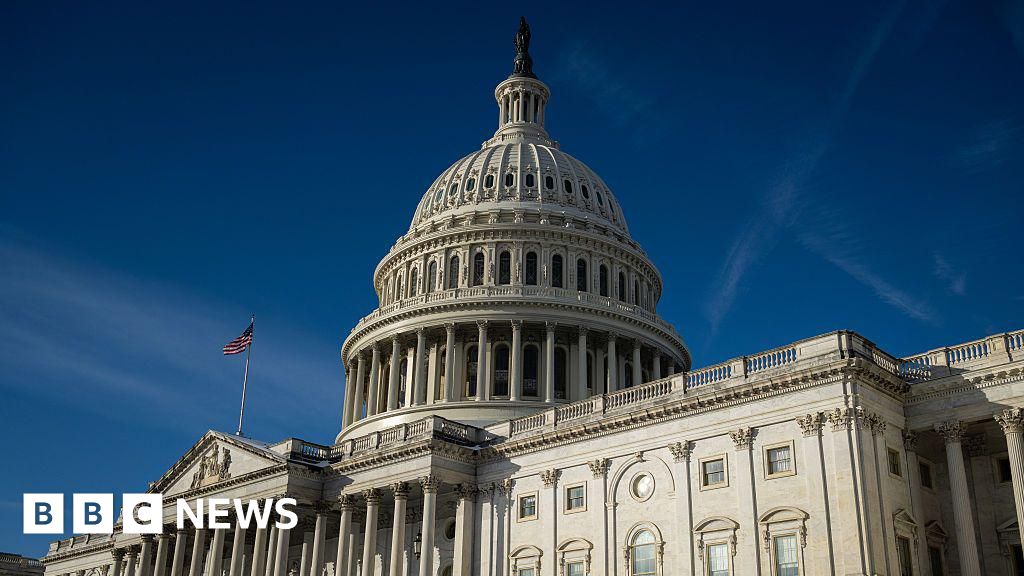
The US House approved a Senate-passed bill by voice vote on Thursday, restoring funding to much of the Department of Homeland Security and ending the longest partial shutdown in the agency's 22-year history. The 76-day standoff centered on immigration enforcement operations, with Democrats pushing for changes to ICE and Border Patrol practices. The bipartisan package does not include new funding for those agencies; Republicans plan to pursue separate legislation. President Trump supports the measure and is expected to sign it promptly. The shutdown had furloughed thousands of DHS employees and disrupted operations at ports of entry, immigration courts, and cybersecurity divisions.
The Department of Homeland Security was created in 2002 after the September 11 attacks, consolidating 22 federal agencies. This shutdown exceeded the 35-day partial government closure of 2018-2019, previously the longest in US history.
Musk testified for a third day Thursday in his lawsuit against OpenAI, seeking the removal of CEO Sam Altman and co-founder Greg Brockman while demanding up to $150 billion in damages for the nonprofit. Musk claims he was deceived into funding OpenAI's 2015 founding under its original charitable mission, only to watch it pivot toward profit through its partnership with Microsoft. OpenAI counters that the suit is a "baseless and jealous bid to derail a competitor" benefiting Musk's rival AI company xAI. The trial, which began with jury selection April 27, centers on whether OpenAI's shift to a capped-profit structure violated its founding charter. Musk's own emails and public statements from 2019-2020, when he ceased funding, have become central evidence.
Musk co-founded OpenAI in 2015 with a $1 billion funding pledge but left the board in 2018. He launched xAI in 2023, releasing the Grok chatbot as a direct competitor to ChatGPT.
San Francisco startup Goodfire launched Silico, a platform that lets researchers inspect and modify individual neurons and pathways inside language models during training. The tool applies mechanistic interpretability—mapping how specific circuits produce behaviors—to the entire development pipeline, from dataset construction through deployment. Goodfire claims this shifts AI development from "alchemy" toward precision engineering by exposing adjustable parameters that control outputs. The system uses automated agents to trace how inputs activate particular neurons and how those activations cascade through the network. Researchers have already identified, for example, a single neuron in Qwen 3 that frames outputs as moral dilemmas when activated. Silico works with open-weight models; proprietary systems like ChatGPT remain inaccessible.
Mechanistic interpretability aims to reverse-engineer neural networks into comprehensible components. Anthropic, OpenAI, and Google DeepMind also pursue this research, but Goodfire is among the first to productize tools for external developers.
Astronomers using the James Webb Space Telescope identified EGS-z11-R0, a massive galaxy shrouded in dust that appears just 400 million years after the Big Bang. The galaxy's crimson hue comes from dust absorbing and reddening light from its abundant blue stars—an amount of dust astronomers thought impossible to accumulate so early. Finding such a mature, dusty galaxy at this epoch resembles discovering a full-grown redwood in a freshly plowed field. The detection, led by Giulia Rodighiero at the University of Padua, suggests galaxy formation proceeded faster than current models predict. Spectroscopic analysis also revealed carbon, another marker of chemical enrichment typically associated with later cosmic periods.
The "red monster" joins JWST's growing catalog of unexpectedly mature early galaxies. These discoveries pressure the standard model of hierarchical galaxy formation, where small structures merge gradually into larger ones over billions of years.
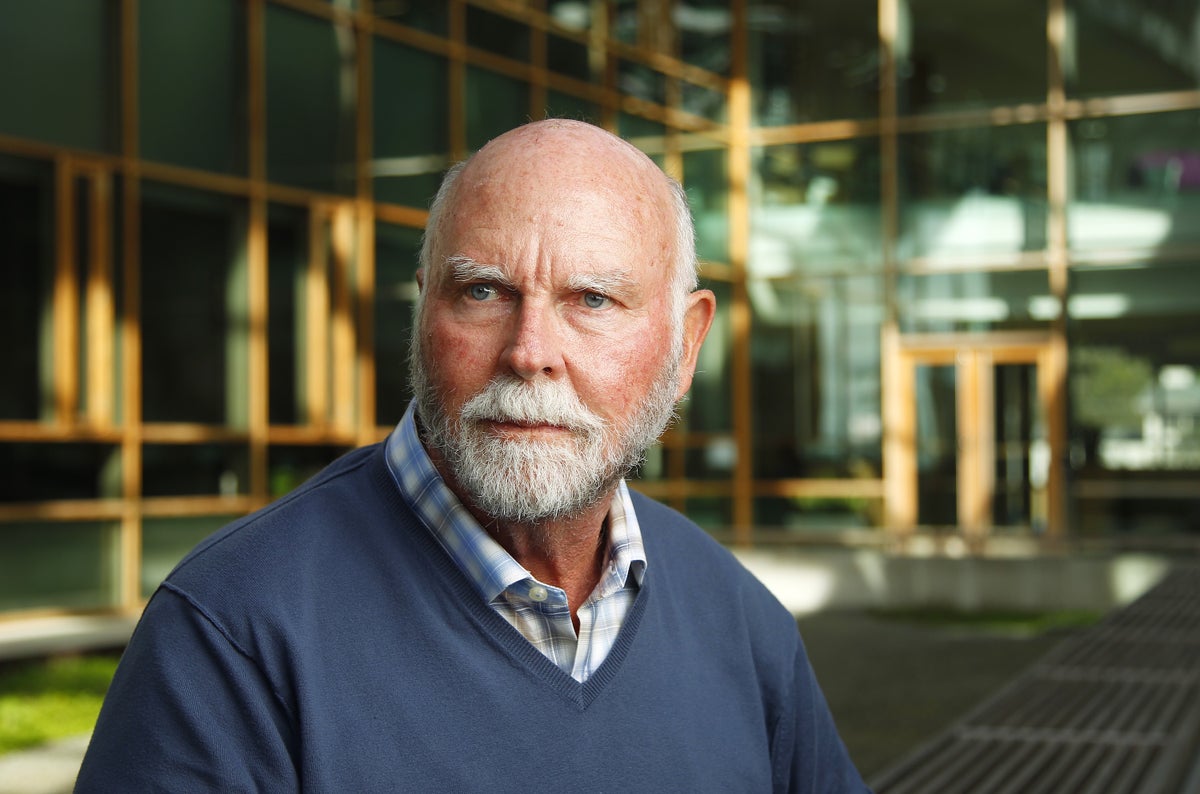
J. Craig Venter, the biologist who raced the government-funded Human Genome Project to decode human DNA, died Thursday at 79. Venter revolutionized genomics in 1995 by publishing the first complete bacterial genome, then developed whole-genome shotgun sequencing—a faster method that sequences DNA fragments in parallel and reassembles them computationally. His company Celera Genomics used this technique and his own DNA to produce a draft human genome in 2000, forcing a tie with the public project. Later ventures included the Global Ocean Sampling Expedition, which catalogued marine microbial diversity from his yacht, and the 2010 creation of the first synthetic bacterial cell. In 2013 he co-founded Human Longevity to apply genomics to aging-related diseases.
The Human Genome Project began in 1990 as an international public effort; Venter's private competition accelerated its timeline and reduced costs. The rivalry ended in a 2000 White House announcement of joint publication.
Beijing will implement China's strictest drone regulations on May 1, prohibiting sales, rentals, transport, and storage of drones and components within the city. The rules extend beyond flight restrictions imposed last August, creating a comprehensive lifecycle ban that authorities hope will prevent unauthorized aerial activity preemptively rather than policing it after the fact. Online platforms have already blocked drone deliveries to Beijing addresses; retail stores are clearing inventory. Storage facilities inside the Sixth Ring Road face police inspections and quantity limits. Exceptions apply to universities, research institutions, and law enforcement. Registered owners may transport personal drones across city boundaries. The policy reflects growing official concern about surveillance and security risks, even as Chinese manufacturers dominate global commercial drone markets.
China produces the majority of the world's consumer and commercial drones, with DJI holding approximately 70% global market share. Beijing's airspace has been restricted since 2015, with escalating controls following security incidents.
Israeli naval forces intercepted 22 vessels from the Global Sumud Flotilla in international waters northwest of Crete early Thursday, detaining approximately 175 activists from multiple countries. The flotilla, which departed two weeks ago with 58 boats from Spain, France, and Italy, aimed to break Israel's naval blockade of Gaza. Organizers called the operation "piracy," noting the interception occurred over 600 miles from Gaza. Israel's foreign ministry defended the action as necessary to prevent breach of a lawful blockade, stating passengers would be transferred to Greek authorities. Italian Prime Minister Giorgia Meloni condemned the seizure and demanded release of 24 detained Italians. The EU called for respect of international maritime law. Greek officials confirmed the operation occurred outside their territorial waters without prior consultation.
The 2010 Gaza flotilla raid, in which Israeli forces killed 10 activists aboard the Mavi Marmara, drew international condemnation and strained Israel-Turkey relations. Current operations reflect lessons from that incident, with Israel acting earlier and further from Gaza.
President Trump announced Wednesday that the US is "studying and reviewing" whether to reduce its 36,000 troops stationed in Germany, responding to Chancellor Friedrich Merz's criticism of American Iran policy. Merz had told students that the US lacked strategy in Iran negotiations and was being "humiliated" by Iranian negotiators. Trump retorted that Merz "doesn't know what he's talking about" and should focus on Germany's economic and immigration problems. The threat revisits a 2020 proposal to withdraw 12,000 troops, blocked by Congress and reversed by the Biden administration. Germany now spends 3.1% of GDP on defense, exceeding NATO's 2% target. Merz had received assurances of continued US presence during his March Washington visit; Thursday's comments marked a sharp reversal.
The US maintains its largest European military presence in Germany, centered on Ramstein Air Base. Troop levels have fluctuated since Cold War peaks above 200,000, with recent debates over burden-sharing and strategic priorities.
The Trump administration finalized regulations Thursday restricting access to $200,000 lifetime federal graduate loans to 11 professional degrees: pharmacy, dentistry, veterinary medicine, chiropractic, law, medicine, optometry, osteopathic medicine, podiatry, theology, and clinical psychology. All other graduate programs, including nursing, physical therapy, education, and social work, face a $100,000 cap. Congress mandated these limits last summer; the rule defines which programs qualify as "professional." Tens of thousands of public comments, including bipartisan lawmaker opposition, argued the narrow definition violates congressional intent and will create healthcare workforce shortages. The department defended its approach as providing "clearer and more uniform boundaries" than alternatives. The rule takes effect July 1.
Graduate student debt has grown rapidly, with average balances exceeding $90,000 for professional degrees. The caps aim to reduce taxpayer exposure but may shift students toward private loans with less favorable terms.
The Maryland Appellate Court rejected a claim that transgender parents should be denied tiebreaking custody authority when children explore gender identity. In [Turner v. Abelle-Kiser], a cisgender mother challenged a lower court's grant of such authority to her transgender ex-wife, arguing the arrangement was inherently suspect given the child's emerging gender questioning. Judge Douglas Nazarian's unanimous opinion held that custody decisions must center on the child's best interests, not parental identity categories. The court noted that therapists supported following the child's lead on pronouns and names, and that the evaluator found no evidence the transgender parent had inappropriately influenced the child's exploration. The ruling explicitly declined to create any categorical rule disadvantaging transgender parents in custody disputes involving gender identity.
The case arose from a 2022 divorce between AshLee Smith Turner and Blair Abell-Kiser, with joint custody of their minor child Z. The trial court granted Abell-Kiser tiebreaking authority on major decisions, including those related to gender identity.