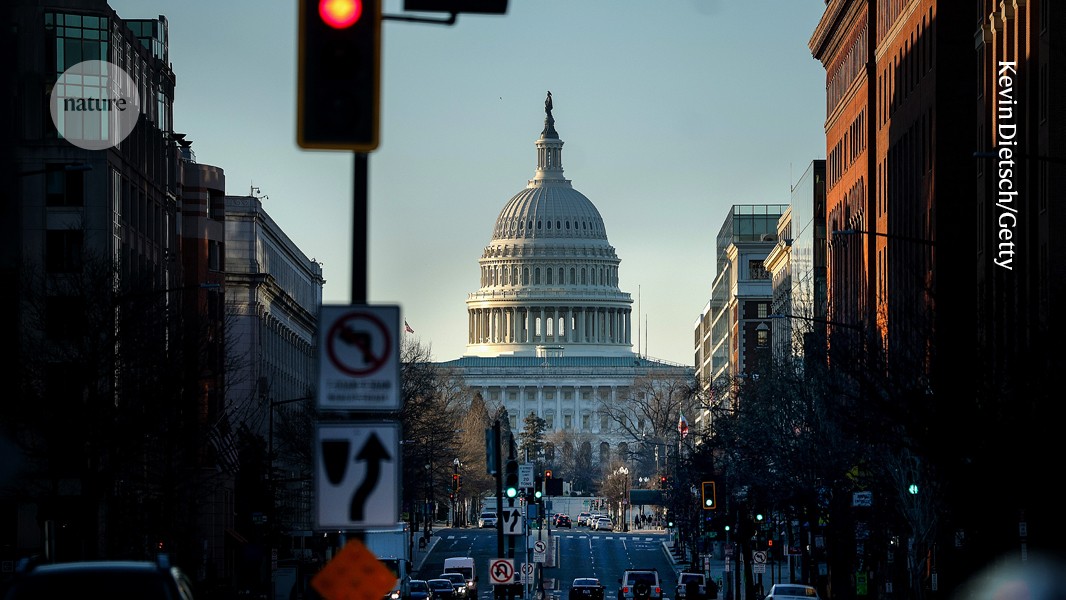
A House subcommittee voted Thursday to cut NSF funding by 20% and NOAA by 5% for fiscal 2027, while preserving NASA's overall budget. The vote rejected President Trump's far steeper proposals—55% for NSF, 27% for NOAA, 23% for NASA—but still signals substantial pressure on federal research agencies. The 20% NSF cut would drop its budget below $7 billion, while NASA science missions would fall to $6 billion from $7.2 billion. Democrats on the panel opposed the reductions, warning they would damage the talent pipeline for future researchers. The bill advances to the full appropriations committee on May 13, with the Senate expected to draft its own version. Last year, the Senate proposed smaller cuts than the House, and final spending landed closer to the Senate's position.
The Trump administration has twice proposed unprecedented cuts to science agencies for 2026 and 2027. Congress rejected the 2026 cuts, keeping spending flat. The current House bill represents a middle position between the administration's demands and previous funding levels.
China will eliminate tariffs on imports from 53 African countries starting Friday, extending a duty-free policy previously limited to 33 least-developed nations. Eswatini, which maintains diplomatic ties with Taiwan, remains the sole exclusion. The policy runs through April 2028. Beijing claims this makes it the first major economy to offer unilateral zero-tariff treatment to Africa. Analysts note the move burnishes China's image as a trade liberalizer against US tariff policies, though structural barriers—weak logistics, limited industrial capacity, reliance on raw commodity exports—mean gains will likely concentrate in already-developed African economies like South Africa and Morocco. Africa's trade deficit with China hit $102 billion last year, up 65%. Chinese officials suggest agricultural exports could rise, helping rural incomes; critics counter that tariff removal alone cannot reverse the fundamental asymmetry in Sino-African trade.
China has cultivated African partnerships through infrastructure investment and resource extraction. The duty-free expansion follows US tariffs on some African nations and comes as Beijing seeks to counter perceptions of exploitative trade relationships.
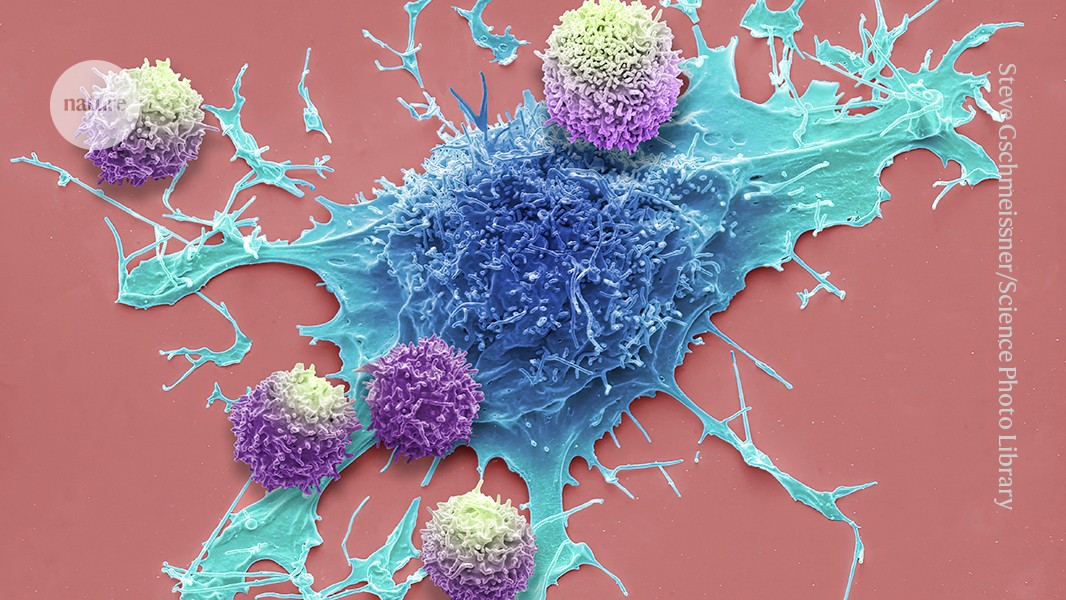
A small clinical trial suggests CAR-T therapies enriched with stem-cell memory T cells may outperform standard treatments for blood cancers. Of 11 patients with difficult-to-treat disease receiving the enriched therapy, 5 entered complete remission and 1 partial remission—against 1 remission in 10 patients receiving conventional CAR-T at similar doses. The stem-cell-like formulation also produced milder side effects. CAR-T therapies normally contain mixed T-cell populations; this trial deliberately increased stem-cell memory T cells nearly tenfold. These cells can generate diverse T-cell types, potentially improving persistence and potency. The study, led by researchers at the NCI and Leibniz Institute for Immunotherapy, was published April 30 in Cell. Larger trials are needed to confirm effectiveness, but the early results suggest a path toward lower-dose, less-toxic cancer immunotherapy.
CAR-T therapy involves extracting a patient's T cells, genetically engineering them to target cancer, and reinfusing them. Standard versions use mixed T-cell populations with variable efficacy. Stem-cell memory T cells are a rare subset with self-renewal capacity.
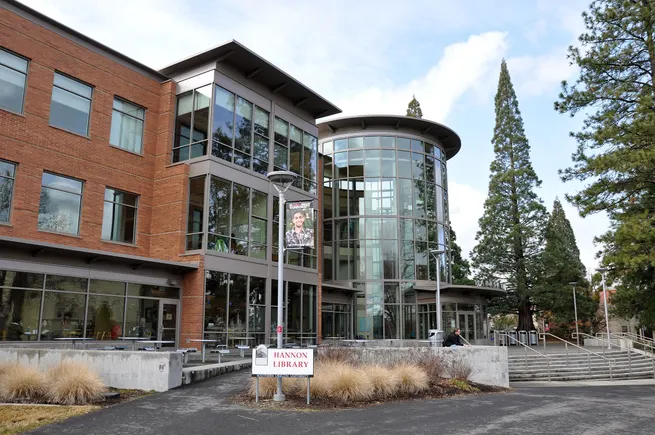
Deloitte consultants told SOU's governing board Tuesday that the public university faces possible closure without drastic restructuring, even after receiving $15 million in emergency state funding. The firm recommended cutting money-losing academic programs—including music, outdoor adventure leadership, and creative writing—freezing salaries, and outsourcing back-office functions to shared services, targeting $7-8 million in academic savings and $6.9 million in administrative cuts. SOU operates at a $12.5 million deficit projected to reach $16.9 million by 2030. Only 10 of 23 academic units generated positive gross income per credit hour in 2024-25. The state mandate requires balanced budgets by 2027-2029 and a plan for sustainable regional higher education without ongoing state increases. Consultants warned that failure to hit milestones should trigger planning for a "controlled winddown."
Small regional public universities across the US face enrollment declines and funding pressures. SOU's crisis follows similar challenges at other Oregon public institutions. The emergency funding came with strict accountability requirements attached.
Family structure, not just wages or wealth, drives persistent inequality in America. Children from intact two-parent families show dramatically better outcomes: 40% college graduation versus 17% from broken families, 77% reaching middle-class incomes versus 57%. The US leads developed nations in single-parent households at 23% against a 7% international norm. Government policy actively penalizes marriage through EITC phase-outs, Medicaid thresholds, housing vouchers, and SNAP benefit structures that punish household income combination. One estimate suggests 7.5% more low-income mothers would marry by age 35 absent these penalties. The marriage collapse has hit the least educated hardest: marital births fell 47 points for the bottom education quintile versus 6 points for the top from 1970-2018. The author, a libertarian, opposes government tilting scales either for or against marriage—but notes current policy overwhelmingly tilts against.
The essay draws on an American Enterprise Institute report edited by Kevin Corinth and Scott Winship. Research by Princeton's Sara McLanahan and economist Melissa Kearney supports the correlation between marriage and child well-being across racial and educational groups.
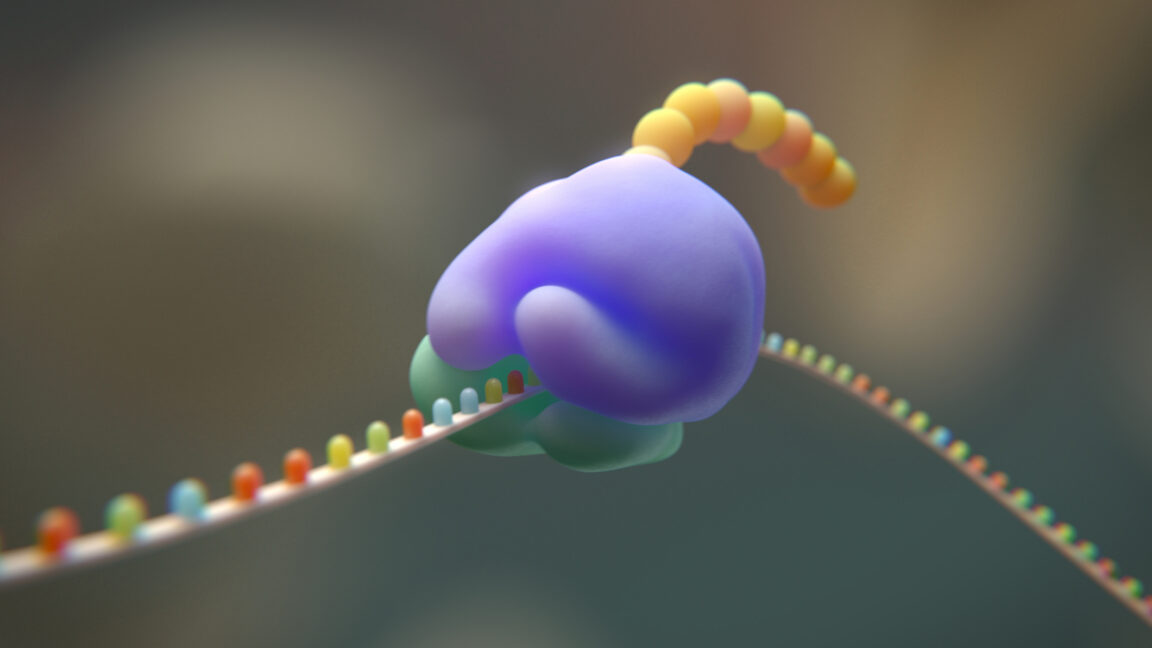
A Columbia-Harvard team has engineered a portion of the bacterial ribosome to function without isoleucine, one of the 20 standard amino acids used by all known life. Using AI protein design tools, they replaced isoleucine with valine in 50 [ribosomal] protein genes; 18 tolerated the swap without issue, 19 grew more slowly. The work tests hypotheses that early life used simpler genetic codes before settling on the current universal set. [Isoleucine] proved the most replaceable in genomic analysis—frequently substituted by other amino acids in related proteins across species. The researchers focused on the ribosome as a stringent test case because its assembly requires precise protein-RNA interactions. Success here suggests AI-assisted protein engineering may enable systematic exploration of how minimal a genetic code can be while sustaining cellular life.
All known life uses 20 amino acids encoded by three-base DNA codons. The origin of this code remains mysterious; theories suggest gradual expansion from simpler systems. The last universal common ancestor presumably used the full 20-amino-acid code.
Beacon Biosignals, founded by MIT PhD Jake Donoghue and former MIT researcher Jarrett Revels, has developed a lightweight headband that records EEG data during normal home sleep. The FDA-cleared device has been deployed in over 40 clinical trials for conditions including depression, schizophrenia, narcolepsy, Alzheimer's, and Parkinson's disease. Machine learning algorithms process the data to monitor treatment effects, identify disease progression markers, and create patient cohorts for trials. The company is building a "foundation model" of brain function from this growing dataset. Donoghue, who trained in neuroscience and medicine at MGH and Boston Children's, was struck by the lack of longitudinal brain monitoring compared to cardiac care. The platform aims to transform sleep from a constrained lab test into scalable, continuous brain health data.
Traditional sleep studies require overnight stays in specialized labs with bulky equipment. Home EEG devices could enable longitudinal studies at scale, potentially capturing disease progression and treatment responses invisible to periodic lab snapshots.
Six transgender Idaho residents filed a federal lawsuit Thursday challenging a new state law that bars them from using sex-designated restrooms in public buildings and private businesses. The ACLU, its Idaho affiliate, and Lambda Legal represent the plaintiffs, who seek to strike the law. The measure, enacted this year, extends restrictions beyond government facilities to privately owned businesses open to the public. Plaintiffs argue it violates constitutional protections and puts transgender people at risk of harassment and violence by forcing them into facilities mismatched with their gender identity. The case joins ongoing litigation against similar laws in other states. Idaho has enacted multiple transgender-related restrictions in recent years, including a ban on gender-affirming care for minors that courts have partially blocked.
Bathroom access laws have become a focal point in state-level transgender policy debates. Courts have split on whether such restrictions violate sex discrimination protections under federal law. The Idaho law's extension to private businesses broadens its scope beyond typical government-facility restrictions.
The current AI investment boom resembles the 19th-century railroad bubble more than the 2020s crypto cycle: massive capital deployment into infrastructure with uncertain near-term returns, but plausible long-term transformative potential. Railroads overbuilt, consolidated, and eventually delivered genuine economic transformation; crypto largely failed to produce comparable utility. Today's AI spending—data centers, chips, power infrastructure—follows similar patterns of speculative overbuilding with possible productive outcomes. The comparison suggests investors may face years of losses and consolidation before winners emerge, rather than immediate collapse. The piece also covers week one of the Musk v. Altman trial, where Musk's finance manager Jared Birchall made unplanned disclosures about a xAI bid for OpenAI assets, and examines regulatory uncertainty around Meta's Manus acquisition in China.
Platformer is a technology newsletter by Casey Newton, formerly of The Verge. The railroad bubble of the 1840s-1870s saw massive railway construction, frequent bankruptcies, and eventual industry consolidation that enabled transformative economic growth.
Researchers at the Friedrich Miescher Institute have created endometriumorganoids that regenerate after simulated menstrual shedding, offering a model for studying scarless tissue repair. The endometrium—the uterine lining—uniquely rebuilds monthly without scarring, but the mechanism has been difficult to study directly. The team treated spherical organoids with estrogen and progesterone, then withdrew the hormones and mechanically broke down tissue to mimic menstruation. The organoids regenerated spontaneously. Contrary to prior primate research suggesting deep stem cells drive renewal, the team found luminal cells at the surface participated actively. The simplified model contains only epithelial cells, omitting immune, stromal, and vascular components. Published April 28 in Cell Stem Cell, the work could inform understanding of endometriosis and broader tissue regeneration biology.
Organoids are three-dimensional tissue cultures that mimic organ structure and function. The endometrium's scarless repair has puzzled researchers because most tissue injury produces fibrotic scarring. Endometriosis involves endometrial-like tissue growing outside the uterus, causing pain and infertility.