Iran's Revolutionary Guard Corps fired cruise missiles at two UAE-flagged tankers, the Mombasa and Al Bahiyah, as they transited the Strait of Hormuz Sunday night. One Indian crew member was killed aboard the Mombasa; eight others, including Indian and Ukrainian nationals, were injured. Both ships caught fire before crews contained the blazes.
The UAE's Defense Ministry said the country reserves its full right to respond. The IRGC claimed the vessels ignored repeated warnings and chose to pass through a minefield.
The attack comes during a sharp week-long escalation. Trump reimposed a naval blockade of Iranian ports this weekend and told reporters Monday that Gulf states should pay the US for protecting Hormuz traffic. Congress received formal notification, restarting a 60-day military authorization clock.
Iran formally closed the Strait of Hormuz on July 12 after a week of US airstrikes on Iranian military positions. The waterway carries roughly 20 percent of global oil supplies. The current confrontation began in early July when Iran struck three commercial vessels near the Strait, drawing retaliatory US strikes.
US District Judge Kathleen Williams voided a legal agreement that would have granted Trump personal immunity from IRS tax audits and created a $1.8 billion compensation fund for people alleging politically motivated IRS enforcement. Williams ruled Monday that the lawsuit was not a genuine legal dispute but a vehicle to shield people affiliated with the president and redirect public funds under the cover of judicial approval.
Trump attorney Alejandro Brito was referred to the Florida Bar for potential disciplinary action. A second attorney was barred from future cases in the Southern District of Florida.
Trump filed the suit in 2026 alleging an IRS employee leaked his private tax data. He settled in May, with the immunity provision widely flagged as unprecedented. Plans for the compensation fund were already paused in June when a separate judge blocked it temporarily.
The settlement was unusual from the start: a sitting president sued the federal agency he controls, then settled in a way that would have granted him personal protection from that same agency's oversight. Legal experts called it an unprecedented use of civil litigation to insulate a president from accountability.
ICE agents shot and killed a 26-year-old Colombian man in Biddeford, Maine on Monday during a surveillance operation at his last-known address. DHS Secretary Markwayne Mullin later confirmed to Senator Angus King that the man killed was not the intended target of the warrant. Agents said the man attempted to flee in a vehicle toward an officer, who then opened fire. No agents wore body cameras; the officer who shot has been placed on administrative leave.
Maine's Attorney General opened an investigation. Hundreds of protesters gathered in downtown Biddeford within hours of the shooting.
The killing is the second in less than a week involving an ICE agent shooting a person who was not the intended target. Lorenzo Salgado Araujo, a 52-year-old Mexican national in Houston, died July 11 after an ICE officer shot him in what the agency later confirmed was a case of mistaken identity.
ICE enforcement has intensified under Trump's second term, with agents conducting operations in residential neighborhoods and workplaces. Civil liberties groups have raised concerns about accountability for use-of-force incidents, noting that many operations involve agents without body cameras.
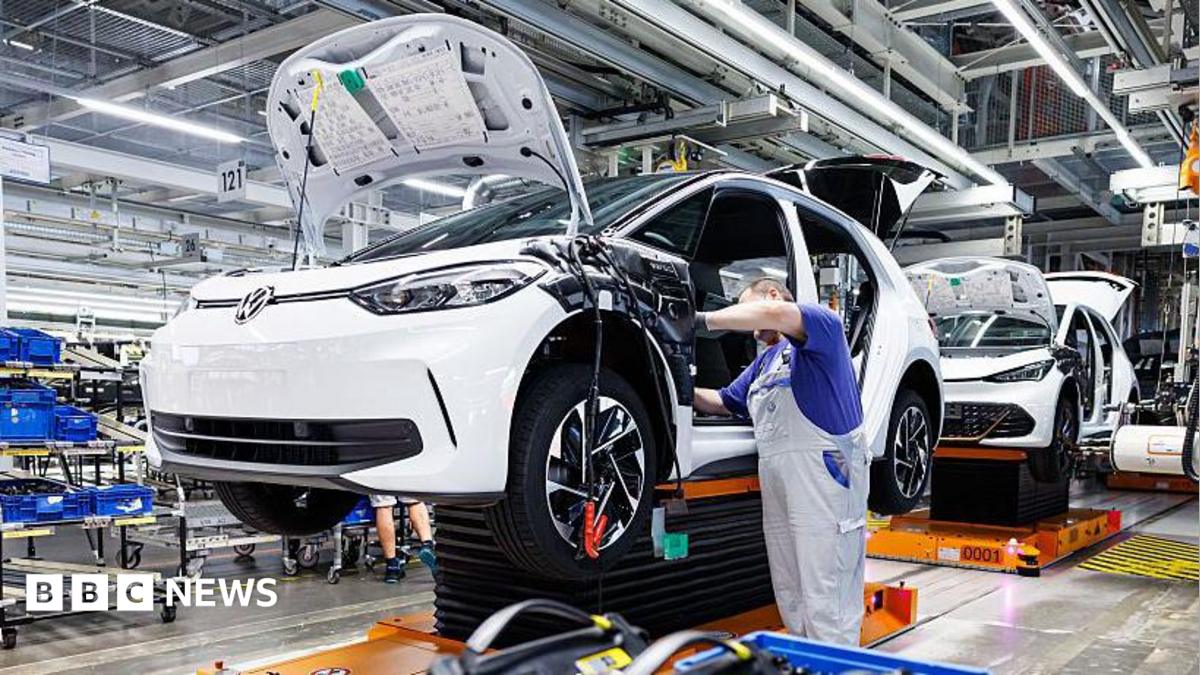
Volkswagen Group plans to eliminate roughly 100,000 jobs, about 16 percent of its 625,000-person workforce, in a cost-cutting drive aimed at saving EUR11 billion by 2030. Four German manufacturing plants are under review for potential closure. The target roughly doubles a previously announced figure of 50,000 positions.
CEO Oliver Blume has said VW's costs run about 20 percent higher than competitors. US deliveries fell 10 percent in 2025, and China deliveries dropped 8 percent as local brands, led by BYD (比亚迪), captured the EV market VW once dominated. About 28,000 departure agreements have already been signed at the group's German headquarters.
Germany's IG Metall union vowed to fight the cuts. The supervisory board is reviewing the full restructuring plan.
Volkswagen Group owns more than a dozen brands, including Audi, Porsche, and SEAT. The group's troubles in China accelerated after 2023 as domestic EV makers, backed by state subsidies, offered competing cars at lower prices. VW had led the Chinese auto market for decades before local brands displaced it.
A proposed White House rule would give political appointees authority to approve or reject federally funded research grants, overriding the existing peer-review system where panels of independent scientists assess proposals on scientific merit. The public comment period closed Monday with roughly 300,000 submissions; 94 percent of those reviewed opposed the change.
Nobel laureates Wolfgang Ketterle, a 2001 physics laureate at MIT, and Martin Chalfie, who won chemistry in 2008, warned the rule would destroy the leadership of the US in fundamental science. OMB director Russell Vought framed the change as preventing funding of "woke" research initiatives.
The American Association for Cancer Research argued that peer review helped reduce the US cancer death rate by 35 percent since 1991, saving an estimated 4.8 million lives. Final rule language has not been published.
Federal research agencies including NSF and NIH award grants through competitive peer-review processes where scientists assess proposals on scientific merit, without evaluating the political implications of the research topic. The system has existed in roughly its current form since the 1950s.
Measurable early signals show AI displacing entry-level workers faster than mid-career professionals, argues Casey Newton in Platformer. Stanford's Canaries Dashboard, which tracks early labor-market shifts, found early-career jobs shrank 2.7 percent in 2025 while mid-career jobs for workers aged 35-40 grew 1.6 percent. Roles most exposed to AI fell 0.5 percent; roles least exposed grew 0.2 percent.
More than 200 economists and AI leaders signed a statement last week calling for urgent policy attention. Software engineering job postings rose 15 percent since Claude Code launched in February 2025, but 71 percent of those new postings are for senior roles. China quietly dropped its numerical urban job creation target for the first time since the 1990s, which Newton flags as a significant signal.
Stanford economist Erik Brynjolfsson warns of a "tsunami that's coming" and questions whether the economy will adjust fast enough.
Daron Acemoglu and Simon Johnson shared the 2024 Nobel Memorial Prize in Economics partly for their research on how technology affects labor markets. Both are among the statement's signatories. Acemoglu has argued that AI's productivity benefits tend to flow to capital owners and senior workers rather than to workers broadly.
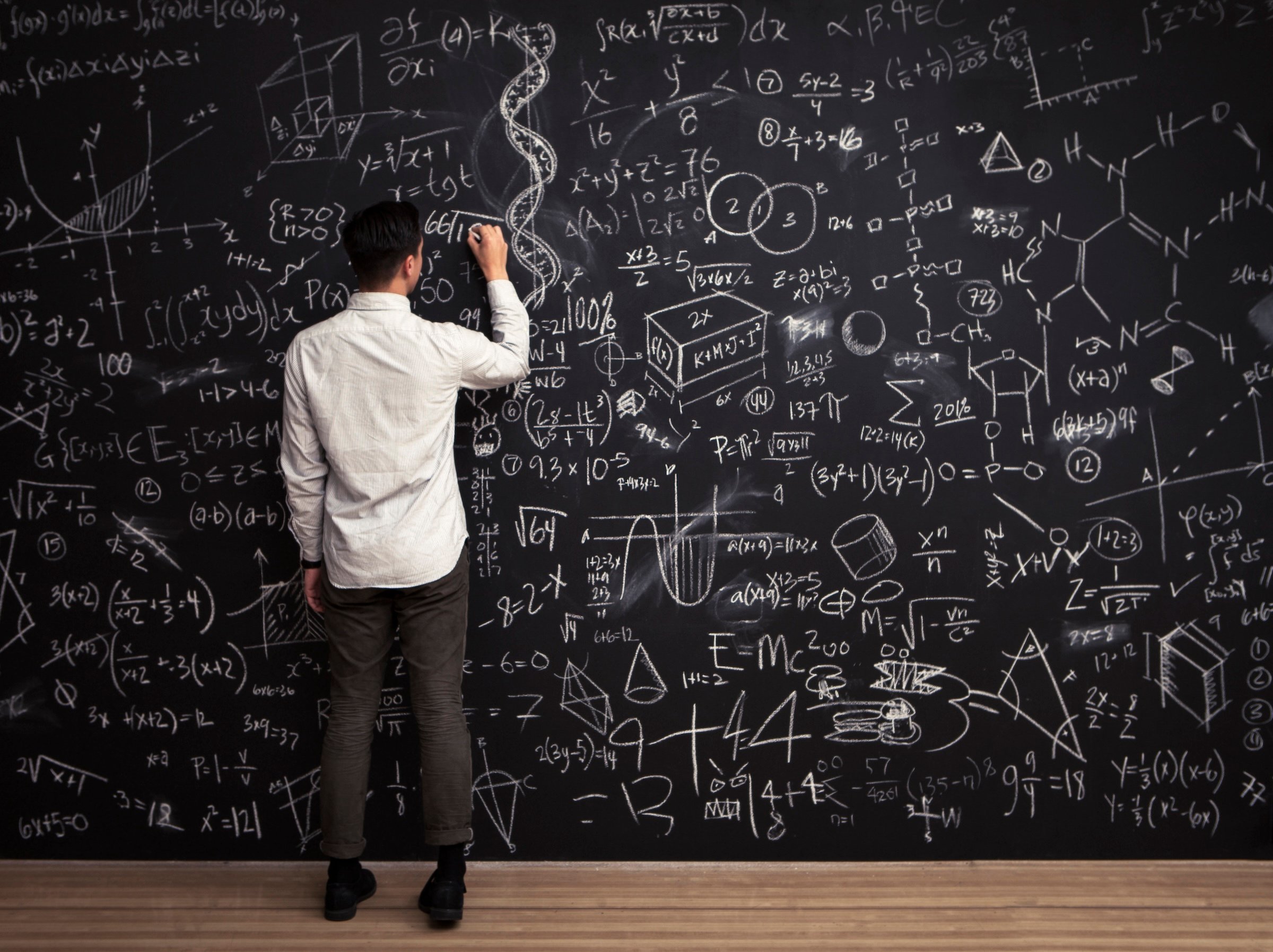
In 1960, a 23-year-old Soviet mathematician named Anatoly Karatsuba showed that the method most people learn in school for multiplying large numbers is not optimal. By replacing some multiplications with additions, which computers handle more cheaply, he cut the required operation count. The proof overturned a conjecture by his advisor Andrei Kolmogorov, who had argued the school method could not be beaten.
A 2019 algorithm by David Harvey and Joris van der Hoeven improved the bound further, running in what mathematicians call O(n log n) time, close to the theoretical floor for reading the numbers at all. The catch is that this algorithm only outperforms rivals at scales that don't arise in any current real-world computation.
The speed of multiplication matters well beyond classrooms: it underlies encryption, training neural networks, signal processing, and most of what a chip's arithmetic units do all day.
Multiplying two n-digit numbers requires roughly n-squared operations by the school method. Karatsuba's 1960 result reduced that to about n^1.585. The open question is whether the O(n log n) bound Harvey and van der Hoeven reached is a true lower limit or just the best anyone has managed so far.
About 10 percent of humans are left-handed, a figure that holds across cultures and stretches back millions of years in the fossil record. Neuroscientists long assumed the brain's left-hemisphere dominance for language caused corresponding right-hand dominance. A new finding reverses that story: ultrasound imaging shows fetuses display movement asymmetries around 10 weeks of gestation that predict later handedness, weeks before the brain-to-limb connections controlling voluntary movement have formed. The spinal cord's own early asymmetry appears to be the driver.
About 40 gene variants influence the probability of left-handedness, most encoding tubulin, a structural protein. Those variants correlate with elevated rates of schizophrenia, dyslexia, and autism, all more common among left-handers than in the general population.
One evolutionary hypothesis: a stable minority of left-handers survives because opponents trained against right-handers are less prepared to defend against a left-handed strike.
Handedness appears to have stabilized after the genus Homo emerged about 2.8 million years ago. Stone tools from that era show consistent right-hand dominance in their manufacture, suggesting the current roughly 9:1 ratio is ancient. Most mammals show some lateralization, but none approaches humans in the consistency of the bias.
Astronomers have detected erythrulose, a four-carbon sugar found in raspberries, inside a massive cloud of gas and dust about 26,700 light-years from Earth near the center of the Milky Way. Radio telescopes in Spain captured the specific pattern of radio waves the molecule emits as it rotates, a spectral barcode unique to each compound.
The finding confirms that sugars can form in interstellar space under conditions present in molecular clouds that eventually collapse to form stars and planets. The mechanism surprised researchers: models predicted erythrulose would build up one carbon atom at a time, but the data suggest it formed by combining two two-carbon fragments, glycolaldehyde and ethylene glycol, rather than growing incrementally.
Sugars matter to the chemistry of life: they store energy and form the structural backbone of DNA and RNA. Finding them in the raw material of solar systems extends the reach of prebiotic chemistry.
G+0.693-0.027, the molecular cloud targeted by astronomers, sits near the galactic center and is one of the richest known sites of complex interstellar chemistry. Its turbulence and density promote molecular collisions absent in quieter regions. Earlier observations detected simpler sugars like glycolaldehyde there; erythrulose is the most complex sugar found beyond the Solar System.
Anthropic's claim to have found a hidden computational space inside Claude where the model deliberates before producing outputs is circular and can't determine whether the model is conscious, argues neuroscientist and novelist Erik Hoel. The methodology detects what Hoel calls verbalizable representations, meaning the model's own self-reports are both the experimental instrument and the evidence. If Claude reports having an internal workspace, and the experiment measures internal workspaces by what models report, no independent verification exists.
Hoel also notes the J-space architecture appears only in Claude Sonnet 4.5 in current tests; attempts to replicate it in open-source models found no comparable structure, undercutting any general claim about language models.
A structural conflict shapes the research, he argues: whether or not AI models have subjective experience, Anthropic benefits from the suggestion that they might, in recruiting talent and in consumer perception.
Anthropic published research in July 2026 describing J-space, a set of internal activation patterns where words appear to influence Claude's reasoning without appearing in its output. The company drew an analogy to global workspace theory, a neuroscience framework proposing that consciousness arises from a central hub where information is broadcast across the brain.