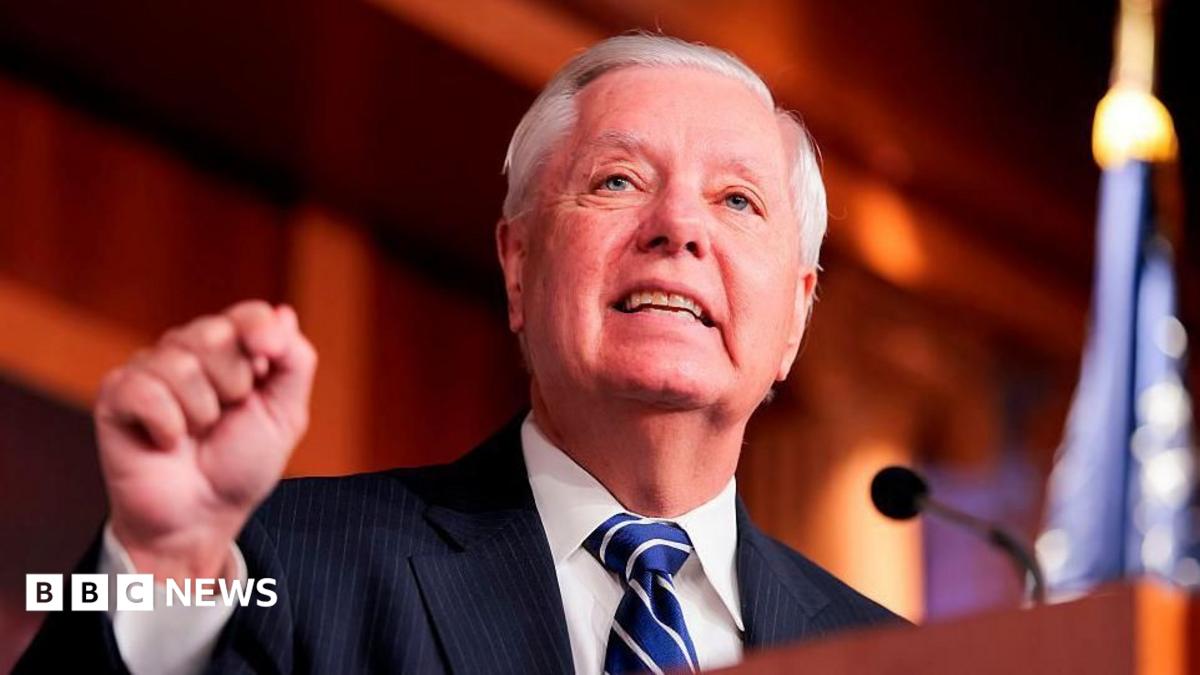
Senator Lindsey Graham, Republican of South Carolina and chairman of the Senate Budget Committee, died Saturday evening at 71 from what his office called a brief and sudden illness. He had shown no prior health concerns. Graham had just returned from Kyiv, where he met President Zelensky on Friday to advance a Russia sanctions bill he described as giving Trump the tools to end the war.
The death caught Washington off guard. Graham called Trump a race-baiting, xenophobic bigot in 2015 and declared after January 6 that he was done with him, only to return as one of Trump's most reliable Senate allies, voting against both impeachment convictions. Trump called him a true American Patriot; Zelensky, who had hosted Graham in Ukraine ten times since the 2022 invasion, called him a determined leader the world has lost. Netanyahu said Israel lost one of its greatest friends.
Graham served in the House for eight years before winning South Carolina's Senate seat in 2002. He became a consistent advocate for US military support for Ukraine despite his complicated history with Trump. His death leaves South Carolina's Republican governor to appoint a temporary replacement until a special election.
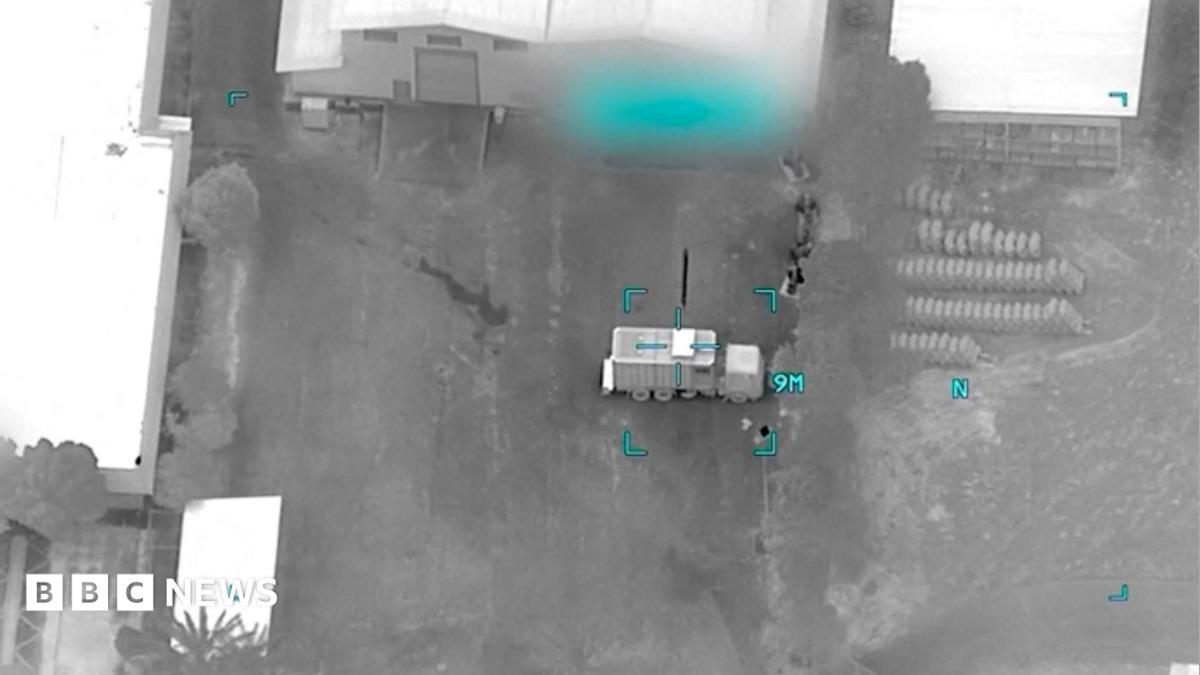
Iran's Revolutionary Guard Corps formally closed the Strait of Hormuz on Saturday, the waterway through which roughly 20 percent of global oil supplies travel daily, after the US struck 140 Iranian military targets in a third round of air operations this week. The exchange began when Iran fired a naval cruise missile at the MV GFS Galaxy, a Cyprus-flagged cargo ship it said was traveling an unapproved route, damaging the engine room and leaving one crew member missing. US Centcom responded by destroying Iranian missile sites, drone facilities, communications networks, and coastal surveillance stations. Iran struck a US air base in Jordan, claiming to destroy drone hangars, and launched missiles at bases in the UAE, Qatar, Kuwait, and Bahrain. Trump declared the ceasefire over but said negotiations would continue. Iran's supreme leader Mojtaba Khamenei, whose father Ali Khamenei was killed in a US-Israeli airstrike in February, called for vengeance against the US and Israel.
The Strait of Hormuz, between Iran and Oman, carries roughly 21 million barrels of oil and liquefied natural gas daily, about a fifth of global supply. The current conflict reignited after the ceasefire signed in late June collapsed. A previous round of US and Iranian exchanges in early July had ended in a brief standdown before this week's escalations.
Typhoon Bavi, a storm roughly as wide as France, struck Zhejiang province twice on Saturday: first near Taizhou in the evening, then near Wenzhou, a coastal city of 10 million people, around midnight. Chinese authorities evacuated 1.7 million residents across Zhejiang and hundreds of thousands more in neighboring provinces; Beijing separately moved 100,000 people. About 400 flights and dozens of train routes were cancelled, and schools and workplaces were suspended province-wide. Bavi is the second major typhoon to hit China in a single week. Typhoon Maysak, which struck earlier in the week, killed at least 39 people and caused massive agricultural losses before triggering rare inland tornadoes. Bavi killed at least 17 in the Philippines through landslides before reaching China's coast. As of Sunday morning, China and Japan reported no deaths from Bavi, though five people were injured in Japan's Ryukyu island chain. The storm is now moving inland toward Anhui province.
Typhoon Bavi originated as a super typhoon over the western Pacific, hitting Guam and the Northern Mariana Islands with 290 km/h winds before weakening to 144 km/h by Chinese landfall. Zhejiang province hosts major manufacturing, export, and port infrastructure. Two significant typhoons striking the same country within days is uncommon.
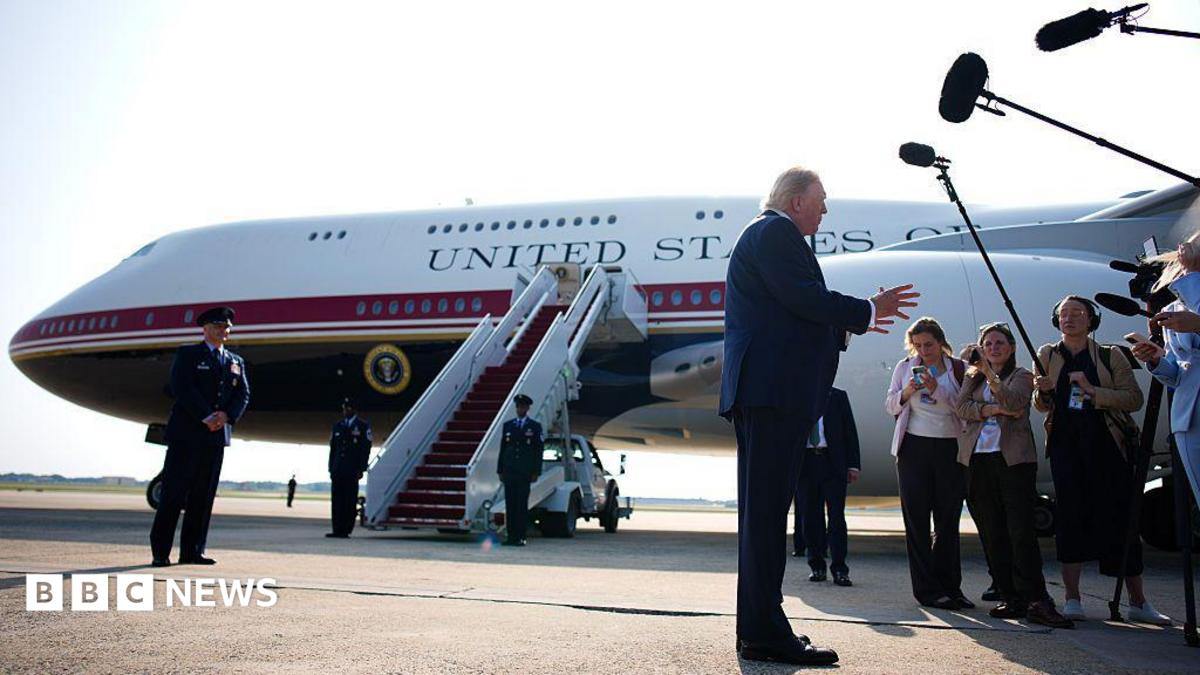
Federal agents delivered grand jury subpoenas to New York Times journalists at their homes on Friday, requiring them to testify in Manhattan as early as Wednesday. The subpoenas followed two Times stories reporting that the Secret Service urged Trump to use an older aircraft for his return from the NATO summit in Turkey, because his newer plane, a Boeing 747-8 gifted by Qatar in June and valued at roughly $400 million, lacked advanced missile-defense systems and other security features. Other outlets including CBS published similar reporting but only Times journalists received subpoenas. The Justice Department said it is investigating illegal leaks of classified information and that reporters are not the targets. Times lawyer David McCraw called the subpoenas a brazen act and nothing more than an attempt to prevent the public from knowing what is happening in their country by intimidating journalists. Trump, when asked about the security gaps, said he faces threats constantly and is always number one on the list.
Press subpoenas in leak investigations are rare but not unprecedented. Qatar gifted the Boeing 747-8 to the US as an unconditional gift unveiled June 19, a transfer that drew ethical scrutiny for months. The subpoenas came during a week of escalating US-Iran military exchanges, including the Iranian closure of the Strait of Hormuz.
Google's Quantum AI team has built a reinforcement learning agent that keeps its Willow quantum processor recalibrated during live computation, addressing a practical barrier to running deep quantum circuits. Quantum processors drift as temperature, electromagnetic noise, and material fatigue gradually shift their control parameters. The only fix today is to pause the computation, recalibrate, and restart, which works for short programs but breaks any algorithm that needs extended runtime.
The RL agent repurposes error-detection events that quantum error correction already generates as a continuous feedback signal, using that data stream to tune roughly 40,000 control parameters without pausing. When the team injected artificial drift as a stress test, the system achieved a 3.5-fold improvement in logical qubit stability under the surface code and a 20 percent improvement in overall error correction. The paper appeared in Nature. The agent manages an exploration-exploitation tradeoff, occasionally sampling sub-optimal control settings to avoid locking in on a locally good strategy that masks deeper drift.
Quantum error correction distributes information across many physical qubits and checks continuously for errors, catching them before they corrupt results. Recalibration has historically required pausing this process, which rules out the long runtimes that future useful quantum algorithms will need. Reinforcement learning, the technique behind AlphaGo, has the agent explore control strategies and converge toward those that minimize detected errors.
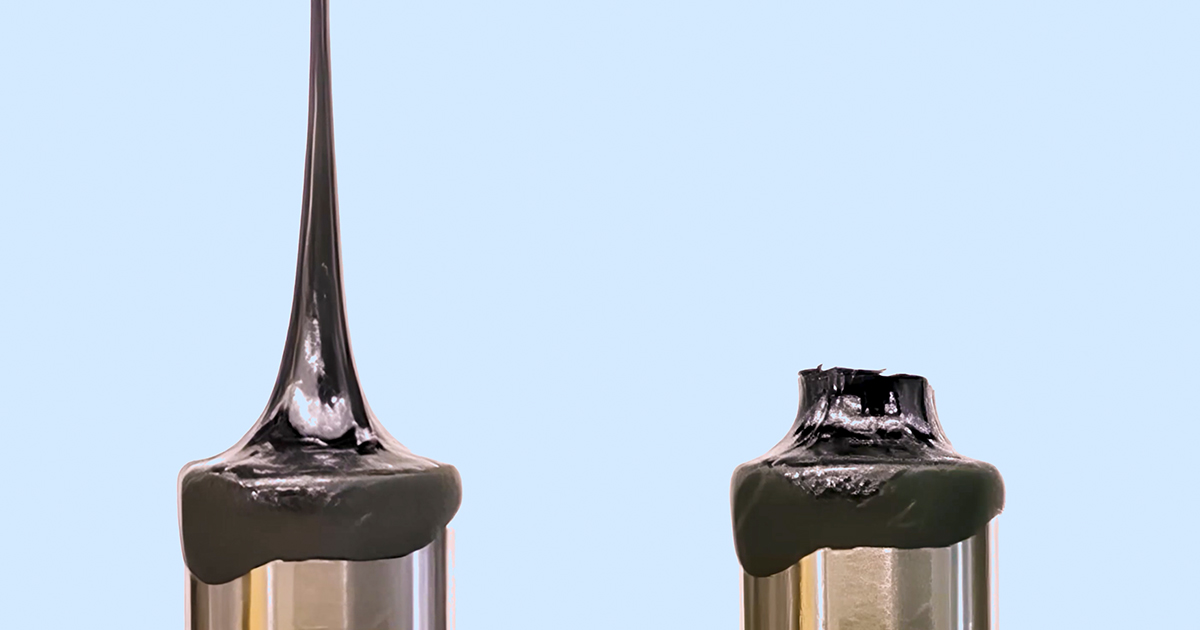
Researchers at Drexel University have shown that simple, non-elastic liquids such as hydrocarbon oils can snap apart like glass rather than flow, overturning a decades-old assumption in fluid mechanics. Fracture had been documented only in elastic complex fluids like polymers and biological gels, where molecular networks absorb energy and slow crack propagation. Plain liquids were assumed to always flow around any emerging gap.
The Drexel team, collaborating with ExxonMobil and researchers at Penn and India's International Center for Theoretical Sciences, pulled hydrocarbon samples through a glass capillary. Above roughly 300 millimeters per second, cavitation bubbles nucleated faster than the liquid could flow around them, and molecular cohesion failed catastrophically. Cracks in these simple fluids travel at 500 to 1,500 meters per second, far faster than the roughly 7 centimeters per second seen in elastic fluids, because no molecular network slows them. The results appeared in Physical Review Letters and have implications for fiber spinning, inkjet printing, soft robotics, and models of traumatic brain injury.
Fracture requires a crack to grow faster than the material can flow to fill the gap. In elastic fluids, polymer chains bridging a growing crack absorb energy and brake the propagation, which is why the effect was assumed limited to those materials. The Drexel experiments used high-speed imaging to capture events unfolding in milliseconds. The collaboration with ExxonMobil reflects industrial interest in how lubricants and fuels behave under extreme mechanical conditions.
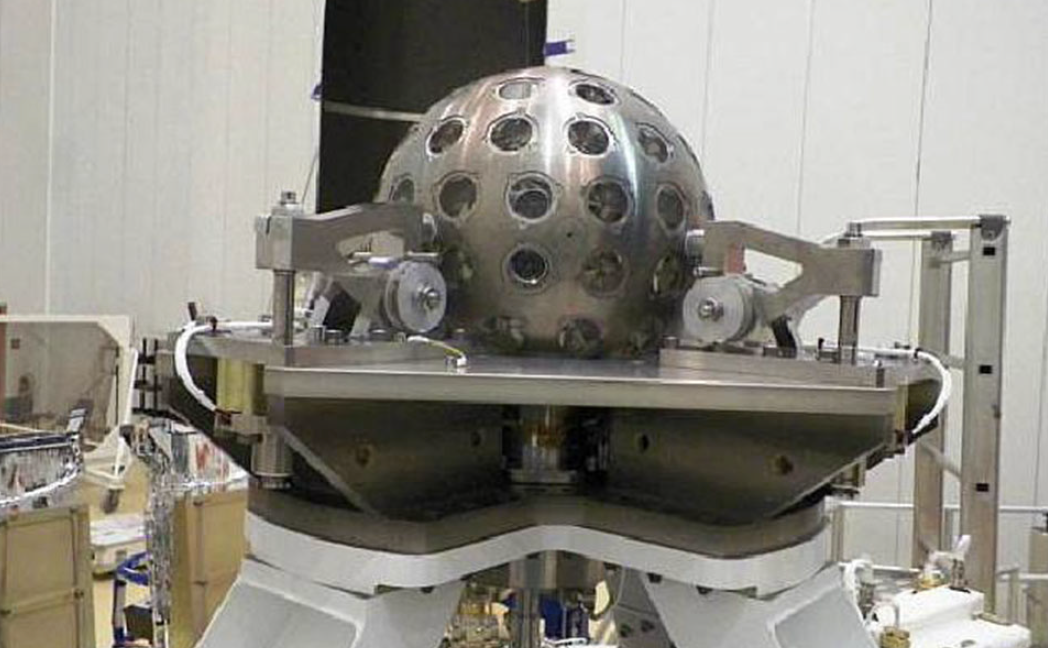
Physicists tracking LARES-2, a mirror-covered aluminum sphere launched by the Italian Space Agency in 2022, have measured the Lense-Thirring effect with an uncertainty of one part in a thousand, a more than tenfold improvement over the best previous Solar System tests. The Lense-Thirring effect is a prediction of general relativity: a massive spinning body drags the fabric of spacetime around it, much as a spoon stirs honey, pulling nearby objects into a slow orbital drift. Earth's rotation produces this drag, detectable as a tiny deviation in satellite trajectories.
The team, led by Ignazio Ciufolini at Sapienza University of Rome, bounced laser pulses off LARES-2's retro-reflectors to track its orbital path with millimeter precision, treating the entire orbit as a gyroscope sensitive to spacetime curvature. Results appeared in Nature. The precision improvement comes from LARES-2's design: its high mass-to-cross-sectional-area ratio makes it far less susceptible to contamination from atmospheric drag and solar radiation pressure than earlier satellites.
The Lense-Thirring effect was predicted by Austrian physicists Josef Lense and Hans Thirring in 1918. Earth's rotation drags spacetime by roughly 8 centimeters per year at orbital altitudes, too subtle to detect without precise laser ranging. Earlier confirmations came from NASA's Gravity Probe B (2011) and the two LAGEOS satellites, which LARES-2 now substantially improves upon.
KIC 8462852, known as Tabby's Star after astronomer Tabetha Boyajian, has puzzled scientists since 2015 with irregular dimming that sometimes drops its brightness by up to 22 percent in erratic, non-periodic patterns. Standard explanations failed: orbiting planets produce regular dips, and dust clouds alone could not account for the varied shapes. The anomaly attracted speculation that an advanced civilization might be building a megastructure around the star.
Researchers at the University of Warwick now report the detection of a companion planet roughly ten times Jupiter's mass, spotted by NASA's TESS satellite during a 21-hour transit in September 2019. The team argues this massive companion is the cause: its gravity perturbs swarms of exocomets and planetesimal debris into orbits that cross our line of sight to the star, and the dusty fragments produce the irregular dimming as they pass through. The study marks the first confirmed transiting companion around the star after more than a decade of observations.
Boyajian's Star drew worldwide attention in 2015 when citizen scientists in the Planet Hunters project flagged its unusual light curve from Kepler satellite data. Ground-based campaigns confirmed the dimming was real and variable, ruling out instrument error. TESS, launched in 2018, provided the continuous long-baseline monitoring needed to catch a planetary transit. The alien megastructure hypothesis was never the scientific consensus.
IO Fund, a technology investment research firm, published an analysis arguing that Nvidia is inflating its GPU demand figures through circular financing with its two largest cloud computing customers. Nvidia has invested $896.7 million in CoreWeave and $33 million in Nebius; both companies deploy that capital to buy large volumes of Nvidia GPUs. CoreWeave spent $7.7 billion on capital expenditures in Q1 2025 against $2.08 billion in revenue, carrying a free-cash-flow deficit of $4.71 billion and $24.86 billion in total debt. A separate provision in Nvidia's contract obligates Nvidia to purchase CoreWeave's unsold datacenter capacity if customers do not fill it, effectively backstopping demand for its own products. CoreWeave spends 25 to 27 percent of its revenue on interest payments. IO Fund argues that a significant portion of what appears as explosive organic GPU demand is being recycled through Nvidia's own balance sheet, which would mean publicly cited demand projections are structurally overstated.
CoreWeave and Nebius are neoclouds, companies that rent GPU-powered computing time for AI training and inference. Unlike AWS, Azure, or Google Cloud, they depend almost entirely on the AI market. Nvidia's market capitalization and revenue growth during the AI boom have rested heavily on the premise of sustained GPU demand from customers like these.
American elites who grew up in modest circumstances tend to claim working-class identity when they were always on a path out, argues Noah Smith in Noahpinion. Smith draws on Milton Friedman's permanent income hypothesis to reframe the question: class tracks lifetime earning potential, not current income or lifestyle. A graduate student eating ramen with strong career prospects is not working class, even if their bank account suggests otherwise.
Smith applies this to political failure. Progressive elites who believe their modest upbringings give them insight into working-class voters are wrong in exactly this way, misreading people they only superficially resemble. The Maine Senate race involving Graham Platner, a candidate progressives recruited partly for his working-class credibility, illustrates the pattern. The underlying problem is structural: the institutions that once mixed classes in daily life, military service, religious congregations, mixed-income neighborhoods, have eroded. Elite and working-class Americans now live in social worlds with almost no overlap.
Milton Friedman's permanent income hypothesis, proposed in 1957, holds that people set spending based on expected long-run income rather than current earnings. Applied to class identity, it suggests subjective class depends heavily on expected future economic trajectory rather than present circumstances. Noah Smith is an economist and Substack writer who covers economics, politics, and technology.