The US military struck 90 targets along Iran's southern coastline overnight Wednesday, hitting air defense systems and military logistics infrastructure at ports including Bandar Abbas, Sirik, Jask, and Chabahar, all on or near the Strait of Hormuz. US Central Command said the strikes were aimed at degrading Iran's ability to attack commercial shipping, a day after Iranian forces hit three commercial tankers in the strait. Trump called the new round "retribution for yesterday's bombing of ships." That tanker attack had followed the first US airstrikes the same night, which Trump launched after declaring the June 17 ceasefire "over" and calling Iran's leaders "scum." Iran's Revolutionary Guard confirmed overnight retaliatory strikes on US military bases in Kuwait and Bahrain. Explosions hit Bahrain's capital Manama; Kuwait intercepted missiles and drones. Iran's parliamentary speaker warned the Strait of Hormuz would open only under "Iranian, not American, arrangements."
The US and Iran reached a ceasefire on June 17 after weeks of escalating confrontation over Iran's nuclear program. Trump declared it void on July 7, triggering the current exchange. Iran's supreme leader Ayatollah Khamenei died recently, leaving a leadership transition underway as the crisis intensifies. The Strait of Hormuz channels roughly 20 percent of global oil trade, making it Iran's central point of leverage.
Roberto Serrano, a blind economics professor at Brown University, noticed something wrong with his spring 2026 course: 86 students enrolled, about three times the usual number, and a take-home midterm produced an average of 96 out of 100, with 40 scoring a perfect 100, well above the historical range of 65 to 80 percent. Running the same questions through ChatGPT produced similar results. Serrano announced the final would be held in person. Eighteen students dropped the course; nine more skipped the final entirely. Of those 27, 22 had scored perfect 100s on the midterm. Among the 59 who did take the final, the average fell to 48, a roughly 50 percent drop. Brown's administration released a provost-led AI report, but Serrano called the institutional response "tepid." He has since gone public in Spanish and American press, warning that normalized AI cheating leads to "a failing society."
Take-home exams became common during the COVID-19 pandemic and have been slow to disappear. AI assistants capable of completing graduate-level coursework have been widely available since late 2022. The Brown case is unusual for its scale and for Serrano going public, but AI cheating concerns have spread across universities in the US, UK, and Australia, with institutions debating when in-person assessment should be required.
Omar Yaghi, a 61-year-old UC Berkeley chemistry professor who shared the 2025 Nobel Prize in Chemistry for pioneering metal-organic frameworks, a class of ultra-porous crystalline materials, is leaving the United States to lead a new AI for Chemistry and Materials Science center at Tsinghua University (清华大学) in Beijing. His work on MOFs has applications in harvesting water from desert air, capturing carbon dioxide, and storing hydrogen for clean energy. The move, announced July 3, positions his lab at the intersection of AI-driven materials design and sustainable technology. Yaghi trained roughly 200 researchers during his US career; nearly half were Chinese. He is leaving after sustained cuts to US science spending under the Trump administration, which has also restricted international research partnerships. China has responded to those cuts with an aggressive international talent recruitment campaign, and Yaghi's departure is one of the highest-profile results.
Metal-organic frameworks are porous crystalline structures formed by linking metal ions with organic molecules. Their enormous internal surface area makes them useful for gas storage, carbon capture, and filtration. Yaghi is credited with making MOFs practical at scale. He shared the 2025 Nobel Prize in Chemistry with Richard Robson and Susumu Kitagawa.
Microsoft announced a sweeping Xbox restructuring this week, laying off 3,200 employees across the division. Xbox CEO Asha Sharma framed the cuts as eliminating redundant middle management to focus on higher-priority projects. Obsidian Entertainment, the studio behind The Outer Worlds and Grounded, absorbed about 25 percent staff cuts and canceled multiple projects, including a planned Avowed sequel. The studio is now building a new mainline Fallout game, with Fallout: New Vegas director Josh Sawyer leading development. id Software, maker of Doom, was hit with roughly 50 percent cuts, about 90 employees, even as its first Doom: The Dark Ages DLC shipped the same day. Bethesda Studios was hit particularly hard; Bethesda President Jill Braff told remaining staff the company must focus on its strongest franchises, language that has left Starfield's future uncertain. Elder Scrolls Online lost as much as half its development team.
Microsoft acquired Bethesda's parent company ZeniMax Media for $7.5 billion in 2021, folding id Software, Arkane, MachineGames, and other studios into Xbox Game Studios. The purchase was partly justified as a way to build exclusive content for Xbox; many of those bets underperformed. Microsoft then acquired Activision Blizzard for $68.7 billion in 2023, creating pressure to rationalize an unusually large studio portfolio.
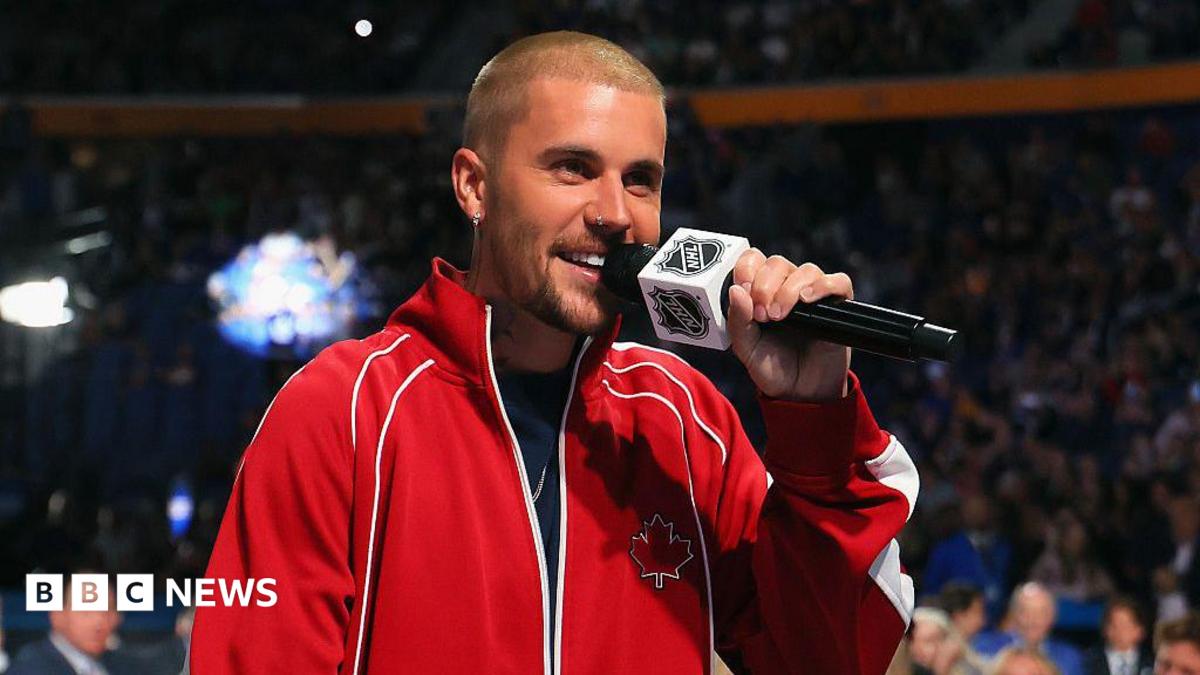
The 2026 FIFA World Cup final in New York on July 19 will feature the tournament's first halftime show, modeled on the Super Bowl format. Justin Bieber, Madonna, Shakira, BTS, Burna Boy, and conductor Gustavo Dudamel are confirmed to perform, joined by the PS22 Chorus in a collaboration featuring Coldplay. The 11-minute show was curated by Coldplay frontman Chris Martin in partnership with the FIFA Global Citizen Education Fund, which aims to raise $100 million for children's education. Bieber's addition is his latest major stage appearance after his Coachella comeback. Shakira and Burna Boy have been central to this tournament from the start: their collaboration "Dai Dai" dominated the charts throughout. The World Cup, hosted across the US, Canada, and Mexico, has leaned into American sports entertainment formats throughout what is already the most-watched edition of the tournament.
The FIFA World Cup is held every four years and is the world's most-watched sporting event. The 2026 edition is the first in North America since 1994 and the first to expand the field to 48 teams. Previous World Cup finals had no halftime entertainment show; FIFA modeled this year's on the Super Bowl, which has featured major pop acts since 1993.
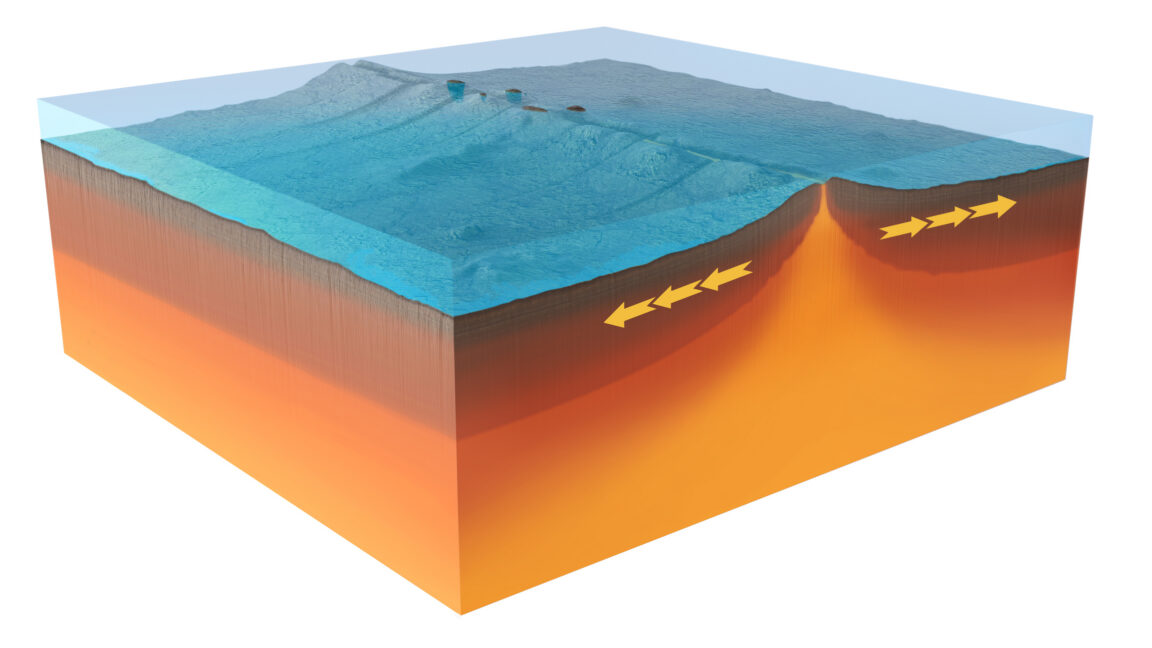
In April 2024, a French research team's underwater sensors in the southern Indian Ocean caught mid-ocean seafloor spreading as it happened, the first direct observation of a process that rebuilds Earth's ocean floor. Deployed along the Southeast Indian Ridge, where the Antarctic and Australian plates diverge, the monitoring array had been in place for two months when the event began. Seismic data traced a magma intrusion progressing southward eight kilometers, then northward nine; sensors recorded the seafloor drop by 4.2 meters over six days as a deep magma reservoir drained. Instruments on opposite sides of the valley spread apart by more than a meter. A follow-up survey found new lava flows exceeding four kilometers in length, depositing roughly 150 million cubic meters of fresh seafloor. The extension released over those days equaled 38 years of accumulated strain at this ridge. Some spreading events produced no seismic signal at all, suggesting earthquake monitoring misses significant portions of ocean-floor creation.
Mid-ocean ridges are underwater mountain ranges where tectonic plates pull apart and magma wells up from the mantle, creating new oceanic crust. The process underpins plate tectonics theory, but direct observation has been nearly impossible since spreading happens unpredictably and far below the surface. Before this, scientists inferred the mechanics from seismic records and post-event seafloor surveys.
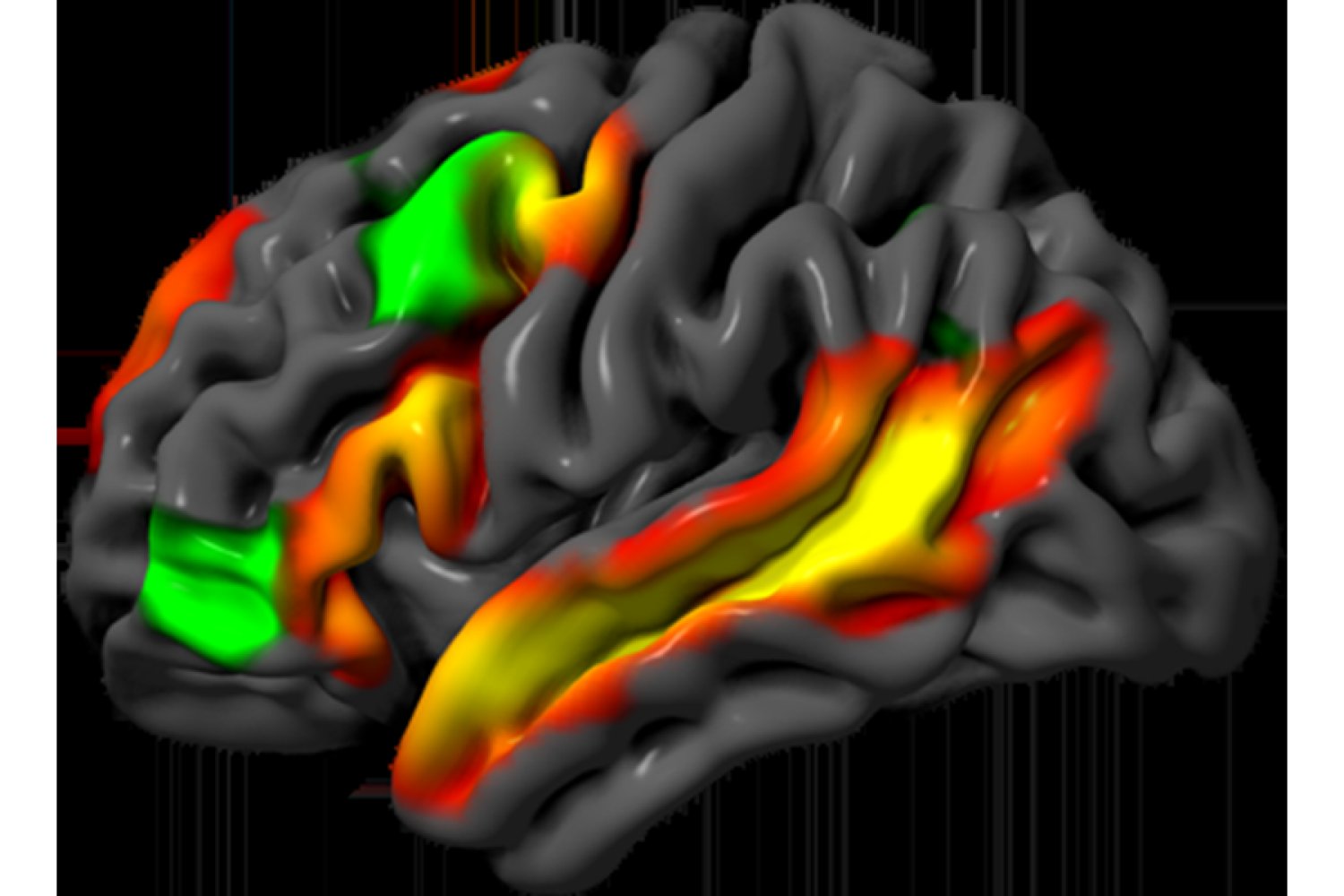
MIT McGovern Institute researchers have found that logical reasoning uses a brain system separate from language processing, challenging the assumption that the two are intertwined. In experiments comparing healthy adults with two stroke patients who had severe aphasia, the aphasia patients performed as well as healthy controls on both inductive reasoning tasks (pattern recognition) and deductive reasoning (syllogisms), despite significant language impairment. Brain scans of healthy adults showed logic tasks activating the frontoparietal "multiple demand network," a general-purpose problem-solving system, while language-processing regions showed no activation during reasoning. The spatial separation was visible on MRI. For AI researchers, the finding matters: large language models, trained on text, route all reasoning through language, whereas the human brain appears to reason without language as a substrate. The researchers suggest this difference matters for understanding what AI systems can and cannot do.
The hypothesis that language structures thinking dates to mid-20th-century cognitive science. Aphasia, caused by stroke damage, impairs the ability to speak or understand language. The multiple demand network is a set of frontal and parietal brain regions that activates across many demanding cognitive tasks, thought to function as a general-purpose reasoning system.
A federal appeals court struck down Florida's Stop WOKE Act for higher education in a 2-1 ruling Tuesday, finding the 2022 law's classroom speech restrictions violate the First Amendment. The law barred college faculty from teaching content the state deemed discriminatory based on race or sex, in practice banning discussions of systemic racism and gender theory. Writing for the 11th U.S. Circuit Court of Appeals majority, Judge Britt Grant called it "a breathtaking assertion of power to ban unpopular ideas from public discourse," and said the First Amendment "trusts students to figure it out for themselves." The ruling covers colleges and universities; the law remains in effect for Florida's K-12 schools and state employers. Six other appeals courts have reached similar conclusions protecting faculty speech, making this ruling consistent with a national pattern. A separate Alabama case challenging comparable anti-DEI restrictions remains pending before the same court.
Florida Governor Ron DeSantis signed the Stop WOKE Act in 2022 as part of a broader push against diversity, equity, and inclusion programs in public institutions. Florida also passed legislation restricting DEI offices and faculty hiring at state universities. Texas, Iowa, and other states passed similar laws, which academic freedom advocates and the American Association of University Professors challenged in court.
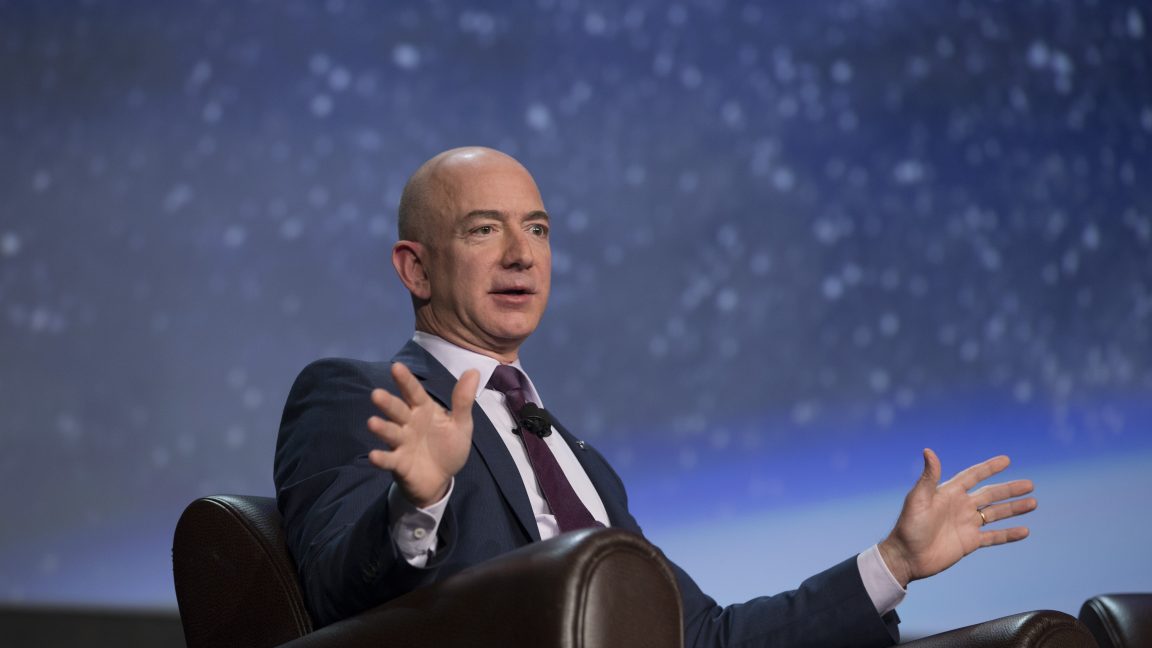
Blue Origin, the aerospace company Jeff Bezos founded in 2000, is raising $10 billion in its first round of outside investment, at a valuation of $130 billion. Investment firm Coatue Management is leading with a $4 billion commitment; large institutional investors will add another $4 billion, and Bezos himself will contribute $2 billion. Unlike SpaceX, which raised outside equity early and reached an estimated $2 trillion valuation after an IPO this year, Blue Origin relied for 25 years on Bezos's personal funding. The fundraise follows a difficult spring: Blue Origin's flagship New Glenn rocket exploded on its Florida launchpad in late May. CEO Dave Limp moved quickly to reassure investors and close the round anyway. The capital is earmarked for New Glenn launches, a NASA lunar lander contract, and two planned satellite megaconstellations targeting enterprise broadband and sun-synchronous orbit.
Blue Origin has been seen as SpaceX's main rival in heavy-lift launch, but has fallen far behind. SpaceX's Falcon 9 has completed hundreds of commercial launches; New Glenn made its first flight earlier this year before the May explosion. Bezos funded the company from his own wealth for 25 years, and the gap with SpaceX widened as SpaceX secured NASA contracts and dominated the commercial launch market.
JD Vance, the Vice President, has argued that GDP is a misleading metric that obscures the social damage of growth, implying Americans should stop treating economic output as a proxy for wellbeing. Economist Noah Smith argues in Noahpinion that Vance has the causation backward. The 1950s Vance implicitly idealizes were a period of rapid GDP growth, and that material abundance is what made larger families and stable households viable: maternal mortality fell 94 percent between 1936 and 1956, and rising wages enabled the homeownership Vance associates with a lost era. Low-GDP countries today have not preserved the communal vitality Vance associates with pre-growth America. Okun's Law links robust GDP growth to lower unemployment, so attacking GDP metrics tends to hurt working-class voters Vance claims to champion. The opioid epidemic costs roughly $700 billion annually in economic damage, showing that social dysfunction and economic decline compound each other.
Gross domestic product measures the total value of goods and services a country produces. Economists use it as the primary gauge of living standards, though critics argue it misses inequality, leisure, and environmental damage. Okun's Law describes the empirical relationship between GDP growth and employment: roughly two percentage points of GDP growth above trend correlates with a one-point drop in unemployment.