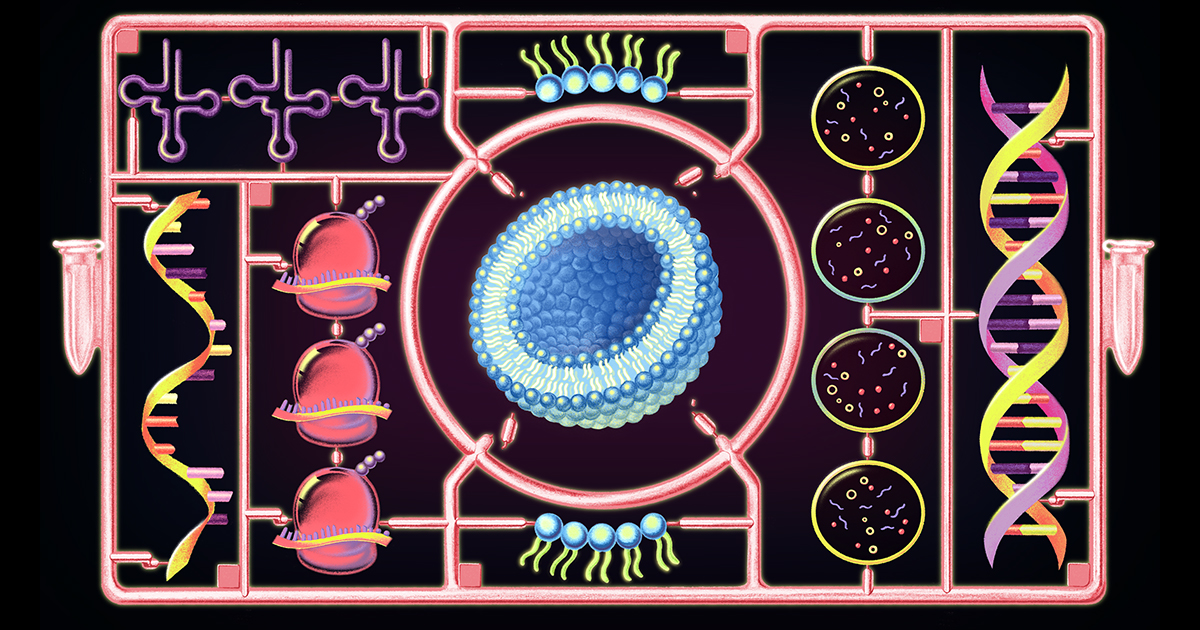
Scientists at the University of Minnesota have built the first laboratory-constructed cell that successfully grows, copies its DNA, and divides — crossing a threshold that biologists have pursued for decades. Kate Adamala's team assembled the cell, called SpudCell, by encasing 36 commercial enzymes inside lipid membranes alongside ribosomes, transfer RNA, and feeder molecules. The result is a cell that replicates genetic material using biological machinery and splits into daughter cells through a protein-based division mechanism. This is not a simplified natural cell with pieces removed; it is a cell assembled from nonliving components, demonstrating that life-like behavior can emerge from the ground up. The cell still cannot sustain itself without external supplies of ribosomes and nutrients, so it falls short of a fully autonomous living system. Researchers caution against overstating the result — it remains far from self-sustaining — but peers describe the division mechanism as a major achievement. The team has launched Biotic, a nonprofit, to distribute synthetic biology tools to scientists globally.
Synthetic biology attempts to engineer living systems from scratch to understand the basic rules of life and eventually build organisms for medicine, energy, or materials production. Prior experiments modified existing cells or partially constructed membrane bubbles, but none had achieved a complete cell cycle — growth, DNA replication, and division — from artificially assembled nonliving components.
Sony announced it will stop producing physical discs for PlayStation games starting January 2028, meaning all new titles will ship digital-only from that point. The move arrives as Sony began notifying PlayStation owners that 551 StudioCanal movies and TV shows they purchased through the PlayStation Store will be removed from their libraries by September 1, 2026 — films they paid for but never technically owned, only licensed. The StudioCanal titles vanish because a licensing agreement expired; Sony will issue refunds only for purchases from the last three years. The two announcements together collapse the premise that digital purchases are durable. Physical discs allowed ownership that survived corporate deals and platform shutdowns; the coming all-digital era removes that fallback. With no disc drive, games purchased digitally from previous generations become unplayable if Sony's servers go offline, and the company has not addressed long-term preservation questions.
Sony's PS5 already sells a disc-free Digital Edition alongside a disc-reading version; the 2026 announcement extends this model to all future hardware and software production. StudioCanal, a French studio, owns titles including Terminator 2 and the Paddington films; its licensing dispute with Sony now costs PlayStation users their purchased copies. Game preservation groups have warned for years that digital-only platforms create fragility in gaming history.
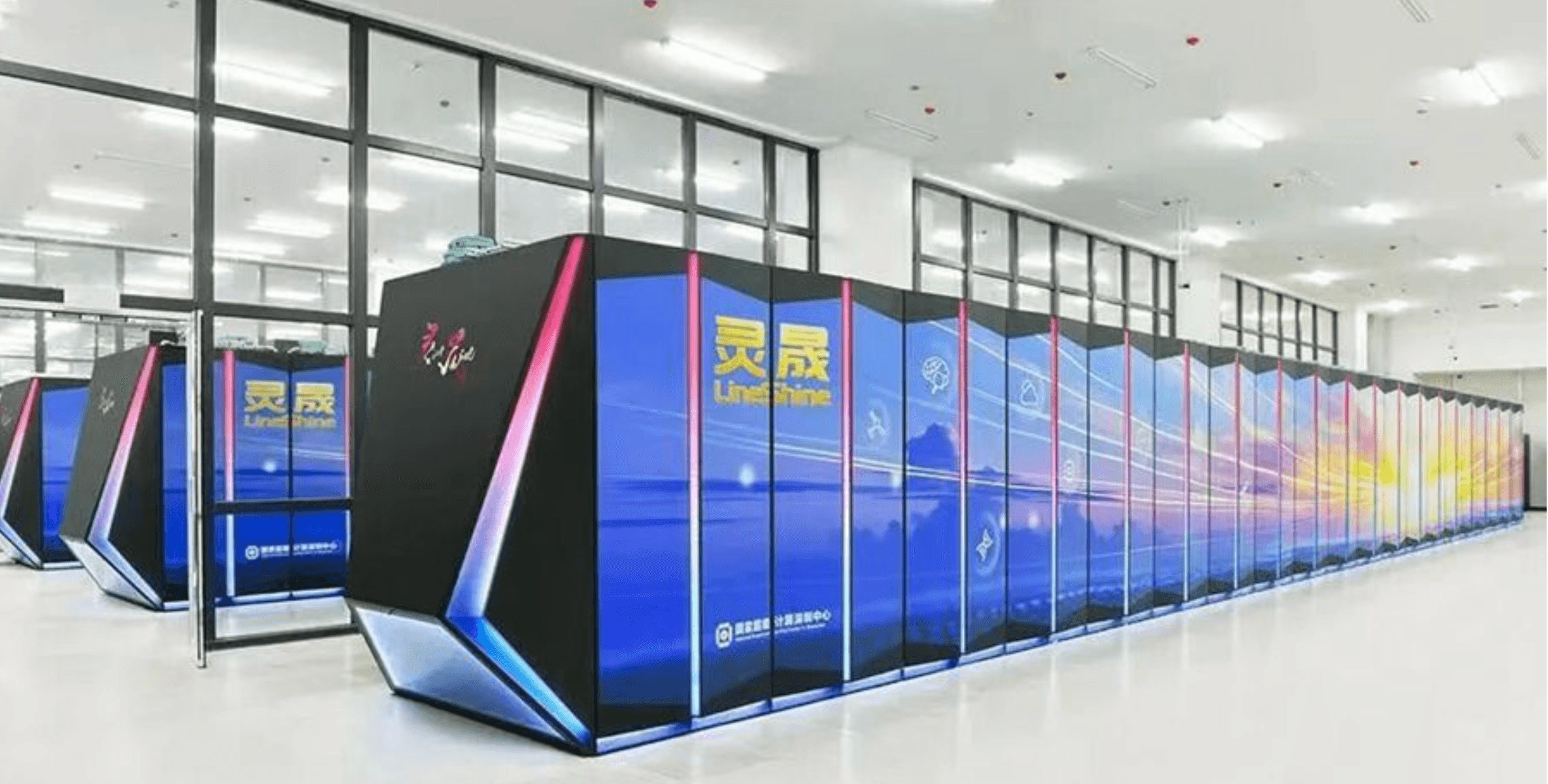
China's LineShine supercomputer has taken the top spot in the TOP500 rankings of the world's most powerful machines, displacing the United States' El Capitan. The machine, hosted at the National Supercomputing Centre in Shenzhen and built by Shenzhen Cloud Computing Center, achieves 2.198 exaflops of actual performance — roughly 2.2 quadrillion floating-point operations per second. That beats El Capitan at Lawrence Livermore National Laboratory in California, which reaches 1.809 exaflops. LineShine runs on 13.79 million computing cores using China's own 304-core LX2 processors. The TOP500 list, published twice yearly, tracks supercomputer performance and is closely watched as a proxy for national technological capability. The result matters because it comes despite US export controls on advanced semiconductors: China built its way to the top ranking using domestically developed processors rather than Nvidia or AMD hardware, signaling progress in the country's semiconductor independence push.
Supercomputers power climate modeling, nuclear simulations, drug discovery, and AI training. The Biden administration restricted exports of advanced Nvidia and AMD chips to China in 2022, pushing Chinese institutions to develop domestic alternatives. The US held the top spot with El Capitan since late 2024; LineShine pushes El Capitan, Frontier (Oak Ridge), and Aurora (Argonne) into the 2nd, 3rd, and 4th positions.
The Supreme Court ruled 6-3 on June 30 to eliminate federal caps on how much money political parties can spend coordinating directly with their candidates, removing one of the last remaining constraints on party-level campaign financing. Under the overturned rules, national party committees faced per-candidate spending limits ranging from $65,300 for House races to several million dollars for Senate contests. The majority opinion by Justice Brett Kavanaugh held that these limits violated the First Amendment and were not proportional to any anti-corruption interest, placing parties on equal footing with outside super PACs that face no coordination limits. The ruling overturns a precedent from the 2001 Colorado Republican v. FEC case. Writing in dissent, Justice Elena Kagan warned the system is now 'increasingly unable to stop political corruption.' The decision closes out a Supreme Court term that also reshaped birthright citizenship, transgender athlete eligibility, and geofence warrant law.
Campaign finance law distinguishes 'independent' spending by outside groups from 'coordinated' spending done in direct consultation with campaigns. The 2010 Citizens United ruling eliminated limits on independent corporate spending; the 2014 McCutcheon ruling narrowed the anti-corruption rationale to direct quid-pro-quo exchanges. NRSC v. FEC removes the remaining barrier between national party committees and their candidates, allowing unlimited joint spending.
Anthropic unveiled Claude Science on June 30, describing it as the company's most significant product launch since Claude Code. Available to all paid Claude subscribers, it is designed to carry out scientific research autonomously when given high-level instructions — writing and executing code on compute clusters, interfacing with tools used in genetics, chemistry, and protein biology, and prioritizing reproducibility so results can be verified. At a launch event for pharmaceutical executives and biotech founders, Anthropic demonstrated the system identifying drug candidates for phenylketonuria, a rare metabolic disorder. John Jumper, the Nobel Prize-winning researcher known for AlphaFold, recently joined Anthropic from Google DeepMind and is involved with the initiative. Anthropic plans to use Claude Science in its own rare disease research, and positions the product against Google DeepMind, which has historically dominated AI for scientific work. The announcement comes as Anthropic approaches a planned IPO later in 2026.
Claude Code, released in 2025, allows software developers to delegate complex programming tasks to Claude with minimal oversight; Claude Science follows the same agentic model but targets wet labs and computational biology. Phenylketonuria (PKU) is a genetic disorder causing dangerous buildup of the amino acid phenylalanine; patients currently manage it through strict low-protein diets and enzyme supplements.
When asked to pick a random number between 1 and 10, almost every major chatbot returns 7. When asked for brand taglines, Claude and ChatGPT have independently produced the same phrase for the same client. A NeurIPS 2025 award-winning study looked at 25 language models generating metaphors for time; 1,250 responses clustered almost entirely around two phrases — 'Time is a river' or 'Time is a weaver.' Australian startup Springboards is trying to fix this with Flint, a model built on Alibaba's open-source Qwen 3. Rather than uniformly increasing randomness — which produces incoherence at high settings — Flint identifies specific decision points in text generation where variation adds value and inserts slightly less predictable tokens there. In testing, it returned 3.7916 instead of 7 for the random-number prompt, and proposed a Ford F-150 rather than a Toyota when asked for car recommendations. Springboards attributes the uniformity to training on the same internet data, which reinforces common patterns regardless of which company built the model.
Large language models train on massive shared internet datasets, which tends to reinforce the most common textual patterns across providers. Temperature settings can increase randomness but do so indiscriminately, producing word salad at high values. The groupthink effect matters most in creative and strategic tasks — brainstorming, naming, ideation — where convergent answers from multiple AI sessions add little over asking once.
The Supreme Court ruled 6-3 in Chatrie v. United States that police use of geofence warrants — which require companies like Google to produce location records for every device near a crime scene during a specific window — constitutes a Fourth Amendment search requiring judicial approval and probable cause. The ruling does not ban geofence warrants but establishes a constitutional checkpoint: law enforcement must satisfy the same standard applied to traditional warrants rather than issuing a dragnet request with minimal oversight. The decision builds on the 2018 Carpenter v. United States ruling, which extended Fourth Amendment protections to historical cellphone location records. Google received its first geofence warrant in 2016 and more than 11,000 by 2020. The case arose from a 2019 Virginia bank robbery where investigators swept location data for all devices near the scene during the incident. Justice Samuel Alito dissented, warning the ruling would send 'seismic waves' through Fourth Amendment doctrine.
Traditional warrants name a specific target; geofence warrants reverse that logic, starting with a place and time and asking tech companies to identify who was there. Critics raised concerns about innocent bystanders swept into criminal investigations. Google's Sensorvault location history database was the source at issue — the same database used in hundreds of criminal investigations, typically without the suspects' knowledge.
On June 26, a small two-seat light-sport aircraft crashed into the CITIC Tower in Beijing — the city's tallest building at 528 meters and headquarters of the state-owned CITIC Group — killing the pilot and injuring 13 people on the ground. Within hours, Chinese authorities scrubbed the incident from social media, police prevented bystanders from photographing the scene, and state media made no mention of it. The plane, a Sunward SA 60L Aurora comparable in size to a Volkswagen Beetle, breached Beijing's heavily restricted airspace, raising security questions the government has not addressed. A Hainan Airlines Airbus A330 jet came within 457 meters of the aircraft moments before impact — a near-miss over China's capital that has also received no official explanation. The ability of a small plane to reach the heart of Beijing — where Communist Party leadership compounds are located and where even drone flights are prohibited — remains officially unacknowledged.
The CITIC Tower, also called China Zun, was completed in 2018 and anchors Beijing's central business district in Chaoyang. Beijing's airspace is among the most restricted in the world; drone flights require special permits, and the area around central government buildings is effectively a no-fly zone. Chinese authorities routinely suppress news of accidents and security incidents that could suggest institutional failure.
Educational Testing Service (ETS), the nonprofit that administers the GRE and TOEFL, has acquired ACT from private equity firm Nexus Capital Management, with the deal closing July 1, 2026. The acquisition unites the two largest standardized testing providers in the US under a single owner, creating an organization that reaches roughly 35 million people annually. ETS acquired ACT — which Nexus had owned since 2024 — at undisclosed terms, and plans to maintain ACT as a separate for-profit subsidiary before potentially changing its status. The deal includes ACT's WorkKeys workplace skills certification and National Career Readiness Certificate program but excludes its Encoura enrollment management subsidiary. The acquisition arrives as standardized testing regains ground in college admissions: many universities that dropped test requirements during the pandemic have since reinstated them, and skills-based assessment demand is growing. ETS's CEO said the combined organization will continue investing in ACT's products.
ETS and ACT have historically competed for the high school testing market. Private equity purchased ACT in 2024 as test-optional policies adopted during the pandemic began to reverse. The College Board, which owns the SAT and competes with ACT for the same college-bound students, is not part of this deal and remains a separate organization.
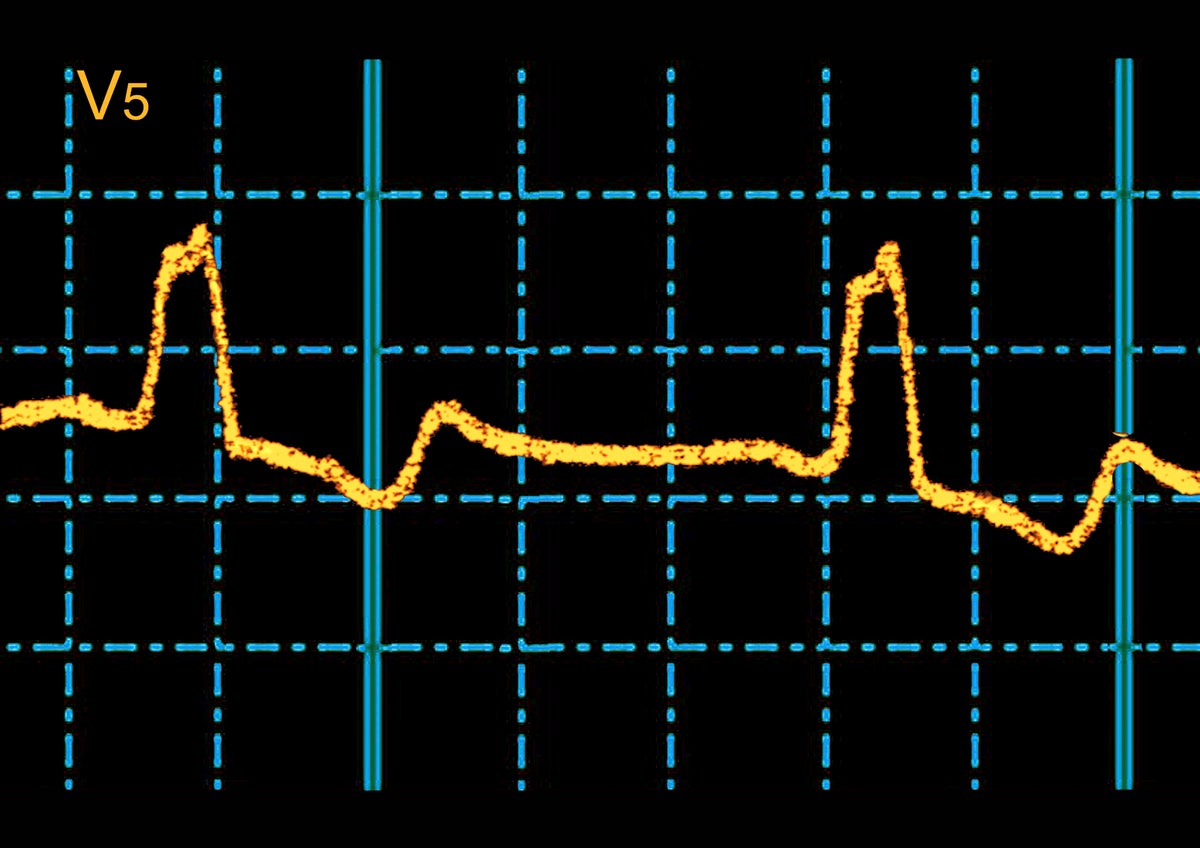
Researchers at UC Berkeley and Cedars-Sinai Medical Center trained an AI on more than 440,000 electrocardiograms from roughly 180,000 patients to identify who is at risk of sudden cardiac death, which kills over 300,000 Americans annually. The model flagged approximately 2.2 percent of patients as high-risk; within that group, the annual sudden cardiac death rate reached 7 percent, compared to 4.6 percent caught by standard ultrasound screening. Over 86 percent of patients the AI flagged would have been missed by existing tools. A second generative AI model was used to explain what the first had found, and it identified something unexpected: a subtle slurring pattern in a single ECG lead called aVL, never previously described in medical literature. The pattern corresponds to diffuse fibrosis — scarring of heart muscle associated with dangerous arrhythmias — and cardiac MRI scans confirmed the connection. Researchers caution against using the model as a standalone diagnostic tool and describe it as a starting point for clinical study.
An electrocardiogram (ECG) records the heart's electrical activity through electrodes placed on the skin. Most ECG interpretation still relies on patterns identified decades ago. Sudden cardiac death typically strikes without warning; current screening tools — including echocardiography and implantable monitors — catch only a fraction of those at risk because most patients show no prior symptoms.