For the first time in the Federal Reserve's 112-year history, a president tried to fire one of its governors. Donald Trump removed Lisa Cook in August 2025, citing mortgage fraud allegations she called "manufactured pretext." On Monday, the Supreme Court blocked the removal 5-4, with Chief Justice John Roberts joining the three liberal justices and Brett Kavanaugh.
Roberts held that Trump failed to give Cook adequate due process before dismissal. Without some explanation of the evidence and an opportunity to respond, Roberts wrote, "for-cause" protection becomes indistinguishable from at-will employment, effectively abolishing the Fed's statutory independence. The ruling is preliminary; Trump may restart the firing with proper procedures, and the fraud allegations go back to lower courts for review.
The decision came the same day the Court ruled 6-3 in Trump v. Slaughter that presidents may fire heads of most other independent agencies, including the FTC, NLRB, and similar bodies, overturning a 91-year precedent. The Fed is carved out: Roberts cited a national tradition of central banking free from political interference, tracing it to Hamilton's design of the First Bank.
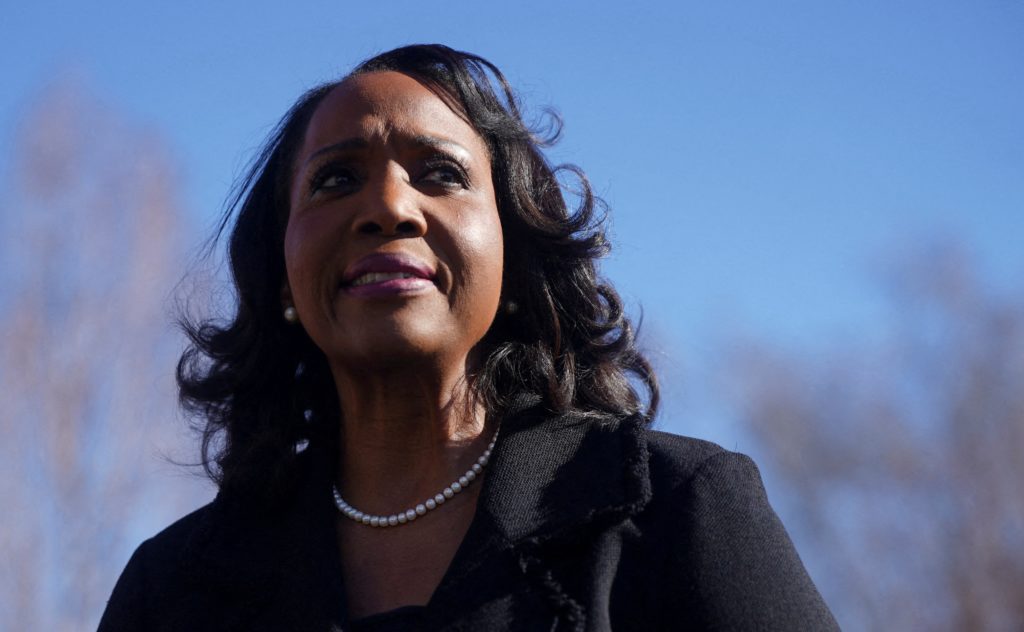
Lisa Cook, an economics professor appointed by Biden in 2022, became the first Black woman on the Federal Reserve Board. The Fed's seven governors set short-term interest rates; their 14-year terms and "for-cause" removal protections were designed to keep monetary policy clear of electoral politics. The companion Trump v. Slaughter ruling stripped those same protections from most other independent regulatory agencies.
More than six days after twin earthquakes struck Venezuela's Yaracuy coast, the confirmed death toll stands at 1,719 with over 46,000 people still listed as missing. The State Department confirmed three Americans have died; twelve more remain unaccounted for. A 4.6-magnitude aftershock struck Caracas on Monday, adding to more than 500 tremors recorded since the June 24 quakes.
In La Guaira and Catia La Mar, the hardest-hit coastal areas, residents dug through collapsed buildings with crowbars, pickaxes, and bare hands for days without government heavy equipment. When BBC journalists visited, police and soldiers were present on the streets but not working in the debris. Interim President Delcy Rodríguez claimed 25,000 emergency workers were deployed; residents disputed that account to reporters on the ground. Late Sunday, an international team pulled a 21-year-old man from wreckage in Caraballeda after more than 100 hours trapped. The US has committed $300 million in emergency aid, doubled from last week's pledge.
The June 24 quakes, a 7.2-magnitude foreshock followed 39 seconds later by a 7.5-magnitude mainshock, Venezuela's strongest since 1900, collapsed nearly 800 buildings and damaged 2,500 more. Nicolás Maduro has governed Venezuela since 2013 and is serving out a disputed term under acting leader Rodríguez. International aid access faces complications from US sanctions still in effect against the Maduro government.
Police have used geofence warrants to compel Google to produce location data for every device present in a defined area during a crime window, then identify individuals from the anonymized results, without suspecting any specific person first. On Monday, the Supreme Court ruled 6-3 that this practice constitutes a search under the Fourth Amendment, requiring police to establish probable cause before obtaining one.
The case arose from a 2019 credit union robbery in Midlothian, Virginia. Investigators obtained a geofence covering 150 meters around the bank, walked Google through an expanding search, and eventually identified Okello Chatrie as a suspect through de-anonymization. Justice Elena Kagan wrote for the majority in Chatrie v. United States, drawing on the Court's 2018 Carpenter ruling on cell-site location data. Google's Location History is "akin to a personal journal," Kagan wrote, with a Fourth Amendment privacy expectation that blocks mass location sweeps without individualized suspicion. Justice Alito dissented, calling the majority's approach an "irresponsible escapade."
Geofence warrants emerged as a law enforcement tool around 2016. Google received more than 20,000 of them in 2020 alone. Critics compared them to the general warrants the Fourth Amendment was written to forbid: dragnet searches of many innocent people to find a single suspect. Justice Gorsuch concurred in the judgment separately on broader grounds.
Monday's Supreme Court ruling on presidential removal power is threatening the legal foundation for transatlantic data flows. The EU-US Data Privacy Framework, the 2023 agreement that lets companies like Google, Meta, and Microsoft transfer personal data from Europe to the United States, rests on the Federal Trade Commission acting as an independent privacy enforcer. Monday's Trump v. Slaughter decision eliminated that independence. The framework references the FTC as an independent enforcer roughly 259 times.
Max Schrems, the Austrian privacy lawyer whose previous legal challenges struck down both Safe Harbour in 2015 and Privacy Shield in 2020, sent a formal letter to the European Commission on Monday demanding withdrawal of the adequacy decision for the US. His organization, noyb, plans to file suit before the Court of Justice of the EU within weeks. A final ruling would take two to three years. In the meantime, companies must update data transfer impact assessments now, and some European organizations may need to move US-bound data processing onto EU infrastructure.
EU law restricts transfers of personal data to countries without privacy protections deemed "essentially equivalent" to European standards. US companies have relied on three successive adequacy frameworks to legally move Europeans' data for ad targeting, cloud services, and product operations. Schrems brought down the first two; his challenge to the third is now underway.
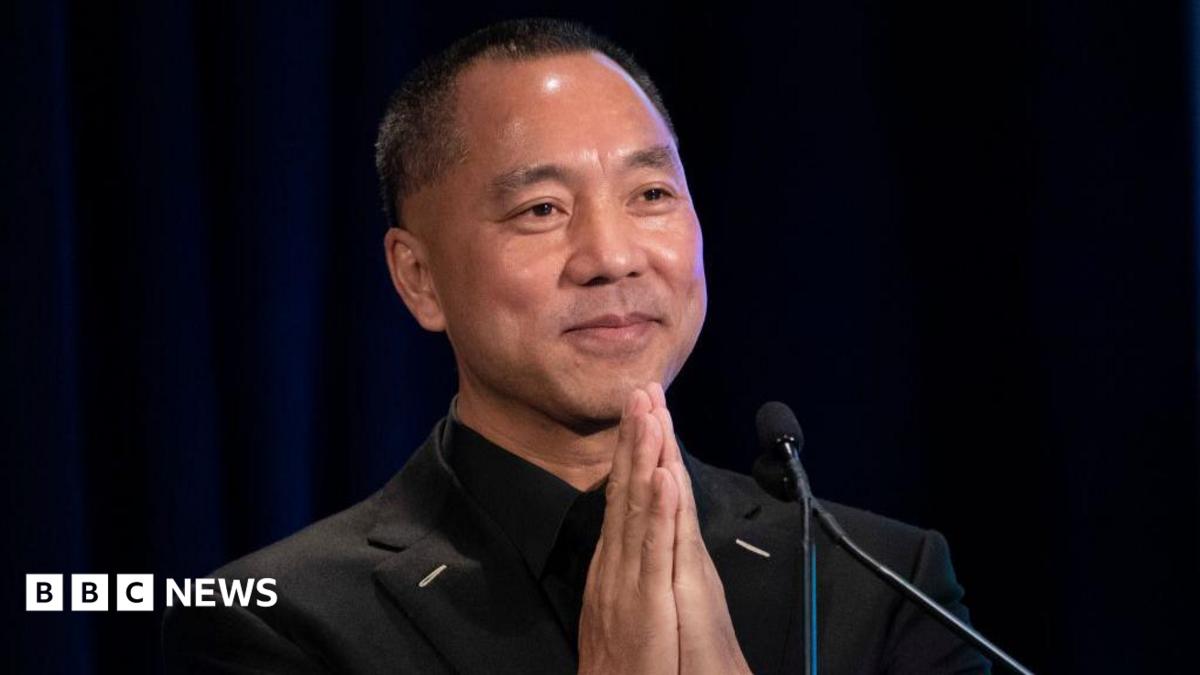
Guo Wengui (郭文贵), once one of China's wealthiest property developers, built a second career in the United States as a prominent China critic, founding the "New Federal State of China" movement with Steve Bannon in 2020 and cultivating a devoted diaspora following. On Monday, a federal judge in New York sentenced him to 30 years in prison on racketeering, fraud, and money laundering convictions.
Prosecutors said Guo raised more than $1 billion from followers between 2018 and 2023 through investment and cryptocurrency schemes, telling them the funds would support pro-democracy activism against the Chinese Communist Party. The money instead financed a 50,000-square-foot mansion, a $1 million Lamborghini, and a $37 million yacht. Judge Analisa Torres said Guo "preyed on those seeking to bring democracy to China." Bannon was arrested on Guo's yacht in 2020 on separate fraud charges and later pardoned by Trump; he was not a defendant in the current case.
Guo fled China in 2017 after being accused of corruption by Beijing. His public role as a dissident gave him credibility with Chinese diaspora communities abroad. Bannon and Guo declared the New Federal State of China from a boat in New York Harbor in 2020; it claims to represent a government-in-exile but controls no territory.
South Korea's President Lee Jae Myung unveiled a $1 trillion investment plan on Sunday aimed at making the country a global hub for memory chips, AI data centers, and humanoid robots.
The largest commitment is $585 billion from Samsung and SK Hynix for new memory chip fabs in southwest South Korea and the Seoul capital region. Together they supply about 80 percent of global high-bandwidth memory, the chip type that makes large-scale AI training possible, and the investment targets doubling output within five years, focusing on next-generation HBM4 and processing-in-memory technology. A second $357 billion tranche funds AI data centers requiring an additional 8 gigawatts of power.
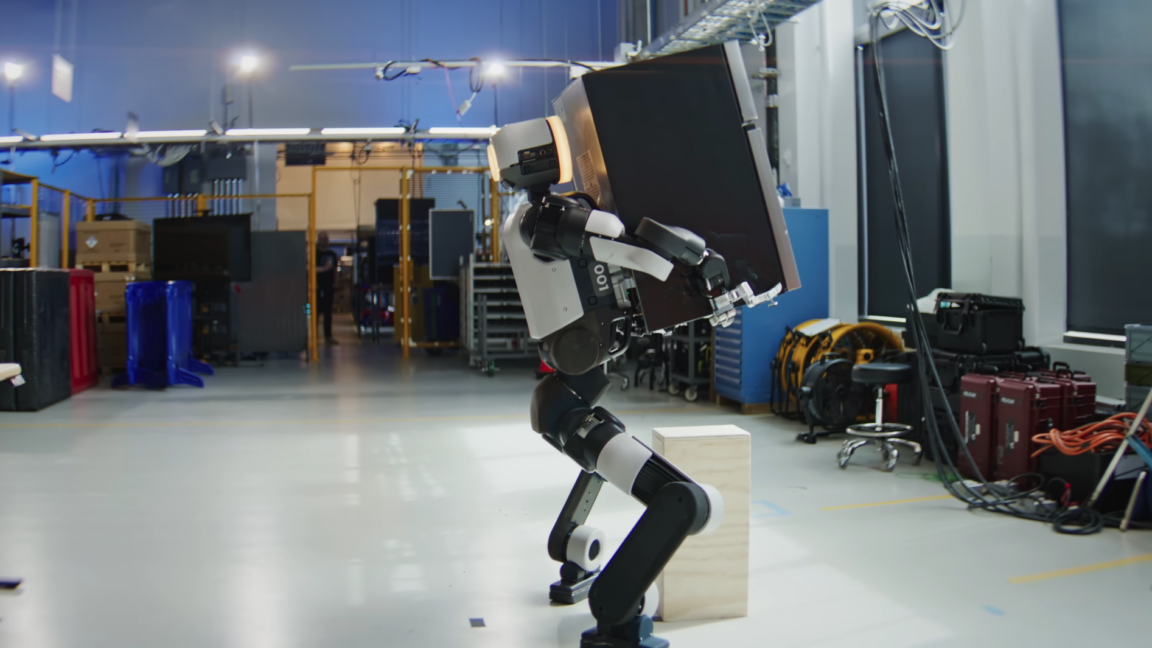
On robots, the government designated physical AI a national strategic industry and set a target of growing South Korea's global robotics market share from 1 percent to 20 percent. Hyundai Motor and its subsidiary Boston Dynamics plan to deploy humanoid robots in automotive factories by 2028. Labor unions are pushing back over job displacement concerns.
Samsung and SK Hynix together make most of the world's DRAM and high-bandwidth memory. HBM stacks multiple DRAM chips vertically, connected by wires called through-silicon vias, enabling the bandwidth that large AI models require. South Korea's plan competes with US CHIPS Act semiconductor subsidies, Japan's Rapidus initiative, and Taiwan's TSMC for dominance in advanced chips.
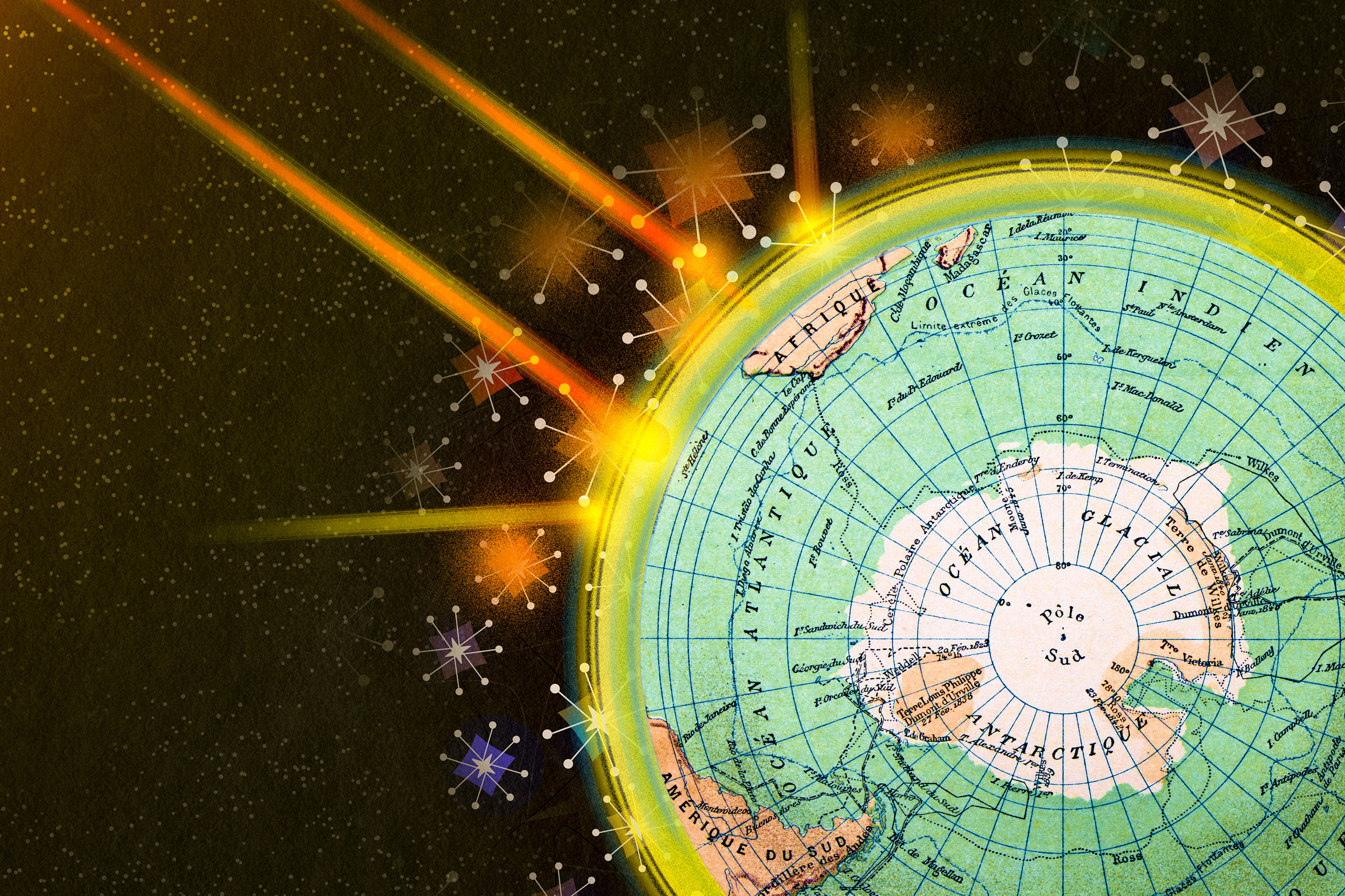
A new study from MIT found that human-caused ozone depletion began at least 30 years before the Antarctic ozone hole was discovered in 1985. Using atmospheric models combined with ice core records and industrial emissions data, researcher Susan Solomon and colleagues traced the earliest detectable signal to around 1957, in the tropical upper stratosphere, where lower natural variability makes human contributions easier to isolate.
The culprit in that early period was carbon tetrachloride, an industrial solvent used for dry-cleaning and degreasing since the 1930s, not chlorofluorocarbons, which became widespread only later. Ice core records show atmospheric carbon tetrachloride concentrations rising through the 1940s. With today's monitoring sensitivity, the researchers found, scientists would have detected ozone loss roughly 30 years before the 1985 discovery that prompted the Montreal Protocol. The finding reinforces that ozone-depleting substances persist in the atmosphere for decades, and that the full timeline of damage predates the chemicals most commonly blamed for it.
The ozone layer, 15-35 kilometers up in the stratosphere, absorbs most ultraviolet radiation from the sun. Its thinning over Antarctica, confirmed in 1985, was linked to chlorofluorocarbons in refrigerants and aerosols. The 1987 Montreal Protocol phased them out; the ozone layer has partially recovered since. Carbon tetrachloride was also banned, though its atmospheric sources remain debated.
Qwen 3.6 27B, an open-weight language model from Alibaba's Qwen team, has become the leading recommendation for running AI locally on personal hardware, drawing an 871-point Hacker News discussion centered on a benchmark post from the Quesma engineering team.
The post describes running the model on a MacBook M5 Max at 32 tokens per second using 42GB of RAM. The author calls it the first local model that makes sense as a general-purpose intelligence, capable of both creative and coding work, fast enough for real development use, and able to outperform quantized larger models like DeepSeek V4 Flash on code quality. The recommendation favors the 27B dense model over the 35B mixture-of-experts variant: the MoE version runs faster at roughly 85-90 tokens per second but produces lower-quality output at about a third higher code volume. The HN thread covers thermal management for sustained workloads, Mac Mini versus laptop trade-offs, and performance across different hardware configurations.
Qwen is Alibaba's open-weight model family, one of the main alternatives to Meta's Llama series. Running AI locally means using your own hardware rather than calling a cloud API, which keeps code and proprietary data off external servers. A mixture-of-experts model activates only a fraction of its parameters per token, allowing faster inference than a dense model of the same stated parameter count.
A package of children's online safety bills cleared the House on Monday in a 267-117 vote, the first time any version of the Kids Online Safety Act passed that chamber. The legislation bundles 14 separate bills.
Key provisions include requiring platforms to default to restricted settings for users under 13, banning targeted advertising to minors, raising children's data protections to age 14 under an update to the Children's Online Privacy Protection Act, and mandating age verification for sites with more than one-third adult content. AI chatbots must also disclose crisis resources to users in distress.
Absent from the House version: the Senate's original "duty of care" provision requiring platforms to exercise reasonable care to prevent harm to minors. Senate supporters say its removal strips enforcement teeth and makes it harder to sue platforms over harmful design choices. The bill now faces a difficult path in the Senate before the August recess. The ACLU and EFF opposed the package, citing age verification surveillance risks and concerns that vague harm definitions could push platforms to suppress LGBTQ+ content and sex education.
KOSA, the Kids Online Safety Act, has been before Congress since 2022. The ACLU and EFF have consistently opposed it, arguing that age verification requirements create surveillance infrastructure and that vague harm definitions could prompt platforms to remove LGBTQ+ content, sex education, and addiction recovery resources to avoid legal liability. Civil liberties concerns cut across party lines.
The Justice Department has expanded its legal campaign against in-state college tuition for undocumented students, filing suit on Monday against Rhode Island and Massachusetts and bringing the total number of states facing federal challenges to 12.
The DOJ argues that offering in-state tuition rates and state financial aid to undocumented immigrants, while charging higher out-of-state rates to American citizens from other states, violates federal law. Assistant Attorney General Brett Shumate was quoted saying universities "cannot provide benefits to illegal aliens that they do not provide to U.S. citizens." The suits target state scholarships as well as tuition rates.
Several Republican-led states settled earlier suits and ended the practice. Minnesota succeeded in getting its case dismissed earlier in 2026. Rhode Island and Massachusetts, both Democratic-led, are expected to contest. The suits fit into a broader federal campaign targeting states that have extended public benefits including housing, healthcare, and higher education to undocumented residents.
More than 20 states currently offer in-state tuition to undocumented students, typically those who attended high school in the state for at least three years. The practice expanded after 2001 and is sometimes called the state-level DREAM Act policy, following Congress's repeated failure to pass federal legislation protecting young people brought to the US as children.