In a 6-3 ruling Monday, the Supreme Court gave President Trump the power to fire members of independent federal agencies at will, overturning a 91-year precedent. The case arose from Trump's 2025 firing of Rebecca Slaughter, one of the FTC's Democratic commissioners, who sued claiming the removal violated laws protecting agency members from dismissal without cause. Chief Justice Roberts, writing for the majority, declared the 1935 Humphrey's Executor ruling that had shielded independent agencies effectively overruled. The decision reshapes governance across roughly two dozen agencies, including the FTC, the SEC, and the NLRB, converting what were once insulated expert bodies into offices whose members serve at the president's pleasure. Congress had long used bipartisan-balance requirements and tenure protections to keep these agencies at arm's length from the White House. Those protections are now gone. The Court carved out one exception: a separate 6-3 ruling the same day blocked Trump from firing Federal Reserve Governor Lisa Cook, preserving the Fed's independence.
Humphrey's Executor v. United States (1935) held that Congress could protect members of independent agencies from removal without cause, reasoning that their functions were quasi-legislative or quasi-judicial rather than purely executive. Today's ruling rejects that logic, finding the Constitution requires the president to be able to fire executive officers.
The United States and Iran agreed Monday to stand down after a weekend of exchanges that threatened to unravel their fragile ceasefire. Over the prior two days, the U.S. struck Iranian drone storage sites, radar installations, and missile infrastructure in southern Iran after Iran attacked a commercial ship in the Strait of Hormuz. Iran responded by launching missiles and drones at U.S. military bases in Kuwait and Bahrain, and Iran's Revolutionary Guards threatened to halt all diplomatic processes. A U.S. official confirmed Monday that both sides had agreed to stand down and that ships could move freely again. Fresh talks are scheduled for Tuesday in Doha, Qatar. The "Islamabad Memorandum," a 60-day framework signed by Trump and Iranian President Masoud Pezeshkian on June 17 to end the broader conflict, remains technically in force.
U.S. and Israeli forces began striking Iranian nuclear and military facilities in late February 2026, severely threatening oil transit through the Strait of Hormuz and disrupting global energy markets. The ceasefire was signed in Islamabad in mid-June; both sides have since accused the other of violations, with this weekend's exchange the most serious breach yet.
Pakistani airstrikes killed at least 28 civilians in eastern Afghanistan on Saturday night, according to the Taliban government and UN observers. Afghan accounts describe a particularly lethal sequence in Paktia's Chamkani district: Pakistani forces struck a home, killing an elderly man and a child, and then hit the area a second time as residents rushed to help survivors, killing roughly 28 more people and wounding over 158. Pakistan says it targeted militant hideouts of Jamaat-ul-Ahrar and Fitna al-Khwarij in Paktia, Paktika, and Kunar provinces in retaliation for a recent attack on Pakistani paramilitary Rangers in the port city of Karachi. Pakistan's government claims 29 militants were killed and weapons caches destroyed. Some reports put the civilian death toll at 36. The Taliban called the strikes an "atrocity" and demanded international condemnation.
Cross-border tensions between Pakistan and Afghanistan have run high since early 2026, when Afghanistan launched retaliatory strikes after earlier Pakistani incursions. Pakistan blames Afghan soil for harboring militant groups that carry out attacks inside Pakistan, while the Taliban government denies allowing such operations. Multiple rounds of ceasefire talks have collapsed.
The Supreme Court ruled 5-4 Monday that states may count mail-in ballots that arrive after Election Day, as long as they were postmarked by election day. The case involved Mississippi's law allowing a five-day grace period for late-arriving mail ballots. Trump's campaign and the Republican National Committee had argued that federal law designating a single Election Day preempts state grace periods. Justice Amy Coney Barrett, a Trump appointee, wrote the majority opinion and sided with three liberal justices and Chief Justice Roberts, rejecting that argument. The four dissenters were Alito, Thomas, Gorsuch, and Kavanaugh. The ruling is a blow to Republican efforts to tighten mail-voting rules ahead of the 2026 midterms; 18 states and territories maintain similar grace periods. Barrett's role in the majority, siding against the Republican position, drew attention given her appointment by Trump.
Republicans have litigated mail-voting rules across multiple election cycles, arguing that grace periods and signature-cure windows invite fraud. Trump repeatedly called mail-in voting corrupt and his campaign challenged late-ballot rules in several states after the 2020 and 2024 elections. Mississippi's Watson v. Republican National Committee was one of several pending election-law cases before the Court this term.
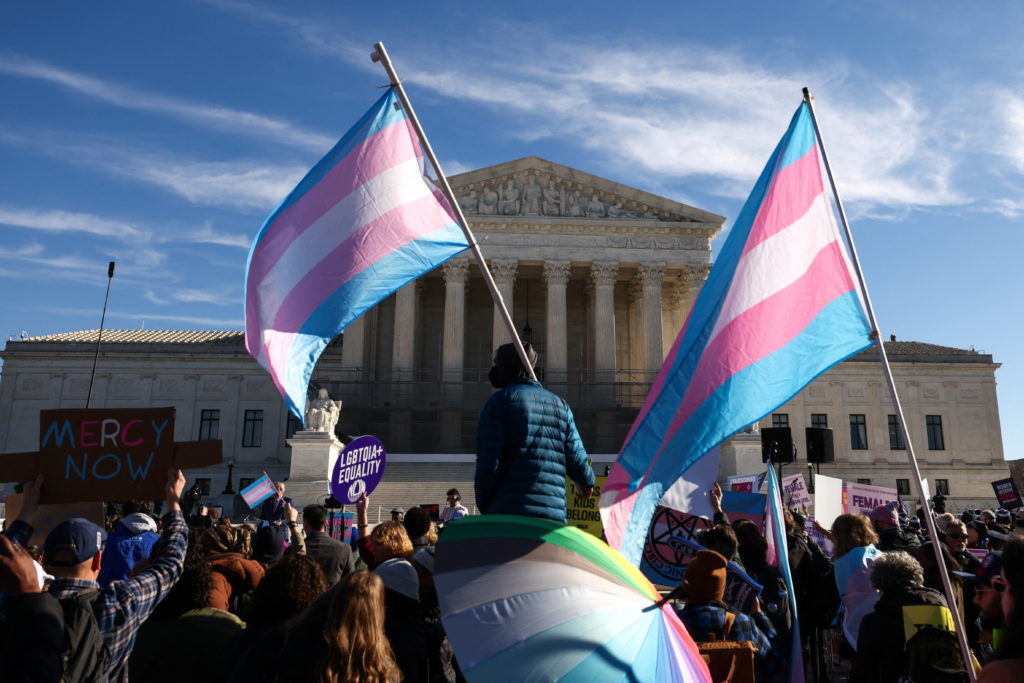
The Supreme Court agreed Monday to take up a parental rights case that asks whether parents have legal standing to challenge Washington State laws that reduced their role in decisions about their children's gender-affirming care. The laws, enacted in 2023, modified how licensed youth shelters handle runaway minors seeking gender-affirming services, transferring parental notification in some circumstances from the shelter to the state's child welfare agency. A group of parents sued, arguing the laws displaced their constitutional right to make decisions for their children. The Ninth Circuit dismissed the case, finding the parents lacked Article III standing to sue. The Supreme Court granted review to decide the threshold standing question: whether parents can challenge a policy that removes them from their child's gender transition. The case will not rule on whether such care bans are constitutional, but resolving the standing question could open the door to broader parental rights challenges.
In March 2026, the Supreme Court ruled 6-3 that California schools could not bar notifying parents when their children identify as transgender, citing parental rights and the Free Exercise Clause. Monday's cert grant continues the Court's engagement with where parental authority begins and ends when children's interests and state policy diverge.
At least 1,300 people died across Europe during the ongoing heatwave, the World Health Organization said Sunday, with France accounting for roughly 1,000 of those deaths. Germany hit a new all-time national record of 41.7°C (107°F), and several other countries exceeded 40°C. WHO chief Tedros Adhanom Ghebreyesus warned that Europe is unprepared for sustained high temperatures. The heatwave began in late May, with a more intense second wave striking in mid-June around the summer solstice. Climate scientists say the extreme temperatures would have been virtually impossible without human-caused climate change, and that climate change made the soaring nighttime temperatures 100 times more likely than two decades ago.
Europe is warming at roughly twice the global average rate, making it the world's fastest-warming continent. The 2003 heatwave killed around 70,000 people across Europe and became a policy reference point; subsequent waves in 2019, 2021, and 2022 each broke prior records. Many European countries still lack widespread air conditioning or comprehensive heat action plans.
Rocket Lab announced Monday it will acquire Iridium Communications for $8 billion in cash and stock, combining the New Zealand-founded space company's launch and satellite manufacturing business with Iridium's global constellation of 66 low-Earth-orbit communications satellites. Iridium serves 2.55 million subscribers across government, defense, maritime, aviation, and remote industrial markets. The deal lets Rocket Lab design, build, launch, and operate its own satellites end-to-end, replicating the integrated model SpaceX uses with Starlink rather than building hardware for other companies' networks. Rocket Lab CEO Peter Beck called it "one of the most transformative deals in the space industry." The transaction is expected to close by mid-2027.
Rocket Lab went public in 2021 and built its business around its small-payload Electron rocket and the Photon satellite bus. Iridium operates the only mobile satellite network with truly global coverage including polar regions, making it essential for maritime and aviation users beyond the reach of terrestrial networks. Starlink has been expanding aggressively into the same markets.
Comcast said Monday it will split into two separate publicly traded companies, spinning off NBCUniversal and Sky from its core cable broadband and wireless business. The separation, expected to complete within a year, aims to let each business pursue different strategies: broadband and connectivity, which remain profitable, versus media and entertainment, which have been hammered by cord-cutting and streaming competition. Comcast shares surged nearly 23% in pre-market trading on the news. The spinoff effectively reverses Comcast's 2011 acquisition of NBCUniversal and its 2018 purchase of Sky, unwinding a 15-year bet that owning content and distribution together would be worth more than the parts.
NBCUniversal includes NBC, MSNBC, CNBC, Universal Pictures, and Universal theme parks. Sky is a European pay-TV operator covering the UK, Germany, Italy, and Austria. Comcast bought NBCUniversal from GE for $30 billion in 2011 and paid $40 billion for Sky in 2018. Peacock, the company's streaming service, has struggled to gain ground against Netflix and Disney+.
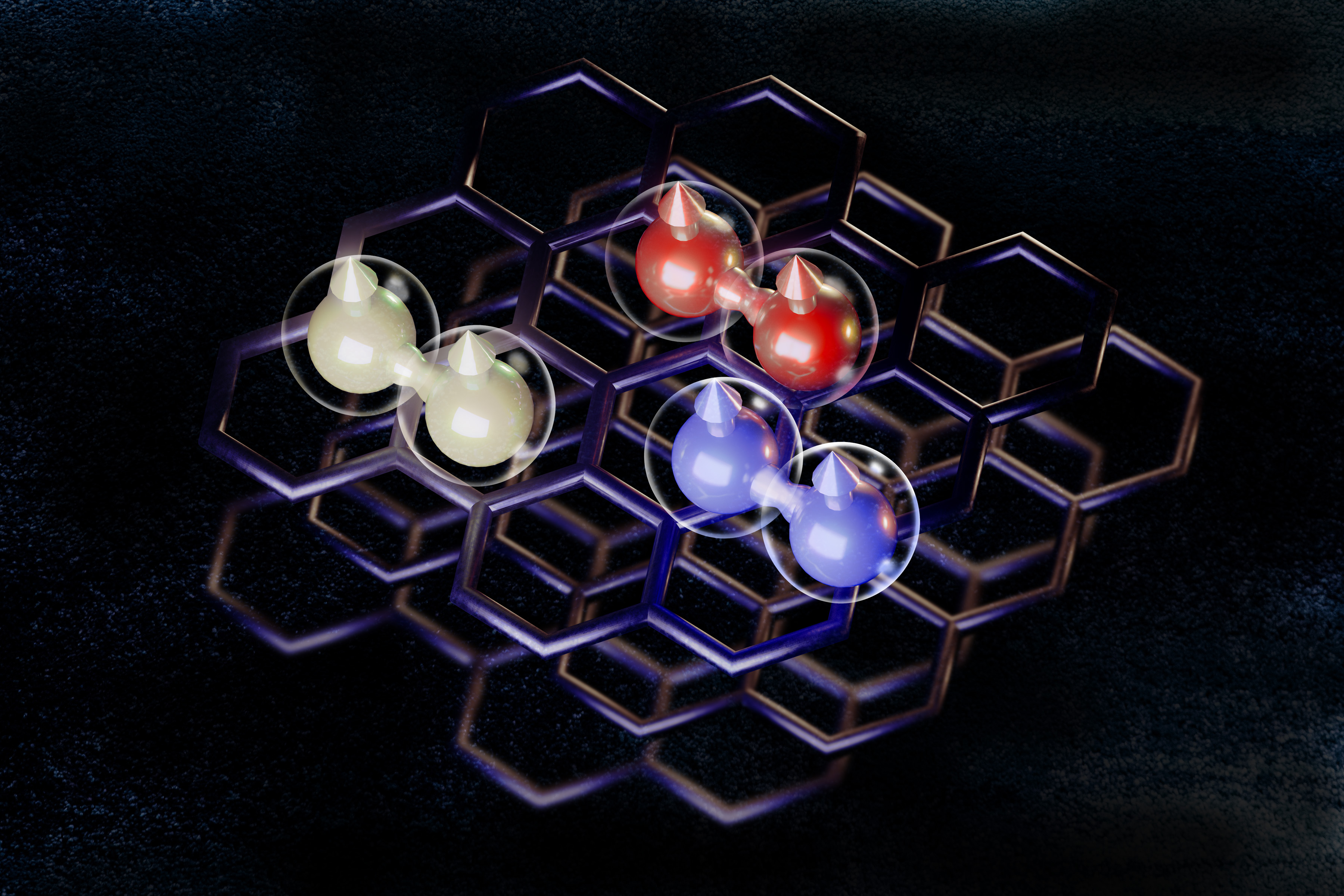
Physicists at MIT have found that rhombohedral graphite — stacks of 4 to 5 graphene layers — can host three distinct superconducting states simultaneously, a property rare in any material. Published Monday in Nature, the study found these superconducting states do something paradoxical: they grow stronger when exposed to magnetic fields. Conventional superconductors are destroyed by magnetism. The three states also show both chirality (a handedness, like left- or right-handed gloves) and magnetism at the same time, a combination not seen before in a superconductor. Lead researcher Long Ju, an associate professor of physics at MIT, said the material may be the strongest candidate yet for a topological superconductor, a class of materials that could make quantum computers far more error-resistant than current designs. Collaborators from the University of Basel, Florida State University, and Japan's National Institute for Materials Science contributed.
Superconductivity is a state in which electrons pair up and flow without resistance. Graphene research has produced several surprises since 2018, when MIT physicists found that stacking two graphene layers at a precise "magic angle" induced superconductivity, launching a wave of interest in what researchers call twistronics. Topological superconductors are a theoretical class that could host robust quantum states resistant to environmental interference.
Zhipu AI, a Chinese artificial intelligence firm spun out of Tsinghua University, released GLM 5.2 on June 13, and security researchers at Semgrep found it outperforms Anthropic's Claude models on a benchmark for detecting access-control vulnerabilities in real software. In Semgrep's test, GLM 5.2 scored a 39% F1 on IDOR (insecure direct object reference) detection — a type of flaw that lets one user access another user's data — compared to 28 to 37% for Claude. The cost was roughly one-sixth of frontier model pricing, at $0.17 per vulnerability found. GLM 5.2 uses a mixture-of-experts design with about 750 billion total parameters and 40 billion active per token, carries an MIT license, and can be deployed entirely inside an organization's own infrastructure. The result landed the day after the U.S. government restricted export of Anthropic's top models to many foreign users.
GLM (General Language Model) is Zhipu AI's flagship series. IDOR vulnerabilities are a common web security flaw where developers forget to verify that the user requesting a resource actually owns it, allowing attackers to read or modify other users' data. F1 score is the harmonic mean of precision and recall, balancing false positives and false negatives in a detection task.