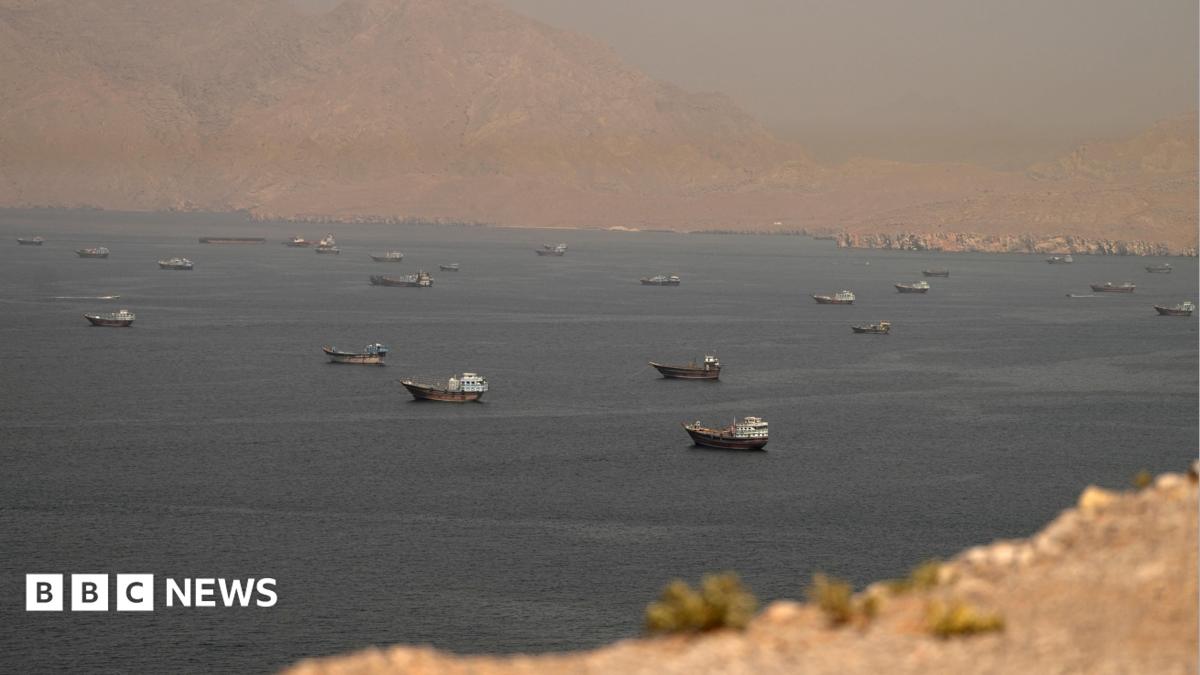
Three weeks after signing a ceasefire, the US and Iran are trading strikes again. On Saturday, an Iranian drone hit the MT Kiku, a Panama-flagged tanker near the Strait of Hormuz. Centcom responded by striking 10 Iranian military targets: air defense sites, drone storage facilities, and communications systems. Iran's Revolutionary Guard then fired ballistic missiles and drones at US bases at Ali al-Salem in Kuwait and the Fifth Fleet at Port Salman in Bahrain, claiming to have destroyed key infrastructure. The US reported no casualties and no significant damage to its facilities. Both sides now accuse the other of violating the June 17 Memorandum of Understanding that ended the earlier fighting. Iran's foreign ministry called the US strikes "brutal attacks." Trump posted on Truth Social that Iran "may never learn," adding that "the Islamic Republic of Iran will no longer exist" if the US loses patience. Commercial shipping is still moving through the Strait, Centcom said.
In late February, US and Israeli strikes on Iran's nuclear program prompted Iran to close the Strait of Hormuz, the chokepoint for roughly 20% of the world's oil. The closure sent commodity prices surging. The June 17 MOU was meant to reopen the Strait; Iran claims it also grants the IRGC control over navigation through it, which the US rejects.
Back-to-back earthquakes (magnitudes 7.2 and 7.5) struck Venezuela's northern coast on June 25, reducing much of La Guaira, the coastal state bordering Caracas, to rubble. At least 1,430 people have been confirmed dead; the UN estimates 50,000 are still missing. More than 100 buildings collapsed in La Guaira's Catia La Mar alone. Rescue teams from Mexico, Spain, the US, and the UK are digging largely by hand, with heavy lifting equipment slow to arrive. The critical 48-hour survival window has passed. In Caracas's Chacao neighborhood, where tower blocks fell, residents confronted Interim President Delcy Rodriguez during a visit and told her the government was doing nothing. Hospitals along the northern coast, already underfunded before the disaster, are overwhelmed. Rodriguez held calls with Trump and Secretary Rubio, who reaffirmed US commitment to send aid.
Venezuela's public infrastructure had been in collapse for years before the quake, gutted by two decades of economic mismanagement and US sanctions. La Guaira is Caracas's port and the site of its only international airport, which was damaged and closed, complicating the humanitarian airlift. The 7.5 was one of the strongest quakes recorded in Venezuela in a century.
A stalled high-pressure heat dome broke all-time national temperature records across three European countries in a single day on Saturday. Germany hit 41.5°C in Saxony-Anhalt, topping a record set just the day before in Saarbrücken. The Czech Republic reached 40.8°C near Prague, its hottest day ever. Denmark provisionally recorded 37°C near Aarhus, surpassing a 1976 record. Switzerland logged its hottest June day for the third consecutive day. An estimated 150 million people across the continent are experiencing temperatures above 35°C. At least 382 heat-linked deaths have been counted, including 327 in Spain since Sunday and 55 drowning deaths in France. Berlin police deployed water cannons as crowd misting stations. Scientists from World Weather Attribution said a heatwave this severe this early in summer would have been "virtually impossible 50 years ago." Cooler air from the west is expected to push eastward later this week.
Europe is the world's fastest-warming continent. Heat domes form when high pressure traps and compresses descending air, blocking cloud cover and amplifying solar heating. They stall more easily as the jet stream weakens from Arctic warming. The Iberian peninsula, where this system originated, has seen the longest sustained heat this season and funneled the dome northward across central Europe.
With Anthropic's Mythos and Fable 5 models barred from non-US access since mid-June, Asian AI firms are moving to position their own models as replacements. Sakana AI, a Tokyo lab founded by former Google researchers, released Fugu, an orchestration model coordinating agents across multiple model APIs, explicitly positioned alongside Fable 5 and Mythos Preview. Co-founder David Ha said top-model access "can disappear overnight." In China, cybersecurity firm 360 (奇虎360) announced Tulongfeng for automated vulnerability discovery and Yitianzhen for incident response, claiming Mythos-level capability. Founder Zhou Hongyi framed AI-assisted vulnerability finding as a national strategic asset. Sakana raised at a $2.65 billion valuation in November 2025 and is targeting Japanese businesses and government agencies. Anthropic, now nearing a $1 trillion valuation ahead of a planned IPO, reported $47 billion annual run-rate revenue as of May.
Anthropic's Mythos is a cybersecurity-focused frontier model. The US export ban, imposed by the Trump administration, blocks non-US access to Mythos and Fable 5 via API. 360 (奇虎360) is one of China's largest cybersecurity firms, founded by Zhou Hongyi. The export ban has been running roughly two weeks and directly affects Anthropic's international revenue.
An anonymous GitHub account named "bikini" is publicly dropping proof-of-concept exploit code for unpatched vulnerabilities in widely used software, including Firefox, Docker, FFmpeg, VLC, libssh2, and Gitea. The repository holds 25+ PoCs across 12 merged projects. The account says it sometimes discloses responsibly first but publishes anyway after inaction, citing a goal of drawing people into the security field. Two vulnerabilities stand out in severity: CVE-2026-55200, a heap overflow in the libssh2 SSH library (CVSS 9.2), and CVE-2026-20896, an authentication bypass in the Gitea code-hosting platform (CVSS 9.8). Security researchers questioned some writeups; one found a Ghidra finding that required pre-existing binary modification to be relevant. Independent analysis confirmed several PoCs are real. The repository accumulated 1,500 stars and 313 forks within a day of the initial discovery.
Zero-day exploits are vulnerabilities disclosed before a patch exists, leaving users exposed immediately. Publishing proof-of-concept code without first notifying vendors, called full disclosure, forces faster vendor response but hands attackers a ready weapon. The security community generally expects a 90-day private window before going public; these disclosures skipped that entirely.
Apple has asked the Trump administration for an exception to purchase RAM chips from ChangXin Memory Technologies (CXMT, 长鑫存储), a Chinese chip maker the Pentagon placed on its list of companies tied to the People's Liberation Army. Apple isn't legally barred from buying from CXMT but needs political clearance to avoid blowback. The company has raised prices on nearly all its products, with the 16-inch MacBook Pro going up $300, and Tim Cook told investors in May that increases were "unavoidable." CXMT's RAM is significantly cheaper than alternatives. The request is politically sensitive: CXMT had been proposed for the Commerce Department's Entity List trade blacklist, but that addition was paused during US-China trade negotiations. Rep. John Moolenaar, chair of the House China Committee, said the purchase would be "a grave mistake" making US tech "more dependent on China."
CXMT (长鑫存储) is a DRAM manufacturer backed by the Chinese government; the Pentagon flagged it for PLA ties. The Entity List bans US companies from buying from listed firms without a license. Apple's supply chain is heavily China-dependent, and the trade war has raised component costs across the industry.
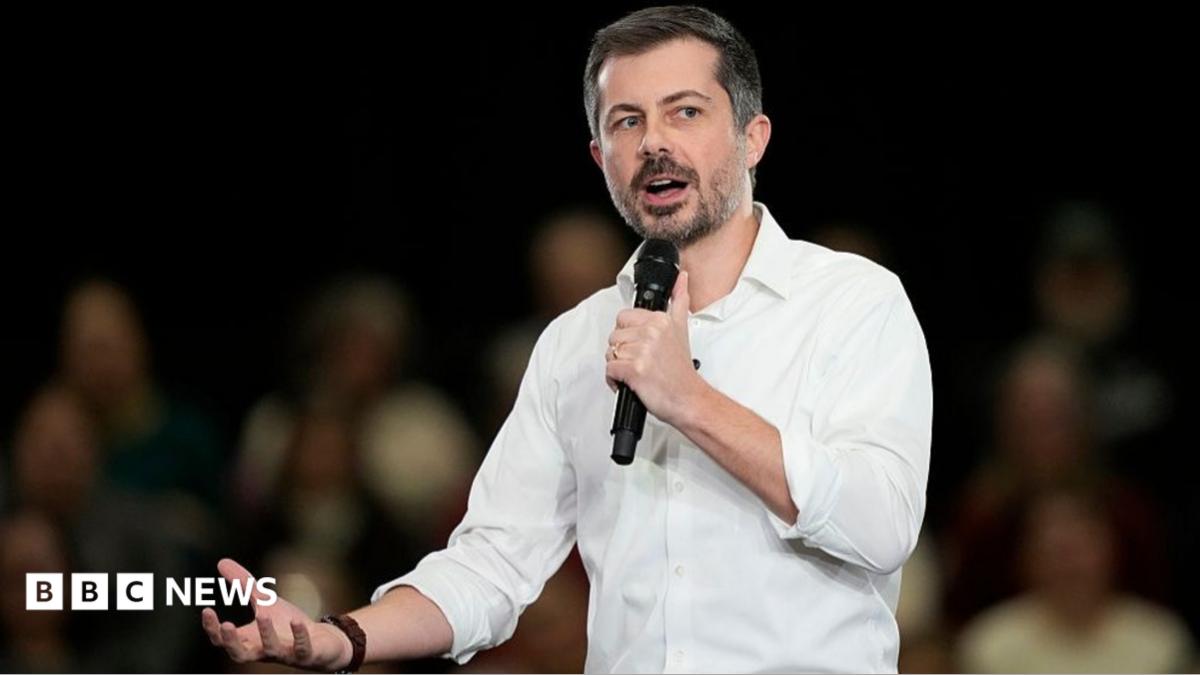
Pete Buttigieg, former US Transportation Secretary and widely expected 2028 presidential contender, disclosed Thursday that someone filed a false Child Protective Services report in Michigan claiming he had committed "unspeakable violent crimes" against his children. Michigan State Police told Buttigieg he could not be alone with his four-year-old twins, Joseph and Penelope, until forensic interviews were completed, separating him from them for a night. The investigation found no evidence, and the case was not referred to prosecutors. The responding officer told Buttigieg he believed the report was politically motivated. In a Substack post, Buttigieg described it as the "CPS equivalent of swatting" and called it "among the darkest hours of my life." The false report arrived shortly after he posted Father's Day photos on social media, during Pride Month. Michigan State Police described false CPS reports as "dangerous" because they divert workers from real emergencies.
Swatting, calling in a false emergency to send police to someone's address, has been used repeatedly against politicians and online figures, occasionally with fatal consequences. Buttigieg is one of the highest-profile openly gay politicians in the US. He and his husband Chasten adopted twins Joseph and Penelope in 2021.
Published in Nature last week, a new study reports the first evidence of "direct waves," a type of gravitational wave predicted by theory but never before observed. Sizheng Ma and collaborators at Caltech, Johns Hopkins, the Niels Bohr Institute, and Columbia analyzed signals from known black hole mergers and identified a component that originates from the extreme near-horizon environment itself, closer to the event horizon than the quasinormal mode signals that have been the focus of gravitational wave research since 2015. Quasinormal modes appear after a merger settles, like a struck bell fading to silence; direct waves emerge from the churning near-horizon violence of the collision itself. The discovery opens a new observational window onto the most extreme gravitational environment in the universe, just outside the event horizon.
Gravitational waves are ripples in spacetime produced by massive colliding objects. LIGO first detected them in 2015. Quasinormal modes are the characteristic ringdown after a black hole merger, the system settling into a stable state. Direct waves are a distinct class, emerging from closer to the event horizon, the boundary inside which nothing, including light, can escape.
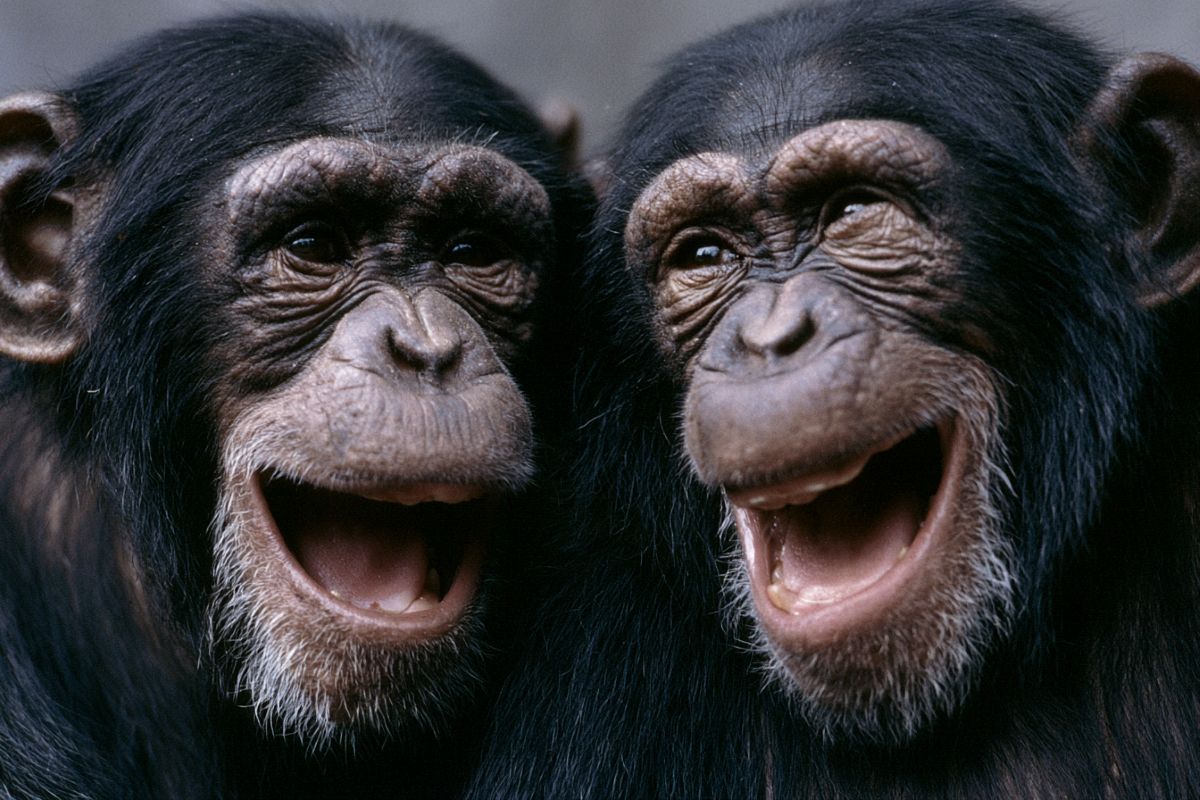
Researchers at the University of Warwick recorded laughter from orangutans, gorillas, bonobos, chimpanzees, and human children during play and tickling, then analyzed the rhythmic patterns. All five species share the same isochronous cadence, the evenly-spaced "ha ha ha" structure, suggesting the pattern was conserved from a common ancestor at least 15 million years ago. Published in Communications Biology, the study found that species more closely related to humans produce more variable and complex laughter, while orangutans and gorillas laugh in more rigid, patterned bursts. Laughter is unusual among primate vocalizations: great apes developed highly distinct call repertoires over millions of years of divergence, but laughter stayed nearly the same across all of them. The researchers argue this conservation signals laughter's foundational role in social bonding, a pattern so effective it survived intact through 15 million years of evolution.
Isochrony means a rhythm where beats are evenly spaced, like a metronome. Great apes began diverging from a common ancestor roughly 15-20 million years ago, with orangutans branching off first, then gorillas, then the line leading to humans, chimps, and bonobos. Most primate calls became species-specific over that span; laughter is a notable exception.
via Chronicle of Higher Education, Inside Higher Ed
Federal enrollment data covering 3,200 colleges and 3 million freshmen shows a sharp bifurcation since the Supreme Court banned race-conscious admissions in 2023. At the 50 most selective schools, Black freshman enrollment fell 27% by fall 2024. At Ivy-Plus institutions, underrepresented minority enrollment dropped 18.9%. At flagship state universities, the same group grew 8%, more than double the 3.2% overall growth rate. Researchers describe a cascade effect: highly qualified Black and Hispanic students who previously attended elite schools are now enrolling at flagships instead, pushing some further down the selectivity ladder. HBCUs, widely expected to benefit, saw enrollment declines. The shift toward lower-selectivity schools concerns researchers because those institutions have lower graduation rates and post-college earnings. Fall 2025 data from 29 elite institutions showed Black enrollment fell at 24 of them.
The Supreme Court's 2023 Students for Fair Admissions v. Harvard decision banned race in college admissions. Elite schools had used race-conscious policies for decades to offset structural disadvantages that grades and test scores reflect. Many institutions responded with socioeconomic-based outreach programs, but researchers say those have not compensated for the full drop in underrepresented minority enrollment.