Israel and Lebanon signed a US-brokered framework agreement on June 26, with Washington serving as guarantor, that sets out a sequenced path toward de-escalation along their disputed southern border. The accord requires the Lebanese army to deploy to southern Lebanon and verify the disarmament of non-state armed groups, language that targets Hezbollah, before Israeli forces progressively withdraw from Lebanese territory they occupy. Two immediate pilot projects will test the framework: Israeli troops pull back from small occupied areas while Lebanese army units fill the gap. Hezbollah is not a party to the agreement. The group's leader Naim Qassem publicly rejected the deal, saying Israel must withdraw unconditionally rather than linking withdrawal to disarmament. Israeli Prime Minister Netanyahu said forces will remain until disarmament is fully verified. Previous ceasefire arrangements between the two sides have seen near-daily cross-border strikes continue regardless, raising open questions about whether this framework can hold.
The current standoff follows Hezbollah's involvement in the broader Middle East conflict of 2024 and 2025. Despite a ceasefire ending that wider war, Israeli forces have remained in occupied pockets of southern Lebanon. Hezbollah, Iran's most powerful Arab proxy, controls significant territory and an independent weapons arsenal in southern Lebanon and has refused any arrangement linking Israeli withdrawal to its own disarmament.
A severe heatwave has swept across Europe since June 21, killing at least 327 people and breaking national temperature records in Germany, France, the UK, and Belgium. Germany provisionally set a new all-time high of 41.5°C (about 107°F) at Drewitz in eastern Germany on June 27, surpassing a record set just the day before. France recorded 44.3°C (111.7°F) in the southwestern town of Pissos, its hottest day in nearly 80 years; dozens drowned as people sought relief in rivers and lakes. Public events across multiple countries have been canceled, hospitals strained, and heat advisories blanketed a wide area from Ireland to central Europe. Climate researchers say the event, which began in late May and intensified through June, represents an earlier onset of Central European summer conditions consistent with a warming climate. A second wave that began June 17, just before the summer solstice, drove most of the records. It is the second major heat emergency to hit Europe in two months.
European countries, France and Spain in particular, have broken heat records repeatedly since 2003, when a prolonged heatwave killed an estimated 70,000 people across the continent. The 2026 event stands out for its early calendar start and geographic breadth: Ireland and the UK, which typically see mild summers, both set June temperature records this week.
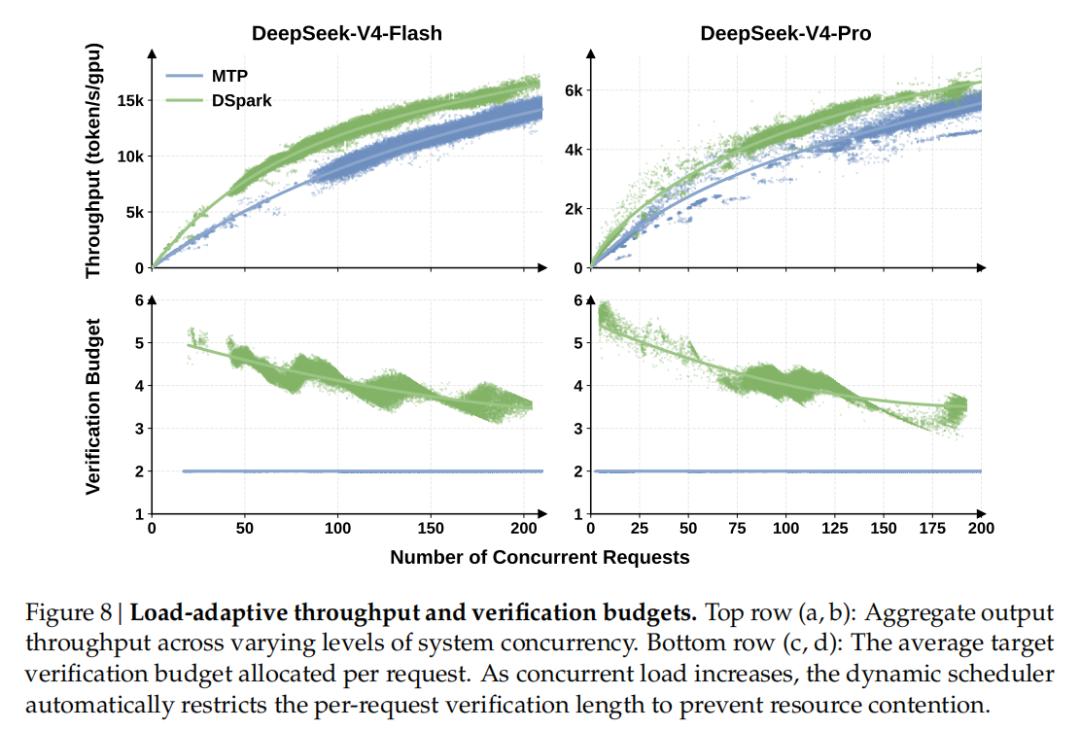
DeepSeek published DSpark on June 27, an open-source speculative decoding framework for large language models that drew over 600 upvotes on Hacker News. Speculative decoding addresses a fundamental bottleneck in LLM serving: models generate tokens one at a time, each requiring a full pass through the network. DSpark trains a smaller draft model to propose a batch of upcoming tokens in advance; the larger production model then validates the entire batch in parallel, producing multiple tokens per compute cycle. 36Kr and KuCoin report inference speed gains of roughly 80 percent on DeepSeek's V4-Flash and V4-Pro models. The DeepSpec repository includes three draft model architectures (DSpark, DFlash, and Eagle3), a complete training pipeline, and evaluation across eight standard benchmarks covering math, coding, and dialogue. It is released under the MIT license. American frontier labs have deployed comparable techniques internally without publishing implementations. The release continues DeepSeek's pattern of open-sourcing research that competitors treat as proprietary.
Speculative decoding was described in a 2022 Google Research paper as a method to accelerate inference without changing model outputs: draft model guesses are accepted only when the production model agrees, so quality is unchanged. DeepSeek, backed by the Chinese hedge fund High-Flyer, has released most of its research openly, including the V3 and V4 model series.
Volkswagen Group is planning to close three of its own plants in Hanover, Zwickau, and Emden, plus an Audi facility in Neckarsulm, with the four sites collectively employing over 45,000 workers. Total job cuts across the group could reach 100,000 under a restructuring plan called Concept 2030, led by CEO Oliver Blume, which targets a 15 percent reduction in capital investment. China, VW's largest single market, recorded a 20 percent sales decline over the past year as domestic automakers, most visibly BYD (比亚迪), captured market share European brands once held. US tariffs are adding an estimated 4 billion euros in annual costs on top of that. First-quarter 2026 net profit dropped 28 percent to 1.56 billion euros. VW stock has lost more than 25 percent of its value in 2026, hitting a 16-year low. Germany's largest industrial union, IG Metall, and VW's works council jointly warned they would do "everything in our power" to prevent the closures.
Volkswagen Group owns the VW, Audi, Porsche, Skoda, and SEAT brands and is Germany's largest private employer. The company built market dominance in China over three decades through joint ventures with state-owned manufacturers. BYD (比亚迪) and other Chinese EV makers have undercut European brands on price and technology since 2022, accelerating a structural shift in the world's largest car market.
A team led by Brent Seales at the University of Kentucky has decoded an entire charred papyrus scroll from Herculaneum, buried and carbonized when Vesuvius erupted in 79 CE, for the first time since antiquity. The scroll, catalogued as PHerc 1667, contains 20 columns of continuous readable text: a previously unknown book by the Epicurean philosopher Philodemus titled "On the Gods, Book Eight." Synchrotron scanners image the fragile rolls layer by layer, building 3D models that software then mathematically unrolls into a readable surface. Artificial intelligence, trained to detect faint carbon-based ink invisible to the naked eye, automated ink detection that would otherwise require months of manual work. The project is backed by Nat Friedman, former GitHub CEO, and Daniel Gross, former Apple AI head. Of roughly 400 intact scrolls recovered from the Villa dei Papiri at Herculaneum, 45 have been scanned and 355 remain unread.
The Herculaneum scrolls were buried and carbonized by the Vesuvius eruption, making them too fragile to physically unroll. Rediscovered in the 1700s, they sat largely unread in Italian museum collections. The Vesuvius Challenge, launched in 2023 with Silicon Valley backing, offered cash prizes to accelerate computational reading. Prior work yielded only small fragments; PHerc 1667 is the first complete scroll recovered.
The New York Times filed an amended complaint against OpenAI and Microsoft on June 25, adding a new theory: that Microsoft was not a passive beneficiary of OpenAI's training data practices but an active participant. The amended filing alleges Microsoft deliberately designed custom computing infrastructure, a supercomputer with over 285,000 CPU cores and 10,000 GPUs, specifically to enable OpenAI to process millions of Times articles at model-training scale without permission or payment. The original lawsuit, filed in December 2023, argued ChatGPT can reproduce Times articles verbatim, harming the paper's subscription business. The amendment follows a Supreme Court ruling siding with Cox Communications against Sony in a music-piracy liability case, which the Times argues strengthens its contributory infringement theory: that deliberately enabling infringement at scale makes the enabler liable. Nearly 400 regional and local newspapers have filed a separate suit over the same practices, making the combined litigation a major test of whether AI training on scraped content requires licensing.
Microsoft invested roughly 13 billion dollars in OpenAI and provides the Azure cloud infrastructure used to train and serve GPT models. Contributory infringement is a legal doctrine under which a party that knowingly enables copyright infringement by others can be held liable even without directly copying the material. The NYT case has been in litigation for 2.5 years.
Analyzing benchmark scores across 18 standard evaluations, Jamie Dborin tracks how quickly open-weight large language models have closed the gap on closed-source frontier models. The lag metric: for each benchmark, identify when the best closed-source model previously achieved the score the best open-weight model reaches today. On coding tasks, that lag shrank from 15 months to 1-2 months since summer 2024. Averaged across all 18 benchmarks, the gap has been near-flat at just under five months for several quarters. Extrapolating the trend, Dborin projects open-weight models will match closed-source performance by approximately December 3, 2026. The implication: the capability gap that once justified premium pricing on frontier APIs is shrinking faster than many expected, and open-weight models that run on local hardware are viable for most production tasks today. The piece concedes that benchmark selection shapes the forecast and that headline benchmarks sometimes diverge from real-world performance on specific tasks.
Open-weight models, including Meta's Llama family, Mistral, and DeepSeek's V series, can be downloaded and run on local hardware. Closed-source frontier models, including OpenAI's GPT-5.6 and Anthropic's Claude, are accessible only through paid APIs. The performance gap between the two has been a central argument for why frontier API subscriptions command a price premium over self-hosted alternatives.
Florida's Board of Governors is advancing a rule that would bar undocumented students from enrolling at the state's 12 public universities starting in the 2027-28 academic year, with the state college system pursuing a parallel ban. Together, the policies would make Florida the fourth US state to restrict noncitizens' access to public colleges and universities. The ban applies to new enrollees only; the roughly 49,000 undocumented students currently enrolled would not be immediately removed. Applicants must demonstrate lawful immigration status, with an exception for online students based outside the country. About 8,000 undocumented students graduate from Florida high schools each year. Governor Ron DeSantis publicly backed the proposal. A 14-day public comment period runs first; the full Board of Governors vote is expected in September 2026. If enacted, the rule would undo a 2014 state law that allowed undocumented Florida high school graduates to pay in-state tuition, closing public university access to students who grew up in Florida but lack legal status. Legal challenges are expected.
Alabama, South Carolina, and Georgia already bar or restrict undocumented students at public colleges; Florida would become the fourth. Roughly 22 states explicitly allow undocumented students to pay in-state tuition. Florida's 2014 law was notable for extending that access to a large undocumented population in a state governed by Republicans who have otherwise led restrictionist immigration policy.
Johns Hopkins University on Friday laid off 110 employees, primarily in administrative roles, citing a 500 million dollar drop in federal research grants and a 43 percent annual decline in federal research funding. The cuts follow a larger wave: in March 2025, Hopkins eliminated 2,200 international positions after the Trump administration gutted USAID, which had funded much of the university's global health work. The new layoffs target Baltimore-based administrative positions supporting research operations. The university is also cutting its administrative budget by 10 percent, consolidating operations, and pursuing corporate partnerships to diversify revenue. A spokesperson said the university's research infrastructure must shrink in proportion to its shrinking federal portfolio. Despite the reductions, Hopkins posted an operating surplus of 491.6 million dollars in fiscal 2025, indicating the adjustments are structural rather than driven by financial emergency. The layoffs reflect a broad pattern: research universities built around federal grant income are shedding administrative capacity as NIH funding freezes, terminations, and political screenings reduce the available grant pool.
Johns Hopkins is the largest single recipient of NIH funding among US universities, making it more exposed than most to federal research cuts. NIH grant freezes and political screenings have reduced available funding at research institutions since early 2025. Other major research universities, including Columbia and MIT, have also announced workforce cuts over the same period.
South Korea's defense ministry announced Friday it will train its entire 500,000-strong active military, across the army, navy, air force, and marines, to operate drones as a "second personal weapon." The country plans to acquire 110,000 drones across all branches by 2029, beginning with 11,000 commercial units for training by end of 2026 and scaling to 60,000 commercial drones by 2029. The program also includes 20,000 low-cost reconnaissance and loitering drones and accelerated development of the K-Lucas, a homegrown long-range suicide drone. Anti-drone defenses are expanding alongside: laser weapons, high-power microwave systems, and interceptor drones. Defense Minister Ahn Gyu-back framed the initiative as a response to lessons from the Ukraine war, where drone warfare has reshaped ground combat. The announcement followed reports of North Korea's growing military cooperation with Russia, including North Korean soldiers fighting alongside Russian forces. Military analysts cautioned that blanket training without specialized doctrine may underdeliver, pointing out that in Ukraine drone effectiveness has come from dedicated units rather than universal distribution.
The Ukraine war showed that small commercial drones modified for reconnaissance or munitions drops can shift tactical outcomes in modern ground combat. North Korea has separately flown drones into South Korean airspace and sent soldiers to fight alongside Russian forces in Ukraine. South Korea fields one of Asia's most capable conventional militaries and has been expanding defense spending as North Korea's nuclear and conventional buildup accelerates.