US Vice President JD Vance traveled to Switzerland over the weekend for direct talks with Iranian officials on Tehran's nuclear program, emerging Monday with a claim that Iran had agreed to invite UN nuclear inspectors back into the country this week, calling it a major milestone and the first step toward permanently ending the Iranian nuclear weapons program. Tehran said the opposite: no new commitments were made on inspections, and the nuclear issue was not discussed during 18 hours of negotiations. The two sides did agree on a 60-day roadmap toward a broader deal and on mechanisms to address the Strait of Hormuz and the Lebanon conflict. The conflicting accounts put both governments in an awkward position: Washington needs to show domestic progress, while Tehran cannot be seen domestically conceding to US pressure. Whether Iran allows inspectors from the International Atomic Energy Agency access in the coming days will determine which account holds.
Iran and Israel fought a significant military conflict in the months preceding these talks, with tens of thousands of Iranian deaths reported. The IAEA, the UN's nuclear watchdog, had its inspectors expelled from Iran before the Swiss negotiations began. The Trump administration entered the talks with a stated goal of denuclearizing Iran through diplomacy rather than military pressure.
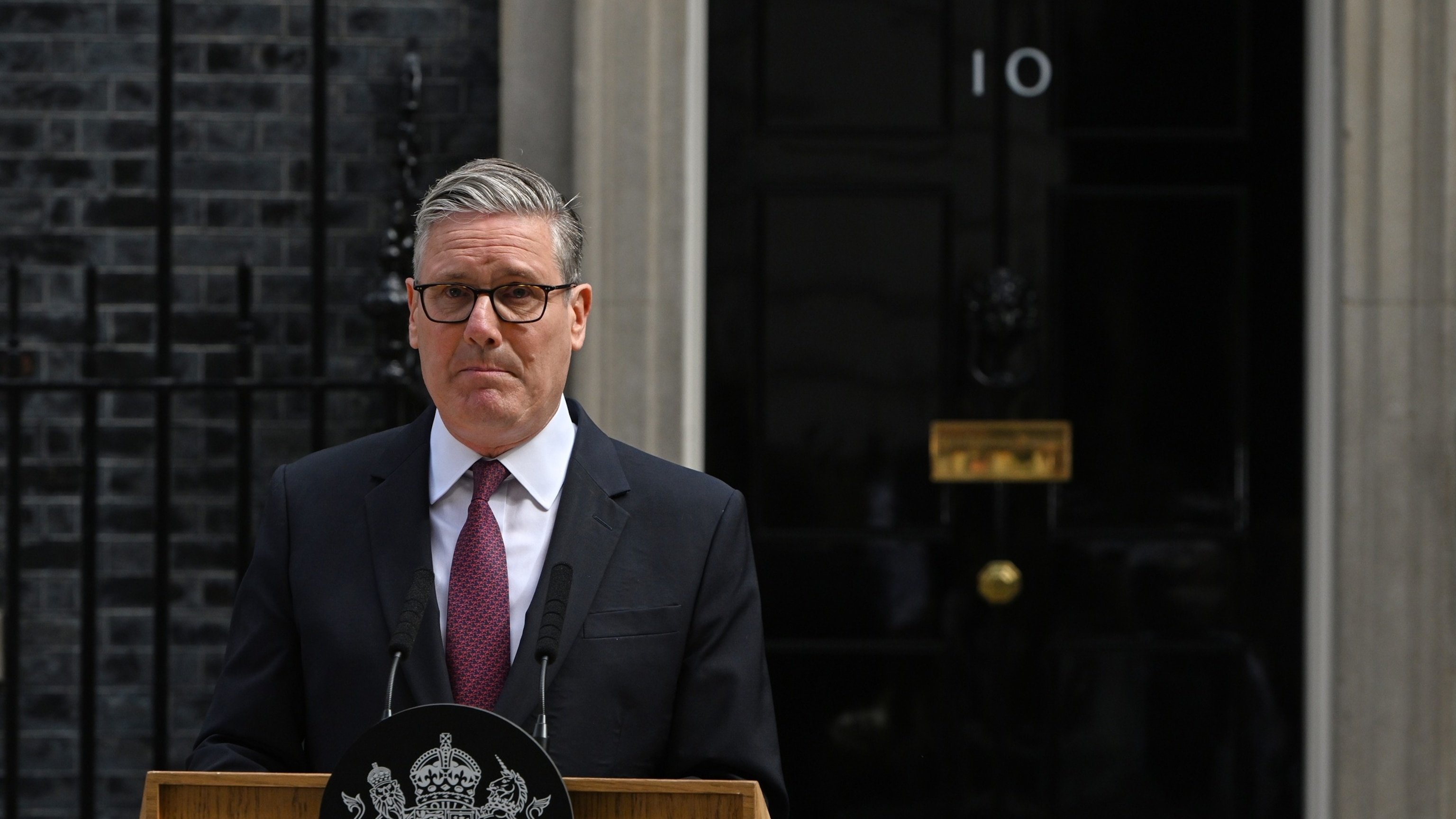
Less than two years after Labour's landslide 2024 election victory, Keir Starmer announced Monday outside Downing Street that he would resign as Britain's prime minister. The trigger was Labour's collapse in May 2026 local elections, where the party lost 1,496 council seats while the far-right Reform UK party gained 1,453 seats. That swing convinced enough Labour MPs Starmer could not lead the party into the next general election. Starmer quoted his own parliamentary party back at him: 'I have heard the answer,' he said, 'and I accept that answer with good grace.' Leadership nominations open July 9 and close July 16, with a new prime minister expected before Parliament returns in September. Andy Burnham, who won a parliamentary by-election just days earlier after years as Greater Manchester's mayor, is the immediate frontrunner, endorsed by former Health Secretary Wes Streeting. Britain will have had seven prime ministers in a decade once a successor takes office.
Starmer became Labour leader in 2020 after the party's worst electoral defeat in decades under Jeremy Corbyn, then led Labour back to power in a 2024 landslide. His tenure was dogged by his centrist stance on welfare cuts and immigration, which alienated progressive voters and failed to slow Reform UK's rise among working-class communities in northern England and the Midlands.
Alan Greenspan, who chaired the Federal Reserve from 1987 to 2006 under Presidents Reagan, George H.W. Bush, Clinton, and George W. Bush, died Monday at his home from Parkinson's disease complications. He was 100. His 18-year tenure coincided with what economists call the Great Moderation: two decades of low inflation and the longest US economic expansion on record, stretching from 1991 to 2001. He was nicknamed the Maestro and markets moved on his cryptic congressional testimony. The other part of his legacy is harder to celebrate. After Greenspan left office, the housing market collapsed and the 2008 financial crisis erased trillions in wealth. Critics pointed to his loose monetary policy through the 2000s and his philosophical resistance to regulating derivatives as conditions that enabled the subprime bubble. Greenspan testified before Congress in 2008 that he had found a flaw in his worldview — a rare admission from someone who had spent decades as the most influential economic official in the world.
The Federal Reserve chair sets US interest rates, which influence borrowing costs worldwide. Greenspan came to the role with an unusual intellectual background: he was a member of Ayn Rand's inner circle in New York and was deeply skeptical of financial regulation, a stance he publicly questioned after 2008. His term at the Fed coincided with the rise of complex mortgage-backed securities that regulators largely left unexamined.
The Senate voted 85-5 on Monday to pass the 21st Century ROAD to Housing Act, a bipartisan bill targeting two persistent drivers of housing unaffordability: scarce supply and institutional investors crowding out individual buyers. The legislation bars large investors from purchasing more than 350 single-family homes and removes regulatory barriers that have slowed affordable housing construction for years. It now heads to the House, where passage is expected quickly, followed by President Trump, who is expected to sign it. Senator Elizabeth Warren called it the most significant housing legislation in three decades. The near-unanimous vote reflects rare political convergence on housing costs ahead of November midterms: both parties want to show voters they acted on inflation-era frustration with housing prices. The bill contains over 45 housing provisions, including an innovation fund for communities that expand supply, updated manufactured-housing standards, and nine community banking provisions.
US home prices rose sharply after 2020 as mortgage rates climbed and institutional investors purchased large shares of single-family homes, directly competing with first-time buyers. A Senate version of this bill passed in March; the House approved a separate version in May. The committees reached a bicameral compromise last week, producing the final text that passed Monday.
Far-right lawyer Abelardo de la Espriella narrowly won Colombia's presidential runoff Sunday, taking 49.65% of the vote against left-wing Senator Iván Cepeda's 48.70%, a margin of roughly 250,000 ballots. De la Espriella, a 47-year-old millionaire criminal defense attorney who holds US and Italian citizenship, ran on a tough-on-crime platform: 90-day military offensives against armed groups and ten mega-prisons modeled on El Salvador's President Bukele. He was endorsed by President Trump, who posted on Truth Social: 'He won BIG!' after early returns. Cepeda has said his campaign will challenge results from about 33,000 of 122,000 polling stations, though international observers have not flagged systemic irregularities. De la Espriella takes office August 7. He has pledged to restore diplomatic ties with Israel, move Colombia's embassy to Jerusalem, and abandon peace talks with rebel groups, marking a sharp reversal from outgoing leftist President Gustavo Petro.
Colombia has been governed since 2022 by Gustavo Petro, a former guerrilla who opened peace negotiations with armed rebel groups including the ELN faction and forged closer ties with Venezuela and Cuba. De la Espriella ran against that approach, promising military operations against armed groups and echoing the anti-crime model of El Salvador's Nayib Bukele, whose mass incarceration policy won wide regional attention.
A nine-person team at Sina Weibo's AI lab has released VibeThinker-3B, a 3-billion-parameter model that matches much larger competitors on structured reasoning benchmarks. On AIME 2026, a rigorous math competition test, it scores 94.3, identical to DeepSeek V3.2's 671-billion-parameter model and ahead of Gemini 3 Pro at 91.7. On LeetCode weekly and biweekly contests from April and May 2026 — problems the model had never seen — it posted a 96.1% acceptance rate, outperforming GPT-5.2. The team built it on Qwen2.5-Coder-3B using three post-training techniques applied in sequence: curriculum-based supervised fine-tuning, multi-domain reinforcement learning using a GRPO-style method called MGPO, and offline self-distillation. Their central claim is that structured reasoning — math, code, formal logic — compresses efficiently into small models, while broad knowledge requires scale. Predecessor VibeThinker-1.5B cost about $7,800 to train. Model weights and code are open-source under MIT license on Hugging Face and GitHub.
GRPO (Group Relative Policy Optimization) is a reinforcement learning technique for training language models on tasks with objective correct answers, like math and code. Popularized by DeepSeek's R1 model, it rewards outputs that score well relative to other outputs from the same model, bypassing the need for a separate reward model. The result tends to be significant gains in reasoning benchmarks at modest compute cost.
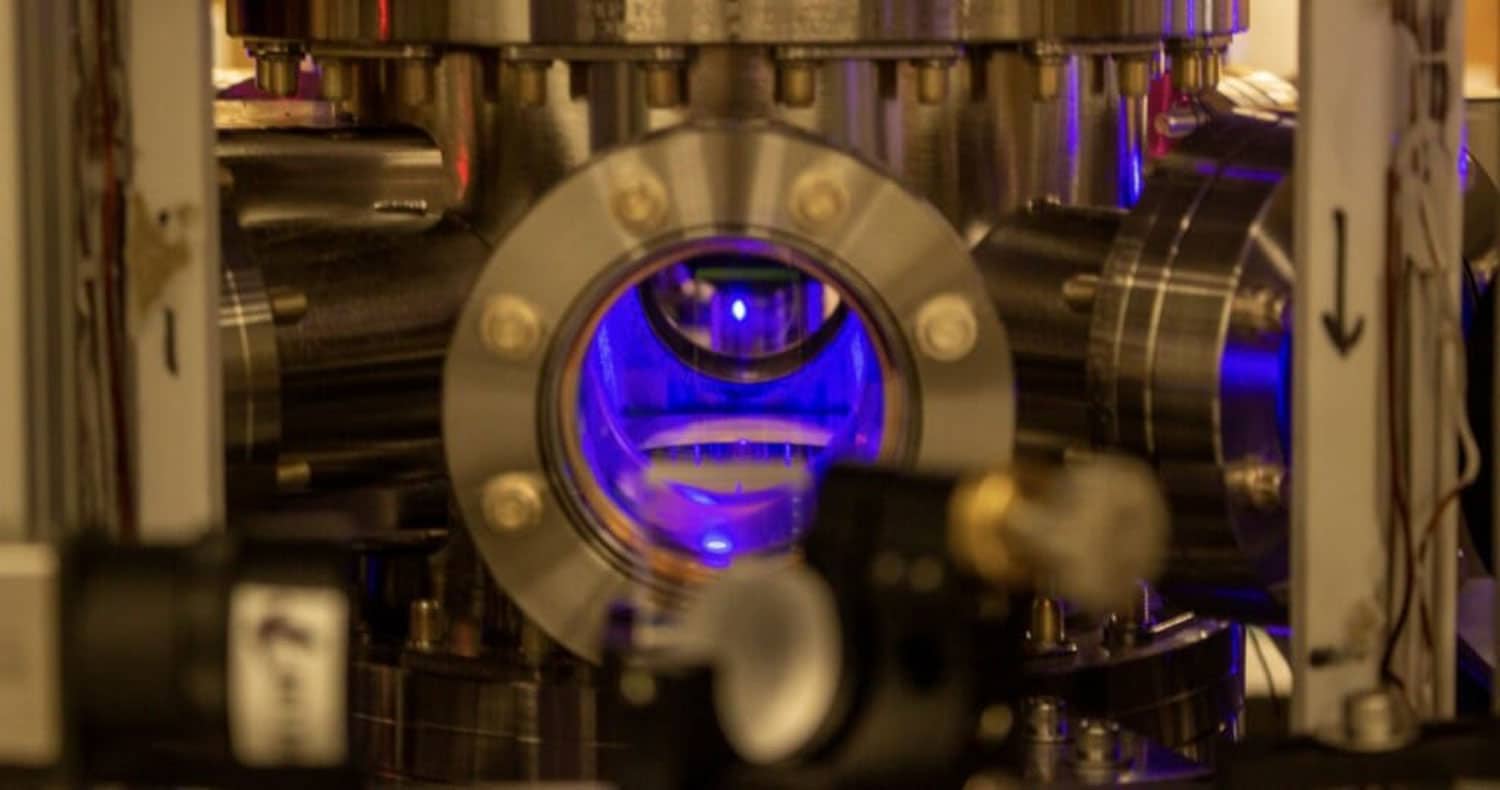
Two independent groups — one at Tsinghua University in Beijing, another at TU Wien in Vienna — have built working nuclear clocks, a physics milestone pursued for decades. Published in Nature on June 22, the devices measure time by probing energy transitions inside atomic nuclei rather than in electrons, as conventional atomic clocks do. The key material is thorium-229, the only known isotope whose nuclear transition sits in a frequency range lasers can reach. Both teams embed thorium nuclei in calcium fluoride crystals and illuminate them with ultraviolet laser light at roughly 148 nanometers; the laser then locks to the nuclear transition to mark time. The result is a clock with fractional frequency instability approaching one part in a quadrillion per day, comparable to today's best atomic standards. The Vienna team also used their device to search for ultralight dark matter, reaching constraints 100 to 1,000 times tighter than any previous atomic-clock experiment. The same precision could eventually improve GPS systems and deep-space navigation.
Conventional atomic clocks keep time by measuring electron transitions in cesium atoms. Nuclear clocks use the atomic nucleus instead, which is far more shielded from stray electromagnetic fields and thermal noise. Thorium-229 was identified decades ago as the ideal candidate because its nuclear energy gap happens to be unusually small, small enough that laser light can drive the transition, unlike virtually all other nuclei.
Canada released a national nuclear strategy on Monday targeting up to ten new reactors by 2040, more than doubling a fleet of 17 operational plants whose last large addition was completed in 1993. Energy Minister Tim Hodgson framed it as a nuclear renaissance timed to Canada's ambition to double total electricity capacity by 2050. Under the plan, two large-scale reactors would be under construction by 2035, with five more in planning by 2040 and at least one outside Ontario. The strategy prioritizes the CANDU reactor, Canada's domestically developed design, which runs on unenriched natural uranium and avoids the supply-chain vulnerability of US and European designs that require enriched fuel. The government estimates the build-out will exceed $100 billion, but no new federal funding accompanies the announcement; financing mechanisms are promised by April 2027. The plan also targets four new international reactor export markets by 2040 and aims to double nuclear employment from 90,000 to 180,000 workers over the coming decades.
Canada currently has 17 reactors, mostly in Ontario, providing about 15% of national electricity. Interest in new nuclear is being driven by rising electricity demand from AI data centers, industrial electrification, and Canada's net-zero-by-2050 commitment. The CANDU design was developed by Atomic Energy of Canada Limited and is already deployed internationally in South Korea, Argentina, Romania, and China.
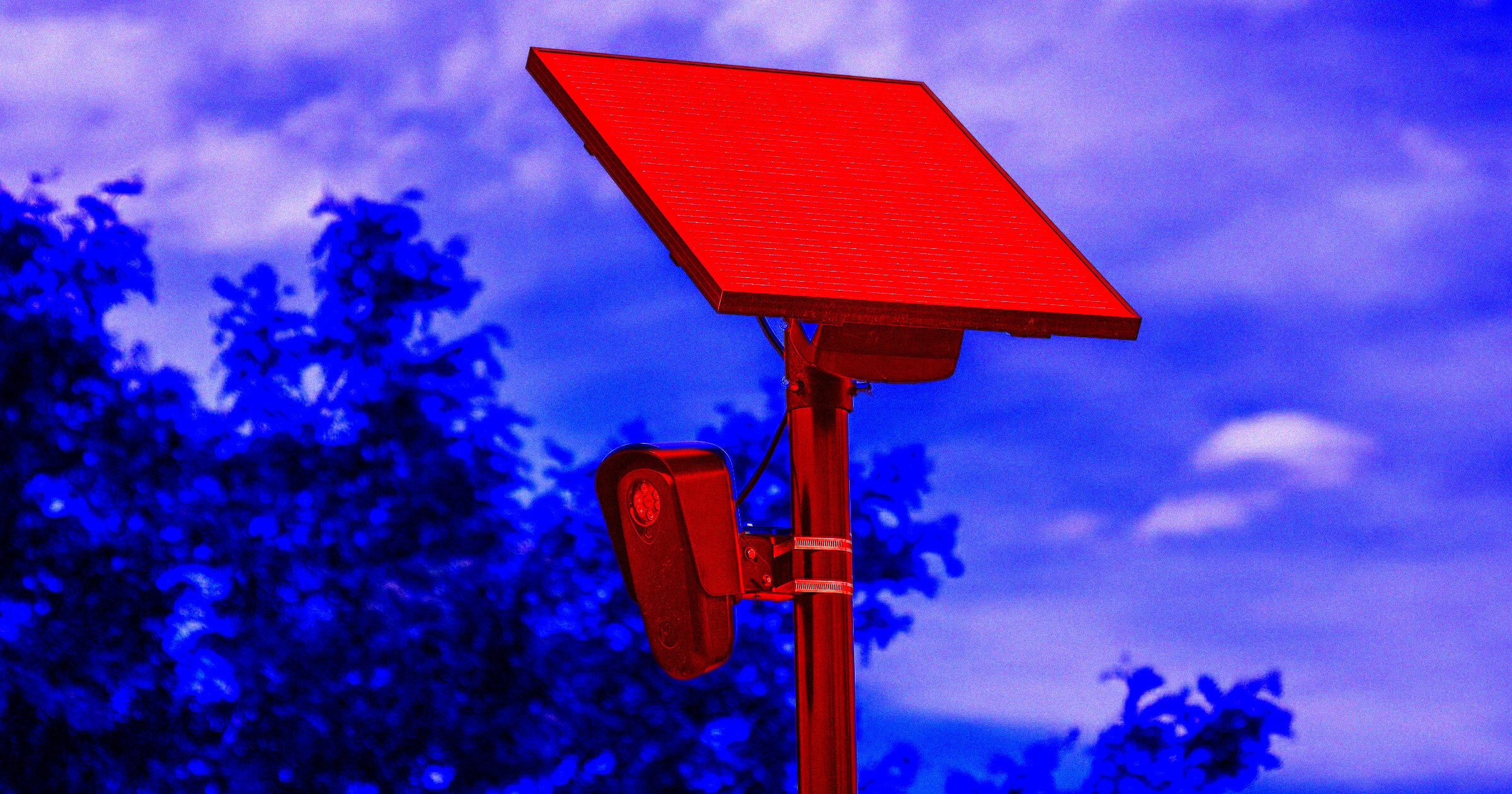
An IPVM security industry investigation has documented at least 18 cases of police officers using Flock Safety's automated license plate readers to track romantic partners. The most recent arrest came June 18 in Illinois, where the police chief of Holiday Hills was charged with two counts of official misconduct after prosecutors alleged he tracked six people he knew personally, including 140 plate lookups on one ex-partner's former boyfriend over several months, with 86 of those searches conducted off-duty. The misconduct spanned 18 months across two Illinois police departments. Flock Safety operates 76,000 cameras in over 6,000 US cities and markets the system as a vehicle-tracking tool rather than a person-tracking tool, but documented abuse cases show officers can easily repurpose it to monitor individuals. The Institute for Justice, which is pursuing a constitutional challenge to the system, says 18 documented cases is almost certainly an undercount. Victims typically discovered the surveillance only through a third-party site, HaveIBeenFlocked.com, with no disclosure from Flock or police.
Flock Safety's license plate readers are positioned as crime-fighting tools that alert officers when stolen vehicles or cars flagged for crimes pass by. Officers can query plate data across networked police departments without a warrant. Civil liberties groups argue the absence of external audit requirements makes misuse easy to conceal. The Institute for Justice's constitutional challenge argues the warrantless tracking of vehicle movements violates the Fourth Amendment.
Z.ai, formerly Zhipu AI, released GLM-5.2 on June 13, and Unsloth AI has since compressed the model from its original 1.51 terabytes down to 217 gigabytes, putting it within reach of multi-GPU clusters without a cloud contract. GLM-5.2 is a 744-billion-parameter mixture-of-experts model with a one-million-token context window, trained entirely on Huawei Ascend accelerators without any Nvidia hardware. That detail makes it the first frontier-class open-weights model built outside the US chip supply chain now subject to export controls. On software engineering benchmarks, it scores 74.4 on FrontierSWE, just below Claude Opus 4.8 at 75.1, and 62.1 on SWE-bench Pro, ahead of GPT-5.5 at 58.6. On math reasoning it scores 99.2 on AIME 2026. The MIT license means unrestricted commercial use. API access costs $1.40 per million input tokens, compared to $5 for Claude Opus 4.8. The Unsloth quantization runs in llama.cpp, Ollama, LM Studio, and vLLM.
Mixture-of-experts models route each query to a small fraction of their total parameters rather than activating all of them, so a 744-billion-parameter model behaves closer to a 40-billion-parameter model at inference. GLM is the main model series from 智谱AI (Zhipu AI), which rebranded to Z.ai in 2025. Huawei's Ascend chips are China's primary domestic alternative to Nvidia GPUs that have faced US export restrictions since 2022.