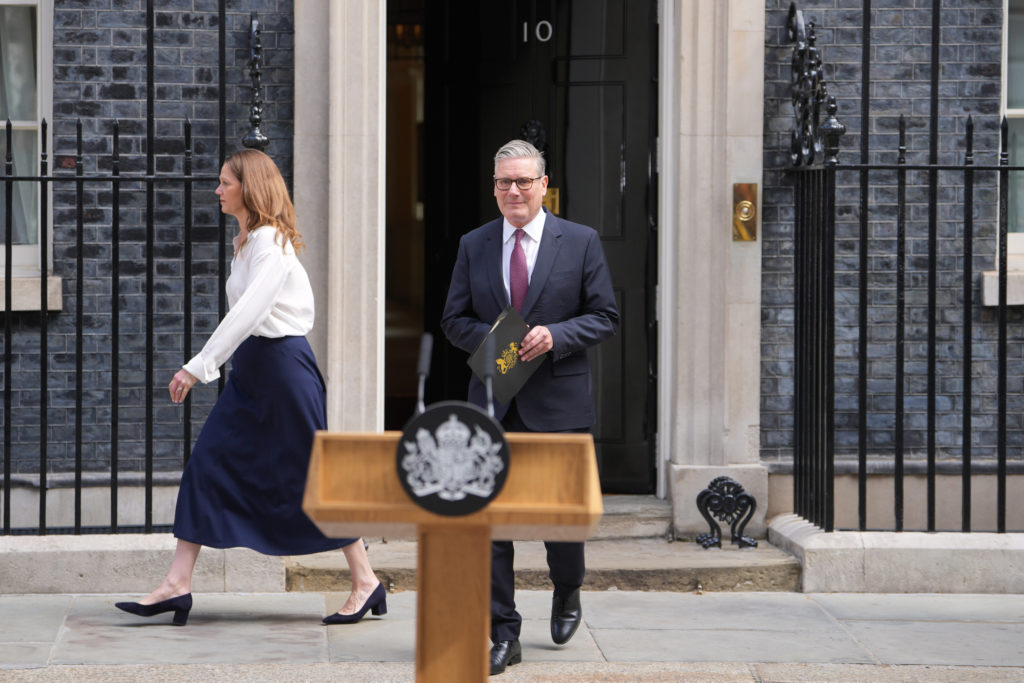
British Prime Minister Keir Starmer announced his resignation Monday in a tearful speech outside 10 Downing Street, paving the way for the UK's seventh leader in a decade. Starmer came under mounting pressure after May's local elections, in which Labour lost over 1,000 council seats and its 27-year control of the Welsh legislature, while the anti-immigration Reform UK party, led by Nigel Farage, gained nearly 1,300 council seats across England. The final trigger was Andy Burnham, the popular former mayor of Greater Manchester, winning a parliamentary seat last week and confirming he would challenge Starmer for the party leadership. Burnham is now the clear frontrunner; potential rivals including Health Secretary Wes Streeting have already pledged him support. Starmer set a clear timetable: nominations open July 9, close July 16, and a new leader would be named by September 1 if a contest is required. If Burnham runs unopposed, he could take office before Parliament rises for its summer recess.
Reform UK, the populist anti-immigration party led by former UKIP and Brexit Party leader Nigel Farage, surged in the May 2026 local elections, gaining nearly 1,300 council seats. Labour MPs, alarmed about the 2029 general election, had been calling for Starmer's departure for weeks before Burnham's parliamentary return accelerated the timeline.
Alan Greenspan, who chaired the US Federal Reserve from 1987 to 2006 and became the world's most closely watched central banker, died Monday at his Washington home from Parkinson's disease complications. He was 100. Appointed by President Ronald Reagan, Greenspan faced his first test two months into the job: the Black Monday crash of October 1987, when the Dow fell 22% in one day. His assurance that the Fed would supply liquidity stabilized markets within weeks. Over 18 years and four presidents, he steered the economy through the 1997 Asian financial crisis, the dot-com collapse of 2000, and the post-9/11 recession, earning the nickname the Maestro. His legacy fractured after 2008. Critics traced the housing bubble, which triggered the worst recession since the Great Depression, to Greenspan's decades of light-touch regulation and easy credit. In a 2008 congressional hearing, he testified: "I made a mistake in assuming that the self-interest of organizations... was best capable of protecting their own shareholders and their equity in firms."
The Federal Reserve, the US central bank, sets interest rates and regulates major financial institutions. Its chair is appointed by the president and serves four-year terms. During Greenspan's tenure, the US experienced near-zero inflation alongside the longest peacetime economic expansion in history. Greenspan was associated with Ayn Rand's free-market philosophy early in his career.
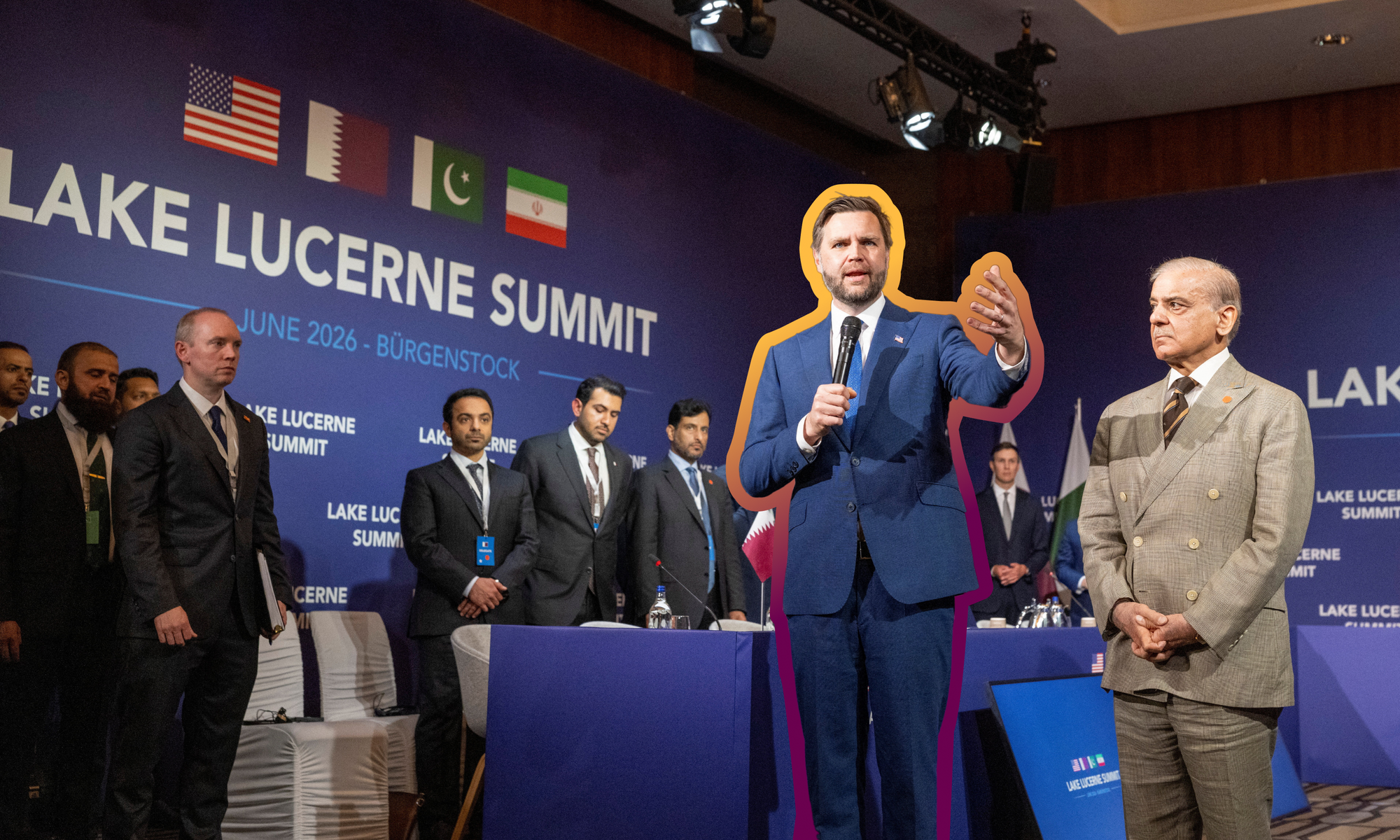
US-Iran talks at a hotel complex on Lake Lucerne, Switzerland, ended Monday with Vice President JD Vance announcing four specific outcomes. Iran agreed to let inspectors from the International Atomic Energy Agency, the UN body that monitors nuclear programs, return to the country after a three-year absence. Both sides established a mechanism to prevent military accidents in the Strait of Hormuz, the narrow waterway through which roughly one-fifth of global oil flows. A ceasefire coordination framework for the Lebanon conflict was agreed. A joint committee was formed to oversee continued negotiations toward a final deal within 60 days. On the financial side, Jared Kushner proposed using unfrozen Iranian assets to purchase US agricultural goods including soybeans, corn, and wheat, a structure designed to satisfy both sides' domestic politics. Iran's lead negotiator called the day constructive while stopping short of endorsing the road map in full.
Iran expelled IAEA inspectors in 2022 in retaliation for tightened Western sanctions. The current regional conflict involves Israeli operations in Lebanon and Gaza, Iranian-backed groups, and Houthi attacks on Red Sea shipping. This was the first high-level direct US-Iran meeting in years. The morning's digest covered the opening of these talks; Monday's session produced the first concrete commitments.
China's commerce ministry added 10 US companies to its export control list Monday, barring Chinese suppliers from selling any dual-use goods, meaning items with both civilian and military applications, to them. The targeted firms span the US military technology supply chain: drone makers Red Cat Holdings and Teal Drones in Utah, robotic hardware maker Jaia Robotics, defense contractors Ball Aerospace and Oshkosh Defense, and rare earth producers MP Materials and USA Rare Earth. Under the controls, any entity worldwide is barred from transferring Chinese-origin dual-use items, which range from drone components to robotic swarm software, to the listed companies. Beijing framed the move as retaliation for a US decision barring leading Chinese tech firms from defense contracts. The action extends a pattern China began in October 2025, when it first deployed its export control list against American defense suppliers, marking retaliatory tech restrictions as a standard tool in the trade dispute.
China controls roughly 60% of global rare earth mining and over 85% of rare earth processing, materials used in jet engines, guided missiles, EV motors, and semiconductor manufacturing. Companies like MP Materials have been racing to build US rare earth processing capacity as an alternative to Chinese supply. Beijing has used export restrictions on these minerals as trade leverage since 2024.
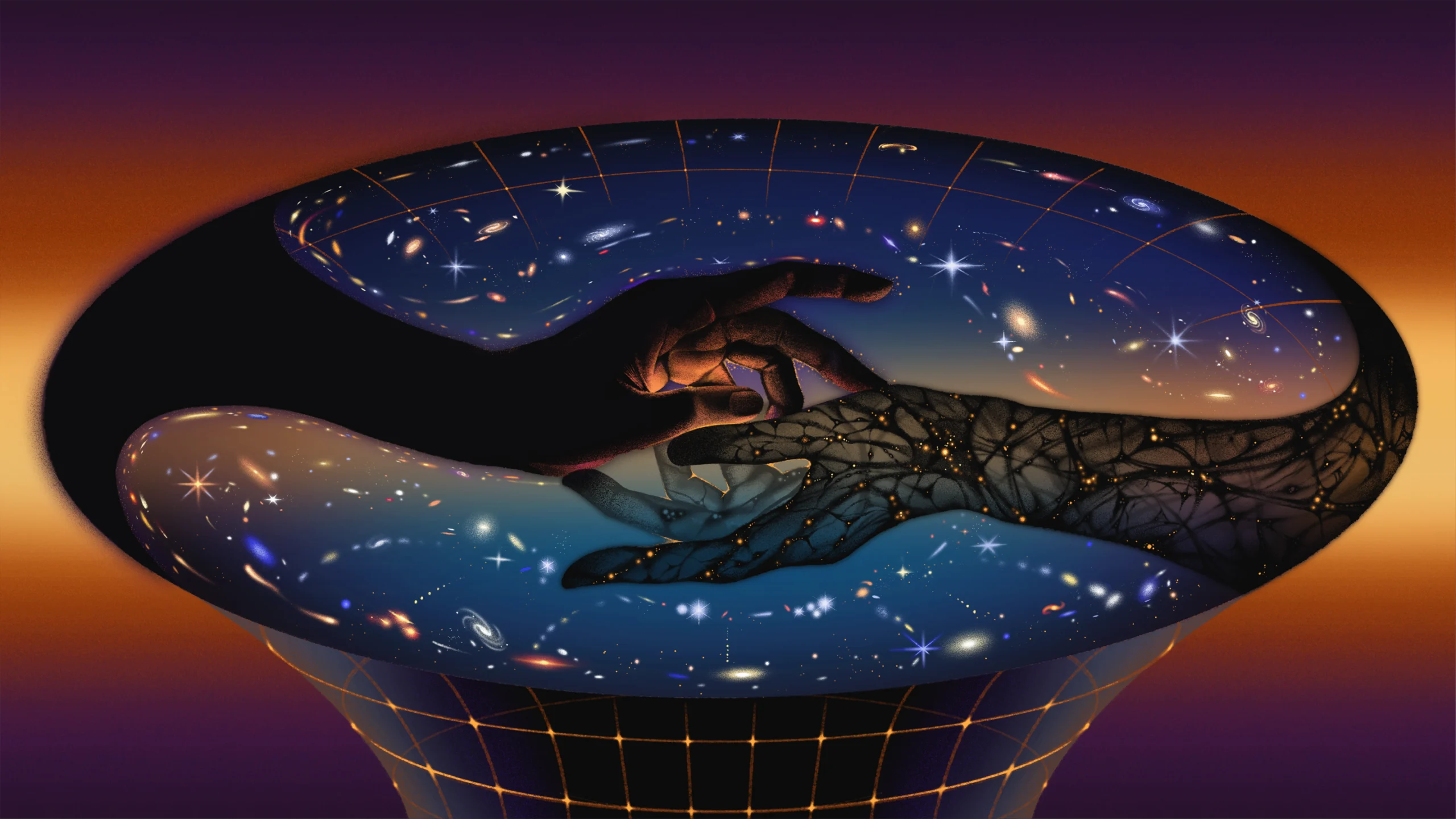
Physicists have a new candidate for explaining two of the universe's biggest mysteries at once. Dark energy and dark matter, together comprising roughly 95% of everything that exists, have been treated as entirely separate problems for decades. A theoretical framework developed by Harvard physicist Cumrun Vafa and colleagues proposes they are linked through a single extra spatial dimension, called a dark dimension, roughly a micron in scale. In this model, gravitons leaking into the extra dimension acquire mass and behave as dark matter, while the geometry of the dimension accounts for dark energy. The theory gained new urgency after the DESI telescope, which has surveyed 40 million galaxies since 2024, reported that dark energy's strength appears to be changing over time rather than remaining constant. A 2025 follow-up study with twice as much DESI data strengthened the finding, and a third paper validated the framework against observations. The pattern points toward some form of dark-energy interaction that the dark dimension model predicts and that standard cosmology cannot explain.
Dark energy is the label cosmologists give whatever is causing the universe's expansion to accelerate, first observed in the 1990s. Dark matter is inferred from galactic rotation: something with mass pulls on galaxies, but it emits no light. Einstein's cosmological constant assumes both are fixed and independent. New telescope data challenges that assumption.
Two independent research groups, one at Tsinghua University in Beijing and the other led by TU Wien and Germany's PTB standards lab, have built the first functional nuclear clocks, using precision lasers to track energy transitions inside thorium-229 atomic nuclei rather than the electron oscillations that atomic clocks measure. When both teams calibrated their clocks using independently manufactured crystals, the frequencies matched closely, a reproducibility milestone suggesting nuclear timekeeping could become a practical standard rather than a laboratory one-off. The European team has already used its device to search for ultralight dark matter. Current nuclear clocks do not yet surpass atomic clocks for precision, but researchers predict they will within a few years, at which point they would be accurate enough to detect tiny variations in fundamental physical constants or sense the gravitational pull of nearby dark matter. The thorium-229 nuclear transition was proposed for clock use in 2003; the 2024 breakthrough in laser-triggering methods made working clocks achievable.
Atomic clocks measure electron oscillations in cesium atoms and are accurate to about one second in 300 million years. They underpin GPS, internet synchronization, and global financial settlement. A nuclear clock tracks changes deep inside the atom's nucleus, a region far less sensitive to electromagnetic interference than the outer electron shell, potentially making it orders of magnitude more stable.
Two patients treated with donor stem cells for a rare severe autoimmune disease called neuromyelitis optica spectrum disorder, a condition in which the immune system attacks the spinal cord and optic nerve causing progressive paralysis and vision loss, have stayed symptom-free for more than 15 years, according to a new case report. The treatment first destroys the patient's own immune B cells using chemotherapy and targeted antibody drugs, then rebuilds the immune system from scratch with stem cells from a donor. The man treated in 2009, who received cells from his sister, regained full neurological function and later had children. The woman treated in 2010 regained arm function and stopped all medication. Researchers view the results as strong enough to justify larger trials but caution the approach is not low-risk: complications include infections, secondary cancers, and graft-versus-host disease, limiting it to younger patients who have not responded to standard therapies.
Neuromyelitis optica spectrum disorder affects roughly 1 in 100,000 people and has no cure. Standard treatment suppresses the immune system to slow attack frequency but does not stop the disease. Allogeneic stem cell transplants using donor cells have been used in blood cancers for decades; applying them to autoimmune disease is a newer frontier with only a handful of published case reports before this 15-year follow-up.
Sakana AI, a Tokyo-based lab co-founded by a former Google Brain research director and one of the original Transformer paper authors, released Fugu on Monday, a language model trained to coordinate other AI systems rather than to answer queries directly. Instead of statically assigning specialist models to tasks, Fugu uses reinforcement learning to decide at runtime which external models to call, what instructions to give them, and how to verify their outputs before synthesizing a final answer. Two variants launched: Fugu for everyday tasks, and Fugu Ultra, which Sakana claims matches or beats Anthropic's Fable 5 and OpenAI's GPT-5.5 on software engineering and scientific reasoning benchmarks. The training uses two frameworks: TRINITY, which assigns models to thinker, worker, or verifier roles; and Conductor, which learns coordination strategies through reinforcement learning rather than hand-coded rules. Both are accessible through an OpenAI-compatible API. The release extends a broader trend of treating multi-agent coordination as a learned capability rather than a scripted pipeline.
Sakana AI was founded in 2023 by David Ha (former research director at Google Brain) and Llion Jones (one of the eight original co-authors of "Attention Is All You Need," the 2017 paper that introduced the Transformer architecture). The lab focuses on biologically inspired AI methods. Sakana means fish in Japanese; Fugu is the puffer fish.
Abelardo de la Espriella, a millionaire criminal defense lawyer who had never held public office and nicknamed himself El Tigre, won Colombia's presidential runoff Sunday, defeating leftist Senator Ivan Cepeda 49.65% to 48.70% from 26 million ballots cast. President Trump called to congratulate him; Trump had endorsed his campaign. The result ends four years of Colombia's first left-wing government under Gustavo Petro, a former rebel who pursued peace talks with armed groups, social welfare spending, and ties with Venezuela. De la Espriella has promised to terminate those peace talks, launch a US-backed air campaign against dissident guerrilla groups, lower taxes, and boost the oil and gas sector. With 12.9 million votes, de la Espriella received the most votes of any Colombian presidential candidate in history. The country joins a regional wave of right-wing outsider victories alongside Argentina's Javier Milei and El Salvador's Nayib Bukele. De la Espriella holds US and Italian citizenship alongside Colombian nationality.
Outgoing President Petro was Colombia's first left-wing head of state and a former member of the M-19 guerrilla movement. His four years featured social spending, peace negotiations with the ELN rebel group, and severed ties with Israel. De la Espriella's campaign focused on security failures and economic concerns, blaming Petro's policies for both.
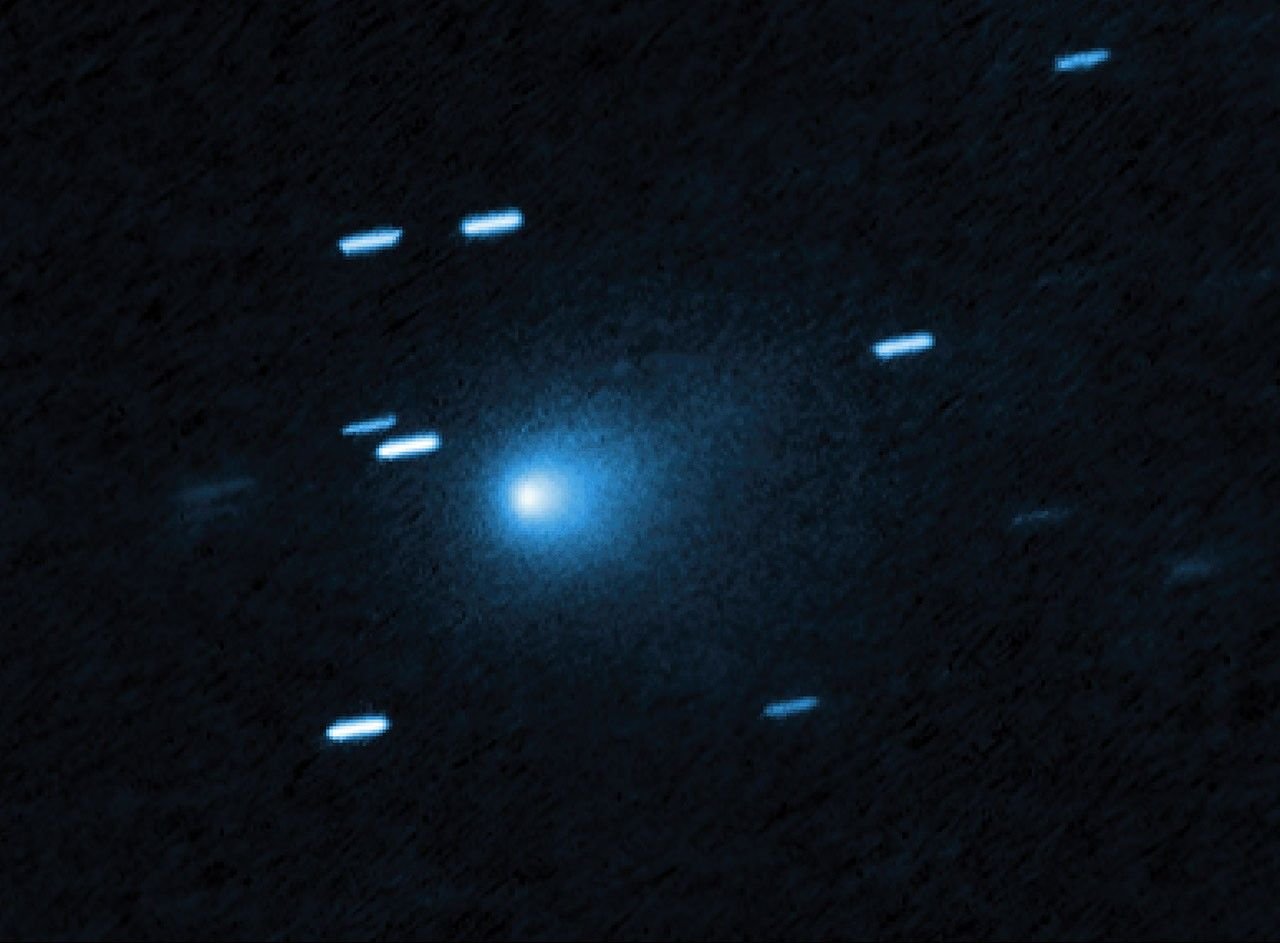
Researchers analyzing data from the James Webb Space Telescope and the ALMA radio array have placed the age of 3I/ATLAS, the third interstellar object ever detected passing through our solar system, at between 10 and 12 billion years, making it a relic of the early universe. By comparison, all of our solar system's comets, including Halley's, formed alongside the sun about 4.5 billion years ago. The age estimate draws on the comet's carbon isotope ratios, measured from gases released as solar heat sublimated its surface ice, and on its extreme velocity of 58 kilometers per second relative to the sun, a speed that can only be reached through billions of years of gravitational slingshots with other stars. Its composition also points to an unusually cold origin: 3I/ATLAS carries far more deuterium, the heavy form of hydrogen, than any comet in our solar system, suggesting it formed in a much colder region of its original star system. Scientists say the finding raises the possibility that our solar comets are the outliers, not the norm, among interstellar visitors.
Interstellar objects are bodies from other star systems passing through ours. Only three have been confirmed: 1I/Oumuamua (2017), 2I/Borisov (2019), and 3I/ATLAS, spotted by the ATLAS sky survey in July 2025. If 3I/ATLAS is 12 billion years old, its original star system may have been consumed by its host star or disrupted long before ours formed.