President Trump announced Sunday that the US and Iran have agreed to a deal meant to end their war, with a signing ceremony planned for June 19 in Switzerland. Pakistani Prime Minister Shehbaz Sharif, who mediated the talks, said Iran would commit to not building or buying nuclear weapons, stop enriching new uranium until a final agreement is reached, and dilute its existing stockpile of highly enriched uranium. In return, the US would lift its blockade of the Strait of Hormuz, the narrow waterway that carries about a fifth of the world's oil, with shipping expected to return to pre-war volumes within 30 days. Washington would also release $25 billion in frozen Iranian assets and hold off on new sanctions while a permanent deal is negotiated over the next 60 days. Stock futures jumped and oil prices fell on the news. Trump then traveled to a G7 summit in the French Alps, where allies including UK Prime Minister Keir Starmer, who had criticized the war, plan to discuss helping clear mines from the strait.
The US joined Israel's war with Iran earlier this year, including strikes on Iranian nuclear sites, followed by a shaky ceasefire that nearly collapsed last week when Iran closed the Strait of Hormuz and the US struck Iranian radar sites in response. Today's deal is the first sign that conflict may be ending for good.
Four days after Anthropic released Claude Fable 5, its most capable model yet, the Trump administration ordered the company to cut off access to it and the underlying Mythos 5 model for any foreign national, including Anthropic's own staff on US work visas. The White House invoked export-control authority on Friday, citing a national security risk: researchers at Amazon had reportedly found a way around Fable 5's safeguards and reach Mythos's unusually strong ability to find software vulnerabilities, useful for both defense and attack. Anthropic disabled both models to comply, but disputed the government's framing, calling the issue "a small number of previously known, minor vulnerabilities" that other public models share. It marks the first time Washington has retroactively pulled a commercial AI model from the market through export controls. Anthropic has since sent senior technical staff to Washington, where they have been meeting daily with administration officials to try to resolve the standoff and restore access to the models.
Anthropic makes the Claude family of AI models and ranks among the leading US AI labs alongside OpenAI and Google. Mythos and Fable are its newest model lines. Earlier this year, the Pentagon tried to brand Anthropic's products a "supply chain risk" after the company restricted military uses of its AI; a federal judge temporarily blocked that move as likely retaliation.
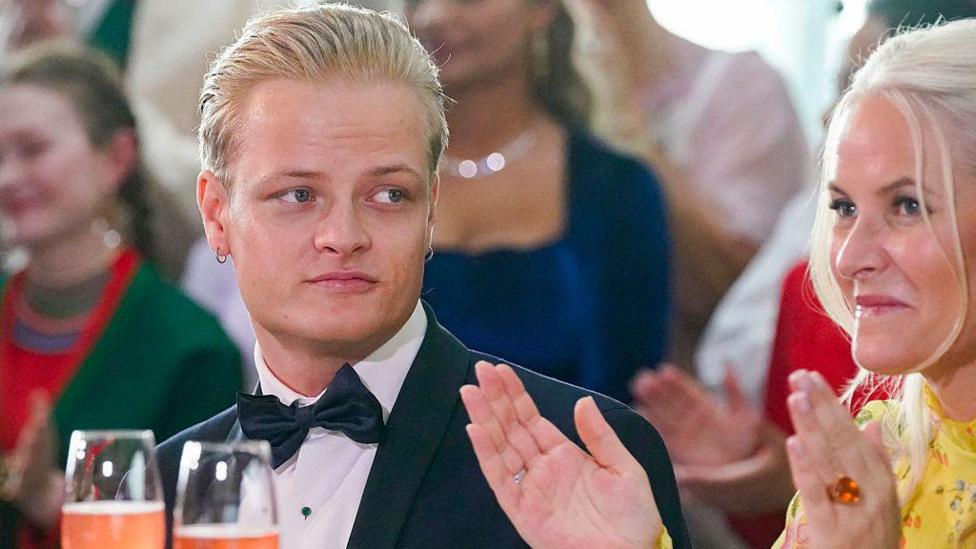
An Oslo court sentenced Marius Borg Hoiby, the 29-year-old son of Norway's Crown Princess Mette-Marit, to four years in prison on Monday after convicting him on two of four rape charges. Prosecutors said Hoiby assaulted women who were asleep or otherwise unable to resist, in incidents spanning 2018 to 2024; the court acquitted him on two of those counts but separately found him guilty of domestic violence against a former girlfriend over roughly a year. Prosecutors had asked for more than seven years, while his defense argued he should be acquitted of the rape charges entirely and serve no more than 18 months for the conduct he admitted to. The sentence is not final, and Hoiby can appeal. Hoiby is Mette-Marit's son from a relationship before she married Crown Prince Haakon, Norway's heir to the throne, so he holds no royal title and is outside the line of succession, but his case has drawn heavy coverage in Norway given his place in the royal household.
Hoiby was charged in 2025 with 32 counts including rape, voyeurism and drug offenses after several women came forward; his trial began in February 2026 and concluded weeks ago, with Monday's hearing delivering the verdict. Mette-Marit is married to Crown Prince Haakon, who will become Norway's king after his father, Harald V.
Russia launched more than 60 missiles and drones at Kyiv overnight, and a Shahed-type drone struck the roof of the Dormition Cathedral inside the Kyiv Pechersk Lavra, one of the most significant sites in Eastern Orthodox Christianity. The strike set the cathedral's roof ablaze; firefighters extinguished the fire before it spread further into the 11th-century building. Mayor Vitali Klitschko and President Volodymyr Zelensky said at least five people were killed and 28 injured across the city in the wider attack. Ukraine's security service later recovered drone fragments confirming the cathedral took a direct hit rather than damage from falling debris. The Dormition Cathedral was largely destroyed during World War II and only rebuilt in the 1990s after Ukrainian independence, making it a touchstone for the country's religious and national identity. Zelensky called the strike "one of Russia's most serious crimes against Christian culture to date," describing it as part of a broader pattern of Russian attacks on cultural and religious sites since the full-scale invasion began in 2022.
Kyiv Pechersk Lavra, founded in 1051, is a UNESCO World Heritage monastery complex and one of the holiest sites for Orthodox Christians in both Ukraine and Russia. The strike comes as Russia's invasion of Ukraine, now in its fifth year, continues alongside separate diplomatic efforts elsewhere, including the US-Iran ceasefire announced the same day.
Quanta Magazine takes on a question that sounds like it should have a simple answer: how many elementary particles make up the universe? The classroom poster version of the Standard Model, physics' best theory of matter and forces, lists 17: six types of quarks and leptons in three families, four force-carrying particles, and the Higgs boson. The count depends on what you choose to tally. Add each particle's antimatter twin and it rises to 30. Count the eight types of gluon that carry the strong nuclear force separately and it reaches 37. Track quarks' color charges plus left- and right-handed versions of each particle, and the total climbs past 100. A different approach, based on a 2011 theorem about the "degrees of freedom" a quantum field theory must contain, produces a count of about 995.5, not even a whole number. The mismatch shows quantum field theory still resists one settled picture of what counts as fundamental.
The Standard Model is the framework that has successfully predicted the results of particle-physics experiments for decades, including the 2012 discovery of the Higgs boson at the Large Hadron Collider. Quantum field theory is the underlying mathematics, describing particles as ripples in fields that fill space.
Casey Harrell, a 48-year-old environmental activist with amyotrophic lateral sclerosis (ALS), has used a brain implant to speak and work for almost three years, racking up more than 3,800 hours of independent use at home, more than any other patient with this kind of device. ALS gradually destroys the nerve cells that control voluntary muscles, and by 2023 it had left Harrell paralyzed and largely unable to make himself understood. That year, surgeons at the University of California, Davis, led by neurosurgeon David Brandman and neuroengineer Sergey Stavisky, implanted four electrode arrays, 256 electrodes in total, into the part of his brain that plans speech. Two connectors on his skull link wirelessly to a computer that reads those signals and translates them into the 39 sounds that make up English, then assembles those sounds into words. The system started with a 50-word vocabulary at 99.6 percent accuracy and has since grown to 125,000 words at 97.5 percent accuracy, letting Harrell browse the web, send email, and hold a job using a voice that sounds like his own.
Brain-computer interfaces read electrical signals from neurons and translate them into commands a computer can act on. Earlier trials mostly took place in short lab sessions; Harrell's case stands out because he uses the system on his own, daily, at home, a step toward these devices working in ordinary life rather than only research settings.
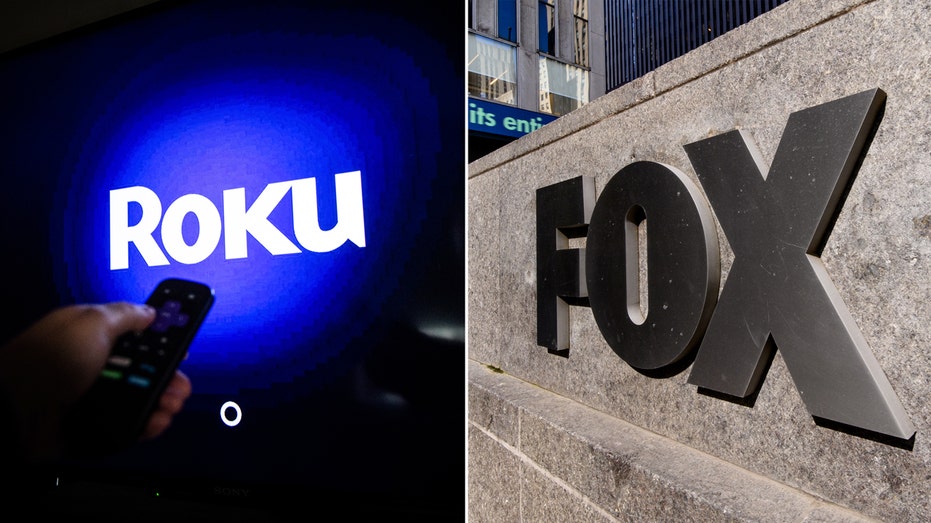
Fox Corporation agreed Monday to buy Roku, maker of the popular streaming-TV devices and the Roku Channel, in a cash-and-stock deal valuing the company at about $22 billion. Roku shareholders will receive $160 per share, made up of $96 in cash plus just under one share of Fox's non-voting Class A stock (the Murdoch family controls Fox through separate Class B shares). Fox lined up $12 billion in bridge financing from Morgan Stanley to cover the cash portion. Once the deal closes, expected in the first half of 2027, current Fox shareholders will hold 73 percent of the combined company and former Roku shareholders 27 percent. The combination pairs Fox's news, sports and entertainment channels and its free streaming service Tubi with Roku's software platform, which runs on roughly 100 million households' televisions worldwide and gives Roku a direct view into what people watch. Fox executive chair Lachlan Murdoch called it "a defining moment," and the deal would make the combined company the third-largest player in US television by share of viewing. Roku founder Anthony Wood will join Fox's board.
Roku built its business selling low-cost streaming devices and smart TVs, then made money from advertising and a cut of subscriptions sold through its platform as US households dropped cable for streaming. Pairing that audience data and ad business with Fox's live sports and news lets the combined company sell advertising across both, competing more directly with Google and Amazon.
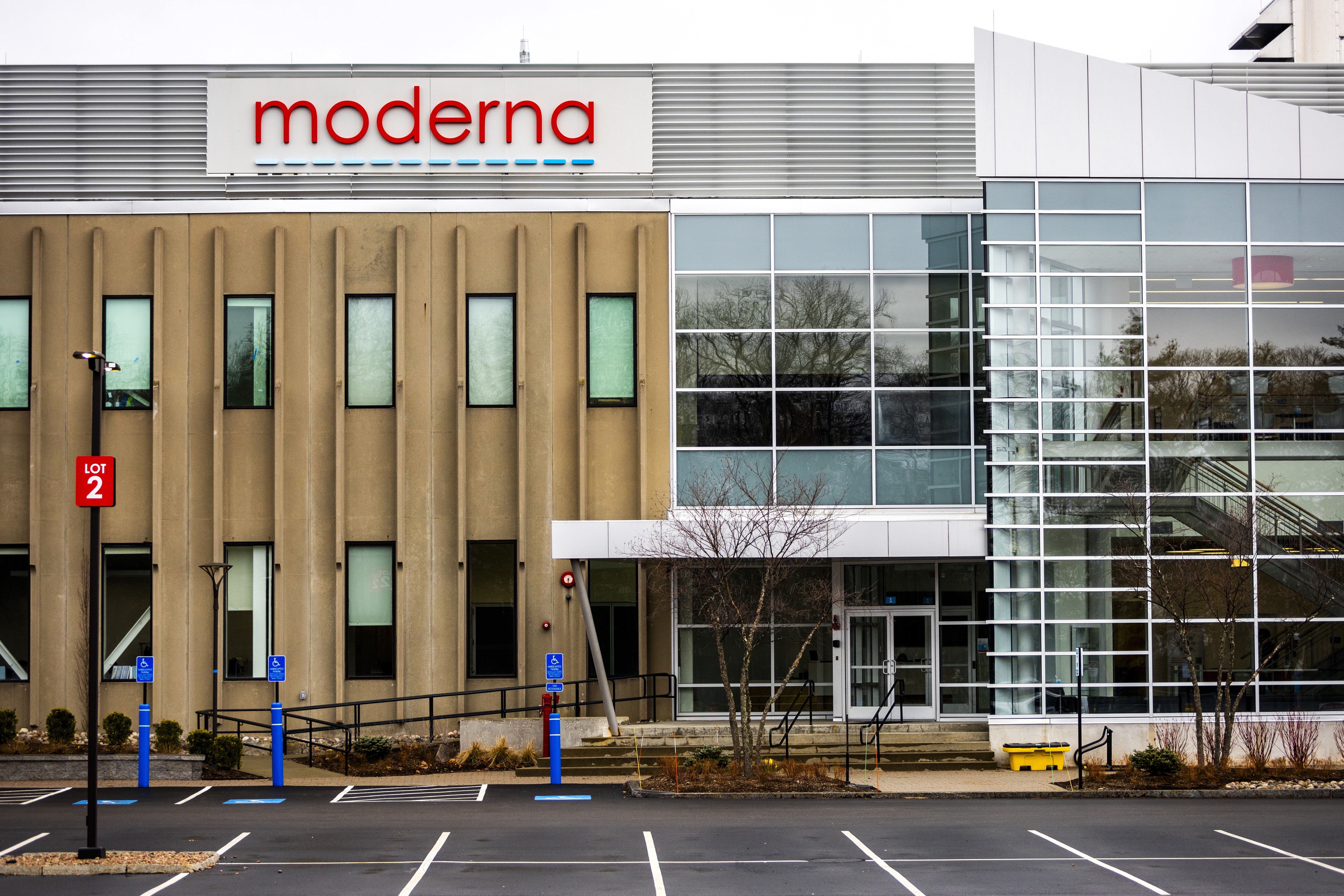
Scientific American reports on the race to build a vaccine against Bundibugyo ebolavirus, a rare strain driving an outbreak in the Democratic Republic of the Congo and Uganda. Existing Ebola vaccines were built against a different strain, Zaire ebolavirus, which has caused the largest outbreaks historically and so received most research investment; they offer little protection here. Moderna, known for its COVID-19 mRNA vaccine, is developing a Bundibugyo-specific candidate using the same approach: injecting genetic instructions that tell a person's cells to produce a piece of the virus, training the immune system to recognize it before infection. The work has up to $50 million in backing from CEPI, a global vaccine-preparedness fund. Moderna hopes to begin an early safety trial within months, though animal studies, safety review and regulatory approval cannot be skipped. Even if the vaccine arrives too late for this outbreak, researchers say it would leave the world better prepared next time.
CEPI was founded after the 2014-2016 West African Ebola epidemic that killed more than 11,000 people. It funds vaccine development for diseases that pose outbreak risks but attract little commercial investment because they mostly affect lower-income countries with small drug markets.
Japan spent the 1990s and 2000s propping up companies that should have failed, lending them just enough to service old debt without ever forcing a reckoning, a pattern economists call "zombification." Economist Noah Smith argues China is now running the same playbook. China's official bad-loan rate sits at about 1.5 percent, but independent estimates put the real figure at 10 to 20 percent. The gap comes from banks that, under government pressure, roll over loans that troubled companies cannot repay, extend their deadlines, or let unpaid interest pile onto the balance rather than write it down. The share of Chinese companies unable to cover even their interest payments has been rising since 2021, even as banks keep extending new loans below market rates to those same firms. The cost is concrete: zombie companies keep competing for workers, materials and customers against healthy firms, feeding what Chinese economists call "involution," destructive price wars that drag down profits across entire industries. China's state-directed banking system, Smith writes, cannot make that cost disappear.
A "non-performing loan" is one where the borrower has stopped making payments, the standard measure banks use to track bad debt. China's major banks are largely state-owned or state-influenced, giving Beijing leverage over lending decisions, including pressure to keep loans to struggling firms classified as healthy.
Twenty state attorneys general, led by Maryland, sued the Trump administration on June 10 over how federal agencies have enforced a March executive order targeting diversity, equity and inclusion programs at organizations holding federal contracts. The order calls DEI initiatives "unethical and often illegal" and lets the government cancel or suspend contracts from organizations found out of compliance. Rather than challenge the executive order itself, the lawsuit, Maryland v. Hegseth, targets the new contract terms agencies have been requiring: the states argue agencies skipped the public notice-and-comment process required for changes to federal procurement rules, exceeded their legal authority, and wrote requirements so vague that contractors cannot tell what is actually prohibited. The states also argue the new rules sit awkwardly alongside a 1965 executive order, signed by President Lyndon Johnson, that bars federal contractors from discriminating based on race. A separate lawsuit covering similar ground has been filed by the National Association of Diversity Officers in Higher Education, which represents DEI staff at colleges and universities.
Universities that receive federal research funding or hold government contracts are themselves federal contractors, so this order reaches many colleges' hiring and diversity programs, not just private companies. The Trump administration has separately pushed universities to roll back DEI offices and race-conscious admissions since taking office.