The United States and Iran exchanged strikes for a second consecutive day on Wednesday, the third round of fighting this week to test a ceasefire that has held for about two months. The US carried out a wider, more intense round of strikes on Iran overnight, with explosions reported in several cities along Iran's southern coast. President Trump had warned Tehran it would "pay the price" after talks stalled, and the new strikes followed a US attack a day earlier blamed on Iran for an Army helicopter crash near the Strait of Hormuz. Iran retaliated by firing on Bahrain, Kuwait and Jordan, all of which host American troops. Jordan said it shot down five missiles aimed at a base used by US aircraft, while Bahrain and Kuwait intercepted other incoming fire. Bahrain's capital reported damage overnight. Iran released little information about the damage from the US strikes.
The US and Israel fought a war with Iran starting in late February 2026, ending in a ceasefire about two months ago. Since then, sporadic strikes have repeatedly tested that truce. The Strait of Hormuz is the narrow waterway at the mouth of the Persian Gulf through which much of the world's oil shipments pass.
US consumer prices rose 4.2% in May compared with a year earlier, the fastest annual pace since early 2023, the Labor Department reported Wednesday. Prices climbed 0.5% from April to May alone, in line with what economists had forecast. Energy costs drove most of the increase: the energy index rose 3.9% for the month and 23.5% over the past year, accounting for more than 60% of the overall jump in prices. Gasoline alone rose 7% in May and is up 40.5% from a year ago, as the war between the US, Israel and Iran has disrupted oil supplies from the Middle East. So-called core inflation, which strips out food and energy because those prices swing the most from month to month, rose a milder 0.2% in May and 2.9% over the year. The report lands in an election year where rising costs are already a central political issue, drawing sharp responses from Democrats.
The Consumer Price Index (CPI) tracks the average cost of a basket of goods and services Americans buy and is the government's main inflation gauge. 'Core CPI' excludes food and energy, which swing the most month to month, to show the underlying price trend the Federal Reserve watches when setting interest rates.
Google DeepMind released DiffusionGemma, an experimental open-weight model that generates text in a fundamentally different way from ChatGPT-style models. Standard large language models write one word at a time, each new word chosen based on everything written before it. DiffusionGemma instead starts with a block of 256 placeholder tokens and refines the entire block at once, repeatedly, the way image-generation models turn random noise into a photo. This bidirectional approach lets the model revise earlier words as it fills in later ones, rather than locking in each word permanently as it goes. The payoff is speed: DiffusionGemma generates more than 1,000 tokens per second on an Nvidia H100 chip and over 700 on a consumer RTX 5090, up to four times faster than Google's standard Gemma models. DiffusionGemma scores below the standard Gemma 4 model on every benchmark DeepMind published, so the speed comes with a real cost in output quality. The model is a 26-billion-parameter system that activates only 3.8 billion parameters per response, released under an open Apache 2.0 license.
Diffusion models are best known for image generation (Midjourney, Stable Diffusion), where they learn to reverse a noise-adding process. Applying the same idea to text is an active research direction because it could let language models work on a whole passage at once instead of being locked into a strict left-to-right order.
A team led by Dieter Egli at Columbia University has edited human embryos with the most precision yet achieved, using a technique called base editing rather than the CRISPR method that made headlines in 2018. CRISPR works by cutting both strands of DNA and letting the cell's repair machinery fix the break, which can introduce errors. Base editing instead chemically converts one DNA letter directly into another without cutting the strand, similar to correcting a single typo rather than cutting out and retyping a sentence. The team used the technique to edit two genes in embryos not intended for pregnancy: one linked to LDL cholesterol and heart disease risk, and another that controls hemoglobin production before birth. In some embryos, though, the editing molecules missed their target, leaving a mix of edited and unedited cells that could cause health problems if such an embryo were allowed to develop. Scientists call this an impressive step toward correcting disease-causing mutations, but bioethicists warn the same precision could eventually be used to try to engineer traits like intelligence.
In 2018, Chinese scientist He Jiankui announced he had created the first gene-edited babies using CRISPR, an act widely condemned as premature and unethical, and he was later imprisoned. That episode made 'gene-edited embryos' a loaded phrase, and new research in this area draws intense scrutiny over how precise and safe the editing really is.
The University of Florida's board of trustees voted unanimously on Wednesday to name Stuart Bell as the school's 14th president, the first permanent leader since the previous president left in summer 2024. Bell led the University of Alabama from 2015 to 2025 and also served as president of the Southeastern Conference (SEC), the athletic conference both schools belong to. His record on diversity, equity and inclusion (DEI) programs became the central issue in his candidacy. Alabama opened a DEI office under Bell in 2017, then closed it in 2024 after the state passed a law banning public institutions from funding DEI work. At public forums during the search, Bell told Florida audiences: "I'm certainly not coming to Florida to bring DEI or any form of woke back. Period." His selection still needs approval from the Florida Board of Governors, the body that oversees the state's public university system, which is expected to set up another contentious confirmation fight.
Florida's public university presidencies have been politically charged in recent years. In 2022, the University of Florida's search drew criticism after finalists were kept secret, and in 2023 it hired former US senator Ben Sasse, who resigned within two years amid spending controversies. The Board of Governors, appointed largely by the governor, has final say over presidential hires.
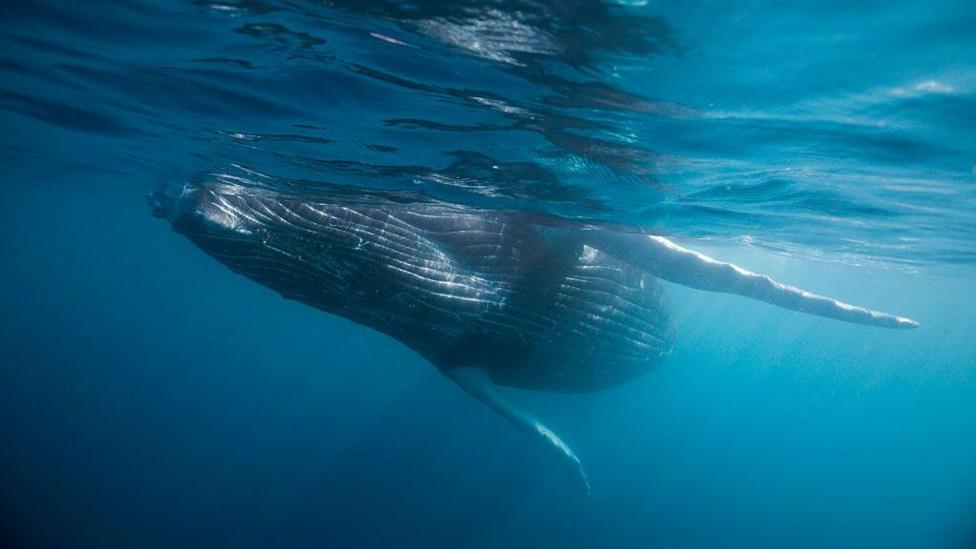
Chinese researchers have found the largest collection of whale fossils ever documented: more than 450 skeletons scattered across roughly 750 miles of seafloor in the Indian Ocean. The discovery came from 32 dives by the crewed submersible Fendouzhe (奋斗者号, "Striver") in 2023 along the Diamantina Fracture Zone, a rift valley that stretches from southwestern Australia into the ocean and formed about 50 million years ago. The skeletons sit at depths of 13,800 to 23,000 feet, roughly 2.5 to 4.4 miles down, and range in age from 5.26 million years to just 120,000 years old. One researcher called the find "far beyond anything we had imagined." Among the skeletons is a previously unknown extinct whale species. Five of the carcasses were recent enough to still be hosting "whale fall" ecosystems: communities of jellyfish, brittle stars, worms that bore into bone, and shellfish that can survive for decades feeding off a single sunken whale.
A 'whale fall' is what happens when a whale carcass sinks to the deep seafloor, where it can sustain a unique food web for decades as scavengers strip it down to bone and then feed on the bones themselves. Finding so many in one place, spanning millions of years, is unusual because deep-sea conditions rarely preserve large skeletons this well.
Smartphones have become the operating system underneath daily life rather than just another app running on top of it, and constant connection to social media is now the default state of being awake, not a choice people actively make. A recent essay by Noah Smith argues this amounts to a collective trap: people who recognize the harm can't easily opt out, because everyone else is still online. He points to a 2024 study in which college students said they would pay an average of $24 to have a social media platform deactivated on their campus for four weeks, evidence that people keep using apps they resent because of fear of missing out. A 2025 study offers a glimpse of the alternative: when researchers cut participants' mobile internet access for two weeks, 91% reported better mental health, and people spent the freed-up time socializing in person, exercising, and getting outside.
This essay is part of a broader debate over smartphones and well-being that gained momentum after Jonathan Haidt's 2024 book 'The Anxious Generation' linked smartphone adoption to rising teen mental health problems. Noah Smith writes Noahpinion, a widely read economics and culture newsletter.
OpenAI's latest threat report describes two influence campaigns linked to the People's Republic of China (中国, PRC) that used ChatGPT to shape US debates about AI. In one, accounts OpenAI traced to a Chinese government contractor asked ChatGPT to write social media posts and draw comic strips arguing that AI data centers are driving up American households' electricity bills. In the other, a campaign used ChatGPT to generate political cartoons attacking President Trump's tariffs and his push for US dominance in technology, with prompts specifically instructing the AI to depict Trump but not China's leader, Xi Jinping (习近平). Separately, OpenAI identified a network of fake accounts spreading false claims that hackers had stolen ChatGPT user data, which never happened. OpenAI says neither campaign gained much real traction or appeared to change anyone's mind, but their existence shows state-linked operators are now testing AI chatbots as content factories for shaping American domestic arguments.
An 'influence operation' is a coordinated effort, often using fake or hijacked accounts, to push a narrative on social media so it looks like organic public opinion. OpenAI and other AI companies regularly publish reports identifying and shutting down accounts that misuse their tools this way, including past campaigns linked to Russia, Iran and China.
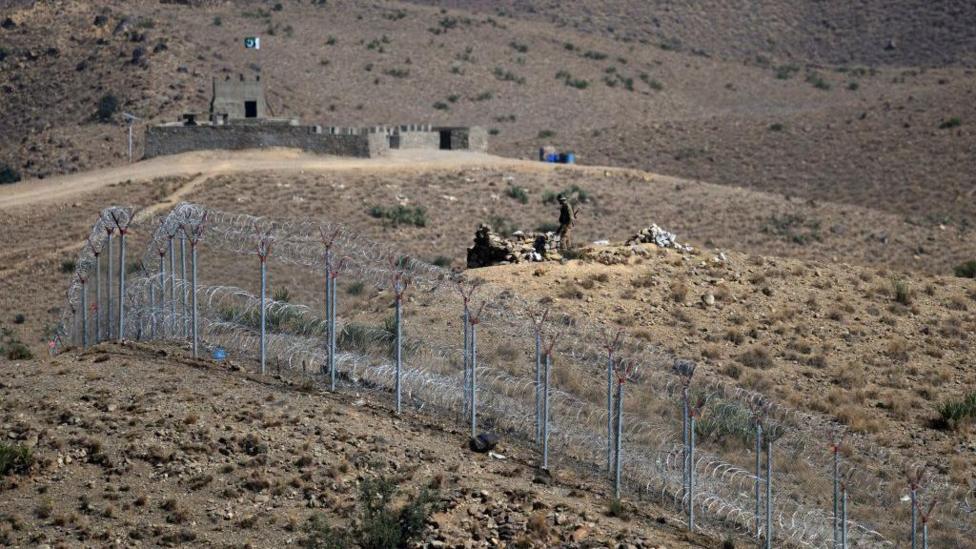
Pakistan carried out airstrikes in three Afghan border provinces on Tuesday, reigniting a conflict that had been relatively quiet for several weeks. Afghan officials said the strikes, in Khost, Kunar and Paktika provinces, killed 12 to 13 people, most of them children. Pakistan's military said it killed 26 fighters from Tehrik-i-Taliban Pakistan (TTP), a militant group also known as the Pakistani Taliban that is separate from Afghanistan's ruling Taliban government, along with fighters from the Islamic State's regional branch. Pakistan accuses Afghanistan's government of sheltering TTP fighters who cross the border to attack Pakistani security forces; Afghanistan denies this and says Pakistan's strikes violate its sovereignty. The clashes are part of a wider conflict that escalated earlier this year, when Pakistan launched what it called Operation Ghazab lil Haq after Taliban forces retaliated against earlier strikes. The United Nations reported that cross-border fighting killed at least 372 Afghan civilians and injured 397 more in just the first three months of 2026.
Khost, Kunar and Paktika are Afghan provinces along the porous, mountainous border with Pakistan, a region that has long served as a refuge for militant groups on both sides. The TTP, founded in 2007, seeks to overthrow Pakistan's government and impose its own interpretation of Islamic law there.
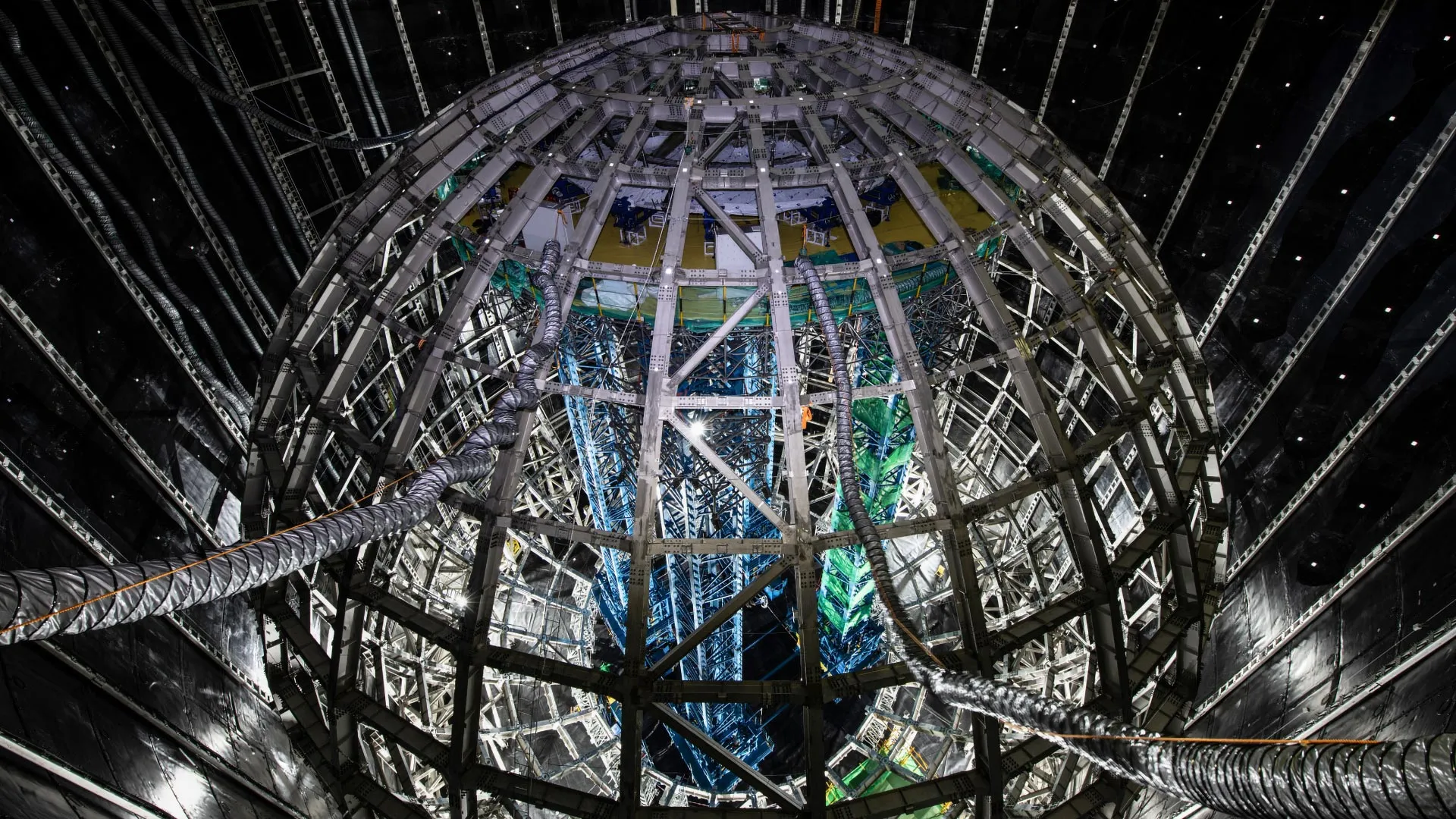
Physicists at the Jiangmen Underground Neutrino Observatory (JUNO) in southern China have published their first results, just 59 days after the detector switched on in August 2025. JUNO is built around a 35-meter acrylic sphere filled with 20,000 tons of liquid that flashes faintly when neutrinos, the nearly massless particles that stream through ordinary matter by the trillions every second, occasionally interact with it. The sphere sits 700 meters underground, shielded from the cosmic radiation that would otherwise overwhelm its sensors. In its first weeks of operation, JUNO already produced the world's most precise measurements of two of the six numbers that describe how neutrinos shift between their three types as they travel, beating the previous best results by about 60%. The detector's ultimate goal is to determine which of the three neutrino types is the heaviest, a property called "mass ordering" that physicists have debated for decades. That answer will take years more data, but the early results show the detector and its analysis methods work as designed.
Neutrinos come in three types, and physicists know their relative mass differences but not which type is heaviest, the 'mass ordering' problem. Because neutrinos are so abundant across the universe, their masses affect how matter clumped together after the Big Bang, making this an open question with implications for cosmology as well as particle physics.