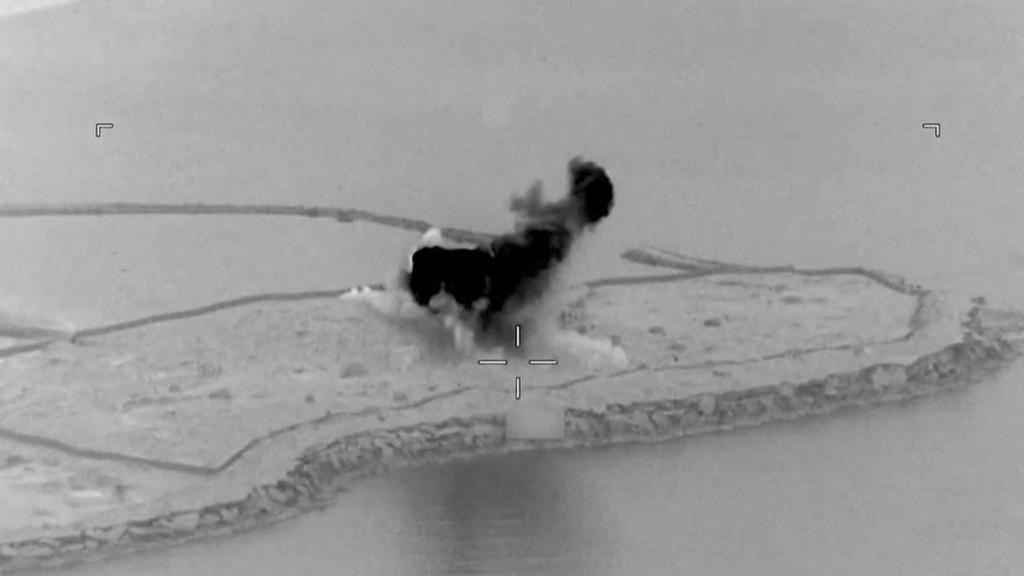
The US military shot down four Iranian drones headed toward the Strait of Hormuz on Friday and struck Iranian coastal surveillance radar sites at Goruk and on Qeshm Island in the Persian Gulf. Tehran responded by firing at US military facilities in Kuwait and Bahrain. The exchange marks the most serious ceasefire breach since April 8, when Pakistan brokered a halt to the 2026 Iran war, and signals the deal is under increasing strain. US Central Command said it acted in self-defense, but the sequence of drones toward a critical oil shipping lane, a US counterstrike on Iranian territory, and Iranian missiles at American bases in two Gulf countries has followed this pattern before. No casualty figures were released by either side for the latest exchange. Negotiators have not turned the ceasefire into a broader peace deal in the six weeks since it took effect.
The ceasefire between the US, Iran, and Israel took effect April 8, brokered by Pakistan after weeks of direct military exchanges. A US naval blockade of Iran remains in place while negotiations for a permanent deal continue. Talks in Pakistan in April collapsed, and Trump later extended the ceasefire open-endedly.
The Nasdaq lost 4.18% on Friday, its steepest single-day drop since April 2025, dragging the S&P 500 down 2.64% and the Dow Jones Industrial Average down 695 points. The selloff traced to three colliding pressures: Broadcom failed to raise its AI chip revenue guidance Thursday night, disappointing investors who had priced in an upgrade; the May jobs report came in far stronger than expected, pushing Treasury yields up and making equities less attractive; and a secondary stock offering from Meta added selling pressure on a day already tilted against tech. Chip stocks bore the worst of it, with the Nasdaq-100 falling close to 5%. The episode briefly erased about $1 trillion in market value from semiconductor-exposed companies. Whether the selloff represents a repricing of AI-driven growth expectations or a one-session correction depends on chip company guidance scheduled in the weeks ahead.
The Nasdaq had been near record highs through most of spring 2026, buoyed by AI investment optimism. Broadcom is a major supplier of custom AI chips to Google, Meta, and other hyperscalers; its quarterly guidance functions as a proxy for broad AI infrastructure spending. When Broadcom's guidance disappoints, chip sector stocks frequently move in sympathy.
Anthropic published a report Thursday warning that its AI systems may be approaching the point where they can design and train their own successors with minimal human oversight, a process the field calls recursive self-improvement. The company cited a striking internal metric: Claude now authors more than 80% of code merged into Anthropic's production systems, up from a few percent before Claude Code launched in early 2025. Engineers at the company ship eight times as much code per quarter as they did in 2024. Anthropic co-founder Jack Clark co-authored the report and called for a global coordination mechanism to allow a pause or slowdown, contingent on multiple well-resourced frontier labs in multiple countries agreeing to halt under the same verifiable conditions. The proposal acknowledges the verification challenge exceeds what is required for physical weapons programs, since training runs can be concealed. Skeptics note the warning comes as Anthropic prepares for an IPO.
Recursive self-improvement describes an AI system that can build an improved version of itself, which then builds an even better version, potentially accelerating beyond human oversight. AI safety researchers have flagged this as a key risk because it compresses the timeline for AI to reach capabilities humans cannot supervise or correct.
A former Social Security Administration executive filed a 49-page whistleblower disclosure this week alleging that DOGE officials pushed the agency to falsely mark 2.7 million living people as dead in its Death Master File database. The goal, according to Jeremiah Schofield, who spent more than 20 years at the SSA, was to freeze immigrants' benefits, bank accounts, and credit without going through courts or deportation proceedings, creating enough misery that people self-deported or showed up at SSA offices where they could be arrested. Schofield pulled a sample of 25 names from the list and found US citizens, green card holders, teenagers, and elderly people receiving survivor benefits. He refused to implement the plan; agency lawyers warned it would violate federal law. The plan was not carried out. Schofield filed the disclosure to the Senate Finance Committee and the Senate Permanent Subcommittee on Investigations.
The SSA's Death Master File is a government database banks, insurers, and federal agencies use to stop payments to deceased recipients. Being listed as dead typically cuts off Social Security payments, freezes bank accounts, and can invalidate federal identification. Correcting the error can take months and requires in-person visits to government offices.
S&P Dow Jones Indices announced Thursday it will not change the rules governing S&P 500 membership, closing the door on a lobbied-for fast track that would have let freshly public megacap companies skip the standard 12-month seasoning period and GAAP profitability requirement. SpaceX, expected to go public later this year at a valuation near $1.75 trillion, posted a net loss of $4.94 billion in 2025; OpenAI and Anthropic are also unprofitable. Had S&P relented, Bloomberg Intelligence estimated the resulting passive index-fund buying would have totaled $14 billion for SpaceX, $8 billion for OpenAI, and $4.6 billion for Anthropic. The index provider said exceptions should not be granted solely on the basis of market capitalization. Nasdaq and FTSE Russell have already relaxed equivalent rules for their indexes, creating a split standard for large IPOs and leaving SpaceX investors uncertain when automatic S&P 500 buying pressure will materialize.
The S&P 500 requires four consecutive quarters of positive GAAP earnings before a company can join the index, plus a 12-month wait after going public. Once added, passive index funds and ETFs tracking the S&P 500, which hold trillions in assets, must buy shares in proportion to the company's weight, creating automatic demand that lifts the stock price.
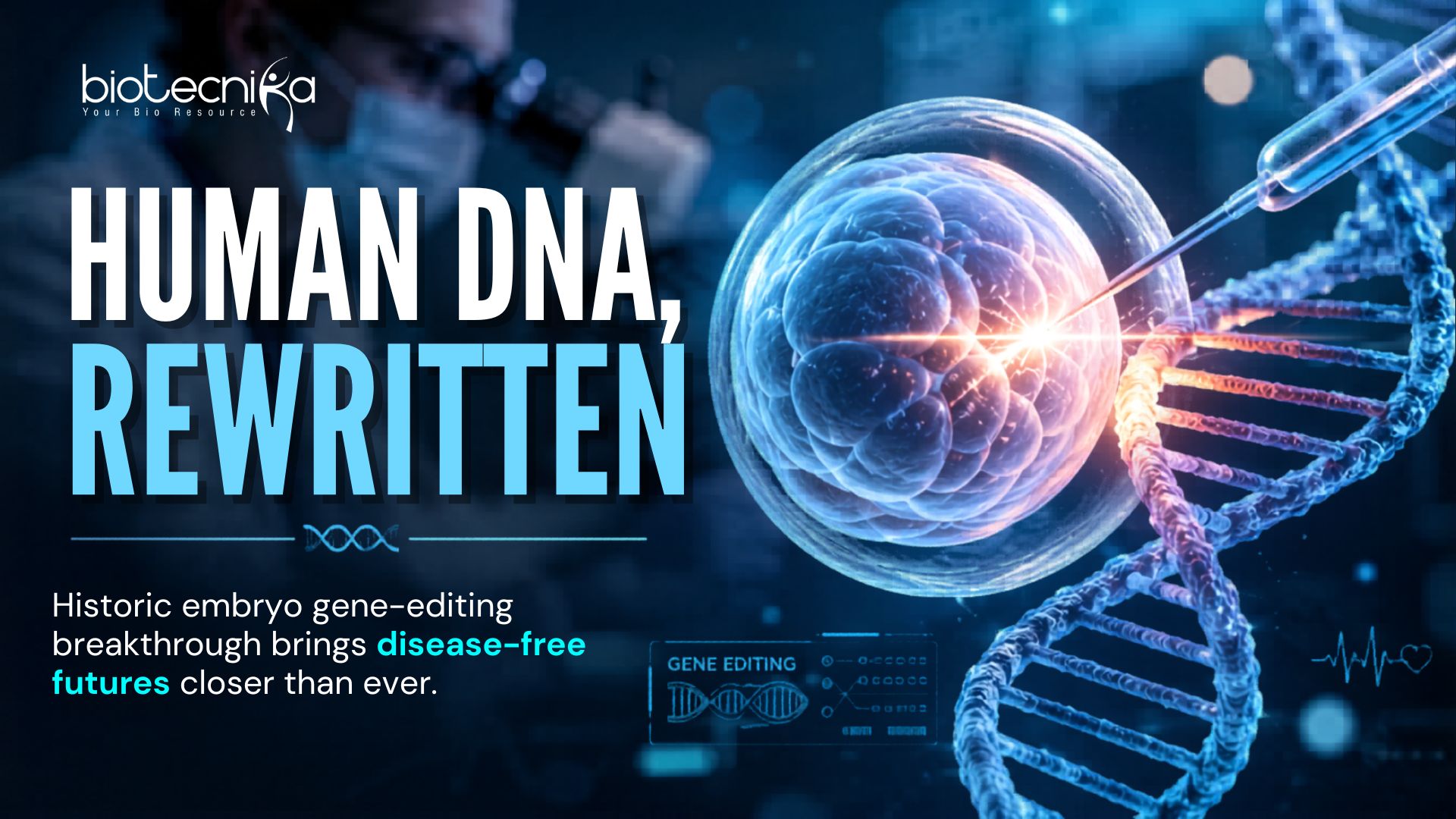
A team led by Columbia University geneticist Dieter Egli has edited the genes of human embryos more precisely than any previous attempt, using a technique called base editing that swaps individual DNA letters rather than cutting the double strand. The team targeted PCSK9, a gene linked to LDL cholesterol and heart disease, and HBG, which governs fetal hemoglobin production; earlier work by the team targeted EYS, which causes inherited blindness. Unlike conventional CRISPR, which can create large deletions or chromosomal rearrangements at the cut site, base editing produced no such abnormalities in these tests. Critics raise two concerns: the embryos studied were tripronuclear, meaning they carry three sets of chromosomes and cannot develop into live births, so safety data in normal embryos is still absent; and the technique is far from clinical use, meaning its most immediate effect may be to accelerate commercial investment in genetic enhancement rather than disease prevention. A preprint was posted to bioRxiv in May 2026.
Base editing was developed in the 2010s as a refinement of CRISPR-Cas9, allowing researchers to convert one DNA base pair to another without cutting the strand. Pioneered by David Liu at the Broad Institute, the technique has entered clinical trials for sickle cell disease. Its application to human embryos crosses a new ethical threshold.
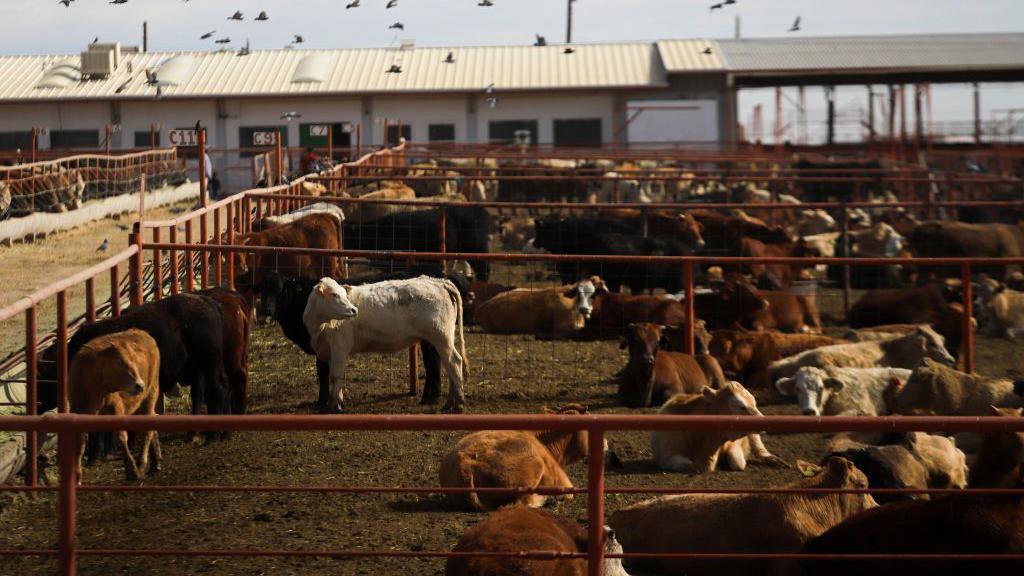
A flesh-eating parasite eradicated from US livestock six decades ago has resurfaced in Texas, with two confirmed cases in calves in Zavala County prompting Texas Gov. Greg Abbott to declare a state of disaster and Canada to ban cattle that recently spent time in Texas from crossing the border. The New World screwworm is a fly whose larvae hatch in open wounds and burrow through living tissue, devastating livestock herds across the southern US and Mexico before eradication campaigns drove it out. The USDA wiped it out of American cattle in 1966 by releasing sterile flies to collapse the breeding population. The first new case was found June 3 in a three-week-old calf's umbilical area; a second followed two days later. Canada's ban covers any livestock that spent time in Texas within the prior 21 days. The USDA has imposed a 20-kilometer quarantine perimeter and resumed sterile fly releases; a new $750-million sterile fly facility is planned for late 2027.
New World screwworm flies detect open wounds from miles away and deposit eggs at the wound site. The larvae burrow into living tissue and can kill a large animal within days if untreated. The pest remains endemic in parts of South America and the Caribbean and has been spreading northward in recent years.
via Inside Higher Ed, Chronicle of Higher Education, Auburn Plainsman
Auburn University's Board of Trustees voted unanimously on Friday to seize full control of the institution's curriculum and dissolve its Faculty Senate, making Auburn the first public university in the country to take that step voluntarily. The board granted itself authority over all course offerings, degree requirements, and academic credentials, with a clause stating no external accreditation standard shall limit the board's authority. The Faculty Senate was replaced with a Presidential Academic Advisory Council whose members are partly appointed by the president, who can only seek its input at the president's discretion, and who are barred from issuing public statements on behalf of the university. The board used its new powers that same day to mandate a civics requirement including US history courses. Auburn is exempt from Alabama's HB 580, a pending law imposing similar changes on other public institutions, meaning the board acted without any legal compulsion and without meaningful faculty input.
The move mirrors changes enacted at Texas public universities under legislative pressure. Alabama's HB 580, passed this spring, weakens tenure protections and requires faculty senate abolition at most state institutions when it takes effect in October. Auburn, a constitutionally created land-grant university, was explicitly exempted but appears to have preempted the law anyway.
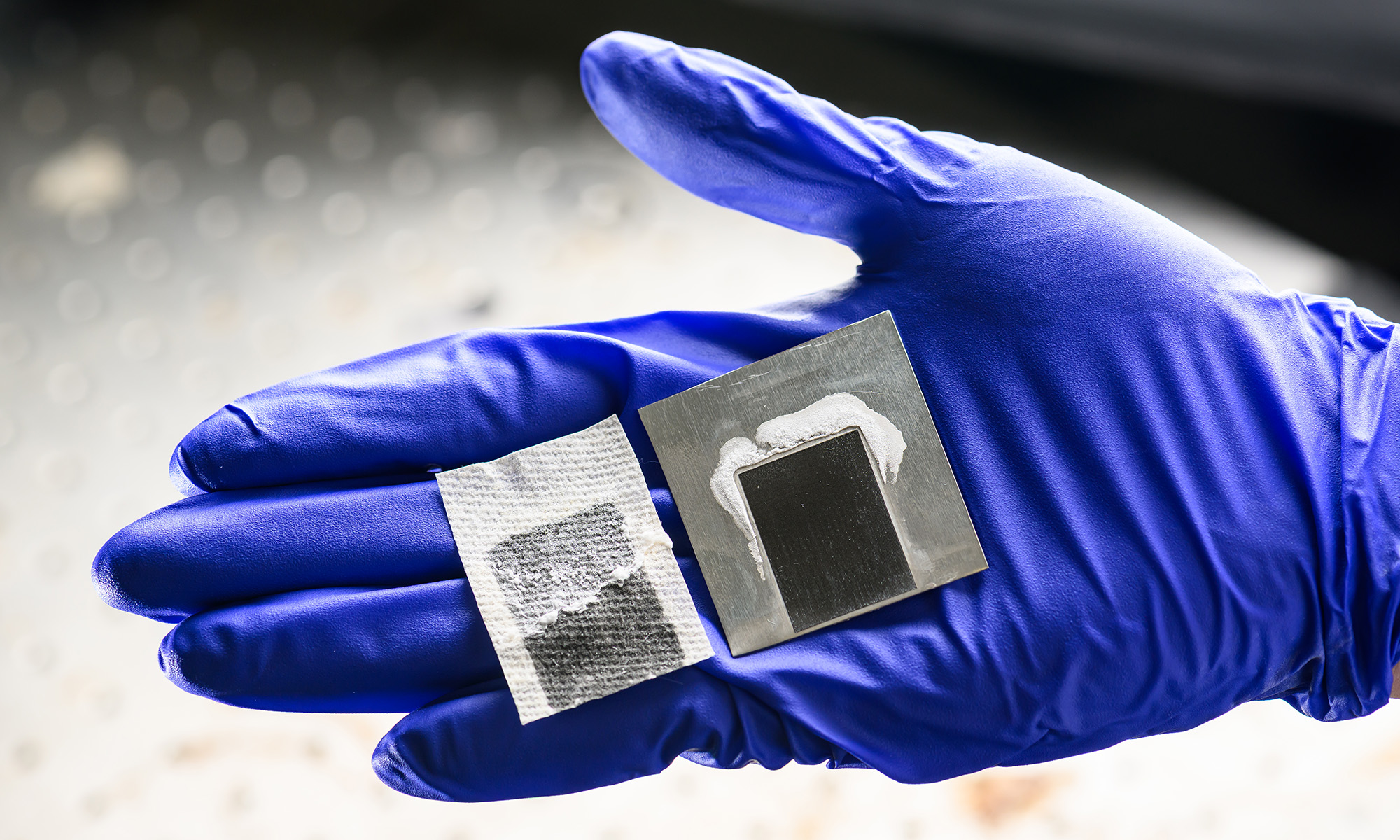
Researchers at the University of Rochester have developed a solar-powered desalination system that converts ocean water to drinking water without generating the toxic brine produced by conventional desalination. The key component is a panel of laser-etched black metal whose surface wicks seawater across its area; sunlight heats the panel, evaporating fresh water upward while the coffee ring effect, the phenomenon that leaves a residue ring when a drop dries, pushes dissolved salts outward to untreated edges where they crystallize as dry solid byproducts. Traditional reverse-osmosis plants discharge hypersaline brine back into the ocean, where it damages marine ecosystems. The Rochester system, led by Professor Chunlei Guo and funded by the National Science Foundation and the Gates Foundation, handled all three ocean samples tested: Pacific, Atlantic, and Indian. The salt crystallized cleanly from each, and the solid output also contains lithium that could be recovered for battery production.
About 97% of Earth's water is saltwater. Existing desalination plants supply drinking water to hundreds of millions of people in arid regions, but their brine disposal costs and ecological damage have limited expansion. Solar desalination has long been proposed as a cleaner alternative, but previous designs either wasted brine or fouled quickly with mineral buildup.
Researchers published a theoretical proof at ICLR 2026, one of the top machine-learning conferences, showing that transformer models can represent certain computational tasks far more compactly than their main architectural rivals. The paper, one of three outstanding papers at the conference, establishes that a fixed-precision transformer can represent some tasks exponentially more compactly than recurrent neural networks and linear temporal logic formulas, and doubly exponentially more compactly than classical finite automata. The practical reading: transformer models may find shorter descriptions of the patterns they learn, not just better ones, helping explain why they generalize well from limited data. The paper also derives a side consequence: because transformers are so expressive, checking one for correctness is hard in the formal sense. Asking whether a transformer accepts any input at all, or whether two transformers behave identically, is EXPSPACE-complete, meaning intractable in general, which has implications for formal verification of neural networks. Authors are Pascal Bergsträßer, Ryan Cotterell, and Anthony Widjaja Lin.
EXPSPACE is a complexity class describing problems that require exponentially large memory to solve. Most practical problems fall in easier classes like P or NP; EXPSPACE hardness means verifying even simple transformer properties is intractable in general. The result helps explain why transformers outperform alternatives at comparable scale by showing their structural expressivity.