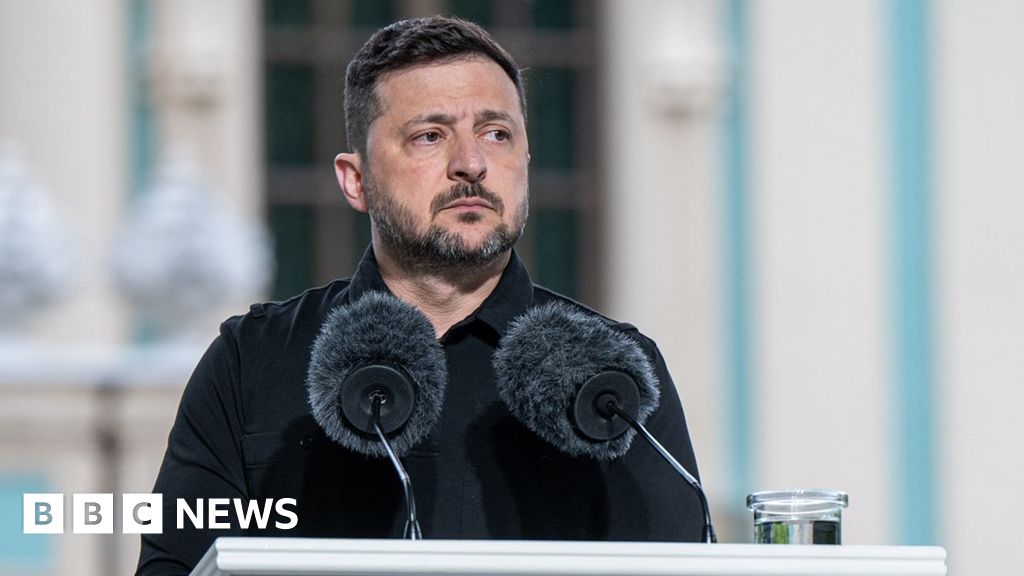
Ukrainian President Volodymyr Zelensky published an open letter to Vladimir Putin on June 4, calling for face-to-face negotiations to end the war. The 1,800-word letter proposed a full ceasefire for the duration of any talks and suggested neutral venues including Switzerland or Turkey. Zelensky framed the proposal around a practical recognition: with the US government occupied with Iran, Ukraine cannot afford to wait for Washington to re-engage, and only direct Ukraine-Russia dialogue can move the war forward. Putin responded the same day at an economic forum in St. Petersburg, saying he was prepared to reach an agreement, but repeated Russia's standing demands that Ukraine cede four occupied regions and renounce NATO membership ambitions. Putin also questioned whether Zelensky held legitimate authority to negotiate, pointing to Ukraine's wartime suspension of elections. Trump described a potential meeting as 'great' and urged both sides to 'get it done,' without specifying what he expected either party to concede.
Russia has occupied roughly 20% of Ukrainian territory since its February 2022 full-scale invasion. Zelensky had previously insisted Ukraine would not negotiate while Russian forces occupied any Ukrainian land. Earlier peace talks in spring 2022 collapsed after evidence emerged of Russian atrocities in the town of Bucha. The war has since settled into an attritional conflict with neither side making substantial territorial gains.
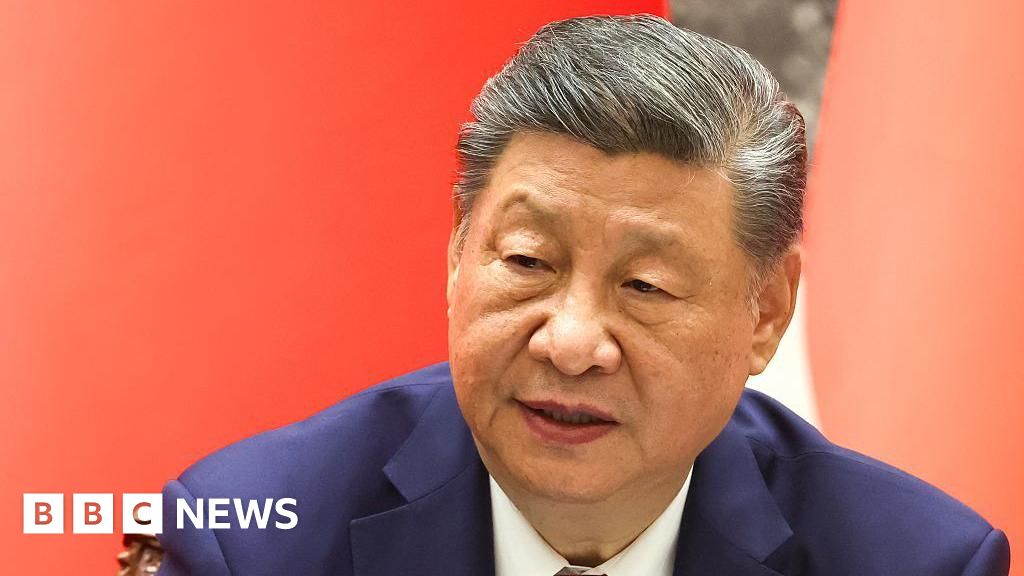
Chinese President 习近平 will visit Pyongyang on June 8 and 9 at Kim Jong Un's invitation, the first trip by a Chinese leader to North Korea since 2019. The visit comes weeks after 习近平 hosted both Donald Trump and Vladimir Putin in Beijing, lending it pointed diplomatic weight: China is North Korea's largest trading partner, sole mutual-defense treaty ally, and the country with the most leverage over Pyongyang. The trip marks the 65th anniversary of the China-North Korea defense pact. Seoul's government, seeking a breakthrough in stalled inter-Korean relations, hopes 习近平 will press Kim toward dialogue with South Korea and the United States. That hope may be optimistic: despite Beijing's stated commitment to denuclearization of the Korean Peninsula, China has softened that stance as US-China tensions have risen. North Korean state media reported last year that Kim oversaw a nuclear facility where weapons-grade materials production had more than doubled over five years.
China is North Korea's only significant trading partner and its diplomatic shield in the UN Security Council, where Beijing has repeatedly blocked or diluted sanctions resolutions. 习近平 last visited Pyongyang in June 2019. North Korea sealed its borders in January 2020 at the start of the COVID-19 pandemic and did not reopen them until 2023. North Korea has not conducted a nuclear test since September 2017.
Researchers at University College London have found evidence that the US military has been hiding an encrypted communications network inside the GPS signal for at least 15 years. A 176-bit field in a standard GPS message, labeled 'Reserved' in public documentation, carries what appears to be traffic from a Pentagon system that remotely updates cryptographic keys for military GPS receivers worldwide. Security engineering professor Steven Murdoch and master's student Ahmed Kamruddin analyzed more than 12 million observations across 3,994 unique messages. They identified a rollout around May 2011 when all 31 operational GPS satellites began carrying the traffic, and a second phase change in 2022. The system turns every GPS satellite into what intelligence agencies call a 'numbers station': a covert transmitter of encoded messages only the intended recipient can decode. Every phone, ship, and aircraft carrying a GPS chip has been passively receiving these signals, with no indication in the public signal specification that anything beyond navigation data was present.
Numbers stations are shortwave radio broadcasts of seemingly random sequences, used since World War I to transmit encrypted orders to agents in the field. GPS satellites carry navigation signals that virtually every device worldwide receives continuously. Embedding a key-distribution channel inside GPS gives the US military a global broadcast that requires no separate network and leaves no obvious trace in telecommunications infrastructure.
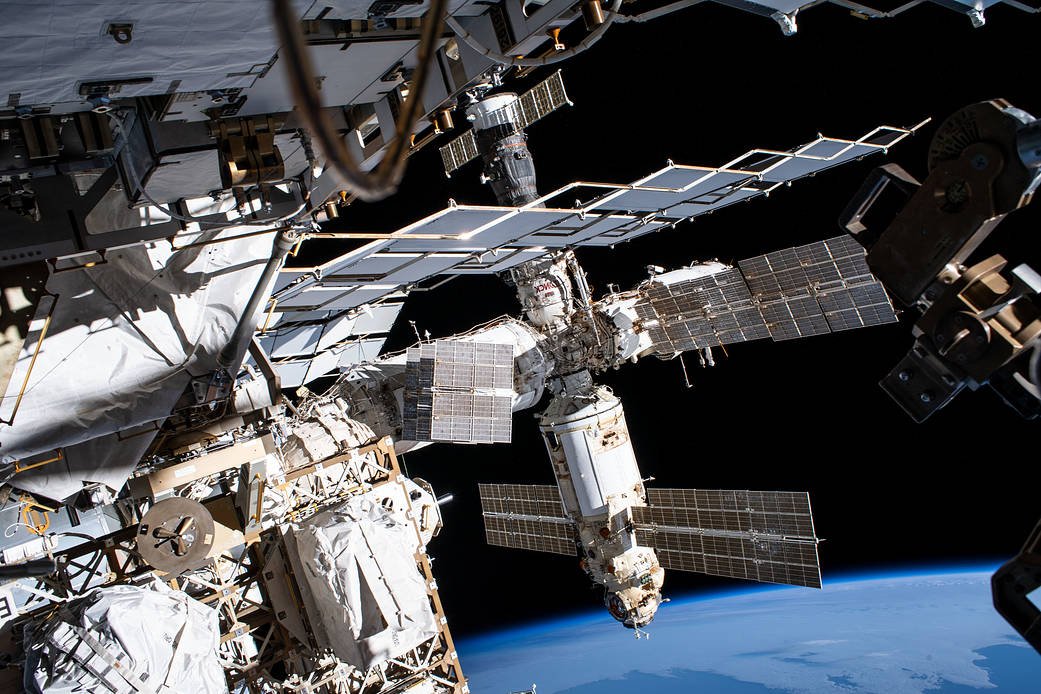
NASA ordered six crew members aboard the International Space Station to shelter inside a docked SpaceX Crew Dragon capsule on June 5 and prepare for potential evacuation, after air leaks from the station's Russian-built transfer tunnel worsened. The crew, including three NASA astronauts, one European Space Agency astronaut, and three Roscosmos cosmonauts, returned to normal operations once engineers confirmed the station remained stable. The leaks originate from microscopic cracks in the PrK transfer tunnel attached to the Zvezda Service Module, installed in 2000; small leaks were first detected in 2019, and the station currently loses roughly one pound of air per day. Roscosmos is conducting an extended repair campaign. NASA plans to retire the ISS by end of 2030, and one expert told Scientific American the loss of the station and crew was 'unlikely but not impossible' given the ongoing deterioration.
The ISS has been continuously occupied since November 2000 and was designed for a 15-year operational lifespan. The Russian segment, which includes Zvezda, provides propulsion for orbital maintenance. NASA is funding development of commercial successor stations, but none are expected to be operational until the late 2020s. The ISS is also the primary facility for US astronauts to reach orbit.
Attackers took over Instagram accounts, including the dormant Obama White House account, by asking Meta's AI customer support agent to reassign those accounts to email addresses they controlled. The only tool required was a VPN set to match the victim's location. No exploit, no social engineering of human staff, no malware. Meta's AI agent lacked a basic account-ownership verification step before executing credential changes. Security researchers say the vulnerability follows a pattern across AI agent deployments: companies add AI to customer-facing workflows faster than they evaluate the security implications, then rely on model-level defenses rather than application-layer validation. The attack succeeded despite Mythos, Meta's internal AI safety system designed to catch adversarial prompts. MIT Technology Review's Grace Huckins argues that securing AI agents requires conventional identity verification before any high-stakes action, and that relying on AI safety frameworks to block manipulation is not a substitute for those safeguards.
AI customer service agents are deployed by large platforms to handle account recovery, payment disputes, and similar tasks previously handled by humans. Meta's Mythos system filters adversarial prompts at the model level to prevent jailbreaks and policy violations. This attack did not require overcoming Mythos; it worked because the agent lacked verification that the requester owned the account before making changes.
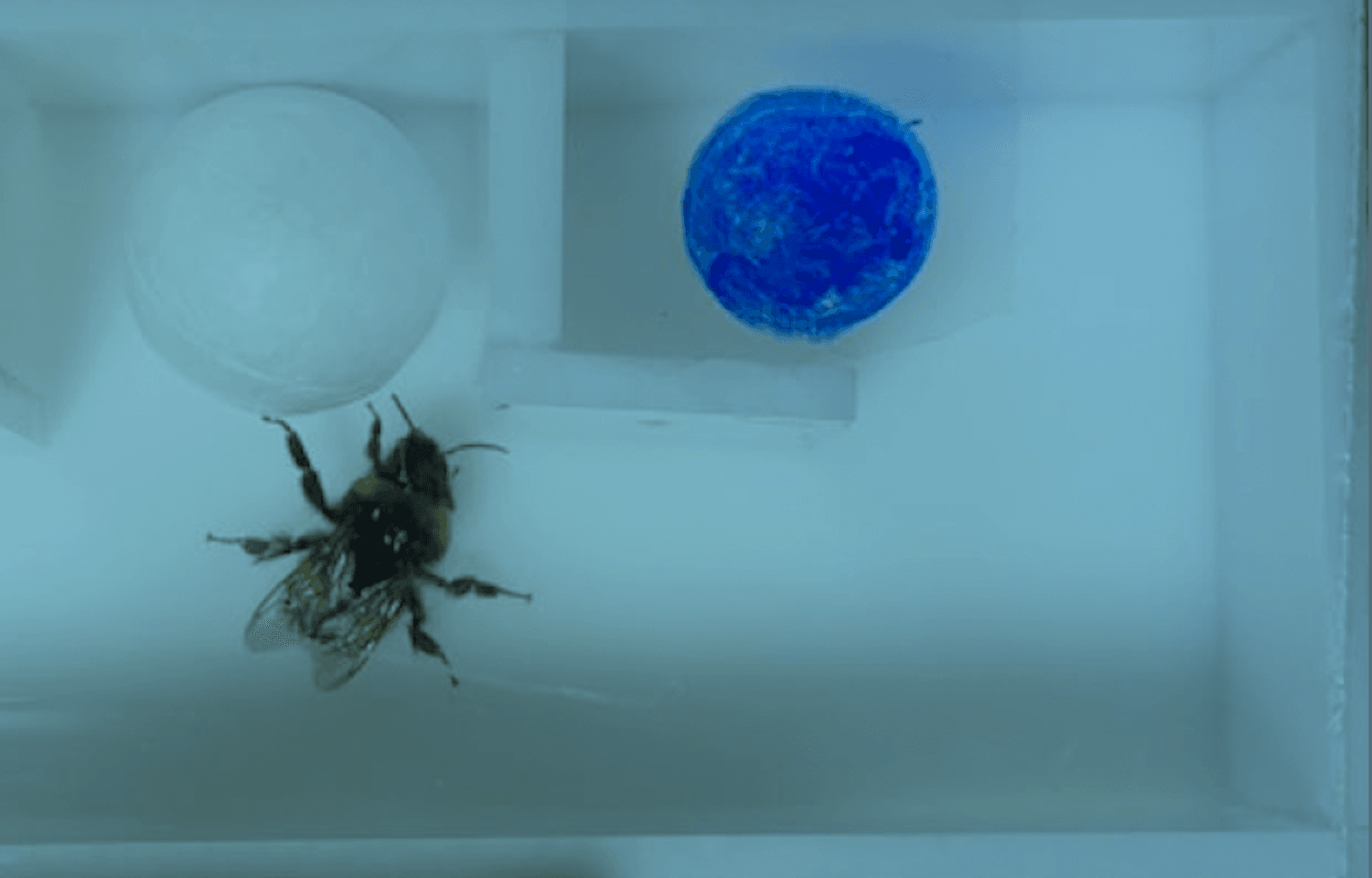
Researchers at the University of Turku and the University of Oulu in Finland published a study in Science showing that bumblebees can independently invent tool use without watching another bee demonstrate the technique. In the experiment, bees encountered a covered pit containing a sugar reward they could not reach directly. Sixteen of 22 bees independently discovered that rolling a small foam ball into the pit released the reward. No training was involved and the bees had no prior experience with the task. One bee found an entirely different solution: hanging from the ceiling above the pit to reach the reward from above. The result challenges the assumption that complex problem-solving in animals requires learning from others or extended experience with similar mechanisms. The bees accomplished this with roughly one million neurons, compared to about 86 billion in the human brain. A 2016 study by some of the same researchers showed bees could learn tool use by watching peers; this new work shows they can also innovate independently.
The 2016 study from this group was the first demonstration of tool use in an invertebrate acquired through social observation rather than instinct. Tool use had previously been documented mainly in primates, corvids, and a few other vertebrates. These two studies together suggest flexible problem-solving is not as tightly linked to brain size as conventional theories of animal intelligence assumed.
In the 1960s, psychologist James McConnell at the University of Michigan trained planarian flatworms to respond to a light cue, then fed the trained worms to untrained worms. The untrained worms apparently acquired the conditioned behavior. Thirty-six labs worldwide produced similar results, and the idea attracted wide media coverage and serious scientific attention. Sam Gershman's lab at Harvard, with postdoc Maddie Snyder, recently tried to reproduce McConnell's experiments using 12 different planarian strains and strict adherence to his protocols. The worms refused to be conditioned at all. Gershman's team published the failed replication in April 2026. The failure leaves two uncomfortable explanations: either McConnell and 36 independent labs consistently misread worm behavior in the 1960s, or something about planarian physiology has changed in ways that eliminated the phenomenon. Research in sea slugs and roundworms has since kept McConnell's central idea, that memories can be chemically encoded and transferred between animals, alive as an active hypothesis.
McConnell's hypothesis suggested memories are stored as molecules rather than as patterns in neural circuits. If true, memories could be extracted, transferred, or even absorbed. Most neuroscientists rejected the idea after replication attempts failed in the 1970s. Work in sea slugs by UCLA researchers in 2018 briefly revived interest by showing RNA from trained animals could transfer a simple sensitization response to untrained animals.
China's National Radio and Television Administration ordered provincial regulators to crack down on micro dramas containing soft pornography, ostentatious wealth display, distorted attitudes toward marriage and family, violent revenge scenarios, and copyright violations. Micro dramas are serialized short clips made for smartphone viewing that have grown into a global industry worth billions, with production centered in China and copycat studios now operating in South Korea and the United States. Local officials must run spot checks on production companies and require removal of noncompliant content. The directive fits a pattern of campaigns under 习近平 to shape online discourse and social values: a parallel Cyberspace Administration drive targets 'pessimistic' narratives such as the idea that hard work is useless, and regulations already require prior government approval for prominent micro drama productions. Prior crackdowns removed sexually suggestive content from WeChat and Douyin, the two main platforms for the genre.
Micro dramas are typically 1-3 minutes per episode, shot vertically for phone screens, and built for fast binge consumption. The genre exploded in China from 2021 onward, generating tens of billions of yuan in revenue. Under 习近平's 'common prosperity' policy the government has targeted media that glamorizes individual wealth or undermines traditional family structures.
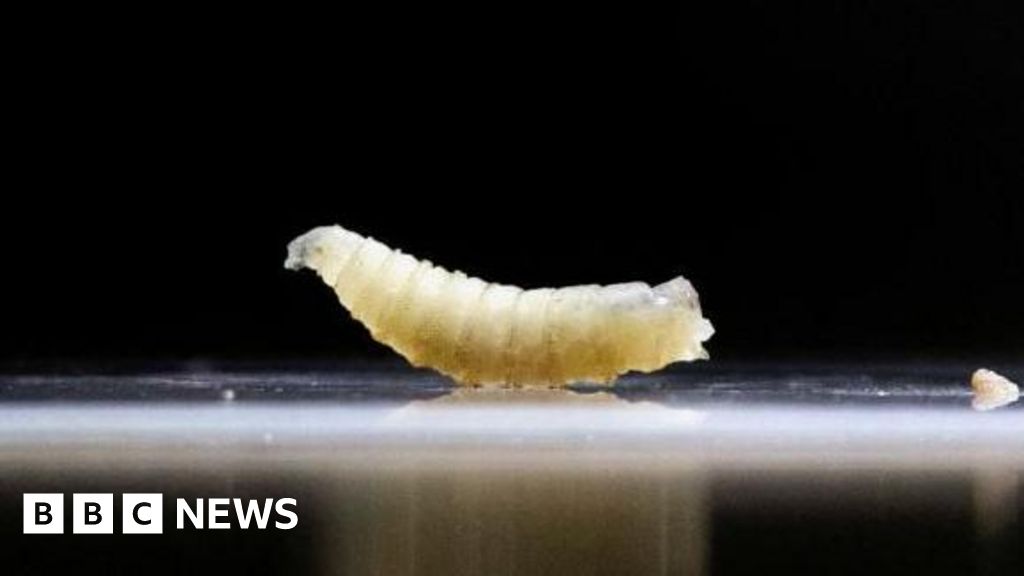
US officials confirmed the New World Screwworm, a parasitic fly whose larvae eat living tissue, in a three-week-old calf at a farm in La Pryor, Texas, about 30 miles from the Mexican border. The announcement came Wednesday and marks the first confirmed case in US livestock since 1966. Female screwworm flies lay eggs in open wounds; larvae hatch and burrow through flesh with sharp mouthparts, killing the host if untreated. The US-Mexico response relies on the Sterile Insect Technique: releasing large numbers of radiation-sterilized male flies so females, which mate only once, lay unfertilized eggs and the population collapses. Officials estimate 600 million sterile flies per week are needed to contain the outbreak; current production capacity stands at around 100 million per week. Since 2022, the screwworm has been spreading northward through South America, Central America, and into Mexico. A 20-kilometer quarantine zone has been established around the Texas farm and sniffer dogs deployed at border crossings.
The New World Screwworm was eradicated from the United States and Mexico through a decades-long sterile fly program that concluded in 1966. Before eradication it caused an estimated $900 million in annual livestock losses. The campaign, run jointly by the US Department of Agriculture and the Mexican government, stands as one of the more successful agricultural pest-eradication efforts in history.
Defense Secretary Pete Hegseth removed nine Navy captains from a promotion list to rear admiral in June 2026. The removed officers included three women, two Black men, and four white men; the resulting list has no women. Kevin Carroll, a former senior DHS counsel and CIA and Army veteran, argues in The Dispatch that framing this as a DEI rollback misses the larger threat. Hegseth's broader pattern, which also includes wider removal of senior officers and civilians from the Pentagon, points toward a desire for flag officers who will not challenge potentially illegal orders. Military law requires officers to refuse unlawful commands and to give frank professional advice to civilian leadership; a culture of deference at the flag officer level degrades both protections. Carroll argues that dismantling the norms surrounding flag-officer promotion will cost the US in combat readiness and will deter strong candidates from pursuing military careers.
Flag officers (generals and admirals) must be confirmed by the Senate, giving Congress a check on executive appointments to senior military roles. Hegseth bypassed standard consultation with service leadership in removing the nine captains. The Pentagon has separately moved to reduce the total number of flag officers across all service branches. The nine removed Navy captains had passed standard selection boards and were awaiting Senate confirmation.