Iran launched four attack drones toward the Strait of Hormuz on Saturday, which US Central Command called an "immediate threat to regional maritime traffic." US forces shot the drones down and struck Iranian coastal radar sites at Goruk and on Qeshm Island. Tehran retaliated with ballistic missiles targeting US air bases in Kuwait and Navy facilities in Bahrain; US and Bahraini air defenses intercepted six of seven missiles, the seventh failing to reach its target. The exchange is among the most intense since an informal ceasefire took hold in early April, following US-Israeli strikes on Iran in late February. Negotiations over a two-month ceasefire extension, which would also reopen the Strait of Hormuz to commercial shipping, have stalled: Iran halted communication with mediators this week. Tehran has linked any broader truce to an end of Israeli operations against Hezbollah in Lebanon, a condition Washington and Jerusalem have not accepted.
The US-Iran conflict began February 28, when US and Israeli forces struck Iranian military sites, prompting Iran to close the Strait of Hormuz, through which roughly 20 percent of global oil and liquefied natural gas flows. A ceasefire took effect in early April. Fighting has continued in episodic exchanges as formal peace negotiations stall over terms.
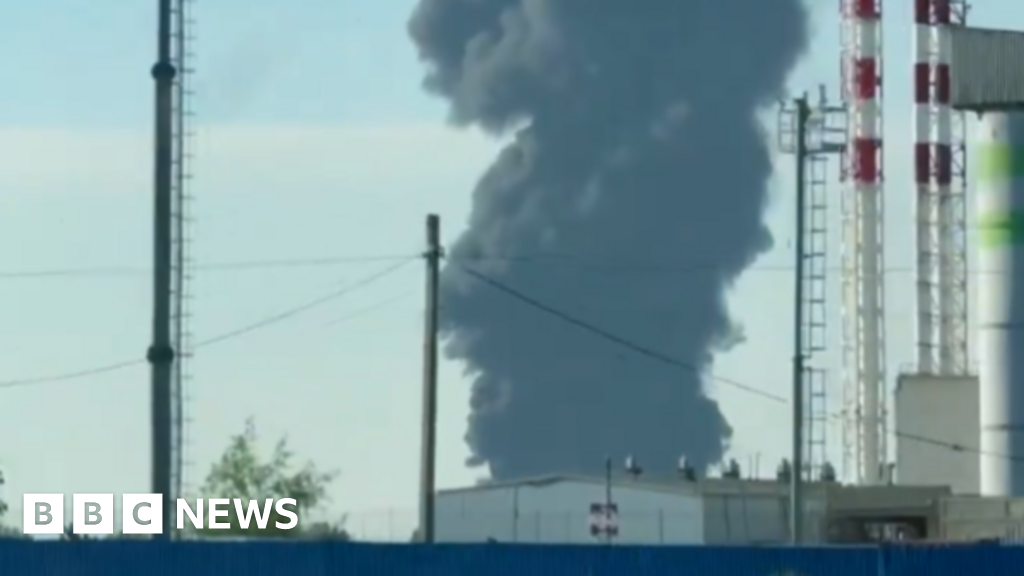
Ukraine launched a mass drone assault on St. Petersburg overnight into Saturday, its second strike on Russia's second-largest city in four days. Russia's Defense Ministry reported shooting down 376 Ukrainian drones. St. Petersburg governor Alexander Beglov ordered residents to remain indoors, the first time a Russian governor has issued that directive for the city since the war began in 2022. Three people were injured in the city. About 600 residents were evacuated from Bolshaya Izhora, a village west of the city that houses a Russian naval arsenal, where fires broke out. Ukrainian commander Yevhen Karas told reporters: "We fly in Russia like it's our own territory. Almost no resistance." The attack came a day after Vladimir Putin refused Volodymyr Zelensky's open letter calling for direct peace talks. Ukraine's first strike on St. Petersburg, three days earlier, hit an oil terminal and a guided-missile corvette at the Kronstadt naval base.
Russia launched its full-scale invasion of Ukraine in February 2022. Ukraine has developed long-range drone capabilities over the war and regularly strikes targets inside Russia, focusing on energy infrastructure, oil terminals, and military logistics. St. Petersburg is over 1,000 kilometers from the front lines, and the June 3 attack marked the first time Ukrainian drones reached the city's vicinity.
Google will pay SpaceX $920 million a month for access to roughly 110,000 Nvidia GPUs and associated server infrastructure at the Colossus data center near Memphis, Tennessee. The contract runs from October 2026 through June 2029, with a discounted ramp-up period through September; total spend at full rate reaches about $30 billion. Google described the arrangement as "bridge capacity" for Gemini Enterprise, its AI agent platform, where demand has exceeded forecasts. Colossus was originally built by xAI, Elon Musk's AI company, which merged with SpaceX in February 2026 at a combined valuation of $1.25 trillion. SpaceX has a separate compute deal with Anthropic worth $1.25 billion per month at the same facility, bringing its total monthly AI infrastructure revenue from these two contracts to roughly $2.17 billion. Either party can exit the Google deal with 90 days' notice after December 31, 2026.
The xAI-SpaceX merger in February gave Musk's aerospace company control of Colossus, one of the world's largest GPU clusters, built for xAI's Grok AI models. SpaceX is widely expected to pursue an IPO, and recurring compute revenue at this scale transforms its financial profile for public market valuation. A global shortage of AI compute has pushed hyperscalers toward non-traditional infrastructure partners.
Researchers at Columbia University, led by biologist Dieter Egli, used base editing to modify three genes in early-stage human embryos and posted their results to bioRxiv on June 1, before peer review. Base editing rewrites individual DNA letters without cutting both strands, reducing the risk of large unintended deletions compared to standard CRISPR. The team targeted PCSK9, a gene tied to elevated heart disease risk, and HBG1 and HBG2, mutations of which naturally protect against sickle cell disease and thalassemia. Results showed significant mosaicism: edits took in some cells but not others, leaving embryos with a mixed genetic profile. Egli concluded the technique is not ready for clinical use, citing cellular damage at effective doses. Stanford bioethicist Hank Greely warned the work risks encouraging commercial "baby improvement" applications before the science matures. UC Berkeley's Fyodor Urnov called embryo editing "a solution in search of a problem," noting that IVF with preimplantation genetic screening already lets couples select unaffected embryos without editing.
Base editing was developed around 2016 in David Liu's lab at Harvard as a refinement of CRISPR, chemically converting one DNA base to another rather than cutting both strands. He Jiankui's 2018 creation of gene-edited babies using CRISPR drew global condemnation and ended with his imprisonment. Current scientific consensus holds that germline editing, which produces heritable changes, is not ready for clinical use.
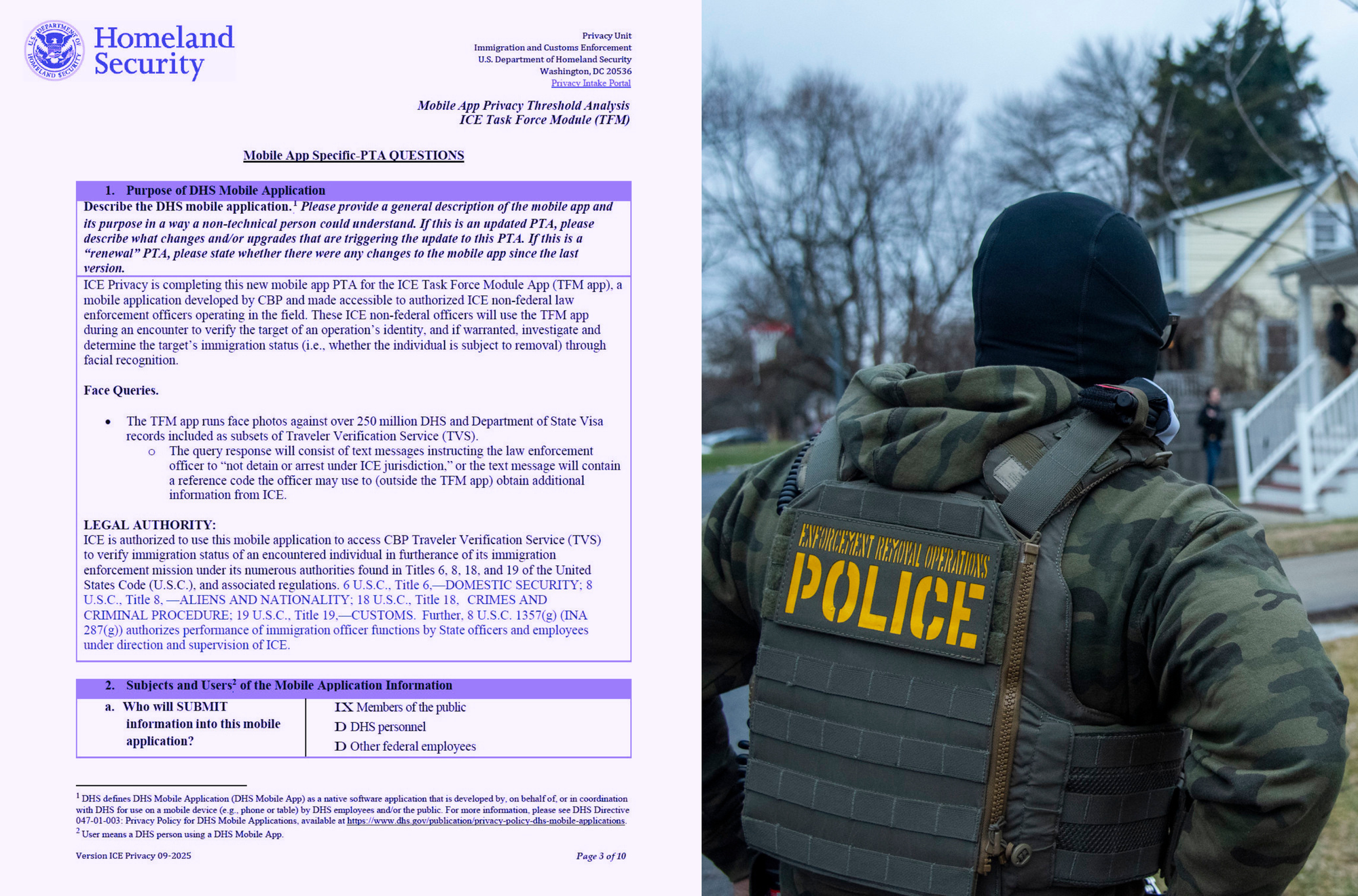
ICE is building a smartphone app that lets participating local police scan a person's face against a database of more than 250 million Department of Homeland Security and State Department records. The scan returns either a clearance code or a flag to detain the person for immigration processing. The app, called the Task Force Module, would be deployed to approximately 1,220 law enforcement agencies across 32 states and two territories participating in ICE's 287(g) program, which deputizes local police for immigration enforcement. ICE's own documentation acknowledges it is "conceivable" the system could flag US citizens. The technology carries documented higher false-match rates for darker-skinned individuals, and biometric records collected through the app would be retained for 15 years. The American Civil Liberties Union warned it would "ensnare police into making immigration decisions they are untrained for"; the Electronic Frontier Foundation said it would subject "even more Americans to omnipresent surveillance and unjust detainment."
The 287(g) program, named for a section of the Immigration and Nationality Act, allows ICE to deputize state and local police for immigration enforcement functions, a practice largely curtailed under Obama. NIST research has documented higher facial recognition error rates for darker-skinned and female subjects. Multiple wrongful arrests have already been linked to facial recognition misidentifications in US law enforcement.
Auburn University's Board of Trustees voted unanimously on June 5 to claim "ultimate authority" over course offerings, curriculum, and degree requirements, and dissolved the Faculty Senate the same day. The Senate was replaced with a Presidential Academic Advisory Council, which the university president chairs and half-populates by appointment, raising concerns that faculty critical of the administration could be shut out. The board also imposed a new civics requirement mandating US history and civics courses for all students. Auburn's American Association of University Professors chapter called it "the end of shared governance." Faculty Senate Chair Virginia Davis said faculty had no meaningful chance to respond, learning of the proposals only the morning before the vote. The board acted without legal requirement: Alabama's HB 580, which forces similar changes at other public universities, does not apply to Auburn as a land-grant institution and does not take effect until October.
Shared governance, the principle that faculty hold primary authority over curriculum and academic standards, has been a foundational norm in US higher education since the AAUP codified it in 1966. Auburn's preemptive move mirrors legislation passed in Texas and Florida reducing faculty control over hiring, tenure, and course content. Critics argue such measures allow politically appointed boards to shape academic content directly.
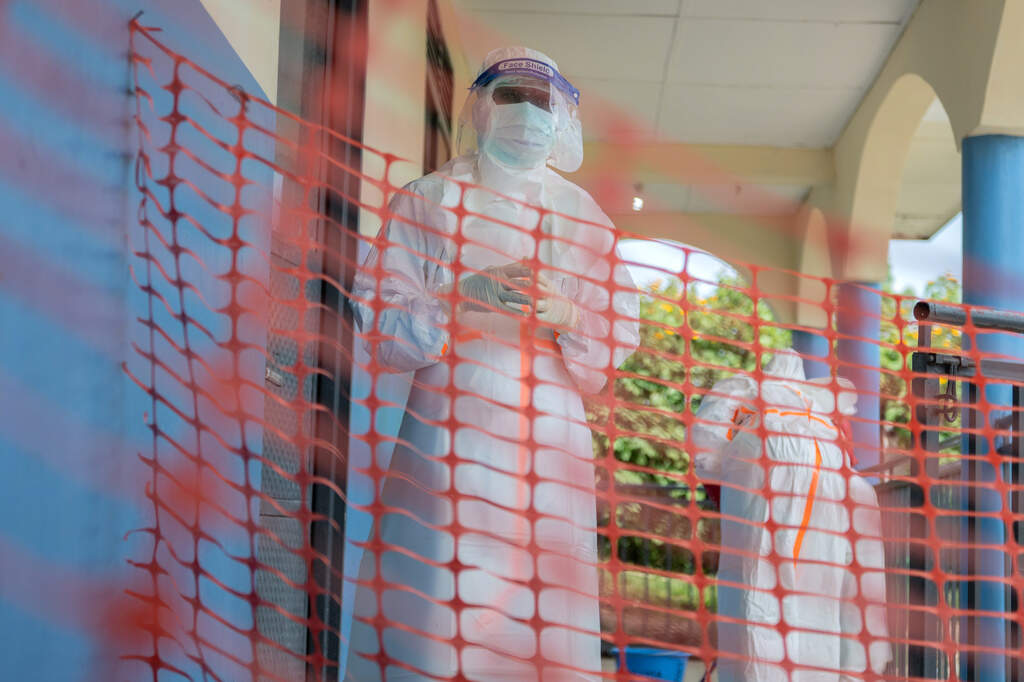
The Centers for Disease Control and Prevention has lost roughly one-third of its staff under the Trump administration, with about 2,000 workers fired and 300 on administrative leave, leaving 80 percent of its senior positions vacant. That gutted agency now faces a major Ebola outbreak in the Democratic Republic of Congo and Uganda. The circulating strain is Bundibugyo ebolavirus, a variant for which there is no approved vaccine or treatment. The WHO has reported more than 513 cases and 130 suspected deaths. Acting CDC Director Jay Bhattacharya has called for remaining CDC staff to volunteer for deployment to US entry points for enhanced travel screening, activated in May. Aid workers on the ground say US funding cuts have slowed the international response, making affected countries more dependent on the now-depleted CDC.
The CDC's global disease detection network has historically been one of the US government's primary tools for detecting infectious disease outbreaks before they spread internationally. The Trump administration's reduction-in-force rounds targeted multiple CDC divisions including emergency operations. Bundibugyo ebolavirus, first identified in Uganda in 2007, has a lower fatality rate than the Zaire strain but lacks the approved vaccines that helped contain earlier outbreaks.
A federal judge struck down the Trump administration's indefinite pause on US Citizenship and Immigration Services processing of asylum petitions, green cards, work permits, and naturalization applications for people from 39 countries. The freeze applied even to legal immigrants already inside the US who had filed paperwork, paid fees, submitted biometrics, and attended interviews. The 39 countries on the affected list skew toward African and Asian nations on the administration's travel ban. US District Judge John J. McConnell Jr. ruled that USCIS "violated the very immigration laws that Congress has charged it with administering" and called the actions "arbitrary and capricious" under the Administrative Procedure Act. The ruling blocks a strategy of suspending legal immigration through administrative inaction rather than legislation, bypassing Congressional authority. The court found that Congress, not the executive branch, sets immigration processing requirements.
USCIS is the Department of Homeland Security agency that processes legal immigration applications, distinct from undocumented immigration enforcement. The "arbitrary and capricious" standard from the Administrative Procedure Act has been the primary legal tool courts have used to block Trump administration policies across multiple domains since 2017. Courts have struck down multiple earlier immigration actions on the same statutory grounds.
Europe should impose tariffs on Chinese manufactured goods, and the case extends well beyond standard protectionism, argues economist Noah Smith in Noahpinion. His first argument is strategic: supply chains for defense-critical goods including military drones, batteries, electric motors, and radio modules are dominated by Chinese producers that European industry cannot replicate, leaving militaries structurally dependent on a potential adversary. His second argument targets the trade system itself: OECD data shows 60 percent of China's global market share gains come from government subsidies rather than productivity improvements, meaning standard free-trade assumptions do not apply. A third argument points to Chinese workers' interests: tariffs could pressure Beijing to shift from export-led growth toward domestic consumption. Chinese motor vehicle consumption has fallen below decade-ago levels despite surging exports, and Chinese solar companies have run at losses since 2024 from overcapacity-driven price wars, Smith notes, signs that industrial policy has pushed production far beyond what market demand supports.
China's government-subsidized industrial policy has driven massive overcapacity in steel, solar panels, electric vehicles, and batteries, producing export surges that have disrupted global markets. The EU has already imposed tariffs on Chinese EVs reaching up to 45 percent. Russia's 2022 invasion exposed European defense supply chain gaps and intensified debate over strategic autonomy from non-allied suppliers. Noah Smith is an economist and Bloomberg Opinion contributor.
Wall Street suffered its steepest single-day drop in more than a year on Thursday, driven by a semiconductor sell-off that wiped roughly a trillion dollars from market valuations. The Nasdaq fell 4.2 percent, its worst day since April 2025. The S&P 500 declined 2.6 percent and the Dow fell 1.4 percent. Chip companies led the decline: Nvidia fell 6.3 percent, Broadcom dropped 7.6 percent, and Micron slid 12.7 percent. Two pressures compounded. Analysts had been warning that AI-linked technology valuations grew stretched after a two-month run of S&P 500 records in April and May. On top of that, a stronger-than-expected May jobs report pushed Treasury yields higher, signaling the Federal Reserve may hold interest rates elevated longer. Higher rates hit growth-oriented tech stocks hardest because they reduce the present value of earnings expected years in the future.
Tech and semiconductor stocks drove the S&P 500 to repeated records in April and May 2026, fueled by expectations of sustained growth in AI infrastructure spending. The Federal Reserve has kept its benchmark rate in the 4.5 to 4.75 percent range, and a resilient labor market reduces pressure to cut. Nvidia's GPUs are the primary hardware for training and running large AI models, making its stock a proxy for broader investor sentiment on AI spending.