The US House of Representatives voted 215-208 on Wednesday to pass a war powers resolution that would require President Trump to withdraw forces from hostilities in Iran or seek congressional approval. Four Republicans joined all Democrats in the largely symbolic rebuke, the fourth such House attempt to rein in the president’s war-making authority. The concurrent resolution does not need Trump’s signature if the Senate also passes it, though legal challenges could follow. The vote adds pressure on the White House as petrol prices climb and public opposition to the four-month conflict grows. Trump told reporters negotiations to end the war could conclude this weekend, even as US and Iranian forces exchanged strikes in recent days. The Senate advanced a similar measure in May but has yet to hold a full floor vote.
The US and Israel launched airstrikes on Iran on 28 February. Iran retaliated by attacking Israel and Gulf states and closed the Strait of Hormuz. A ceasefire was reached on 8 April but has been repeatedly violated, with both sides trading strikes.
More than a third of students in UC Berkeley’s introductory computer science course CS 10 received F grades in spring 2026, and 10.6 percent failed CS 61A, according to Berkeleytime data. Both figures far exceed the department’s guideline of 7 percent Ds and Fs for lower-division courses. Teaching professor Dan Garcia attributes the surge to students leaning heavily on large language models for homework and then being unprepared for exams; nearly 30 students in CS 10 were caught cheating on take-home tests. Garcia and associate professor Gireeja Ranade also point to weak mathematical preparation, with some students having taken linear algebra courses that allowed open-internet, open-AI policies. Both instructors have joined more than 1,300 UC faculty in a petition calling for the reinstatement of SAT and ACT scores in STEM admissions.
CS 10 ('The Beauty and Joy of Computing') and CS 61A ('Structure and Interpretation of Computer Programs') are Berkeley’s largest introductory CS courses. The department’s grading guidelines recommend a typical GPA of 2.8–3.3 for lower-division classes; both courses averaged a C-plus (2.3 GPA) in spring 2026.
The White House issued an executive order on Wednesday reclassifying roughly 8,000 federal positions, including epidemiologists, health scientists, and toxicologists, from civil service to at-will employment. The order, an expansion of the long-planned 'Schedule F' now called Schedule Policy/Career, strips these workers of protections against political firing. The administration argues that policy-influencing roles must be removable for misconduct or poor performance to safeguard democratic accountability. Federal employee unions have already filed at least three legal challenges, noting that the reclassified jobs include non-policy roles such as human resources and data management specialists. An Office of Personnel Management official said the directive would not impose a political litmus test, but critics warn it opens the door to replacing scientific expertise with political loyalty.
President Trump has long complained of a 'deep state' of federal workers resistant to his policies. The original Schedule F proposal, floated in his first term, aimed to make it easier to fire civil servants. The new order follows a 2025 political loyalty questionnaire for new hires.
Large language models generate text by role-playing characters, not by possessing consciousness, Ted Chiang argues in The Atlantic. He draws a parallel: prompting an LLM with 'a conversation between Julius Caesar and Genghis Khan' produces a fictional dialogue, not digital reincarnations. Replacing those names with 'a helpful AI chatbot and a user' changes nothing fundamental. The chatbot character is as fictional as Caesar. Chiang warns that Anthropic’s public documents and executive statements, which treat Claude as potentially conscious or emotionally vulnerable, confuse fluency with agency. This anthropomorphism, he writes, risks assigning moral responsibility to software rather than to the people who deploy it. The essay calls for understanding LLMs as conventional tools, not as entities with subjective experience.
Anthropic’s 'constitution' document describes Claude’s values and behaviors as if written for the model itself, and CEO Dario Amodei has said the company is 'open to the idea' of AI consciousness. Chiang’s essay responds to this trend of treating chatbots as moral patients.
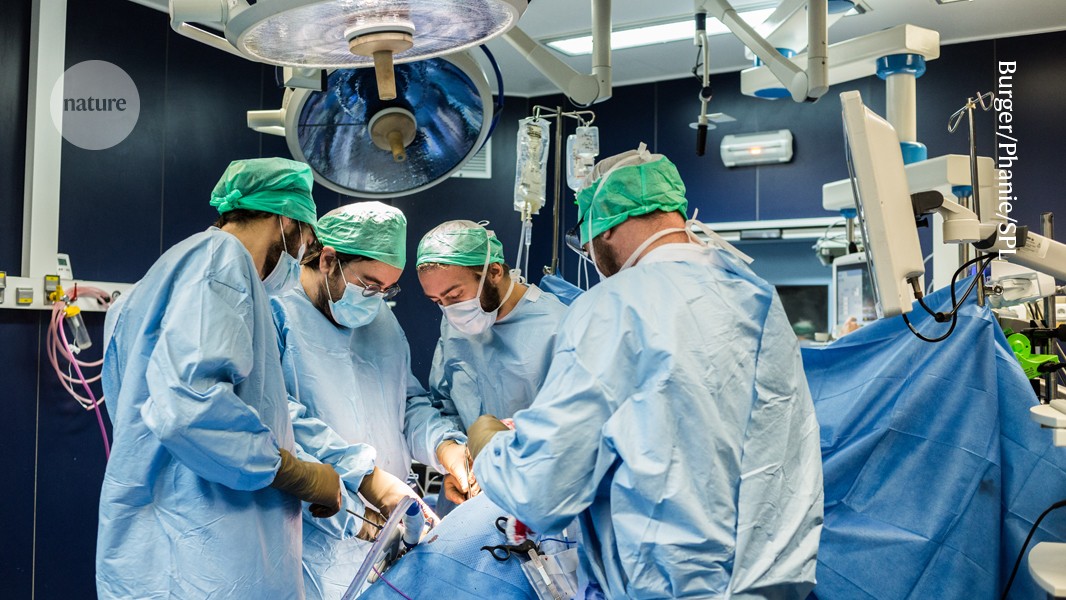
Three people with highly sensitized immune systems, who would normally reject donated organs, have received successful kidney transplants after a single dose of engineered CAR-T cells, according to two studies published Wednesday in the New England Journal of Medicine. The patients’ bodies produced high levels of antibodies that attack foreign tissue, leaving them with almost no chance of finding a compatible donor. Researchers extracted their T cells and engineered them to target cells expressing the CD19 protein, which were driving the harmful antibody production. More than a year later, all three have functioning kidneys and no notable side effects. The approach adapts CAR-T therapy, already approved for blood cancers, to suppress the immune barrier that keeps thousands of highly sensitized patients on dialysis. Transplant surgeons not involved in the work called the results a potential 'game changer' for a population that often dies waiting.
An estimated 5–10% of the more than 91,000 people on US kidney transplant waiting lists have highly sensitized immune systems. Dialysis is time-intensive and exhausting. CAR-T therapy has previously been trialled for autoimmune conditions, but this is the first demonstration in organ transplantation.
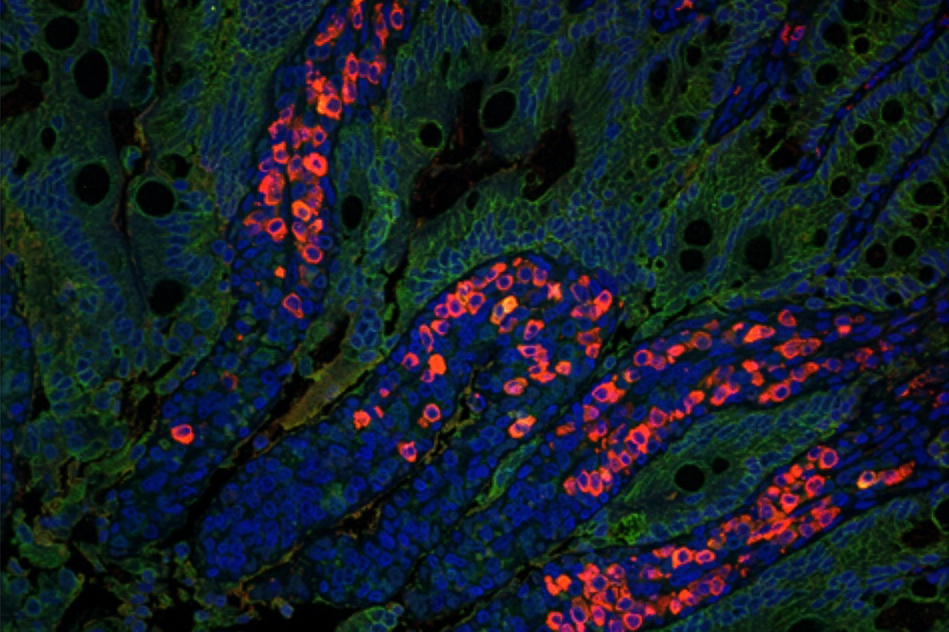
MIT researchers have designed a nanoparticle adjuvant that, when added to the standard injectable polio vaccine, triggers a strong mucosal immune response in the gut, the primary entry point for poliovirus. In a rat study published Wednesday in Science Advances, the combination produced a 20-fold increase in the antibodies needed for mucosal immunity compared to the injectable vaccine alone. The oral polio vaccine already provides this gut-level protection but carries a small risk of the weakened virus mutating back into an infectious form, which is why many countries have switched to the safer injectable version. The new adjuvant, a derivative of vitamin A called Am80, is encapsulated in nanoparticles to eliminate the need for repeated daily injections that had made earlier versions impractical. The team hopes the approach can help achieve polio eradication without the risks of the live oral vaccine.
Poliovirus spreads through contaminated food and water, so blocking infection in the gastrointestinal tract is critical for stopping transmission. The oral vaccine induces mucosal immunity but can, in rare cases, revert to virulence. The injectable vaccine prevents paralysis but does not stop viral shedding.
The National Science Foundation announced it will remove all in-water infrastructure of the Ocean Observatories Initiative, a network of more than 900 instruments that has monitored the Atlantic and Pacific since 2016. The system, designed to operate for at least 25 years, will be dismantled over the next 15 months. Scientists say the loss will blind them to changes in the Atlantic Meridional Overturning Circulation (AMOC), a system of currents that regulates climate and is showing signs of approaching a tipping point. The move follows President Trump’s firing of the independent board overseeing the NSF. Senator Sheldon Whitehouse called it an attempt by 'corrupt fossil fuel stooges' to turn off climate monitors. Democrats in Congress have pledged to fight the dismantling, but the NSF has already begun planning the recovery of moorings off the coasts of Oregon, Washington, Alaska, and North Carolina.
The AMOC delivers warmth to northern Europe and influences global weather patterns. Recent studies suggest it may be nearing collapse due to climate change. The Ocean Observatories Initiative cost hundreds of millions of dollars to build and was intended to provide long-term, continuous data.
Google released Gemma 4 12B, a new open-weight AI model that runs on consumer laptops with 16 GB of RAM. The 12-billion-parameter model sits between the company’s mobile-optimized and large-scale Gemma 4 variants, offering near-flagship benchmark performance at roughly half the memory footprint of the 26B Mixture of Experts version. It ships with Multi-Token Prediction, which uses idle compute cycles to anticipate future tokens and speed up generation. For multimodal inputs, Google replaced the bulky encoder typically used for vision with a streamlined embedding module and eliminated audio encoding entirely by projecting raw signals into the same vector space as text. The model is available for download on Kaggle and Hugging Face under an Apache 2.0 license, and can be tested without installation through LM Studio and Google AI Edge Gallery.
The Gemma 4 family launched in April with four models. The new 12B version fills the gap between the tiny E2B/E4B mobile models and the larger 26B and 31B variants. It is the first Gemma model to include Multi-Token Prediction out of the box.
The New York Federal Reserve Bank published an analysis linking the post-pandemic rise in remote work to higher unemployment among young college graduates. Census data show a 20 percent increase in the jobless rate for graduates under 29 compared to pre-2020 levels. The report suggests that remote and hybrid arrangements reduce the entry-level opportunities and informal mentorship that early-career workers rely on to build skills and professional networks. While remote work has benefited many experienced employees, the NY Fed warns that younger workers may be locked out of the labor force if companies continue to hire fewer in-person junior roles. The findings add to a growing body of research on the uneven effects of workplace flexibility, as policymakers debate whether to encourage return-to-office mandates or develop new pathways for early-career training.
The shift to remote work accelerated during the COVID-19 pandemic and has persisted in many industries. Previous studies have shown that remote workers receive less feedback and fewer promotions, but the NY Fed analysis is among the first to quantify the impact on youth employment specifically.
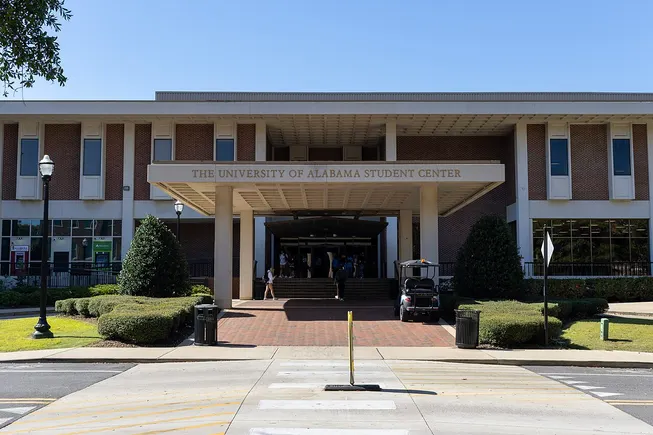
A federal judge declined to order the University of Alabama to reinstate two student magazines, Alice and Nineteen Fifty-Six, while a lawsuit over their indefinite suspension proceeds. The university shut down the publications in December, citing concerns that they could expose the institution to liability under the Trump administration’s crackdown on diversity programs. Alice targeted women students; Nineteen Fifty-Six focused on Black students. U.S. District Judge Edmund LaCour Jr., a Trump appointee, ruled that the students had not shown their case was likely to succeed, because the magazines were defined by their content rather than a specific viewpoint. Without a viewpoint, he wrote, there can be no viewpoint discrimination. The student journalists, represented by the Southern Poverty Law Center, the Legal Defense Fund, and the ACLU of Alabama, are considering an appeal.
The magazines were student-run but funded and operated by the university’s Office of Student Media. The lawsuit argues that the suspensions violate First Amendment protections against censorship and viewpoint discrimination. The university maintains it never exerted editorial control over the content.