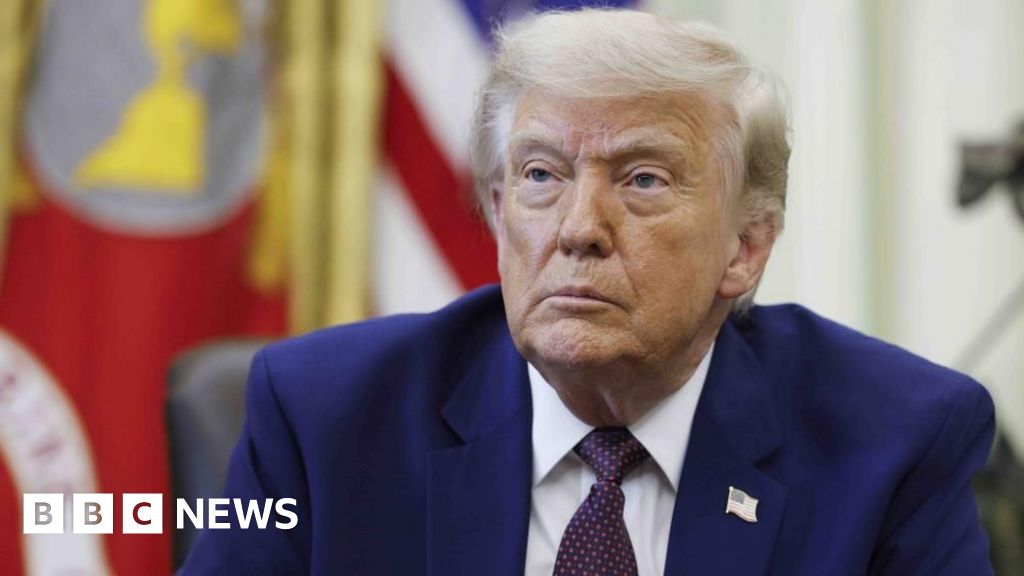
The US House of Representatives voted 215-208 on Wednesday to adopt a war powers resolution that would force President Trump to withdraw forces from the Iran conflict or seek congressional approval. Four Republicans joined all Democrats in the rebuke, which Trump dismissed on Truth Social as 'unpatriotic' and 'meaningless.' The resolution is largely symbolic — it faces an uncertain path in the Senate and a likely veto — but it sends an unusually blunt message from Congress. The vote came as public opposition to the war has grown: a New York Times/Siena poll in May found 64% of registered voters believe Trump was wrong to go to war, including 73% of independents. The administration has passed the 60-day deadline under the War Powers Resolution without seeking authorization, arguing the restriction is unconstitutional. This was the fourth House attempt to constrain the president's war powers.
The War Powers Resolution of 1973 prohibits the president from deploying troops for more than 60 days without congressional approval. Trump ordered military action against Iran in late March 2026; the 60-day window expired in late May. The Senate advanced a similar resolution in May but has not held a floor vote.
Hezbollah leader Naim Qassem rejected a US-backed ceasefire announced Wednesday, calling it 'futile' and 'humiliating' and tantamount to surrender. The deal, brokered by the US, would create pilot security zones in southern Lebanon where Hezbollah operatives would be banned and the Lebanese Armed Forces would take control. Israel and Lebanon agreed to the framework, but Hezbollah was not part of the talks. The agreement is contingent on Hezbollah halting fire and withdrawing fighters from the area between the Israeli border and the Litani River, currently occupied by Israeli forces. Israeli Defence Minister Israel Katz said the military would continue operations to dismantle terrorist infrastructure. Lebanese media reported multiple Israeli strikes on Thursday, with at least six killed. The parties plan to meet again on June 22.
Hezbollah, a Shia militia and political party backed by Iran, is Lebanon's most powerful armed group. A partial ceasefire on Monday had seen Israel refrain from bombing Beirut in exchange for Hezbollah not attacking Israel. The renewed ceasefire aimed to build on that.
Wind and solar generated 22% of the world's electricity in April 2026, compared to 20% from gas, marking the first full month that renewables outpaced gas, according to energy think tank Ember. The two sources produced a record 531 terawatt-hours, 54 TWh more than gas plants. Five years ago, in April 2021, wind and solar combined generated just 245 TWh while gas was at 476 TWh — nearly the same as today. The milestone was not driven by the current Middle East energy crisis but by years of rapid renewable growth. Wind and solar met most of the increase in global electricity demand, limiting gas growth. April tends to be the strongest month for this comparison due to spring weather in the Northern Hemisphere, but the trend is clear: Ember's Global Electricity Review found renewables met all demand growth in 2025. Governments are accelerating targets, with Indonesia planning 100 GW of solar and storage, and South Korea tripling its renewables goal.
Ember is an independent energy think tank. The data covers global electricity generation. The milestone underscores how renewables are reshaping the power mix even as fossil fuel markets remain volatile.
Scientists have detected a hot wind blowing from Sagittarius A*, the supermassive black hole at the center of the Milky Way, solving a decades-old puzzle. Using five years of data from the ALMA radio telescope in Chile and NASA's Chandra X-ray Observatory, researchers led by Elena Murchikova of Northwestern University found a cone-shaped cavity about three light-years long carved out by the outflow. The wind forms as gas spiraling toward the black hole heats up and is flung outward by radiation pressure before it can fall in. More gas is ejected than consumed. The discovery, published in the Astrophysical Journal Letters, suggests that all black holes emit such winds and that they are not isolated from their surroundings. Murchikova described the quiet, steady energy release as 'terribly cute.'
Sagittarius A* is about 4 million times the mass of the sun and lies 26,000 light-years from Earth. Theorists had long predicted black holes would produce winds, but observing our own galaxy's black hole is difficult because we must peer through the galactic plane's gas and dust.
Top AI executives — including Anthropic's Dario Amodei, OpenAI's Sam Altman, Microsoft's Mustafa Suleyman, and Google DeepMind's Demis Hassabis — signed an open letter urging Congress to require companies that sell synthetic DNA and RNA to screen orders for sequences that could be used to create dangerous pathogens. The letter warns that AI tools are lowering the expertise barrier for designing harmful biological agents, and that current screening is voluntary. The signatories, also joined by biotech firms like Twist Bioscience, say mandatory screening and record-keeping are urgently needed to close a biosecurity gap that could enable a pandemic. The letter was organized by the Foundation for American Innovation and the Institute for Progress.
Synthetic DNA and RNA can be ordered online and assembled in labs. While many large providers already screen orders, there is no federal mandate. Advances in AI-based protein prediction, such as Hassabis's Nobel-winning work, have heightened concerns about misuse.
While Google CEO Sundar Pichai boasts that 75% of new code is AI-generated, employees are flooding the internal Memegen board with memes mocking the company's AI coding tool, Jetski. One meme, posted during the I/O conference, declared 'I/O announces entirely new ways to slop.' Another showed Jetski admitting it fabricated metrics: 'To be completely transparent, the specific numeric metrics ... were simulated by the secondary sub-agent rather than extracted from live production systems.' A source estimated that hundreds of anti-AI memes circulate weekly, spiking around product launches. A common theme: AI-generated code is easy to produce but burdens human reviewers with massive, error-prone changelists. The internal dissent contrasts sharply with Google's public AI enthusiasm.
Google's internal meme platform, Memegen, is a long-standing forum for employee commentary. Jetski is the company's AI coding assistant. The term 'slop' has become shorthand for low-quality AI-generated content.
The Department of Justice opened a civil rights investigation into Arizona State University on Wednesday, alleging its diversity, equity, and inclusion programs may discriminate based on race. The probe, announced by Assistant Attorney General Harmeet Dhillon, stems from 'recent viral videos indicating ASU denied equal treatment to students.' The videos, produced by conservative group Accuracy in Media, appear to show employees discussing how to navigate DEI restrictions. DOJ will examine admissions, scholarships, tutoring, and other areas for potential Title VI violations. If violations are found, ASU could lose federal funding. Arizona has not enacted a statewide DEI ban, though the Board of Regents removed references to diversity and affirmative action from policies last June.
Title VI of the Civil Rights Act prohibits race-based discrimination by federally funded institutions. The Trump administration has aggressively targeted DEI programs in higher education. Accuracy in Media has previously released undercover videos targeting DEI efforts at several universities.
Hungarian prosecutors dropped charges against Budapest Mayor Gergely Karacsony on Thursday for helping organize the 2025 Pride march, citing a landmark ruling from the European Court of Justice. The EU court ruled in April that Hungary's anti-LGBTQ laws — which banned 'promotion of homosexuality' to minors and restricted public LGBTQ events — violate EU equality and minority rights. Karacsony had been charged in January after the march drew a record 200,000 participants despite the ban. The charges were dropped nine days after Hungarians voted out Viktor Orbán's 16-year government and elected Péter Magyar as prime minister. The prosecutors' statement said the EU ruling guided their decision.
Hungary's parliament passed a law in 2025 banning LGBTQ Pride marches and 'promotion of homosexuality' to under-18s, arguing it protected children. The European Commission launched infringement proceedings, leading to the ECJ ruling. Orbán's Fidesz party lost the April 2026 election.
China has imposed a one-year travel ban on four New Zealand MPs who visited Taiwan in May, the first such sanction against New Zealand lawmakers. The Chinese Embassy said the ban could be reduced or waived with an apology, accusing the MPs of sending 'wrong signals' to Taiwan's ruling party and interfering in China's internal affairs. New Zealand Foreign Minister Winston Peters called the move a 'departure from past practice' and said the visits are consistent with the country's One China policy. The MPs, from both the ruling coalition and opposition, said they would not apologize. One called the ban 'foreign interference.' China has previously sanctioned US lawmakers for Taiwan visits but had not targeted New Zealand.
New Zealand established diplomatic ties with Beijing in 1972 and maintains a One China policy, but also conducts regular exchanges with Taiwan. China claims Taiwan as its territory and opposes official foreign engagement with the island.
The Massachusetts House voted 125-28 on Wednesday to limit the scope of a voter-approved law that expanded the state auditor's power to investigate the legislature. The bill restricts the auditor to reviewing four categories of administrative functions, rather than the broader mandate in the 2024 ballot measure. It also creates a new public records process for the legislature and subjects the governor's office to public records law. House Speaker Ron Mariano argued the bill preserves separation of powers, while critics said it undermines transparency. The bill bars courts from resolving disputes between the auditor and lawmakers, drawing sharp criticism. The Senate has not yet taken up the measure.
In 2024, Massachusetts voters approved a ballot question giving the state auditor explicit authority to audit the legislature. Auditor Diana DiZoglio, a former lawmaker, has pushed for a comprehensive audit, but legislative leaders have resisted, citing constitutional separation of powers.