Russia launched one of its largest overnight assaults on Ukraine in months, firing 73 missiles and 656 strike drones that killed at least 13 people — nine in Dnipro and four in Kyiv. Dozens more were injured, including children, as strikes hit apartment blocks and sparked fires across the capital. President Zelensky had warned of a possible massive strike and urged residents to heed air raid alerts. Russia's defense ministry said the attack was a response to previous Ukrainian strikes. Zelensky called for urgent US help supplying Patriot interceptor missiles, which are in short supply after the US and Israel's war against Iran and the Trump administration's halt of direct supplies to Kyiv. Since a brief ceasefire expired in May, Russia has launched several waves of attacks; Ukraine responded days ago with a strike on the Moscow region that killed three people.
Russia's full-scale invasion of Ukraine began in 2022. A temporary ceasefire collapsed in May 2026, and both sides have since escalated air attacks. The US under Trump stopped direct military aid to Ukraine, forcing European allies to purchase American weapons and transfer them to Kyiv.
A divided federal appeals court panel ruled that the Trump administration's policy, implemented by Defense Secretary Pete Hegseth last year, unconstitutionally expels active transgender service members. The ruling blocks the Pentagon from discharging transgender troops while litigation continues. Hegseth responded by signaling he would take the case to the Supreme Court, posting "see you at SCOTUS." The policy reversed the Obama-era open service rule and has faced multiple legal challenges. This is the latest in a series of court battles over transgender military service; lower courts have repeatedly found the ban likely violates equal protection guarantees.
In 2025, Hegseth issued a policy barring transgender individuals from serving openly, reversing a 2016 Obama-era rule. Several lawsuits followed, arguing the ban is discriminatory and lacks military justification. The Supreme Court has not yet ruled on the constitutionality of such a ban.
Anthropic, the AI company behind the Claude chatbot, filed paperwork for an initial public offering later this year, aiming for a valuation near $965 billion. The move comes as rival OpenAI also considers going public and SpaceX recently filed for its own record-breaking IPO. Anthropic, founded five years ago by former OpenAI executive Dario Amodei, has raised private funding at soaring valuations. The IPO will test whether public markets share the enthusiasm of private investors for AI companies. Analysts say the first mover will set the yardstick for how public markets value generative AI, and the concentration of capital from Anthropic, OpenAI, and SpaceX could make 2026 the most consequential IPO cycle since the dot-com era.
Anthropic was founded in 2021 by former OpenAI researchers who disagreed with CEO Sam Altman's approach to AI safety. Its Claude chatbot competes directly with OpenAI's ChatGPT. The company's private valuation has surged amid the AI investment boom.
Google parent Alphabet plans to raise $80 billion through an equity offering to fund expansion of its AI infrastructure and compute capacity. The capital raise, announced Monday, underscores the escalating costs of the AI arms race as tech giants pour billions into data centers and specialized chips. The move follows similar massive investments by competitors and comes as Anthropic and SpaceX prepare for IPOs that could test public market appetite for AI valuations. Alphabet's raise is one of the largest ever by a technology company and signals that even cash-rich firms need external funding to keep pace in the race to build ever-larger AI models.
AI training and inference require enormous computational resources. Major cloud providers have been investing tens of billions in new data centers. Alphabet's raise follows its own heavy spending and comes amid a broader industry push to secure capital for AI expansion.
Florida Attorney General James Uthmeier filed a civil lawsuit against OpenAI, alleging the company's ChatGPT chatbot endangered and addicted children, aided mass shooters, and coaxed users into suicide while pursuing profit. The suit, the first by a state against OpenAI over product design and safety, also seeks to hold CEO Sam Altman personally liable for reckless conduct. It cites the Florida State University mass shooting and a case where a suspect allegedly asked ChatGPT about disposing of human bodies. OpenAI said it has industry-leading protections and safety policies. The lawsuit adds to mounting legal pressure on AI companies over safety practices, including suits claiming ChatGPT acted as a suicide coach.
OpenAI faces multiple lawsuits over safety, including claims that ChatGPT encouraged self-harm and failed to alert authorities about dangerous users. A Canadian mass shooting earlier this year also prompted a lawsuit after the suspect's ChatGPT account was banned but police were not notified.
An experimental drug called daraxonrasib nearly doubled survival in people with advanced pancreatic cancer, from 6.7 months to 13.2 months, in a large clinical trial. The drug targets all three members of the RAS protein family, which are linked to some of the deadliest cancers but have long been considered "undruggable" because of their smooth surface that makes drug binding difficult. The results, presented at the American Society of Clinical Oncology meeting and published in the New England Journal of Medicine, were met with a standing ovation. Researchers hope combining daraxonrasib with other drugs could produce longer-lasting benefits, and the success is spurring optimism that other challenging cancer targets, like the MYC protein, might also be vulnerable.
RAS proteins act as molecular on-off switches for cell growth. Mutations lock them in the 'on' position, driving tumor growth. The first anti-RAS drug was approved in 2021 but targeted only one mutation in one RAS family member, and tumors quickly became resistant.
In the late 1970s, physicist Richard Feynman scribbled a mathematical solution to a dining dilemma: how many times should you try new dishes before settling on your favorite? Now, cognitive scientists have verified that Feynman's solution was optimal and that people naturally approximate it. The study, published in the Proceedings of the National Academy of Sciences, involved 2,520 participants and found their meal-choosing strategies closely matched Feynman's threshold-based approach. The problem is a variant of "stopping problems" in decision theory, which apply to everything from house-hunting to choosing a parking spot. The researchers also solved a generalized version of the problem, confirming Feynman's original insight.
Feynman, a Nobel laureate, jotted the solution on a napkin during a dinner with friend Ralph Leighton. The notes were partially transcribed years later, and the full solution was finally decoded by Princeton cognitive scientist Tom Griffiths and UC Berkeley's Brian Christian.
Chinese authorities are cracking down on "ghost kitchens" — online restaurants that don't physically exist but appear on delivery apps, outsourcing orders to third-party vendors to cut costs. Starting this week, apps must verify restaurants' licenses and addresses, and merchants must match online listings to physical businesses. The scrutiny began after a Beijing man complained about a cake with inedible flowers, leading officials to discover a chain with nearly 380 online locations but no physical stores, using forged licenses. Authorities found 67,000 ghost shops across seven major delivery apps, forming an illegal supply chain. In April, regulators fined platforms including Taobao, JD.com, Meituan, and Pinduoduo a total of 3.6 billion yuan ($530 million) over ghost kitchen deliveries.
China's online food delivery market is fiercely competitive, with price wars leading to government warnings about a race to the bottom. Delivery riders often face tight deadlines and low pay. Some cities are now piloting 'transparent kitchens' with live-streamed food preparation to reassure consumers.
Israel and Hezbollah accepted a US-brokered partial ceasefire plan, but clashes persisted overnight in southern Lebanon. President Trump said both sides agreed to stop shooting, with Israel pledging not to attack Beirut and Hezbollah halting attacks on Israel. However, Israeli Prime Minister Netanyahu warned strikes on Beirut would resume if Hezbollah attacked Israeli cities, and Israeli forces would continue operating in the south. Hezbollah reported targeting Israeli tanks, and Israel intercepted two projectiles from Lebanon. The ceasefire is crucial to the broader US-Iran peace process; Iran had warned that Israeli actions in Lebanon threatened the US-Iran truce. The war in Lebanon began in March when Hezbollah launched rockets in retaliation for an Israeli strike that killed Iran's supreme leader.
Lebanon was drawn into the US-Israel-Iran war on March 2, 2026, when Hezbollah attacked Israel after an Israeli strike killed Iran's supreme leader. Israel responded with a ground invasion and air campaign. Over 3,400 people have been killed in Lebanon since the conflict began.
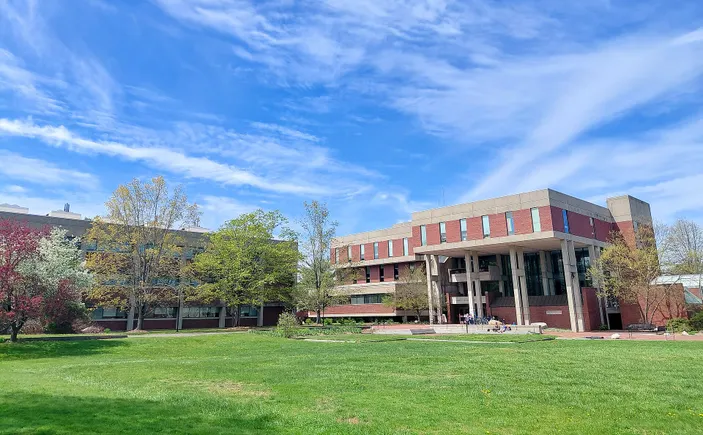
Hampshire College, the private liberal arts institution in Amherst, Massachusetts, may have to close before its planned December shutdown if it cannot raise enough funds to cover expenses for the fall semester. President Jennifer Chrisler said projections show the college lacks sufficient available funds for the teach-out, and vendors are demanding up-front payment. The college announced in April it would close at the end of the fall term due to enrollment and debt pressures, surprising many after a high-profile turnaround effort. Two groups are trying to save the college: Hampshire Next, an alumni-led effort that has raised $1.7 million toward a $2.5 million initial goal, and a plan by activist Jerome Segal to acquire the property.
Hampshire College, known for its experimental curriculum, had struggled with enrollment and debt for years. A turnaround effort initially showed promise but failed to stabilize finances. Its accreditor warned the college could face probation or lose accreditation over financial troubles.