Iran announced Monday it will close the Strait of Hormuz and halt indirect ceasefire talks with the United States, accusing the Trump administration of violating the terms of a truce that had paused direct hostilities. The state-affiliated Tasnim News Agency reported the decision, pointing to Israel’s military operations in Lebanon as a breach of the ceasefire that Iran says covers all fronts. The Strait of Hormuz is the world’s most important oil transit chokepoint; a closure would threaten global energy supplies and likely spike crude prices. Iran’s move escalates a conflict that has already drawn in Hezbollah and prompted US airstrikes. The White House has not yet responded.
The US and Iran reached a ceasefire in April after weeks of direct military exchanges that included the killing of Iran’s supreme leader in an Israeli strike. The truce was meant to halt hostilities on all fronts, including Lebanon, but Israel has continued operations against Hezbollah, which Iran considers a violation.
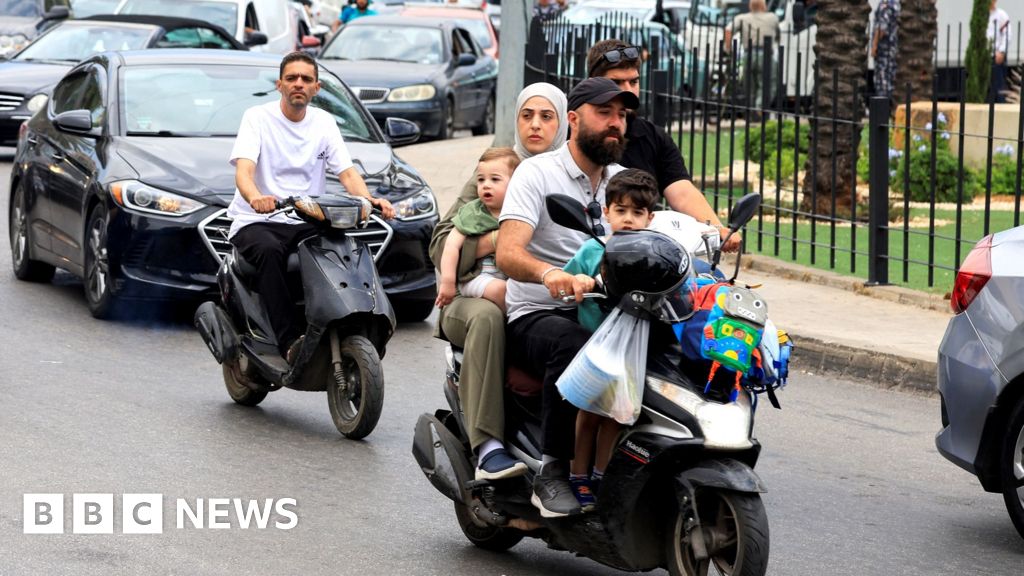
Israeli Prime Minister Benjamin Netanyahu ordered strikes on Dahieh, the Hezbollah stronghold in southern Beirut, on Monday, calling it retaliation for rocket and drone attacks on Israeli civilians. The military then told residents to evacuate, sending families fleeing in gridlocked traffic. The escalation follows months of ceasefire violations since a truce was announced in April. US Secretary of State Marco Rubio had proposed a ‘gradual de-escalation’ plan to both sides on Sunday, but the new strikes suggest diplomacy is failing. Israel’s defense minister warned that if northern Israel has no calm, neither will Beirut. Two Lebanese civilians were killed in a separate airstrike in the south, and an Israeli soldier died in ground combat.
Hezbollah entered the war on March 2 by firing rockets into Israel after an Israeli strike killed Iran’s supreme leader. Israel responded with an air campaign and ground invasion. A ceasefire in April has been repeatedly breached, with Israel striking Beirut twice since then, though far less frequently than before.
Serena Williams is ending her retirement and returning to professional tennis, The Hill reported Monday. The 44-year-old, who stepped away after the 2022 US Open, has not yet announced which tournament she will enter first, but the news immediately dominated sports and culture conversation. Williams won 23 Grand Slam singles titles, the most in the Open Era, and her return at an age when most players have long retired is unprecedented. The comeback follows a trend of elite athletes extending careers, but Williams’s stature makes this a cultural event beyond sports. Details of her training and schedule are expected soon.
Williams retired in 2022 after a third-round loss at the US Open, having hinted at wanting a second child. She has since focused on business ventures and family. Her return would make her the oldest Grand Slam contender in modern tennis.
The National Science Foundation has lifted a freeze on new grant funding for Duke, Harvard, and Yale, reversing a hold that began in April, Nature reported. Princeton remains under the freeze, with its account still marked ‘Future Awards to Organization on Hold.’ The reversal came one day after Nature published a story revealing the freeze, which had affected all four institutions. An NSF staff member said a few grants have already been released to researchers at Harvard and Duke. The number of new grants awarded to each university this year is down sharply from previous years, but the lifting suggests a return to normal for three of the four. The NSF did not explain why the freeze was imposed or why Princeton is still restricted.
The NSF placed the four universities’ accounts on hold on April 9, with no public explanation. The move raised concerns about political interference in research funding, especially as the Trump administration has targeted universities over DEI policies and campus protests.
Sterilized soil continued to consume oxygen and emit carbon dioxide for six years in a French lab, challenging the assumption that such metabolic activity requires living cells. Sébastien Fontaine and colleagues at the French National Institute for Agriculture, Food, and Environment reported in Science Advances that the lifelike chemistry persisted even after gamma radiation, pressure, and heat treatments that should have killed all microbes. Electron microscopy confirmed no living cells remained. The team proposes that the reactions — analogous to the Krebs cycle that powers respiration — can occur abiotically on mineral surfaces, suggesting that metabolism may predate life itself. The finding reframes the origin of biochemistry: the chemistry of life may simply be the chemistry of geology, given the right conditions.
Fontaine initially tried to measure carbon release from dead soil as a baseline. When the soil kept ‘breathing,’ reviewers urged him to dismiss it as contamination. He spent over a decade proving sterility and published the initial results in 2013, but the new six-year data provide the strongest evidence yet for abiotic metabolism.
Former Federal Reserve Chair Jerome Powell used his acceptance of the John F. Kennedy Profile in Courage Award in Boston on Sunday to defend the independence of the Fed, courts, universities, and Congress from political pressure. Without naming President Trump, Powell said the Fed was undergoing a ‘stress test’ and that insulating monetary policy from politics is a ‘priceless asset’ shared by all advanced economies. He acknowledged the Fed’s mistakes during the inflation surge but argued that credibility depends on admitting errors and changing course. Powell, who stepped down as chair in May, kept his seat on the Fed board, blocking the Trump administration from appointing a replacement. The award recognized his refusal to bend to years of public attacks from Trump over interest-rate decisions.
Trump repeatedly criticized Powell for not cutting rates fast enough and sought to fire Fed governor Lisa Cook. Powell’s term as chair ended in May; he was succeeded by Kevin Warsh. By remaining on the board, he preserves a seat that would otherwise be filled by a Trump appointee.
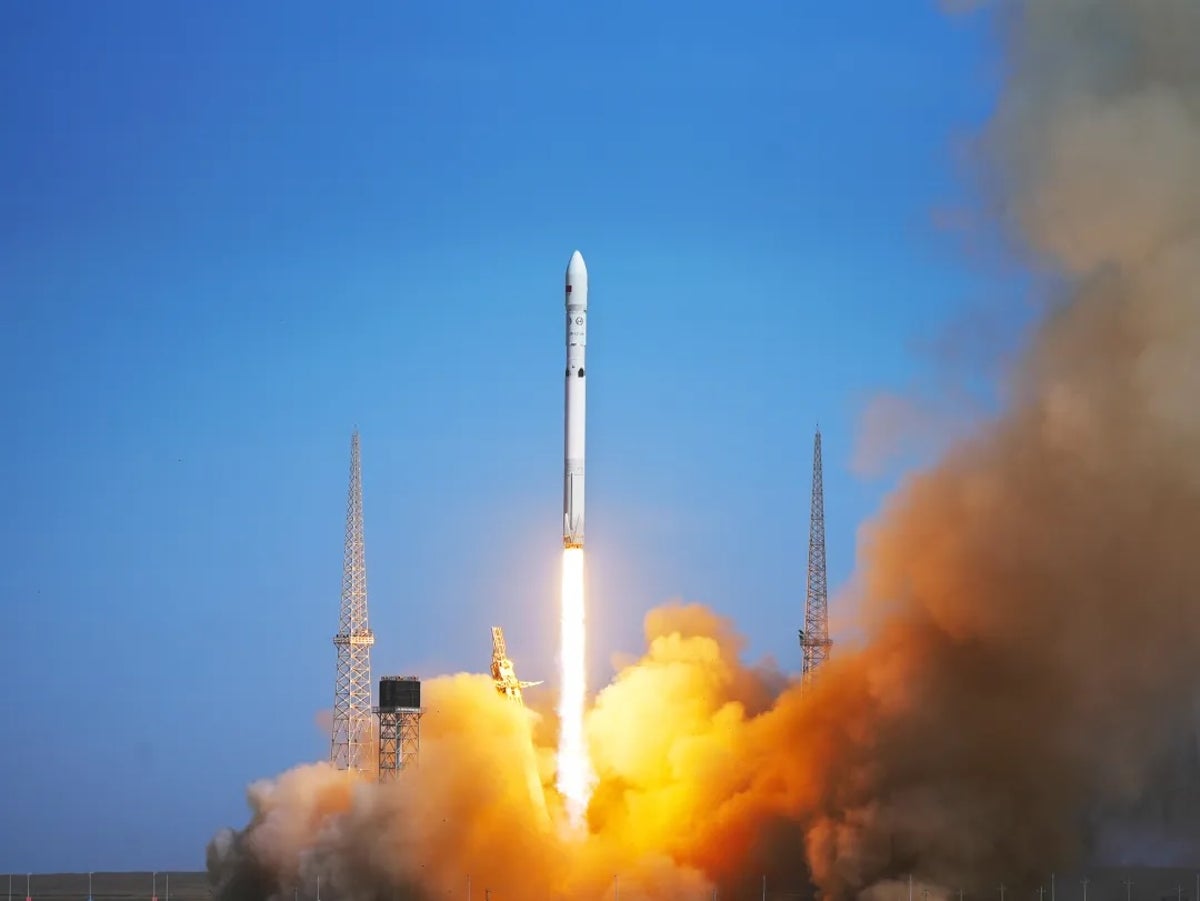
China launched its Long March 12B rocket for the first time on Monday, deploying satellites for the Qianfan Internet megaconstellation — a rival to SpaceX’s Starlink. The state-owned China Aerospace Science and Technology Corporation (CASC) gave no advance airspace or maritime warnings, violating standard international safety protocols. The rocket lifted off at 4:40 a.m. EDT from the Gobi Desert, with news spreading first on Chinese social media. The Long March 12B is designed to be reusable, like SpaceX’s Falcon 9, though this maiden flight did not attempt a first-stage recovery. The success follows China’s February test of a prototype moon rocket, underscoring the country’s accelerating space ambitions as it aims for a crewed lunar landing around 2030.
China’s Qianfan constellation plans thousands of low-Earth-orbit satellites to provide global internet, directly competing with Starlink. The lack of launch notices has drawn criticism from space analysts, who note that China has a history of not fully adhering to debris mitigation norms.
The Federal Trade Commission is investigating Microsoft for potentially anticompetitive practices in cloud computing and AI, according to civil investigative demands obtained by The Verge. The probe, which began under Biden and continued under Trump, focuses on whether Microsoft’s licensing terms unfairly lock customers into its Azure cloud by making it more expensive to run Windows software on rivals’ infrastructure. Google previously accused Microsoft of using its dominance to give Azure an ‘unearned advantage.’ The investigation echoes the antitrust case that nearly broke up Microsoft 25 years ago. If FTC staff recommend a lawsuit and the commissioners approve, Microsoft could face its most significant regulatory challenge since the 2001 settlement over its PC operating system monopoly.
Microsoft changed licensing terms in 2019, raising costs for customers using non-Azure clouds. A 2024 ProPublica investigation found Microsoft used free cybersecurity upgrades tied to Azure to gain a foothold in US government agencies. The FTC’s demands ask about business agreements, licensing, and interoperability.
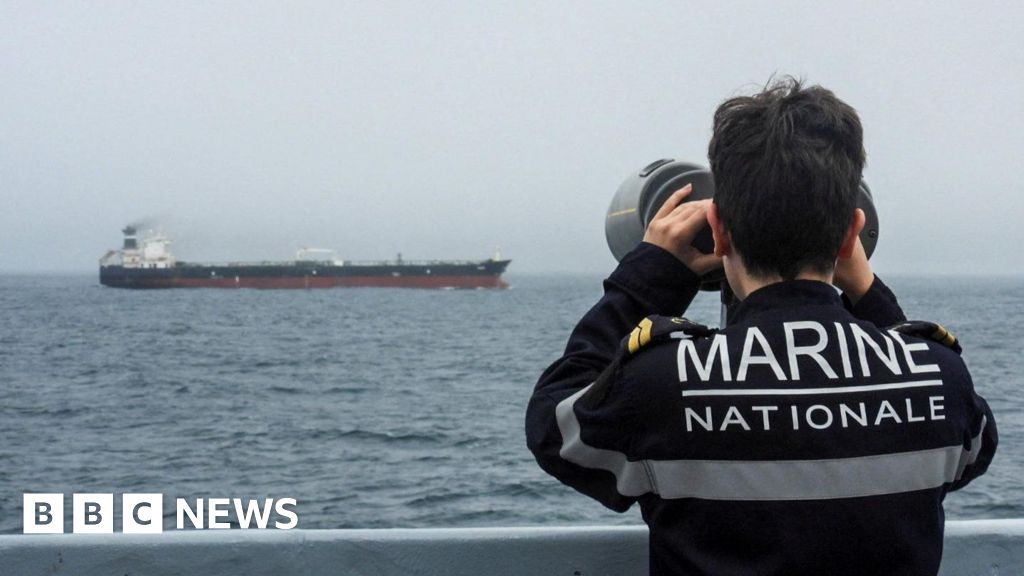
French naval officers boarded the Tagor, a sanctioned Russian oil tanker, in the Atlantic on Sunday with support from a British helicopter, President Macron announced. The vessel was suspected of being part of Russia’s ‘shadow fleet’ — tankers with opaque ownership used to evade Western sanctions on oil exports. It was flying a false flag when intercepted about 400 nautical miles west of Brittany. Macron called the operation a response to ships that ‘circumvent international sanctions, violate the law of the sea, and fund the war’ in Ukraine. The Kremlin denounced the seizure as ‘bordering on international piracy.’ This is the fourth shadow-fleet vessel France has boarded since September 2025, part of a broader allied effort to choke off revenue for Russia’s war.
Since the 2022 invasion, Russia has used a shadow fleet to sell oil above the G7 price cap. The UK authorized its military to board such ships in March, but nearly 200 have entered UK waters since then without interception. France previously allowed ships to continue after fines but has since shifted to blocking them.
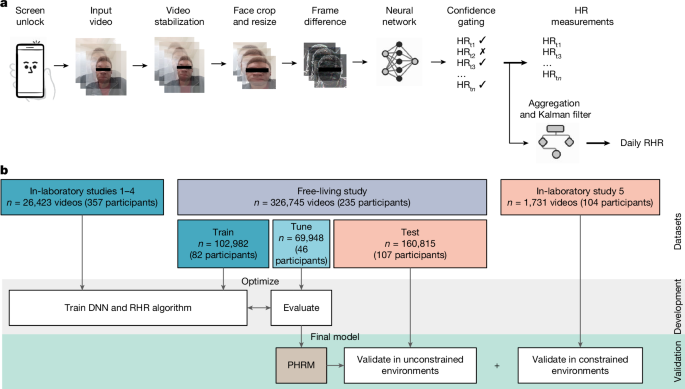
A deep-learning system can measure resting heart rate passively using a smartphone’s front-facing camera during normal use, according to a study published Monday in Nature. Researchers trained the model on 192,353 videos from 485 participants and validated it on 162,546 videos from 211 people in both lab and free-living conditions — the largest validation of its kind. The system, called PHRM, achieved a mean absolute percentage error below 10% across light, medium, and dark skin tones, meeting industry accuracy standards. Daily resting heart rate estimates had a mean absolute error of less than five beats per minute compared with a wearable tracker. The team released the dataset and a pre-trained model to spur further research, aiming to make heart-health monitoring accessible to the billions who own smartphones but not wearables.
Resting heart rate is a biomarker for cardiovascular health and mortality. Wearables can track it, but adoption remains limited, especially among those who would benefit most. Smartphone cameras can detect blood volume pulse via photoplethysmography, but previous methods struggled with darker skin tones and real-world conditions.