President Trump signed an executive order Friday endorsing a Department of Health and Human Services decision to reduce the number of required childhood vaccinations. The order frames the move as protecting religious liberty and parental rights. HHS had earlier adjusted the immunization schedule, cutting some vaccines from the mandatory list for school entry; the specific vaccines removed were not immediately specified. The order directs federal agencies to review vaccine mandates and prioritize exemptions, and calls for a study on vaccine injury compensation. The decision comes amid a resurgence of vaccine-preventable diseases. A separate CDC analysis of the 2025 Texas measles outbreak found that one in five cases required hospitalization, with most developing complications. Public health experts warn that lowering vaccination rates risks larger outbreaks. Medical groups criticized the order, arguing the current schedule is based on decades of safety data.
The childhood vaccine schedule currently includes immunizations against measles, mumps, rubella, polio, and other diseases, and is required for school attendance in all states. Health Secretary Robert F. Kennedy Jr. has long questioned vaccine safety. The 2025 Texas measles outbreak was the largest in decades, with over 700 cases.
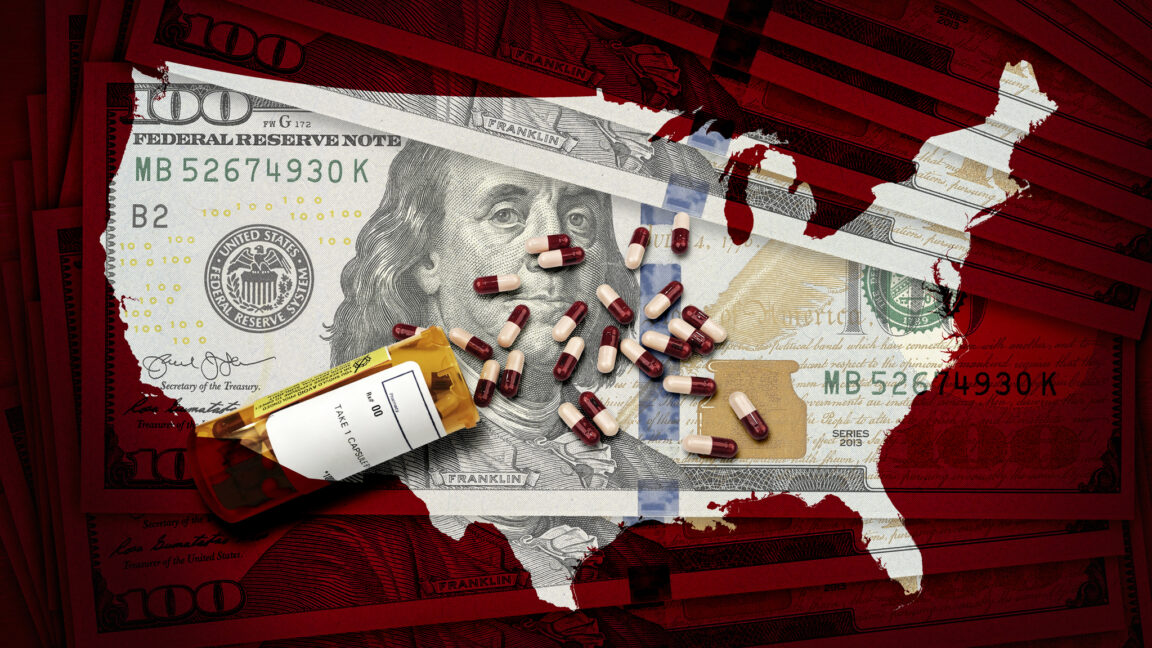
A new Commonwealth Fund analysis of 2024 data across 20 high-income countries finds the US healthcare system remains an outlier in cost and poor outcomes. The US spent 18% of GDP on healthcare, nearly double the average of 9.3%, yet ranked third-lowest in life expectancy at 79 years. Americans are the most likely to skip medications or treatments due to cost. The US had the second-highest avoidable mortality rate and the fewest primary care providers per capita (0.3 per 1,000 people, versus an average of 1.1). Maternal mortality is the highest, at nearly 19 deaths per 100,000 live births, and Black women face a rate of 50 per 100,000. The report notes that the US is the only peer country without universal health coverage. It concludes that other nations have implemented strategies to reduce costs and strengthen primary care, but the US has failed to adopt them.
The Commonwealth Fund is a private foundation that regularly compares health systems. The US has long had the highest spending but mediocre outcomes. The study highlights systemic issues like underinvestment in primary care and lack of universal coverage.
A CDC analysis of the 2025 Texas measles outbreak, published in the Morbidity and Mortality Weekly Report, found that 18.5% of the 325 cases in the first three months required hospitalization. Among 54 hospitalized patients with detailed records, all were unvaccinated. 87% developed complications: 72% had pneumonia, 46% dehydration, and 39% diarrhea. 70% needed supplemental oxygen, and four children required intensive care; one child died. The outbreak ultimately reached 762 cases in Texas alone, the largest since measles was declared eliminated in 2000. The study underscores that measles is not a benign childhood illness, contrary to claims by vaccine skeptics like Health Secretary RFK Jr. The authors stress that vaccination remains critical to preventing severe disease and hospitalizations.
Measles was eliminated in the US in 2000 due to widespread vaccination, but declining rates have led to resurgent outbreaks. The 2025 Texas outbreak began in a community with low vaccination coverage. RFK Jr. has downplayed measles severity.
The Academy of Management’s annual meeting, set for July 31 in Philadelphia, is seeing a sharp drop in European attendance due to concerns over US travel policies, data privacy, and the political climate under the Trump administration. Early registration suggests only about half the usual 14,000 participants will attend. In response, the AOM announced it will move next year’s conference from Seattle to Vienna, and subsequent meetings to Toronto, Frankfurt, and London. Several academics cited fears of social media screening at the border, the administration’s hostility toward climate and sustainability research, and solidarity with colleagues from countries subject to US travel bans. A British-Iranian researcher said the uncertainty made attendance untenable. The boycott reflects a broader trend of international conferences bypassing the US.
The Trump administration has imposed travel bans on several countries and proposed screening social media of visitors. It has also cut funding for climate research and DEI programs. Several scientific conferences have relocated from the US in recent years.
The share of credit card balances that are 90 or more days delinquent rose to 13.1% in Q1 2026, according to the New York Fed’s Household Debt and Credit Report. That is the highest level since 2011, signaling growing financial strain among US consumers. Overall credit card debt reached a record $1.21 trillion. The increase in serious delinquencies is concentrated among younger borrowers and those with lower credit scores. Rising interest rates have made carrying balances more expensive, and inflation continues to squeeze household budgets. The New York Fed noted that the transition into delinquency has accelerated, with more borrowers moving from current to 30 days late. Economists watch this metric as a leading indicator of consumer distress and potential recession risk.
Credit card delinquencies are a key measure of household financial health. The 90-day mark is considered severe and often precedes default. The last time delinquencies were this high was in the aftermath of the Great Recession.
Companies are beginning to ration employee access to AI tools as the costs of running large language models and generative AI services skyrocket, according to a Wall Street Journal report. Firms that initially encouraged widespread experimentation with AI are now imposing usage caps, requiring manager approval for certain queries, and switching to cheaper, less capable models for routine tasks. The shift reflects the gap between the promise of AI and the economics of deploying it at scale. Cloud computing bills for AI inference can run into millions of dollars per month for large enterprises. Some companies are building internal cost-tracking dashboards to monitor AI spending per department. The trend suggests that AI adoption is entering a more pragmatic phase, where ROI must justify the expense.
Generative AI models require significant computational resources, with inference costs often exceeding training costs over time. Many companies adopted AI tools in 2024-2025 without clear cost controls. The rationing mirrors earlier cloud cost optimization cycles.
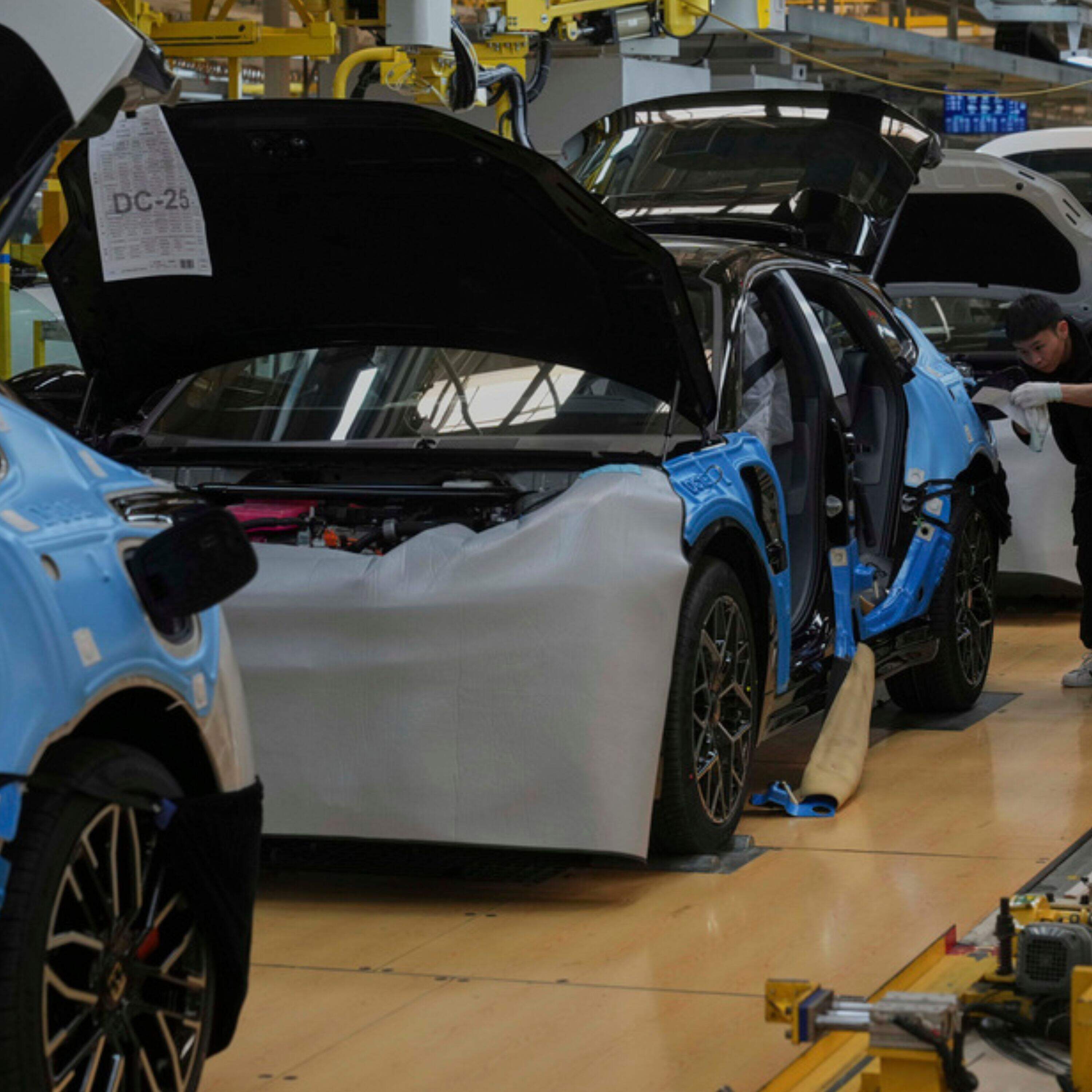
Chinese automaker BYD has begun selling electric vehicles with a second-generation “blade battery” that can charge from near-empty to 70% in five minutes and to 97% in under nine minutes, according to tests by reviewer Zitong Zhang. The charging speed rivals the time it takes to refuel a gasoline car. The battery uses lithium iron phosphate chemistry, which BYD claims is safer and less prone to fires. The technology is already available in China, where a network of high-power chargers supports it, but US tariffs and regulatory barriers mean American consumers are unlikely to see these vehicles soon. The rapid charging capability addresses one of the main obstacles to EV adoption: long charging times. Analysts say China’s lead in EV battery tech is widening as US and European automakers struggle to match the pace of innovation.
BYD is the world’s largest EV maker, surpassing Tesla in global sales. Its blade battery uses a cell-to-pack design that improves energy density and safety. The US has imposed 100% tariffs on Chinese EVs, effectively blocking them from the market.
Stuart Bell, a candidate for the presidency of the University of Florida, compared colleges’ diversity efforts to “segregation” during his campaign, according to the Chronicle of Higher Education. Bell, who previously served as president of the University of Alabama, had implemented aggressive initiatives to attract Black students there, which drew criticism from conservatives. Now, in seeking the UF post, he appears to be distancing himself from those policies, framing diversity programs as divisive. The controversy highlights the political pressures facing public university leaders in Florida, where Governor Ron DeSantis has signed laws restricting DEI spending and altering tenure protections. The UF presidency is one of the most high-profile jobs in higher education, and the selection process has become a flashpoint in the broader debate over campus diversity.
Florida has been at the center of conservative efforts to reshape higher education, including banning DEI offices and limiting what can be taught about race. The University of Florida is the state’s flagship institution. Bell’s tenure at Alabama was marked by both enrollment growth and controversy over his handling of diversity.
Microsoft is threatening criminal legal action against a security researcher known as Nightmare Eclipse, who has been publicly posting proof-of-concept code for zero-day vulnerabilities in Microsoft products. The company disabled the researcher’s GitHub, GitLab, and Microsoft Security Response Center accounts, and suggested it would pursue charges for failing to follow “proper coordination” in disclosing flaws. Security researcher Kevin Beaumont criticized the move, noting that Microsoft has previously hired individuals who publicly disclosed exploits, some with criminal hacking convictions, and has purchased exploits from brokers. Beaumont argued that trying to criminalize disclosure outside arbitrary frameworks would be difficult to defend in court given Microsoft’s own history. The feud highlights ongoing tensions between tech companies and independent researchers over vulnerability disclosure norms.
Responsible disclosure typically involves privately reporting vulnerabilities to the vendor before public release, but there is no legal requirement. Microsoft runs a bug bounty program. The company has faced criticism for slow patching and for using legal threats to silence researchers.
Sen. Chris Murphy (D-Conn.) argues in his new book that private equity’s involvement in youth sports, such as his son’s hockey league owned by Black Bear Sports Group, is ruining the character-building nature of these activities. Matt Welch at Reason pushes back, noting that Black Bear operates only about 50 of 2,100 US ice rinks, and that hockey has always been expensive. Welch questions whether private equity is truly to blame for the hyper-competitive, travel-intensive culture, pointing out that such trends predate corporate ownership. He suggests Murphy’s critique romanticizes a past that wasn’t necessarily better and overlooks the role of parental demand in driving the system. The piece argues that the “grotesque” profits Murphy decries are unquantified and that the real issue is broader cultural shifts, not financial engineering.
Private equity firms have invested in youth sports, dental practices, and other fragmented industries, often consolidating them. Critics argue this leads to higher prices and worse experiences. The debate mirrors concerns about private equity in healthcare and housing.