The US military struck a site in Bandar Abbas, Iran, on Wednesday, saying it was about to launch a fifth attack drone. US Central Command described the strike as 'measured, purely defensive, and intended to maintain the ceasefire' that has paused the three-month war. Iran's Revolutionary Guard said it retaliated by targeting a US air base, without specifying where. Kuwait, which hosts a US base, reported its air defenses intercepting 'hostile missile and drone threats.' The exchange threatens the fragile truce and ongoing negotiations. President Trump told his cabinet that Iran is 'negotiating on fumes' and warned he may resume large-scale bombing if no deal is reached. The conflict has choked the Strait of Hormuz, stranding thousands of tankers and driving up global energy prices.
The US and Israel launched a military campaign against Iran on February 28, 2026, targeting nuclear and military sites. A ceasefire was brokered weeks later, but sporadic strikes have continued. The Strait of Hormuz, through which one-fifth of global oil and LNG passes, remains a flashpoint.
FBI agents arrested a CIA official this week and seized roughly $40 million in gold bars from his Virginia home, according to court documents. Prosecutors allege the officer sold classified information to a foreign intelligence service over several years and was paid in gold to avoid financial tracing. Investigators found gold bars hidden in the walls and floor of the residence. The Justice Department has charged the official with espionage and conspiracy. The FBI had been monitoring him for months after detecting unusual patterns in his access to sensitive files. The foreign service is believed to be China's Ministry of State Security, though officials have not confirmed. The arrest marks one of the most damaging espionage cases inside the CIA in decades, coming amid heightened concerns about insider threats within the US intelligence community.
The CIA has suffered several high-profile espionage cases in recent years, including the 2021 conviction of a former officer who spied for China. The use of gold bars as payment is a known tactic to evade bank reporting requirements.
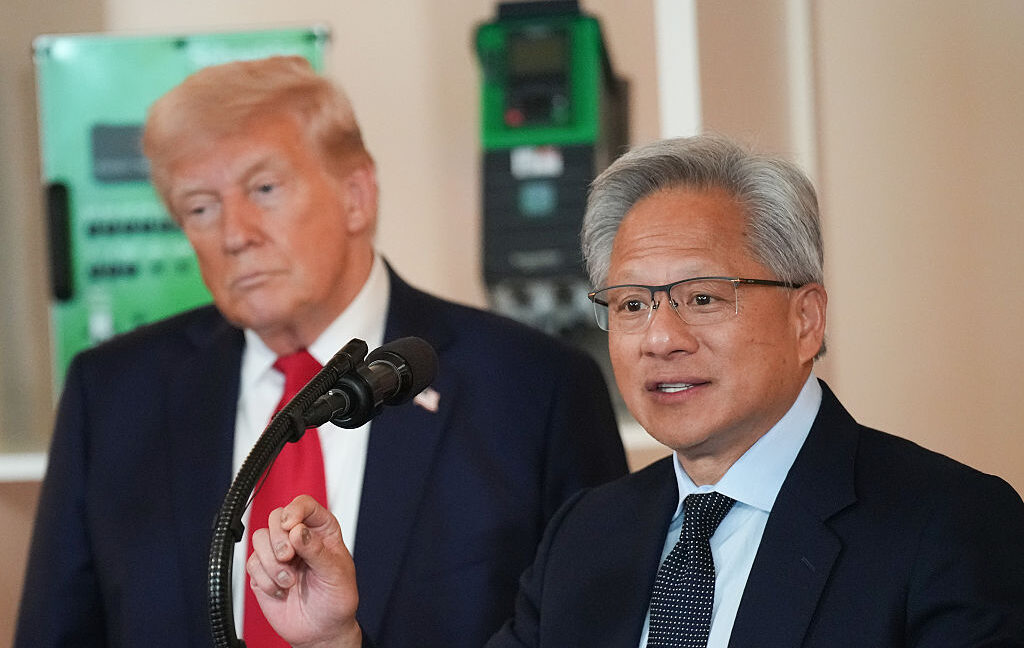
Nvidia CEO Jensen Huang announced Wednesday that the company will invest $150 billion a year in Taiwan, cementing the island as the 'epicenter' of the AI revolution. The investment will fund a new headquarters and deepen partnerships with TSMC and other suppliers. Huang said Nvidia's annual spending in Taiwan has grown from $10-15 billion five years ago to $100 billion now, and will reach $150 billion. The move undercuts President Trump's push to make the US the world's AI manufacturing hub. Nvidia began producing chips in the US last year but still relies on Taiwan for advanced packaging. Huang acknowledged supply constraints will persist through the life of the next-generation Vera Rubin system. Tech giants plan to spend $750 billion on AI infrastructure this year, and Nvidia needs Taiwan to meet demand.
Nvidia designs the GPUs that power most AI training. Its chips are manufactured by TSMC in Taiwan, and advanced packaging—a critical step—is currently only available there. Trump's AI Action Plan has pressured companies to build more in the US.
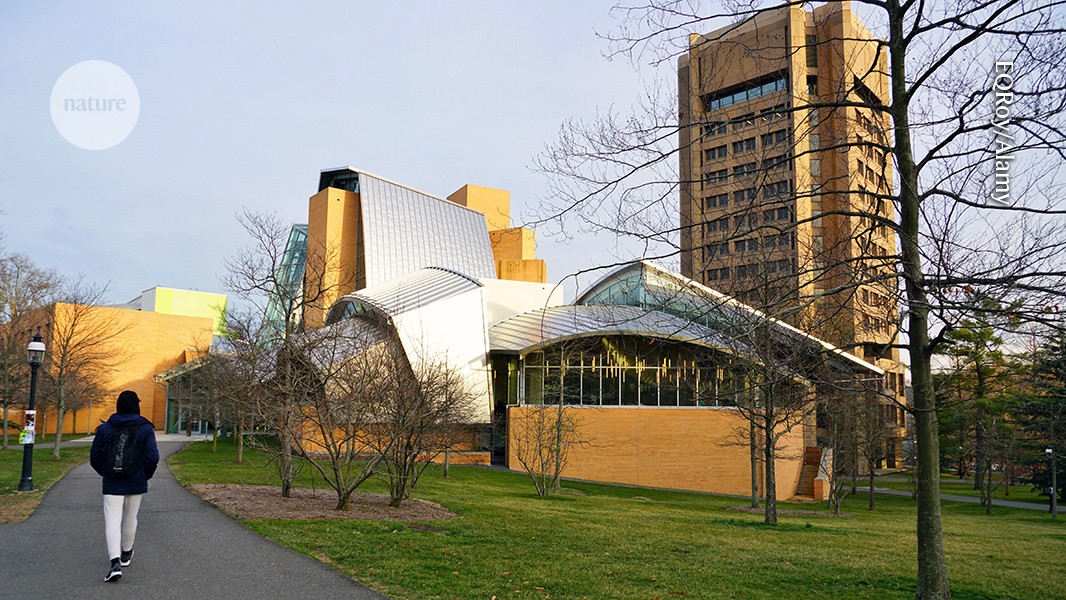
The US National Science Foundation has placed a hold on new research grants to Duke, Harvard, Princeton, and Yale, according to internal documents obtained by Nature. A note in the NSF database reads 'Future Awards to Organization on Hold.' Since April 9, the agency's Office of Award Management has stalled 33 proposals from these universities or their collaborators, with an average delay of 91 days compared to the usual 10. The reason for the restriction is unclear. Last year, the Trump administration terminated or froze funding to several universities over alleged civil rights violations. Harvard sued and won a permanent injunction barring such actions. Legal scholars say the new hold may violate that court order. The NSF has an $8.8 billion annual budget; the four universities received 218 new grants in 2024. Agency staff say this type of hold is rare and typically used only for extreme situations like a university closure.
The Trump administration previously targeted Harvard, Columbia, and others, accusing them of failing to protect Jewish students. Harvard's lawsuit led to a federal ruling that the terminations were illegal. The new hold appears to bypass that ruling by restricting new grants rather than terminating existing ones.
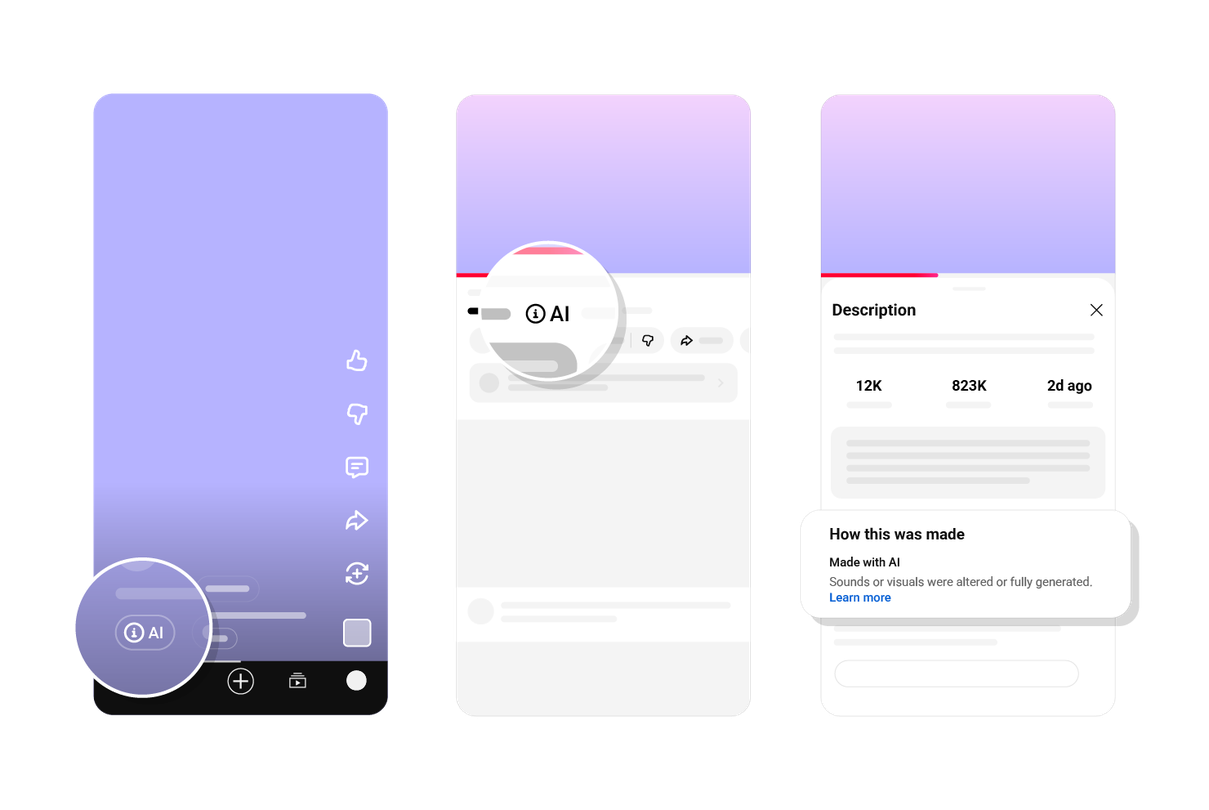
YouTube will begin automatically applying labels to videos that contain photorealistic AI-generated content, the company announced Tuesday. Previously, creators had to self-disclose AI use. Starting this month, YouTube's internal detection systems will identify such content and add a label. For long-form videos, the label appears below the player; for Shorts, it overlays the video. Creators can appeal if they believe the label was applied incorrectly, except when the content was made with YouTube's own AI tools like Veo or Dream Screen, or carries C2PA metadata indicating full AI generation. The labels do not affect recommendations or monetization. YouTube says the change balances transparency with creator control. The move comes as AI-generated media proliferates and platforms face pressure to help viewers distinguish real from synthetic content.
YouTube introduced AI disclosure requirements in 2024, but enforcement relied on creator honesty. Automatic detection uses signals like metadata and visual artifacts. Other platforms, including Meta and TikTok, have also rolled out AI labeling.
Federal prosecutors charged a Google software engineer with insider trading on the prediction market Polymarket, according to a complaint filed Wednesday in Manhattan federal court. Michele Spagnuolo, 36, allegedly used his access to confidential, nonpublic data from Google's 'Year in Search' reports to place bets on Polymarket contracts tied to the most-searched terms. The DOJ says Spagnuolo traded ahead of the public release of the annual rankings, netting over $200,000 in profits over three years. The case is the first criminal insider-trading prosecution involving a prediction market. Polymarket, which allows users to wager on event outcomes, has grown rapidly as a news and betting platform. The SEC is also investigating. Google said it is cooperating with authorities and has terminated Spagnuolo.
Polymarket is a decentralized prediction market where users buy and sell shares in event outcomes. It gained mainstream attention during the 2024 election. Insider trading laws apply to securities; prosecutors are testing whether prediction market contracts qualify.
Faculty at the University of California say the system's test-blind admissions policy has left many STEM students severely underprepared for college-level coursework. UC dropped SAT and ACT requirements in 2020 and later made the policy permanent, meaning test scores are not considered even if submitted. In a recent report, faculty committees across several campuses reported that incoming students lack basic math skills, forcing departments to expand remedial offerings and slow the pace of introductory courses. Some engineering and physical sciences programs have seen failure rates spike. Faculty are now calling for greater oversight of admissions decisions, arguing that high school GPA alone is an insufficient predictor of readiness. The UC Board of Regents has not indicated whether it will revisit the policy.
UC went test-optional in 2020 during the pandemic and became test-blind in 2021 after a legal settlement. The system serves over 290,000 students. Critics of standardized tests argue they perpetuate inequality; proponents say they provide a uniform metric that GPA cannot.
As AI agents take over more complex tasks, the one thing humans will always be better at is knowing what we want, argues Noah Smith. He predicts that the defining job of the future will be maintaining AI alignment—ensuring that autonomous systems stay on mission and don't drift from human goals. Smith draws on David Hume's dictum that reason is the slave of the passions: AI can optimize means, but humans supply the ends. He contrasts this with the popular idea that human labor will survive merely as a luxury status signal. Instead, he sees a growing demand for people who can specify objectives, monitor AI behavior, and intervene when machines go off track. The role is less like a traditional manager and more like a constant editor of machine intent.
AI alignment research focuses on ensuring AI systems pursue intended goals. As agentic AI tools like Claude Code automate coding and other cognitive work, the question of what humans will do becomes urgent. Smith's essay responds to fears of widespread job obsolescence.
Federal banking regulators are retreating from using 'reputational risk' as a pretext to pressure banks into cutting off legal but politically disfavored industries, such as firearms dealers, fossil fuel companies, and payday lenders. For years, the Office of the Comptroller of the Currency and the FDIC cited reputational risk in guidance that effectively strong-armed banks into 'de-risking' entire sectors. The new policy, outlined in a joint statement this week, clarifies that reputational risk alone is not a valid safety-and-soundness concern. The change follows lawsuits and congressional pressure arguing that the practice amounted to backdoor regulation without due process. Critics say the reversal is long overdue; supporters of the old approach warn it could enable money laundering and fraud.
Operation Choke Point, a Obama-era initiative, originally targeted fraudsters but was later used to discourage banks from serving gun shops and other legal businesses. The Trump administration has sought to roll back such policies.
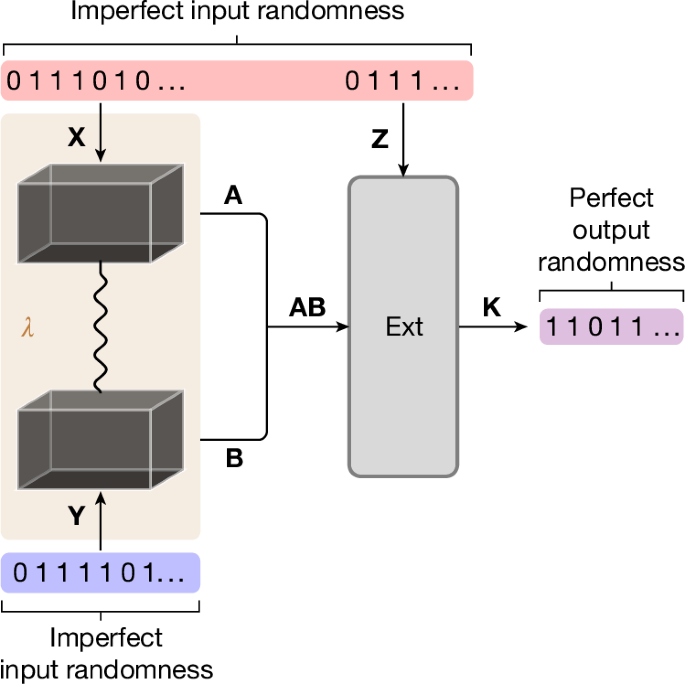
Physicists have experimentally demonstrated randomness amplification, a protocol that takes a source of weak, imperfect randomness and distills it into near-perfect random bits, using superconducting qubits. The experiment, published in Nature, is device-independent: it makes no assumptions about the inner workings of the quantum hardware. Instead, it relies on a loophole-free Bell test—a measurement that proves quantum entanglement—to certify the randomness. Randomness amplification is impossible with classical systems, so the result constitutes a definitive quantum advantage. The team generated certified random bits at a high repetition rate, overcoming the twin challenges of strong Bell violation and fast operation. The work has implications for cryptography, where truly random numbers are essential for secure keys, and for foundational questions about the nature of randomness.
Randomness amplification was proposed in 2012 by Colbeck and Renner. It addresses the problem that real-world random number generators are never perfect. By using entangled particles, the protocol can guarantee randomness even if the initial source is partially predictable or even adversarial.