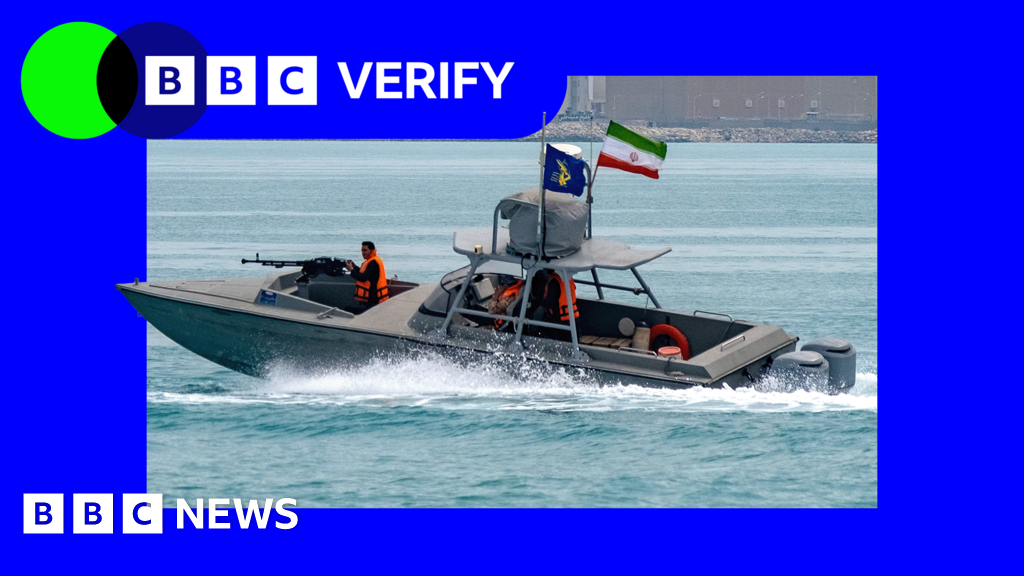
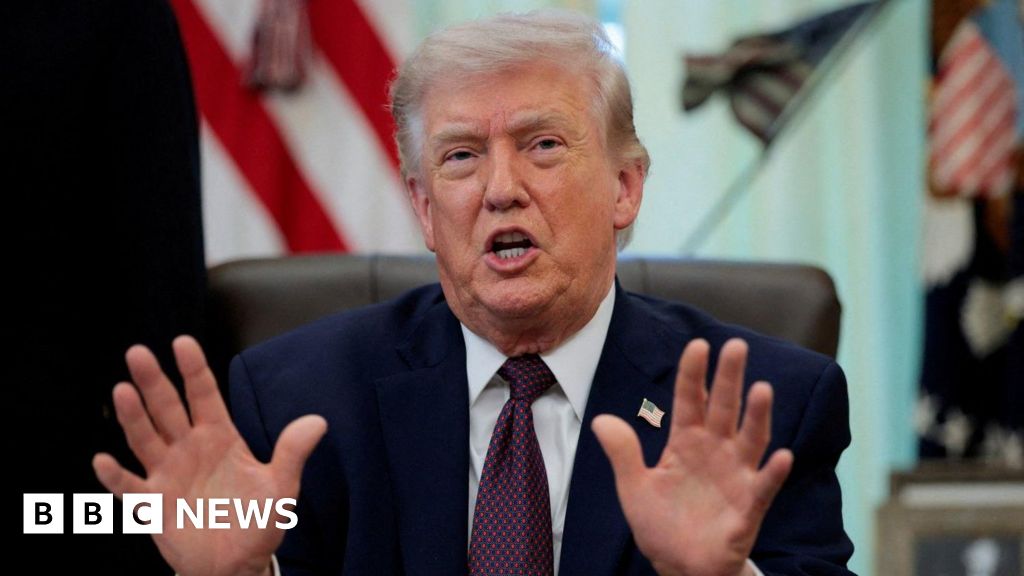
Iran’s newly created “Persian Gulf Strait Authority” published a map claiming military oversight over more than 22,000 sq km of the Strait of Hormuz, extending into the territorial waters of Oman and the UAE. The authority said all transit now requires its coordination and authorization. The UAE dismissed the claim as “nothing but fragments of dreams,” and the US has told ships not to comply. The move follows weeks of escalating US-Iran tensions: US forces boarded an Iran-bound tanker on Wednesday, and President Trump said he held off a military strike at the request of Gulf states because “serious negotiations are now taking place.” Pakistan’s military chief is visiting Tehran to mediate. Iran’s state media also reported that the foreign ministry is reviewing the latest US proposals.
The Strait of Hormuz is a narrow waterway between Iran and Oman through which about a fifth of global oil consumption passes. Iran has long threatened to close it during conflicts. The US has maintained a naval presence to ensure freedom of navigation. The current tensions escalated after the US imposed a blockade on Iranian ports in April.
President Trump said he plans to speak directly with Taiwanese leader Lai Ching-te (赖清德) about a pending $14 billion US arms sale, a move that would break with the diplomatic practice of no direct leader-to-leader contact since 1979. Trump took a similar call with then-leader Tsai Ing-wen in 2016, angering Beijing. China’s foreign ministry said it “firmly opposes official exchanges between the United States and Taiwan” and urged the US to stop sending “wrong signals to separatist forces.” Trump also revealed he discussed the arms sale “in great detail” with Xi Jinping (习近平) during his recent Beijing visit, another departure from past US assurances that it would not consult Beijing on such sales. Lai has emphasized that US arms are a “key factor in maintaining regional peace and stability.” The Pentagon’s top policy official is awaiting a decision on the sale before visiting China.
The US switched diplomatic recognition from Taipei to Beijing in 1979 but is bound by the Taiwan Relations Act to provide Taiwan with defensive weapons. China views Taiwan as its territory and has not ruled out using force. The $14 billion package reportedly includes anti-drone equipment and air-defense missile systems.
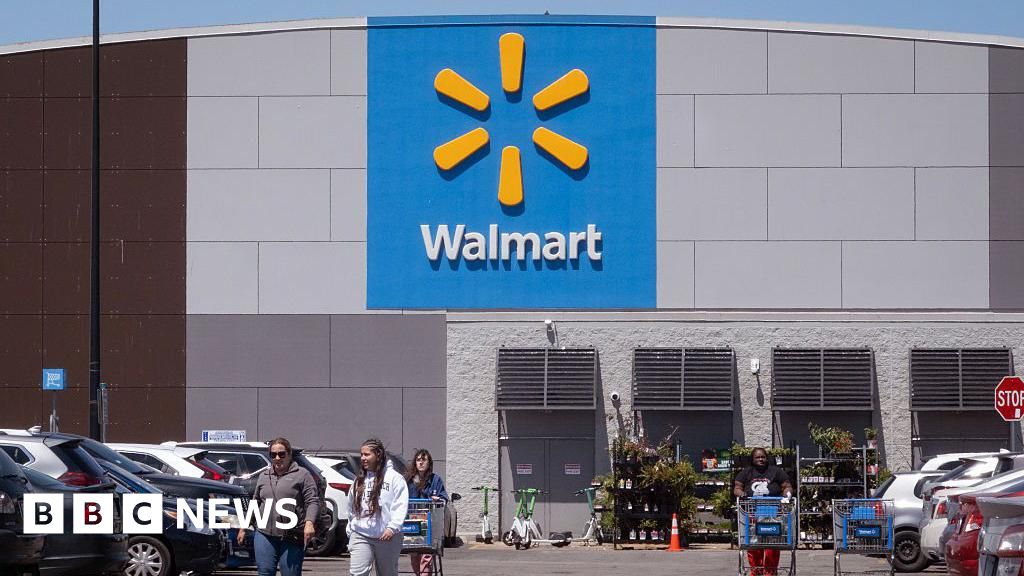
Walmart said it expects US consumers to pull back on spending in the coming months as gasoline prices, driven up by the Iran conflict, squeeze household budgets. The average price of a gallon of gas has hit $4.56, up from $3 when the war began. Walmart finance chief John David Rainey noted that higher tax refunds from President Trump’s tax cuts had temporarily offset the fuel cost pressure, but those refunds are now fading. The retailer forecast sales growth of 4–5% for the May–July quarter, down from 7.3% in the previous period, and its shares fell 7%. Rainey also warned that a prolonged closure of the Strait of Hormuz could force food price hikes because of shortages of fertilizer ingredients like nitrogen and phosphates. Walmart’s first-quarter profit rose 18.8% to $5.3 billion on revenue of $177.8 billion.
Walmart is the largest private employer in the US and a bellwether for consumer spending. The Iran war has disrupted oil shipments through the Strait of Hormuz, pushing crude prices above $100 a barrel. The One Big Beautiful Bill Act (OBBBA) passed in 2025 included tax cuts that boosted refunds earlier this year.
At multiple US graduation ceremonies this month, students booed speakers who praised artificial intelligence. At the University of Central Florida, cheers turned to jeers when an investment executive called AI “the next industrial revolution.” At the University of Arizona, former Google CEO Eric Schmidt told graduates they must adapt to an AI-powered world, drawing boos. At Glendale Community College in Arizona, an AI system meant to announce graduates’ names mixed up or skipped hundreds of them. Nearly one-third of college students report feeling nervous or anxious about AI’s impact on their careers, according to survey data. The Class of 2026 entered college in fall 2022 after pandemic-disrupted high school years, then watched generative AI tools roll out with predictions of widespread job displacement. Many campuses have since partnered with tech companies to integrate AI, deepening the sense that students are inheriting systems they did not design.
Generative AI tools like ChatGPT launched in late 2022 and have since been adopted across industries. Colleges have invested in AI partnerships, including with OpenAI and Google, to prepare students for an AI-driven workforce. Student protests at commencements reflect broader anxiety about automation and the future of entry-level white-collar jobs.
Nvidia reported first-quarter revenue of $81.6 billion, up 85% from a year earlier, and net income that more than tripled to $58.3 billion. Yet shares fell 1.6% in after-hours trading. Analysts said investors have grown accustomed to Nvidia’s stellar results and are concerned about rising competition. CEO Jensen Huang told analysts that “demand has gone parabolic” and that “the era of agentic AI is here.” The company raised its quarterly dividend from one cent to 25 cents per share and announced an $80 billion share buyback. Nvidia also said it is not counting on any data center chip sales to China this quarter, with Huang telling CNBC he has “largely conceded” that market to Huawei. The company forecast second-quarter revenue of $91 billion. Nvidia remains the world’s most valuable company at around $5.3 trillion.
Nvidia’s graphics processing units are the dominant hardware for training large AI models. The US has restricted sales of its most advanced chips to China, but the company has been allowed to sell its H200 chips under certain conditions. Chinese authorities have not yet approved those sales, pushing domestic champion Huawei as an alternative.
The US Commerce Department signed letters of intent to take equity stakes worth $2 billion in nine quantum computing companies, including $1 billion for IBM and $375 million for GlobalFoundries. The move, part of the CHIPS Research and Development program, sent shares of D-Wave Quantum up more than 20%. Among the recipients is PsiQuantum, which previously raised money from 1789 Capital, a venture firm where Donald Trump Jr. is a partner; the company will receive $100 million. Commerce Secretary Howard Lutnick said the investments would “build on our domestic industry” and create high-paying jobs. The administration has increasingly used grants in exchange for equity in strategic sectors, following a similar deal with Intel last year. Notably absent from the list was IonQ, a leading quantum company backed by Cerberus, co-founded by a Trump deputy secretary of war.
Quantum computers exploit quantum mechanics to perform calculations far faster than classical machines for certain problems, but significant engineering hurdles remain. The CHIPS Act, originally passed under Biden, allocated billions for semiconductor and advanced computing research. The Trump administration has converted some grants into equity stakes, arguing it gives taxpayers a share of future profits.
At Radnor High School in Pennsylvania, a freshman boy used an app called Movely to create AI-generated sexually explicit videos of five female classmates and shared them with friends. When the girls arrived at school the next morning, word had already spread. The school’s response, according to parents, isolated the victims further: officials offered to let them leave class early and eat lunch alone. The boy’s friends defended him. Pennsylvania criminalized malicious deepfakes in 2024, and a man was charged last year on felony counts for AI-generated child sexual abuse material. The incident has ignited a debate over whether schools are responsible for off-campus phone use under Title IX. Parents have organized with state lawmakers to push for stronger protections, arguing that the harm follows students into school every day.
Apps that create non-consensual deepfake nudes have proliferated on app stores. Federal law criminalizes AI-generated child sexual abuse material, but enforcement varies. Schools face legal questions about their obligation to address off-campus harassment that affects the school environment. Radnor is one of Pennsylvania’s top-ranked high schools.
Oregon’s Higher Education Coordinating Commission staff has recommended ending the Oregon Promise Grant, a decade-old program that covers community college tuition for recent high school graduates. The proposal would shift the program’s funding to the Oregon Opportunity Grant, a need-based aid program. Officials argue the free college program failed to boost enrollment, retention, or completion rates as intended. A 2025 evaluation found that college-going rates rose only two percentage points in the program’s first year and have since fallen below pre-program levels. However, the same report showed that without the grant, 65% of low-income recipients would be unable to afford college, compared with 52% currently. Community college leaders want to reform the program rather than scrap it. The recommendation is an early step in a long process that could lead to a bill in the 2027 legislative session.
Oregon Promise launched in 2016 as one of the first statewide free community college programs. Students must enroll within six months of high school graduation and stay continuously enrolled at least half-time. Income caps were added during the pandemic. Maine recently voted to make a less expensive version of its free college program permanent after similar sustainability concerns.
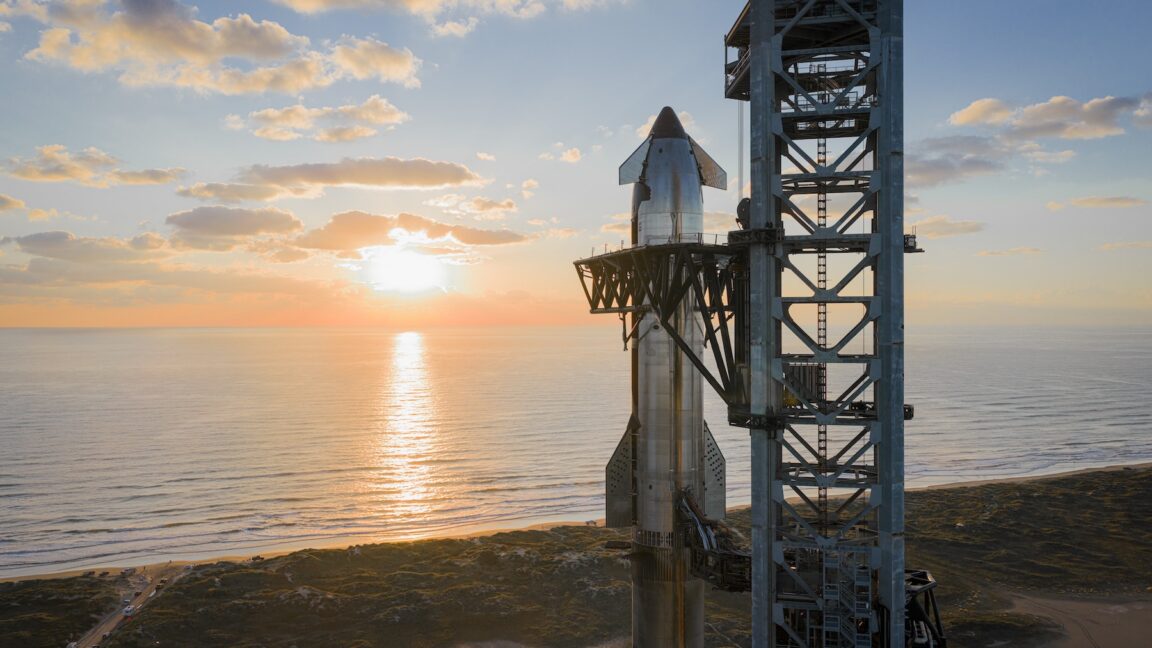
SpaceX filed its S-1 with the SEC ahead of an initial public offering as soon as June 12, revealing financial details for the first time. The company reported $18.67 billion in revenue for 2025, up from $14.02 billion in 2024, but lost $4.94 billion largely due to spending on artificial intelligence development. SpaceX projects a total addressable market of $28.5 trillion, with $26.5 trillion of that coming from AI compute. Elon Musk will retain 85.1% of combined voting power after the IPO and serve as CEO and chairman. President and COO Gwynne Shotwell received total compensation of $85.8 million in 2025. The filing also notes that Starship aims to reduce launch costs to at least $185 per kilogram to orbit. The company warned that political polarization could affect its government contracts.
SpaceX, founded in 2002, has remained private for nearly 25 years. It operates the Falcon 9 and Starship launch systems, the Starlink satellite internet network, and recently acquired Musk’s xAI. The IPO is one of the most anticipated in tech history. The S-1 filing is a required disclosure document for companies going public.
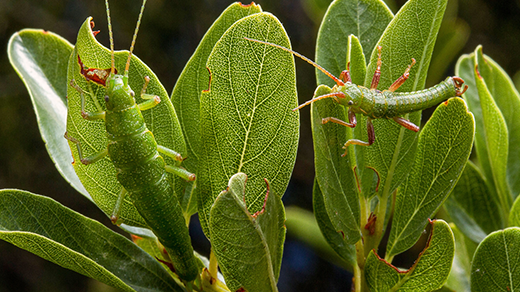
Evolutionary biologists are using whole-genome sequencing to understand how a single species can maintain distinct, locally adapted forms called ecotypes. The concept dates to 1922, when botanist Göte Turesson noticed that saltbush plants from different shorelines had heritable trait differences. Modern genomics now reveals that species like marine snails, stickleback fish, and stick insects carry DNA sequences for multiple adaptations, allowing natural selection to switch among ecotypes as environments change, sometimes within a few generations. Researchers Kerstin Johannesson and Sean Stankowski describe ecotypes as a kind of “genetic memory” that reflects a species’ history of surviving in different habitats. The findings also challenge traditional species boundaries: some groups long considered separate species, including Darwin’s finches, may actually be ecotypes of the same species.
An ecotype is a subpopulation of a species adapted to a specific local habitat, such as snails with thicker shells on sheltered shores versus thinner shells on wave-battered rocks. Unlike subspecies, ecotypes can interbreed and shift traits rapidly. The research was published in a recent review drawing on decades of field and genomic work.