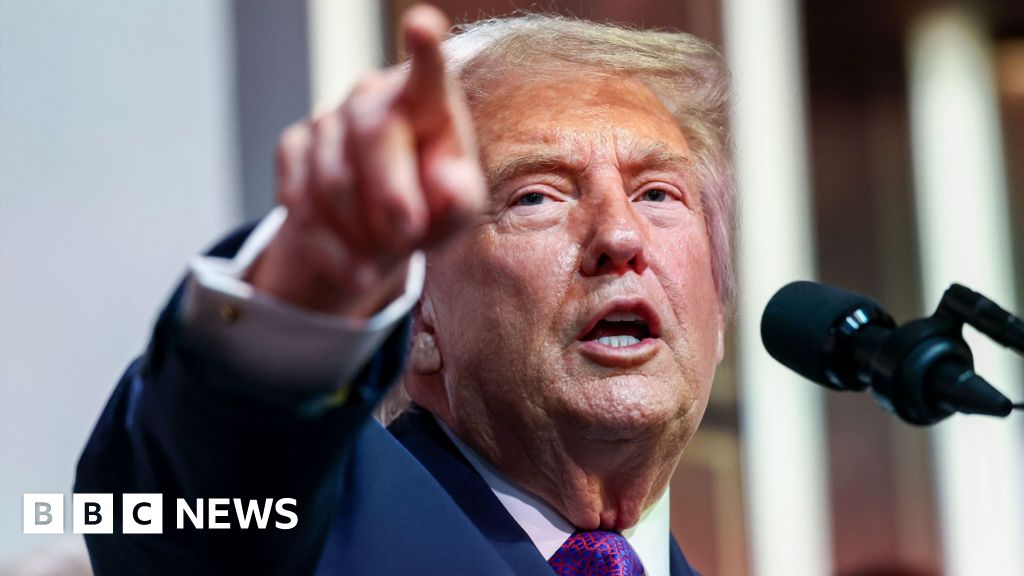
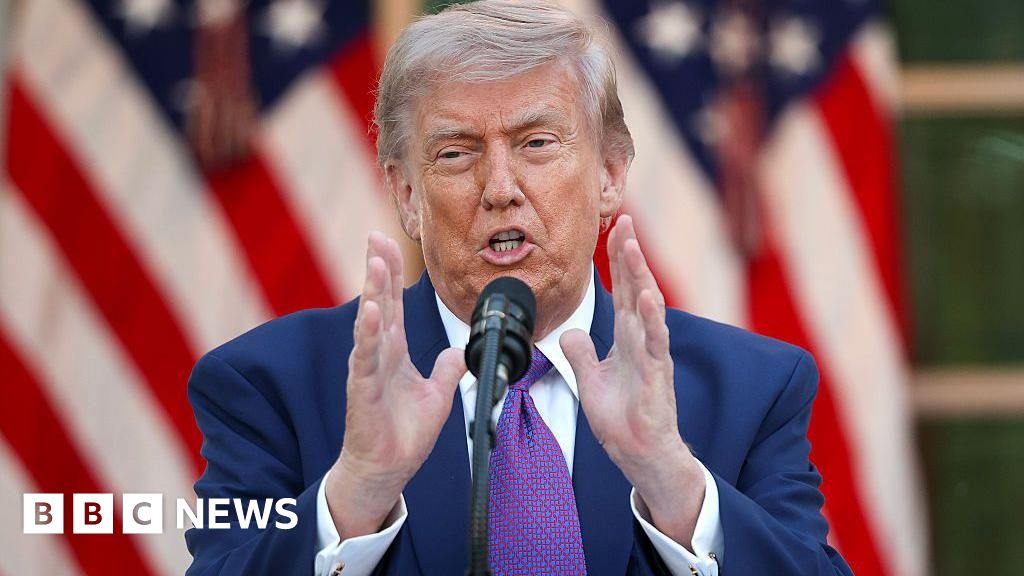
President Trump announced Monday that he had called off a planned military strike on Iran scheduled for Tuesday, at the request of Qatar, Saudi Arabia, and the UAE, who said serious negotiations were underway. Trump warned the US remained ready to launch a “full, large scale assault” if no acceptable deal emerged, but called the diplomatic opening “a very positive development.” The announcement follows a ceasefire agreed in April that has largely held, though Iran continues to control the Strait of Hormuz, choking off about 20% of global oil shipments. The war, which began with US-Israeli airstrikes on February 28, has grown increasingly unpopular: a New York Times/Siena poll released Monday found 64% of voters believe it was wrong to go to war, and Trump’s approval rating has dropped to 37%.
The US and Israel launched massive airstrikes on Iran on Feb 28 after tensions over Iran’s nuclear program; Iran retaliated with drones and missiles against Israel and US targets in the Gulf. A ceasefire in April paused major hostilities but talks have stalled.
The US Justice Department announced a $1.7 billion “Anti-Weaponization Fund” on Monday to compensate Trump allies who claim they were unfairly investigated by the Biden administration. The fund was unveiled as part of a settlement in which President Trump dropped his $10 billion lawsuit against the IRS over the leak of his tax returns. Trump, his sons, and the Trump Organization will receive an apology but no money; instead, participants in the January 6 Capitol riot who were pardoned and others alleging partisan investigations can submit claims. A five-member commission, four appointed by the attorney general, will administer the fund. Democrats immediately condemned it as a “slush fund” for Trump’s supporters, and over 90 House Democrats filed a motion to block the settlement.
Trump sued the IRS in 2020 after a contractor leaked his tax data to the New York Times, revealing he paid $750 in federal income tax in 2016. The contractor was sentenced to five years in prison. The settlement comes as Trump controls the IRS through his administration.
The US on Monday banned travel from Uganda, South Sudan, and the Democratic Republic of the Congo for 30 days as an Ebola outbreak driven by the Bundibugyo virus spreads. At least six Americans are believed exposed; one with symptoms was evacuated to Germany. The World Health Organization declared a global health emergency on Sunday. The Bundibugyo strain has a mortality rate of 25–50% and no approved vaccine or therapeutic. Acting CDC head Jay Bhattacharya said the ban aims to buy time to assess the threat, while the risk to the US public remains low. The CDC will also step up health screening and contact tracing for recent travelers. The outbreak has killed at least 100 people, with hundreds more suspected cases. The travel restrictions do not apply to US citizens or permanent residents.
Ebola Bundibugyo virus is one of several ebolaviruses; it causes hemorrhagic fever. Unlike the Zaire strain that caused the 2014-2016 West Africa epidemic, there is no vaccine. The outbreak centers on remote areas, complicating containment.
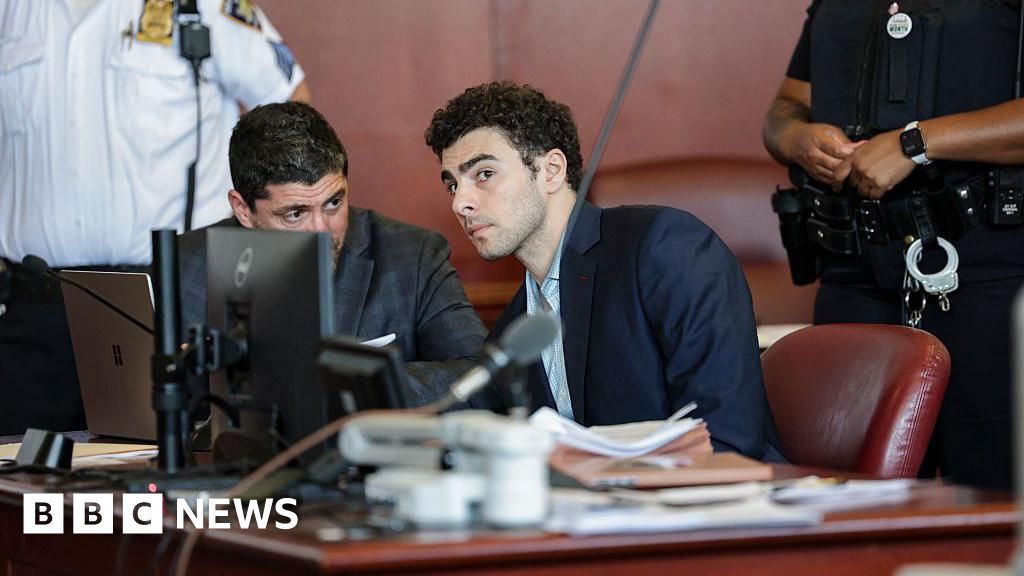
A New York judge ruled Monday that a gun and notebook found in Luigi Mangione’s backpack after his arrest can be used at his murder trial for the killing of UnitedHealthcare CEO Brian Thompson, but suppressed other evidence including a cellphone, passport, and magazine obtained during a warrantless search at a Pennsylvania McDonald’s. Judge Gregory Carro said the initial search was improper, but items discovered later at the police station, including the alleged murder weapon and writings, are admissible. Mangione, 26, has pleaded not guilty to state charges of second-degree murder and firearms offenses. His trial is expected to begin in September. The ruling is a partial win for prosecutors, who retain key evidence, while defense attorneys succeeded in excluding some statements made before Miranda warnings.
Mangione was arrested in Altoona, Pennsylvania, in December 2024 after a nationwide manhunt for Thompson’s shooter. He faces separate federal charges. The case has drawn intense public attention, with supporters attending hearings in “Free Luigi” shirts.
Kentucky congressman Thomas Massie faces a primary challenge on Tuesday from a Trump-endorsed candidate, Ed Gallrein, after repeatedly breaking with the president on spending, tariffs, and the war in Iran. Massie, a libertarian-leaning Republican, voted against Trump’s tax bill, backed rescinding Canada tariffs, and joined Democrats to force release of Jeffrey Epstein files. Trump has called him a “moron” and “loser” and campaigned against him in the district. Massie’s supporters see him as principled; critics call his defiance political vanity. With Republicans holding a razor-thin House majority, Massie’s apostasy has repeatedly stalled Trump’s agenda. A loss would make him the latest Republican to fall after crossing Trump. The primary is a test of Trump’s grip on the party; Massie’s district stretches from Louisville suburbs to Appalachia.
Massie was first elected in 2012 and has long been a fiscal hawk. Trump handpicked Gallrein, a retired Navy special forces veteran, to unseat him. The race is one of the first major intraparty battles of the 2026 midterm cycle.
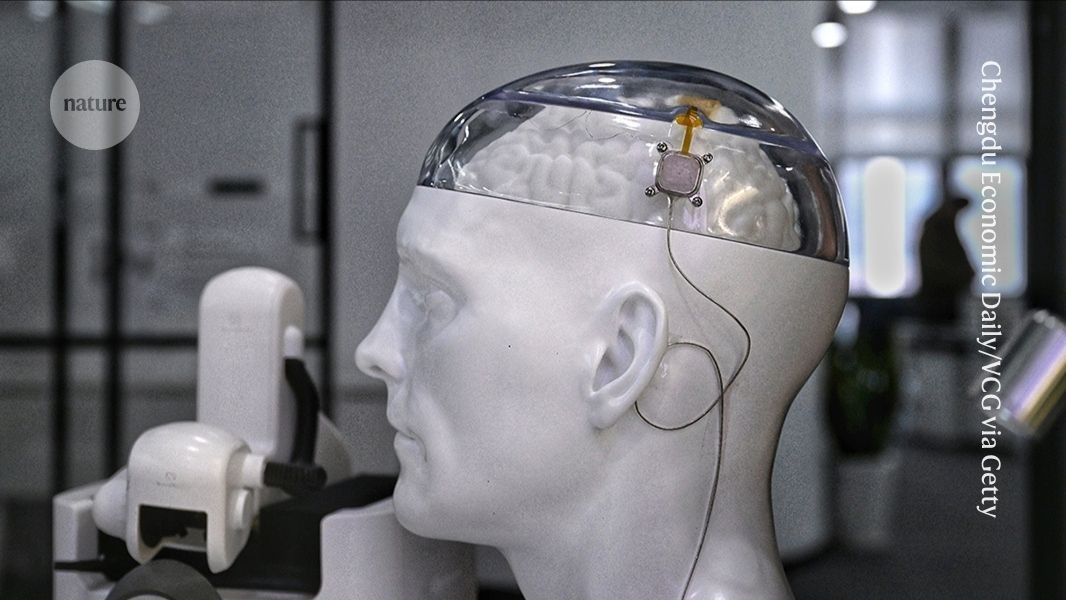
Chinese companies are racing to deploy AI-powered brain-computer interfaces (BCIs) that decode neural signals to help paralyzed people move, speak, and control devices. Shanghai-based NeuroXess has run small clinical trials: in one, a 28-year-old with a spinal cord injury used a brain implant to control appliances via a computer cursor. The company also developed a large language model that decodes Mandarin speech in real time at 300 characters per minute, faster than average spoken Mandarin. China aims to be a global BCI leader by 2030, and approved the world’s first commercial brain implant in March. Researchers note that Chinese users’ greater tolerance for data sharing creates a feedback loop that accelerates improvement, though privacy concerns persist. The government released ethical guidelines in 2024 requiring written consent and ethics review.
BCIs place sensors on or in the brain to read neural activity. Adding large language models improves decoding accuracy over traditional signal processing. The US company Neuralink is also developing BCIs, but China’s state-backed push and regulatory environment have sped deployment.
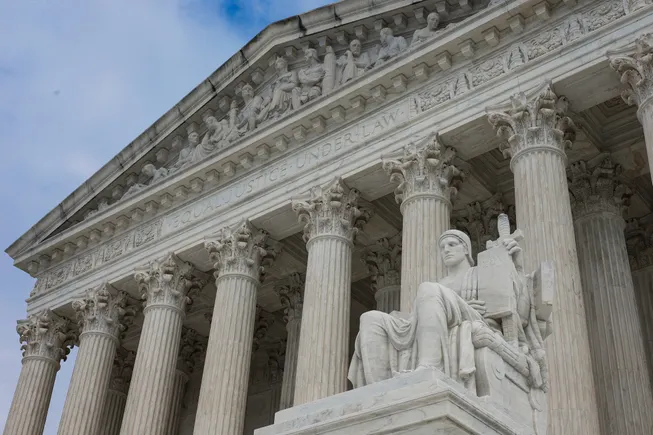
The Supreme Court agreed Monday to decide whether college employees can sue their institutions for sex discrimination under Title IX, taking up a case that could narrow the scope of the federal civil rights law. The case, Thomas Crowther v. Board of Regents of University System of Georgia, arose after the 11th Circuit ruled in 2024 that Title IX’s private right to sue does not extend to employees, diverging from at least eight other appeals courts. The plaintiffs are a Georgia Tech basketball coach and an Augusta University art professor who allege they were fired because of sex discrimination. The high court will hear the case in its October 2026 term. A 2005 Supreme Court ruling, Jackson v. Birmingham Board of Education, had allowed a high school coach to sue under Title IX, but the 11th Circuit said that precedent did not apply to college employees.
Title IX prohibits sex discrimination in federally funded education programs. While it is best known for athletics equity, it also covers employment. The case could affect how faculty and staff at thousands of colleges pursue discrimination claims.
The Education Department released final regulations Monday for the new Workforce Pell program, which will allow students to use federal Pell Grants for short-term programs as brief as eight weeks. Governors, in collaboration with state workforce boards, will determine which programs qualify based on local employer needs and whether they lead to high-paying, in-demand jobs. Programs must meet completion and job placement rate thresholds of at least 70%, and graduates’ median earnings must exceed 150% of the federal poverty line. Institutions that miss these targets lose eligibility for at least two years. The rule also caps outside providers at 25% of a program, with an exception for registered apprenticeships. The program, enacted as part of the 2025 tax and spending bill, is projected to cost $3.2 billion over a decade.
Short-term Pell has had bipartisan support for years but stalled over guardrails. The One Big Beautiful Bill Act authorized it last year. The final rule largely follows consensus reached during negotiated rulemaking.
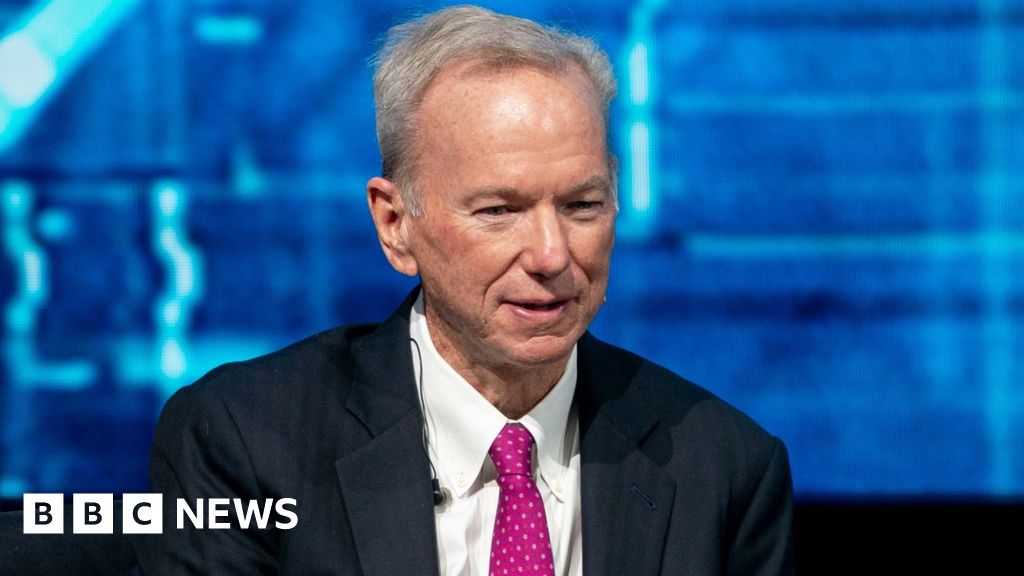
Former Google CEO Eric Schmidt was booed by graduates at the University of Arizona’s commencement on Monday when he spoke about the rise of artificial intelligence. Schmidt acknowledged the jeers, telling the crowd their fears were “rational” but urging them to adapt because “AI will shape the world.” The incident follows similar hostile receptions for speakers mentioning AI at the University of Central Florida and Middle Tennessee State University this month. A Lumina Foundation-Gallup poll found that many students are rethinking their fields of study to avoid automation, shifting toward critical thinking and human-centric disciplines. A Pew survey shows half of American adults are more concerned than excited about AI. Schmidt, who led Google from 2001 to 2011, compared today’s AI boom to the rise of computers decades ago.
Student anxiety over AI’s impact on jobs has grown as large language models automate tasks once thought safe. Graduation speakers have become a flashpoint, with some telling students to “deal with it.” Schmidt’s appearance came amid broader public skepticism of tech leaders.
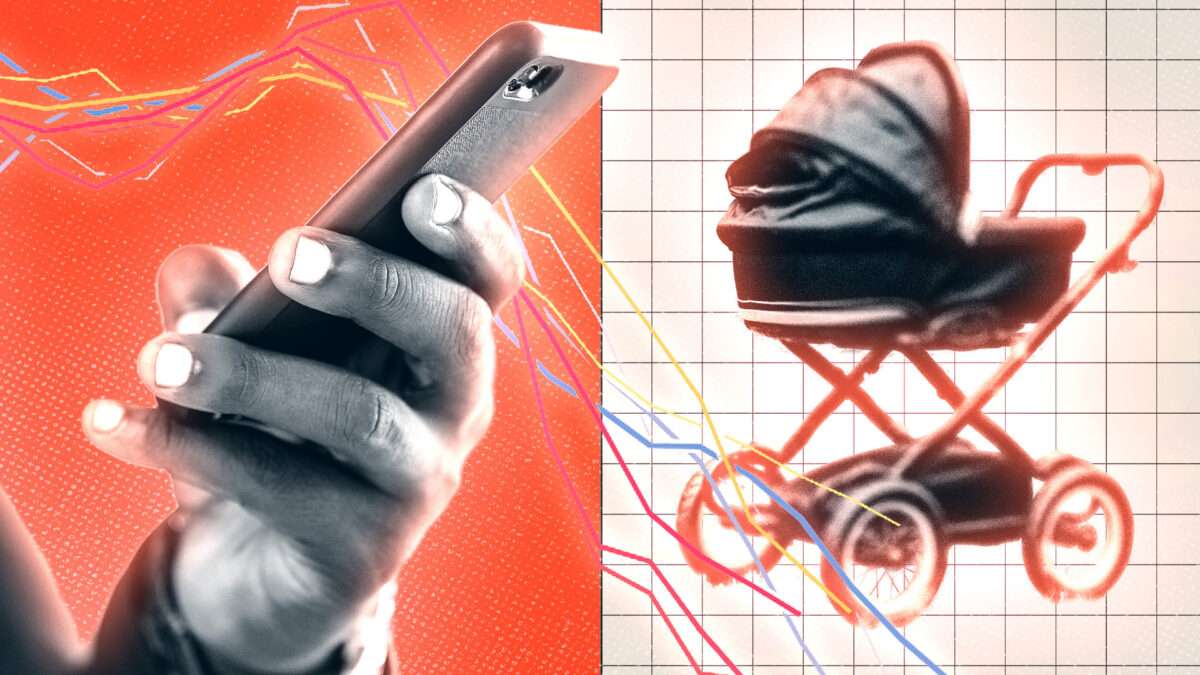
The idea that smartphones caused the global decline in birth rates ignores centuries of data, writes Elizabeth Nolan Brown in Reason. US fertility rates have been falling since 1800, when white women averaged 7 children; by 1900 the rate was 3.6, and by 1930 it had dropped below 3. The post-2007 decline that alarmists blame on the iPhone’s introduction is just the latest leg of a long trend. Brown points to more plausible drivers: falling child mortality, rising housing costs, better economic opportunities for women, increased access to contraception, and later marriage. She argues that singling out smartphones is a moral panic that cherry-picks a correlation while ignoring the larger context and other explanations. The Financial Times recently published a piece linking smartphones to falling birth rates across cultures, but Brown notes that fertility declines predate smartphones by centuries and coincide with many socioeconomic shifts.
Total fertility rate in the US fell from 7.04 in 1800 to 1.62 in 2024. The iPhone launched in 2007, after which rates continued a decline that began earlier. Demographers attribute the long-term drop to the demographic transition.