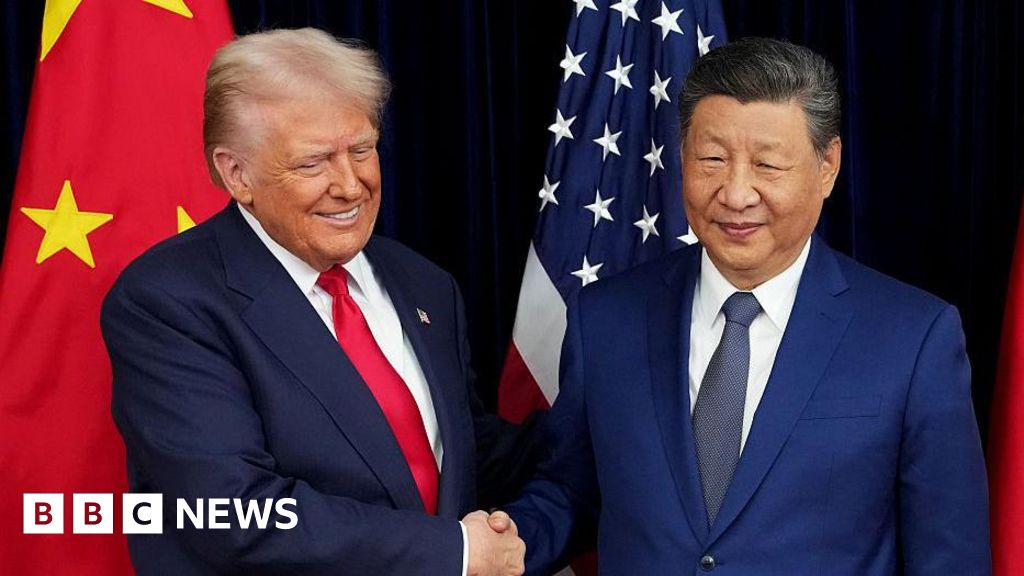
Donald Trump will travel to China this week for the first US presidential visit in nearly a decade, meeting Xi Jinping from May 13-15. The trip comes at a fragile moment in trade relations. Executives from Boeing, Citigroup, and Qualcomm are expected to join, potentially to finalize deals with Chinese firms. The visit tests a tariff truce established after Trump and Xi's October meeting in South Korea, which paused a tit-for-tat trade war that had pushed bilateral tariffs above 100%. Tensions trace back to 2018, when Trump imposed tariffs on $250 billion of Chinese imports. Biden maintained and expanded these restrictions, targeting Huawei and blocking Chinese EVs. Trump's 2025 return brought fresh levies, including 20% tariffs linked to fentanyl flows and a 34% "Liberation Day" duty. Beijing retaliated with agricultural tariffs. The standoff exposed US vulnerability to China's rare earth dominance.
The US-China trade war began in earnest in 2018 and has persisted through both Trump and Biden administrations. China maintains near-monopoly control of rare earth elements critical for electronics and defense manufacturing.
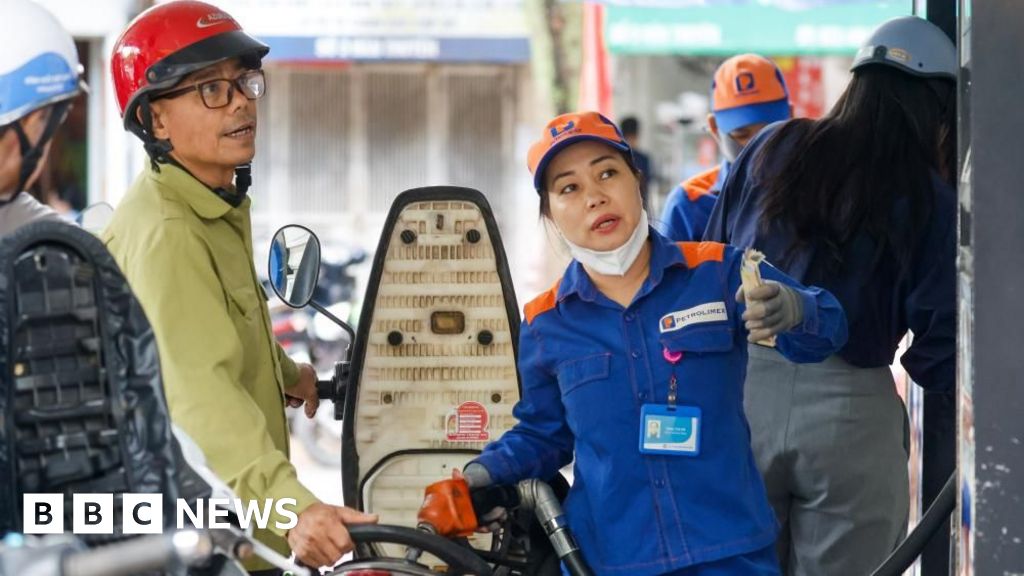
Brent crude jumped 4.1% to $105.50 per barrel and US crude rose 4.4% to $99.80 after President Trump declared Iran's response to US peace proposals "totally unacceptable." Tehran transmitted its terms through Pakistani mediators, demanding an immediate end to hostilities and guarantees against future US-Israeli strikes. The Strait of Hormuz, conduit for roughly one-fifth of global oil and gas shipments, has remained effectively closed for over two months since the war began February 28. Washington had reportedly sought restored shipping access and suspension of Iranian nuclear enrichment. Israeli Prime Minister Benjamin Netanyahu stated the conflict would not end until Iran's enriched uranium stockpiles are eliminated. Energy majors have profited substantially: Aramco reported first-quarter earnings up 25% year-over-year, while BP and Shell posted doubled or sharply increased profits, benefiting from pipeline infrastructure that bypasses the blocked strait.
The US-Israel war with Iran began February 28, 2025. The Strait of Hormuz closure represents what the International Energy Agency calls the largest supply disruption in history. A ceasefire announced April 8 has been mostly observed despite occasional exchanges.
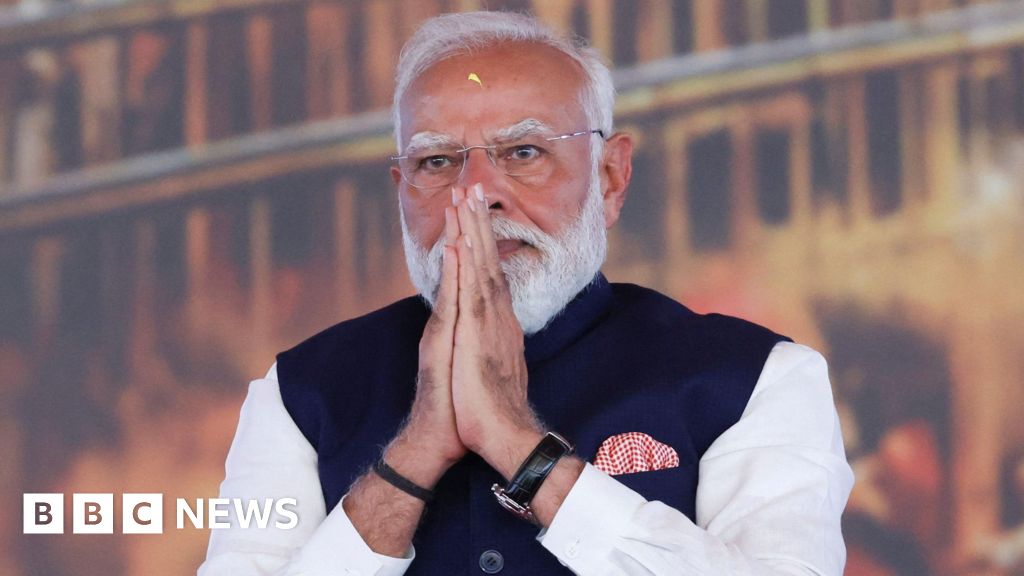
Indian Prime Minister Narendra Modi appealed to citizens on Sunday to work from home, limit foreign travel, reduce gold purchases, and carpool to conserve fuel as the Iran war drives up global energy prices. Speaking in Hyderabad, Modi framed these measures as patriotic duty during economic stress. India imports 90% of its oil and has seen its crude bill spike by billions of dollars since the Strait of Hormuz closed two and a half months ago. The remarks triggered a 1,000-point drop in the Sensex index Monday amid fears of prolonged disruption. Modi also asked farmers to halve fertilizer use. The government has so far avoided raising retail fuel prices, but analysts expect directives on energy conservation and possible price revisions. Opposition leader Rahul Gandhi criticized the speech as evidence of government failure, saying Modi was "shifting responsibility onto the people." The rupee has hit record lows, pressuring inflation and import costs across the economy.
India's high-growth economy depends heavily on Middle East oil. The Iran war has already endangered hundreds of thousands of jobs in glass, plastic, and tile manufacturing, with fertilizer shortages threatening agricultural output.
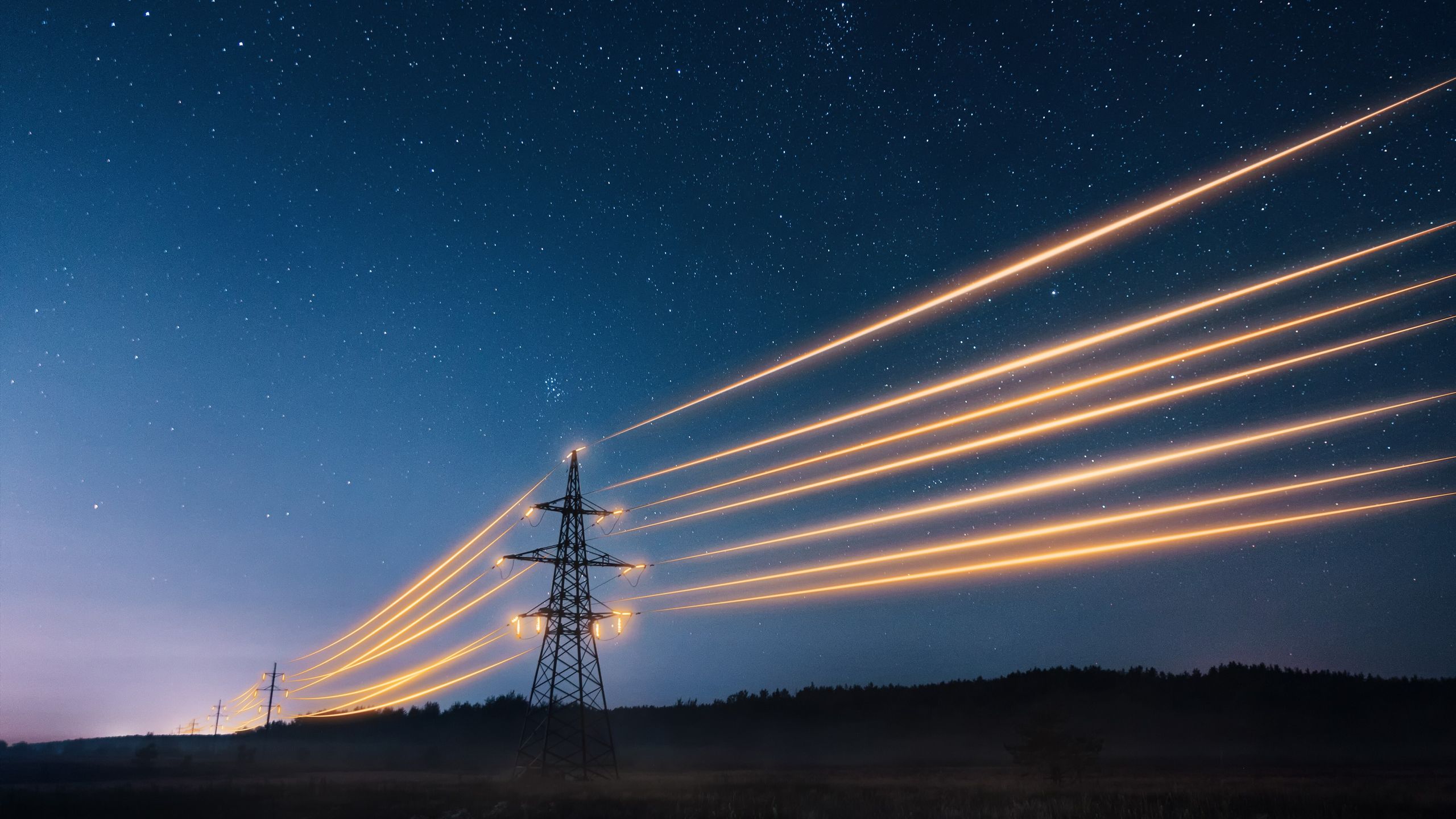
Maryland's Office of People's Counsel has filed a federal complaint against PJM Interconnection, the largest US electricity transmission company, challenging a $2 billion allocation of a $22 billion grid upgrade bill. The state argues Maryland customers are subsidizing infrastructure primarily benefiting data center construction in Virginia, Ohio, Pennsylvania, and Illinois, where load growth far exceeds Maryland's modest projections. The charge would cost residential customers approximately $345 each over ten years, with commercial and industrial ratepayers facing substantially higher per-customer impacts. The complaint notes that PJM's methodology violates the "ratepayer protection pledge" that tech companies made to President Trump, under which data centers should bear their own infrastructure costs rather than shifting them to existing utility customers. The filing highlights broader tensions around AI-driven power demand, with 69 jurisdictions having imposed moratoriums on data center projects amid community pushback.
PJM Interconnection serves 13 states plus Washington DC, covering 65 million people. Data centers are extraordinarily power-intensive, and their projected growth has strained regional grid planning across the US.
A women's and gender studies instructor argues the discipline has narrowed into ideological conformity, losing the intellectual pluralism that once characterized feminist inquiry. The essay traces how programs born from 1960s second-wave activism evolved to center queer theory and social construction frameworks, now dominant enough to crowd out alternative perspectives. The writer assigns a novel featuring traditionalist feminists who help a member find a husband, deliberately provoking student discomfort to open discussion. The piece contends that meaningful gender studies should accommodate genuine disagreement about marriage, autonomy, and interdependence, rather than treating such debates as settled. Current departmental offerings at institutions like Yale illustrate the narrowing: courses cluster around identity categories and theoretical frameworks with little space for dissenting views on sex, gender, or family structure. The writer suggests the field needs feminism capable of internal disagreement, not merely celebration of predetermined conclusions.
Women's studies programs emerged in the 1960s-70s and expanded to gender and sexuality studies in subsequent decades. Conservative critics have long disputed the field's theoretical frameworks, particularly social constructionist accounts of gender.
On August 10, 2025, a 63.5 million cubic meter rock wedge collapsed into Alaska's Tracy Arm fjord, generating a tsunami that surged 481 meters up the opposite shoreline, the second-highest ever documented. The collapse occurred at 5:26 a.m., sparing lives only because the area was unoccupied at that hour. Researchers from the University of Calgary traced the event to climate-driven retreat of the South Sawyer Glacier, which had thinned 100-130 meters between 2013 and 2022. Industrial-era warming raised regional summer temperatures 1.1°C since 1875, exposing the slope's base by July 2025. Seismic records revealed precursor signals: repeating micro-earthquakes began August 5, accelerating to 30-60 second intervals in the final hours. The 1958 Lituya Bay tsunami, at 530 meters, remains the record. Landslide tsunamis, though geographically confined, produce far higher runups than earthquake-generated waves. Scientists warn that glacial retreat worldwide is destabilizing similar slopes.
The Tracy Arm fjord lies in the Stikine Icefield, where widespread glacial retreat has been documented. Landslide tsunamis have produced 27 documented runups exceeding 50 meters since 1925.
A framework for evaluating religious AI proposes a bright line: chatbots may assist research, but any function approximating spiritual formation, including offering prayer, crosses into territory that should remain human. The writer tested a "Christian AI" product by requesting prayer for worry; the system generated a theologically unobjectionable text invoking Jesus and biblical language. The problem, the essay argues, lies not in heretical content but in the substitution of algorithmic output for interpersonal spiritual care. Prayer, in Christian understanding, involves communion between persons and between believer and divine; a language model, however sophisticated, performs this relationship without participating in it. The piece distinguishes information retrieval, where AI may legitimately help, from practices requiring presence, relationship, and embodied community. The proliferation of faith-branded chatbots risks normalizing technological mediation of experiences that theological traditions have treated as necessarily personal.
Generative AI has spawned numerous faith-targeted products promising biblical and theological reliability. The essay extends principles applicable across religious traditions, not solely Christianity.
Mohammed Asasa had just buried his 80-year-old father Hussein in the West Bank village of Asasa, near Jenin, when armed Jewish settlers from the recently reestablished Sa-Nur settlement began digging up the grave. Mobile phone footage shows settlers with automatic rifles threatening the family: either they exhume the body or the settlers would. The family, having secured Israeli military permission for the funeral, watched soldiers stand by as they were forced to dig up the shrouded remains and carry them to safety. The settlers claimed the burial site was too close to their settlement, established on a hill above the cemetery after the Netanyahu government authorized its re-occupation. The UN human rights office condemned the incident as "appalling and emblematic of the dehumanisation of Palestinians." The IDF stated it "condemns any attempt to act in a manner that harms public order, the rule of law, and the dignity of the living and the deceased."
Sa-Nur was re-established as part of the Netanyahu government's expansion of West Bank settlements. The area has been designated a closed military zone, restricting Palestinian access to agricultural land and the cemetery.
Substack is losing prominent writers to competitors Ghost and Beehiiv as creators balk at the platform's 10% revenue cut and strategic shift toward social features. The Ankler, a major entertainment industry publication, departed last month for Passport, a WordPress-based platform offering greater control. NBA writer Sean Highkin reports 22% subscriber growth and significantly higher net income since switching to Ghost, with annual costs dropping from $4,968 to $2,052. Extra Points creator Matt Brown pays Beehiiv roughly $3,000 annually versus the $25,000 Substack would charge at his 71,000-subscriber scale. The migration follows a 2024 talent drain linked to Substack's platforming of extremist content, but current departures center on economics and product direction. Critics describe the platform as "enshittified," citing degraded user experience and extractive fee structures that become punitive as publications scale.
Substack launched in 2017 with a simple newsletter and subscription management model. Its 10% fee structure, standard for payment processing platforms, becomes substantial at scale compared to competitors charging flat rates.
Developers should build AI features that run on-device rather than defaulting to cloud API calls, argues a software engineer who implemented on-device summarization for a news reader app. The cloud dependency pattern creates fragile, privacy-invasive software that stops working when servers fail, accounts lapse, or networks degrade. Streaming user content to third-party AI providers introduces data retention, consent, audit, and government request complications. Local processing with device neural engines, increasingly capable on modern smartphones, avoids these distributed systems problems entirely. The writer's Brutalist Report iOS app generates article summaries using Apple's local model APIs, with no server roundtrips, prompt logs, or vendor accounts. This approach suits transformation of user-owned data, not search or world-knowledge tasks. Features like email summarization, action item extraction, and document categorization, which users want but often distrust cloud providers to handle, become straightforward and trustworthy when processed locally.
Apple has invested substantially in on-device AI tooling for developers. The Neural Engine in modern iPhones and Macs enables local inference for many common tasks without cloud dependency.