Computer scientist Rahul Ilango, as a graduate student, connected two long-separated flavors of mathematical unknowability: Gödel's incompleteness theorems and zero-knowledge proofs. His new cryptographic protocol uses the fundamental limits of mathematics itself—specifically, the impossibility of proving certain axioms consistent—to construct zero-knowledge proofs that bypass limitations researchers considered insurmountable. Traditional zero-knowledge proofs rely on computational hardness assumptions; Ilango's approach draws secrecy from logical undecidability. The work has prompted cryptographers to explore deeper links between mathematical logic and cryptography. UCLA cryptographer Amit Sahai called the direction "incredibly cool" upon first seeing the paper.
Zero-knowledge proofs, invented in 1985 by Goldwasser, Micali, and Rackoff, allow proving a statement true without revealing why. Gödel's 1931 incompleteness theorems showed any consistent formal system cannot prove its own consistency.
Manhattan trial court Justice Gerald Lebovits rejected a motion to compel use of preferred pronouns and award damages for misgendering in Garlington v. Austin. The defendant, who uses they/them pronouns, had sought court-ordered compliance and damages for each instance of deliberate misgendering, arguing it constituted aggravated harassment under New York Penal Law §240.31 and civil rights violations. The plaintiff's counsel responded that such an order would violate the First Amendment. Lebovits ruled that New York recognizes no tort of misgendering and found no showing of legally cognizable injury. The decision adds to sparse state-level case law on compelled speech and pronoun usage in legal proceedings.
The case involves a broader dispute where defendant Burstiner sought damages and injunctive relief for alleged misgendering by plaintiff's counsel. The ruling addresses whether courts can mandate pronoun usage and treat misgendering as legally actionable harm.
Gloria Caulfield, vice president at Tavistock Group, faced sustained booing from thousands of University of Central Florida humanities and communication graduates on May 8 when she described AI as "the next industrial revolution." The crowd interrupted her speech with murmurs, then open jeers; someone shouted "AI SUCKS!" Caulfield paused, asked to finish, and continued. The incident captures mounting skepticism among humanities students toward AI framing that emphasizes inevitability over critical examination. UCF's College of Arts and Humanities and Nicholson School of Communication and Media graduated approximately 2,000 students at the ceremony.
The confrontation reflects broader campus tensions over AI's role in creative and humanistic fields. Humanities enrollments have declined nationally, and students in these disciplines often resist narratives that frame AI as displacing rather than augmenting their fields.
The Supreme Court unanimously ruled March 25 that Cox Communications bears no contributory copyright liability for customers using its broadband to pirate content, overturning a 2019 $1 billion jury verdict. The decision requires proof of culpable intent and tailored service design for infringement—standards Cox did not meet. Sony, Warner, and Universal had pursued similar claims against Verizon and Altice, which they dropped post-ruling. Google, Meta, X, Nvidia, and smaller defendants like Yout now cite Cox against contributory infringement claims. The ruling's broad technological neutrality suggests protection extends beyond ISPs to any platform providing dual-use technology.
The Digital Millennium Copyright Act shields platforms from liability for user conduct absent specific inducement. The Cox decision narrows contributory infringement doctrine, making it harder to hold infrastructure providers responsible for end-user piracy.
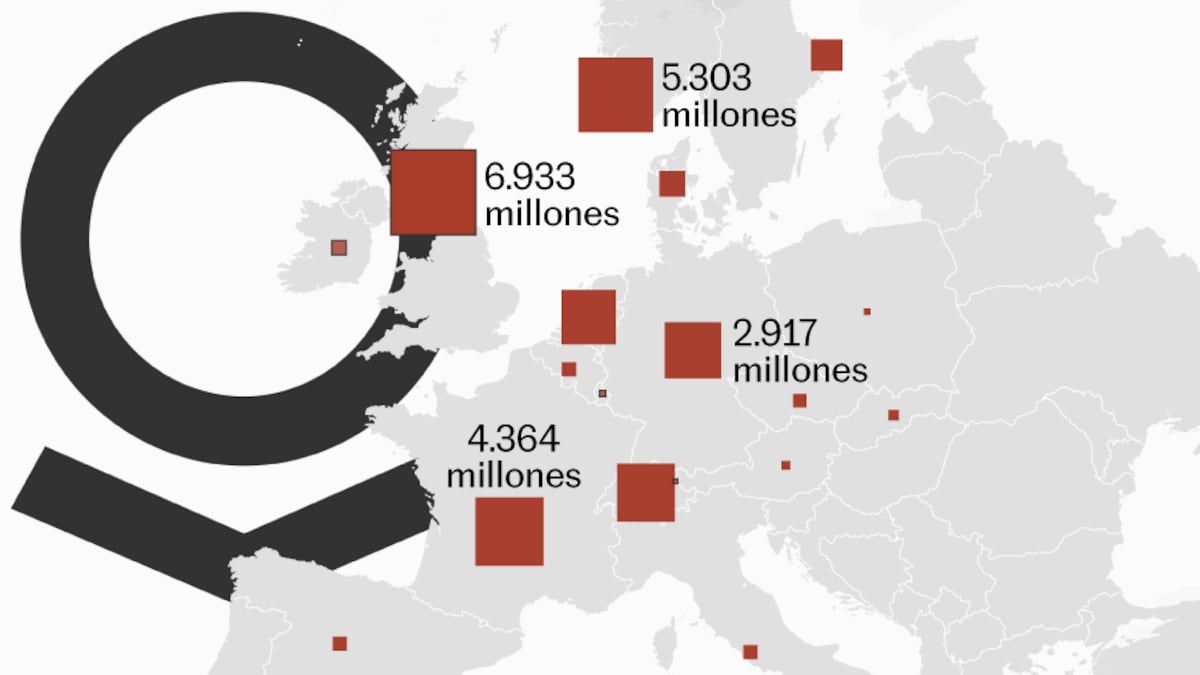
Over 100 major European banks, asset managers, insurers, and pension funds increased their combined Palantir stake by more than 60% in 2024-2025, with total holdings reaching $27 billion by year-end 2025. Norges Bank leads with $5.1 billion, followed by Amundi ($3 billion) and Legal & General ($2.5 billion). The surge came despite Palantir's contracts with ICE and the Israeli military, its MSCI civil liberties score of 2/10, and founder Peter Thiel's anti-democratic positioning. Much investment flows through index-tracking funds that automatically hold S&P 500 components. Spanish banks Santander ($18 million, 16× increase) and BBVA ($103 million) also expanded positions.
Palantir provides data analytics to government agencies including immigration enforcement and military operations. MSCI and Amnesty International have flagged human rights concerns. European investors cite OECD guidelines requiring due diligence, but index fund mechanics often override exclusion policies.
Astronomers have identified L 98-59 d as potentially the first member of a new exoplanet class: a molten, sulfur-rich world with a magma ocean surface and hydrogen sulfide atmosphere. Discovered in 2019 by TESS and characterized with Hubble and JWST data, the 1.6-Earth-radius planet defies existing categories—neither rocky with thick hydrogen envelope nor ocean world. Its 1,500°C surface and five-billion-year persistence of volcanic gases suggest formation from a volatile-rich protoplanetary disk. Cambridge postdoc Harrison Nicholls led the Nature Astronomy study; researchers expect upcoming telescopes to find similar worlds, potentially establishing a distinct population of sulfurous terrestrial planets.
Over 6,000 exoplanets are confirmed, but atmospheric characterization remains difficult. Most small planets fit into rocky, Neptune-like, or sub-Neptune categories. L 98-59 d's unusual density and sulfur chemistry challenge classification schemes.
A Senate housing bill passed in March combines supply-increasing reforms with a provision capping single-family rental ownership at 350 homes per investor and mandating sale of build-to-rent properties within seven years. The restriction, backed by Elizabeth Warren and Donald Trump, responds to polling showing 73% voter support for limiting corporate home purchases. Yet large investors own only 0.7% of US single-family homes and have been net sellers recently. The build-to-rent sector, comprising 3-10% of new construction with 160,000 units in development, would likely shrink under the cap—reducing rather than expanding housing availability. The bill's regulatory relief measures are undermined by this populist provision.
Build-to-rent communities serve renters who cannot or prefer not to obtain mortgages. The Senate bill's tension illustrates a broader policy conflict: easing construction restrictions versus restricting investor participation in housing markets.
Narges Mohammadi, 2023 Nobel Peace Prize laureate and Iranian human rights activist, was transferred from Zanjan prison to Tehran Pars Hospital on May 10 after authorities granted sentence suspension on heavy bail. Her family had warned she could die in prison following two suspected heart attacks and 20kg weight loss; she has difficulty speaking and is barely recognizable. Mohammadi, 54, serves as vice-president of the Defenders of Human Rights Center and has spent over a decade imprisoned on charges including "propaganda against the state." She received an additional 7.5-year sentence in February 2025. Her husband and foundation demand permanent release, noting 18 years remain on her sentence and her health requires specialized care.
Mohammadi was arrested in December 2024 for remarks at a memorial ceremony. Iran's 2022 protests triggered mass arrests; she has become an international symbol of resistance to the clerical establishment's gender policies.
Elsevier joined a class-action lawsuit against Meta on May 5, becoming the first major scientific publisher to allege copyright infringement in AI training. The suit, filed in the Southern District of New York with Hachette, Macmillan, and author Scott Turow, claims Meta used Common Crawl and torrented materials from LibGen and Sci-Hub to train its Llama models—including paywalled papers and abstracts. Internal Meta emails from a separate case (Kadrey v. Meta) support the allegations. Meta will argue fair use. The case tests whether academic publishers can establish control over research content in AI training, with implications for open-access mandates and publisher business models.
Publishers and authors have filed multiple suits against AI firms; no clear precedent exists on training data fair use. Academic papers, both paywalled and open-access, are assumed to comprise significant portions of LLM training corpora.
Nearly 150 passengers and crew from the cruise ship MV Hondius disembarked at the Canary Islands following an Andes hantavirus outbreak that has killed three and infected at least six. Quarantine protocols vary sharply by country: Spain mandates one week in military hospital, the US offers 42 days at University of Nebraska Medical Center or home, and the UK requires 72 hours hospital monitoring followed by 45 days home isolation. The divergence reflects limited understanding of human-to-human transmission efficiency for this hantavirus species, which spreads through rodent excretia but can pass between people via prolonged close contact. One French national developed symptoms during evacuation; a US passenger tested positive en route.
Andes hantavirus, endemic in Argentina where the outbreak originated, has a 9-40 day incubation period. Human transmission typically requires close contact during early symptomatic phases; sexual partners and bed-sharing carry highest risk.