Google released Multi-Token Prediction drafters for its Gemma 4 open models, achieving up to 3x speedup through speculative decoding. The technique pairs a lightweight 74-million-parameter drafter model with the main Gemma model to predict future tokens while the main model verifies them in parallel. This addresses the memory bandwidth bottleneck that slows local AI inference on consumer hardware. Google reports 2.8x speedup for E2B models on Pixel phones and 2.5x for the 31B model on Apple M4 silicon, with zero quality degradation since the main model retains final verification. The drafters share the key-value cache with the target model and use sparse decoding to narrow likely token clusters. Gemma 4's license also shifted to Apache 2.0, making the models more accessible for local deployment.
Speculative decoding, introduced by Google researchers in 2022, generates draft tokens with a small model and verifies them with the large model in parallel. This decouples token generation from verification, utilizing idle compute cycles during memory-bound inference.
Chinese Foreign Minister Wang Yi met with Iranian Foreign Minister Abbas Araqchi in Beijing on Wednesday, calling for the Strait of Hormuz to reopen and urging a comprehensive ceasefire as an "urgent priority." The meeting marks Araqchi's first trip to China since the Iran war began and comes a week before a planned Trump-Xi summit. Wang stated Beijing was ready to help de-escalate tensions and appreciated Iran's commitment not to develop nuclear weapons. China has walked a careful line, mediating while avoiding direct entanglement. Despite Beijing's reliance on the strait for 12% of its crude imports, Trump claimed Xi has been "very respectful" and would not challenge US actions. The US briefly launched and then paused "Project Freedom" to guide commercial ships through the blocked waterway.
The Strait of Hormuz carries 20% of global oil and LNG. Both Iran and the US have imposed blockades since February 28, trapping 22,500 mariners on 1,550 vessels. China imported 1.38 million barrels daily from Iran in 2025 despite US sanctions.
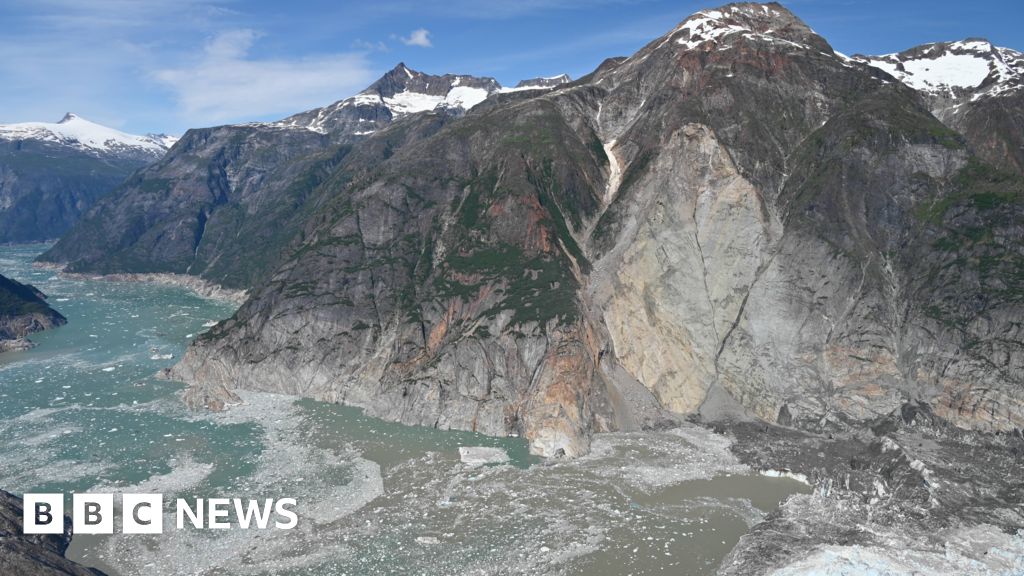
A megatsunami in southeast Alaska last summer reached nearly 500 meters tall, making it the second-largest ever recorded. The wave formed when 64 million cubic meters of rock—equivalent to 24 Great Pyramids—collapsed into Tracy Arm Fjord within a minute. Research published in Science links the event to climate-driven glacier retreat, which had previously stabilized the cliff face. Geologists warn such collapses may now be ten times more frequent than decades ago. The early morning timing prevented tourist cruise ships from being caught in the devastation, though some cruise companies have since suspended operations in the fjord. Alaska's steep mountains, narrow fjords, and frequent earthquakes create natural vulnerability to these localized but catastrophic waves.
Megatsunamis differ from earthquake-triggered ocean tsunamis: they are caused by landslides into confined water bodies, produce extreme local heights, and dissipate quickly. The 1958 Lituya Bay megatsunami remains the largest at over 500 meters.
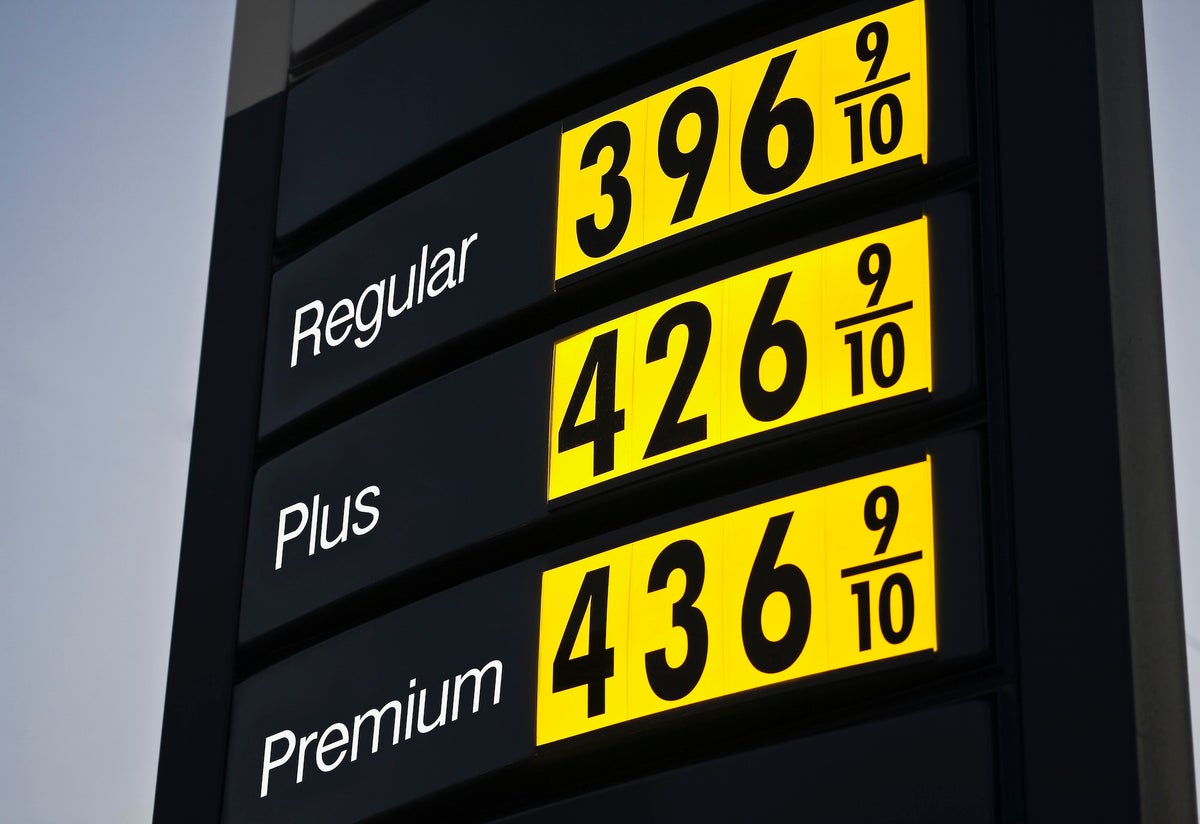
Despite national gas prices near $4.50 per gallon and the Strait of Hormuz closure trapping one-fifth of global oil supply, US producers are not rushing to drill. The World Bank predicts a 24% energy price spike in 2026—the largest since Russia's 2022 invasion of Ukraine. Analysts cite multiple constraints: investors burned by the 2014-2016 price collapse remain cautious, labor and material costs have risen with inflation, and futures markets project crude falling below $90 per barrel by October. New wells require six months or more to reach full production, making current price signals unreliable guides for investment decisions. The shale revolution demonstrated how quickly oversupply can crash prices, leaving companies wary of repeating that cycle even amid current windfall profits.
US oil production peaked in 1970, declined for decades, then surged with hydraulic fracturing and horizontal drilling by the 2010s. OPEC's 2014 decision not to cut production triggered a 70% price plunge, scarring investor psychology.
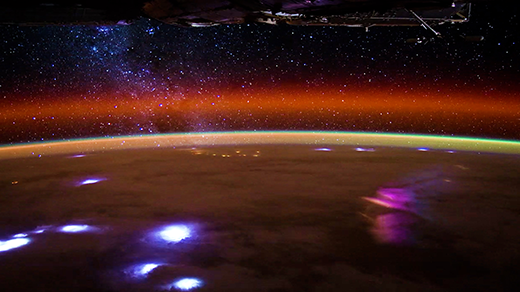
Physicists are revising their understanding of lightning initiation after deploying instruments originally designed for astrophysics to study thunderstorms. Researchers have detected X-rays emitted by lightning as it zigzags, gamma ray flickers from within storm clouds, and hints of bolts traveling unexpected directions. The emerging picture suggests lightning requires extreme high-energy processes more typical of supernovas and particle colliders than of fluffy clouds—cosmic ray interactions and runaway electron breakdown may trigger the initial spark. The field has attracted researchers from astrophysics backgrounds who adapted satellite sensors and cosmic ray detectors for terrestrial storm observation. While no unified theory exists yet, the consensus is growing that conventional electrical breakdown models are insufficient to explain how lightning begins inside opaque, dangerous, laboratory-defying storm systems.
For 50 years, the central mystery has been how lightning channels form. Storm clouds block optical observation and cannot be recreated at scale in labs. Traditional models treated lightning as supersized electric sparks between separated charges.
A programmer proposes three principles for human-AI interaction as counterweights to Asimov's laws for robots: humans must not anthropomorphize AI systems, must not blindly trust their output, and must remain fully responsible for consequences arising from AI use. The author argues that modern chatbot design—conversational tone, empathetic phrasing, prominent placement in search results—trains users toward uncritical acceptance. Current warning labels are minimal and visually deemphasized. Anthropomorphism distorts judgment and can create emotional dependence on systems lacking genuine intentionality. The piece frames these as non-exhaustive heuristics to encourage clearer thinking about risks, acknowledging that no finite rule set can cover all edge cases in human-AI interaction.
Isaac Asimov's Three Laws of Robotics (1942) constrained fictional robots to protect humans. The author notes Asimov never formulated equivalent guidelines for humans, and argues such guidance has become necessary as AI systems embed deeply in everyday tools.
The US Department of Education opened a Title IX investigation into Smith College over its decade-old policy of admitting transgender women. The Massachusetts women's college has considered applications from self-identified women since 2015. The department framed access to women-only spaces—dormitories, bathrooms, locker rooms—as a potential violation, using the term "biological males" throughout its statement. The probe follows a complaint by conservative group Defending Education. Title IX bars sex discrimination in federally funded programs but explicitly exempts undergraduate admissions at private colleges. Smith confirmed receiving notice but declined comment. At least four other women's colleges adopted similar admissions policies in 2014-2015. The investigation reflects broader Trump administration efforts to restrict transgender access to single-sex spaces under federal civil rights law.
Smith's 2015 policy change followed a yearlong institutional study and student advocacy. The Trump administration's February executive order mandated federal recognition of only two sexes, dismissing gender identity validity. GLAAD identifies "biological male" as a hate term in this context.
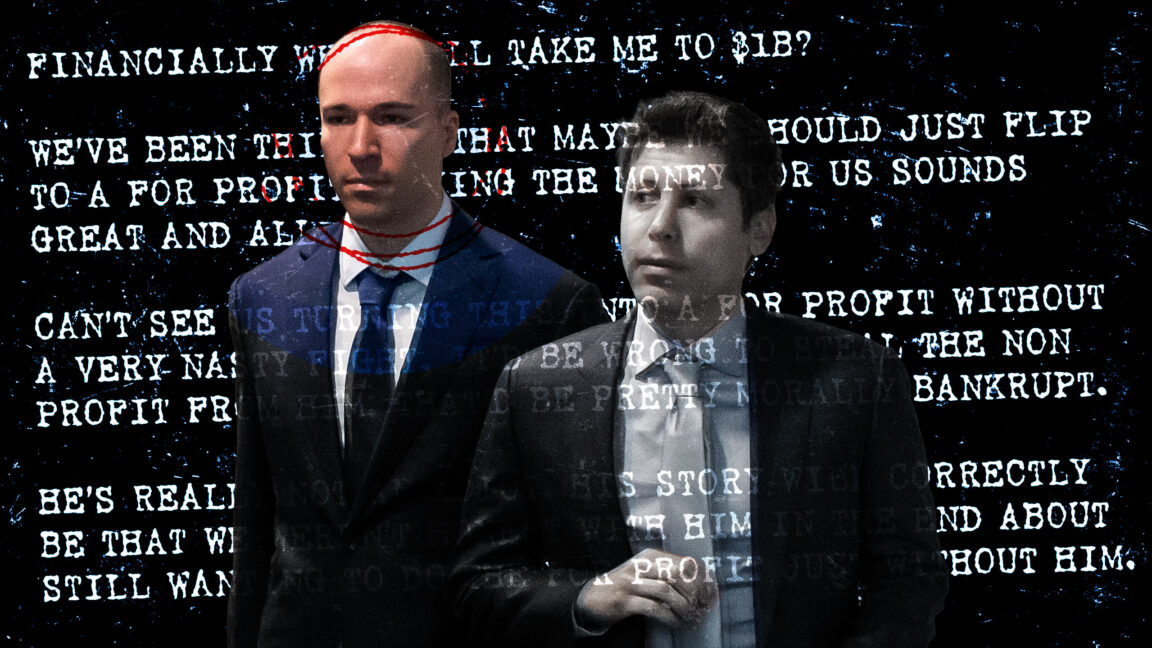
OpenAI president Greg Brockman testified for two days in Elon Musk's lawsuit against the company, reading aloud from personal journal entries that Musk's team alleges show abandonment of nonprofit mission. Entries from 2015-2023 include Brockman mulling whether to "flip to a for-profit" because "making the money for us sounds great" and asking "what will take me to $1B?" Brockman explained the journal as stream-of-consciousness exploration of alternate viewpoints, sometimes recording others' ideas to examine them, and noted he never intended the 100-page document for public view. Musk's attorney repeatedly pressed Brockman to justify his current $30 billion stake given the $1 billion career goal entry. Brockman declined to return $29 billion to the nonprofit arm, noting the stake predated ChatGPT's success. The trial examines whether OpenAI's 2018 for-profit conversion violated its founding charitable purpose.
Musk co-founded OpenAI in 2015 as a nonprofit counterweight to Google DeepMind. He left in 2018 after a power struggle. The lawsuit claims OpenAI betrayed its mission to benefit humanity by creating a for-profit arm that enriched insiders.
First-time college enrollment among adults over 25 fell 15.5% this fall, reversing a post-COVID surge that peaked with an 18.7% jump in fall 2024. New adult students comprise only 10% of all adult learners; institutions have focused recruitment efforts on the larger pool of students with some college credits who stopped out. The decline was steepest at private colleges (which have fewer adult students) and mildest at community colleges (down 11.7%). Demographic decline in traditional-aged students has pushed institutions to rely more heavily on adult enrollment, making this reversal concerning for long-term planning. CUNY bucked the trend with a 14% increase, attributed to targeted marketing and family-member outreach. Experts cite ongoing discourse about college value and the difficulty of locating prospective first-time adult students who lack prior institutional contact.
Adult enrollment surged during 2021-2024 economic upheaval. A North Carolina re-enrollment program contacted stopouts and brought back 3,098 students over four years. Institutions face pressure to compensate for declining high school graduate numbers through alternative pipelines.
Microplastic particles drifting in Earth's atmosphere may have a warming effect equivalent to 16% of black carbon (soot), according to research led by Fudan University and published in Nature Climate Change. Darker-colored microplastics absorb heat while lighter ones reflect it; overall, warming effects outweigh cooling. Current climate models from the IPCC do not account for these particles. The study analyzed optical properties in lab conditions and simulated global effects, though actual atmospheric concentrations remain uncertain. The findings add a previously overlooked mechanism linking plastic pollution to climate forcing, beyond the carbon emissions from fossil fuel-based plastic production. Researchers call for updated climate assessments and reduced plastic reliance to mitigate this additional warming factor.
Microplastics and nanoplastics have been detected in rivers, oceans, soil, and air. This study is among the first to quantify their direct radiative forcing effect on climate, separate from the emissions associated with plastic manufacturing and disposal.