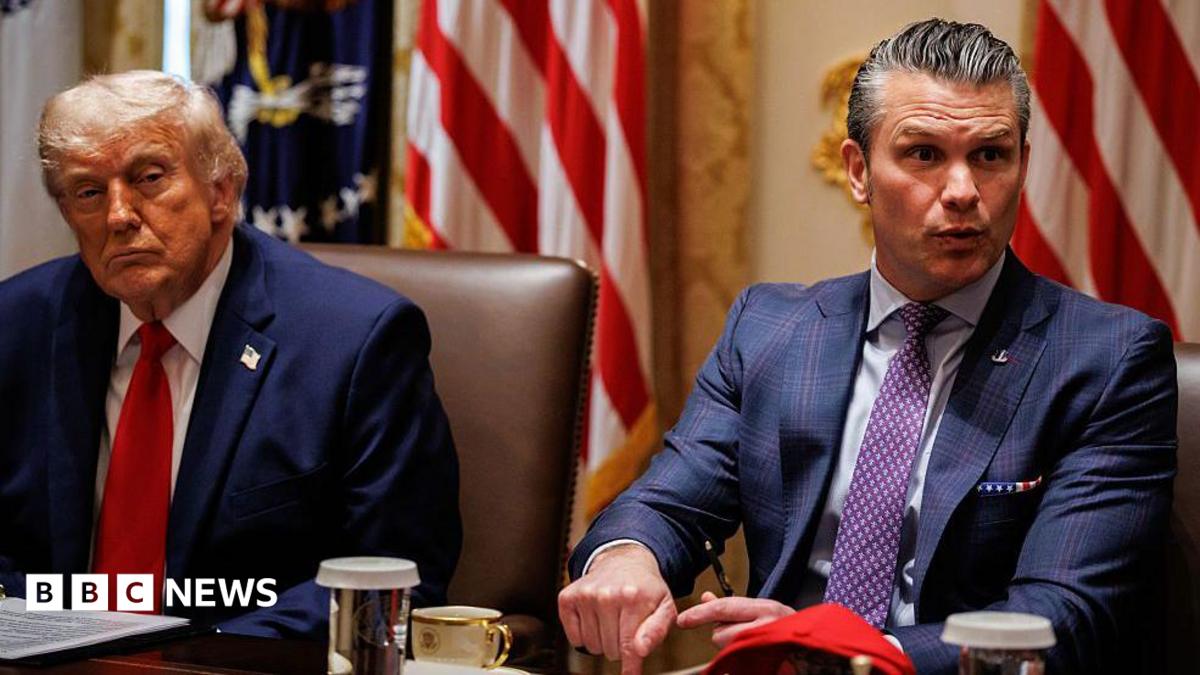
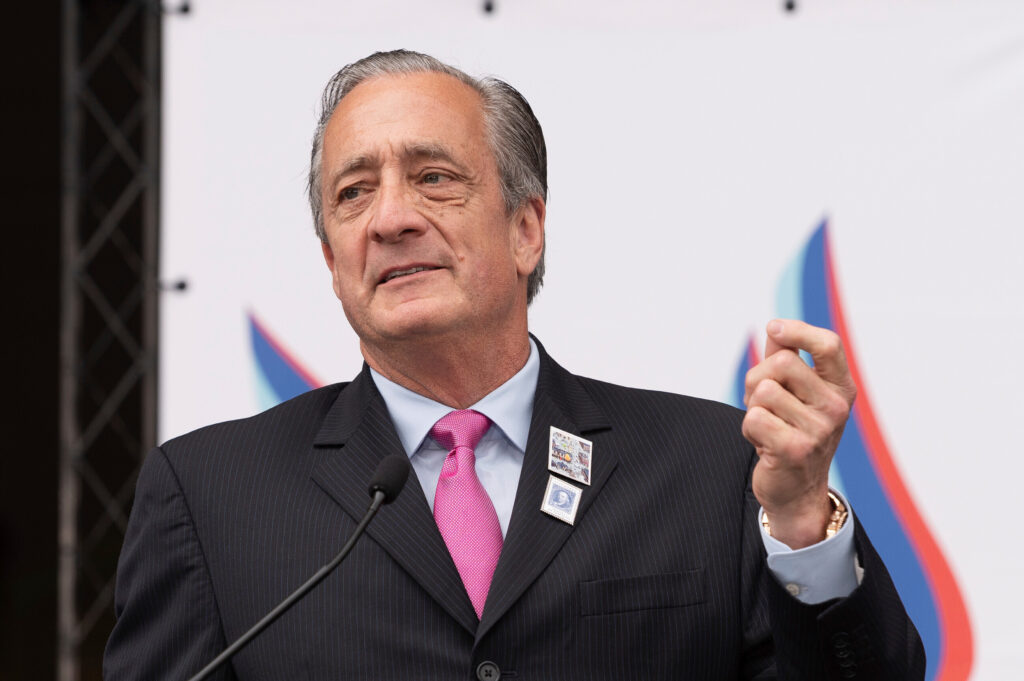
The White House sent Congress a request Wednesday for an $87.6 billion emergency spending package, most of it for Operation Epic Fury, the US war on Iran now entering its fourth month. The Defense Department gets $67 billion of the total: $21 billion for munitions replenishment, $17.3 billion for operational costs, and $12.1 billion for classified programs. Another $11 billion goes to American farmers and $1.4 billion addresses the Ebola outbreak in Central Africa. The request lands days after the Senate passed a war powers resolution directing Trump to end the conflict, the first such measure ever to clear Congress, with four Republicans crossing to join Democrats in a 47-50-1 vote. Trump confronted those senators at a closed-door party lunch, calling them losers; Senator Bill Cassidy of Louisiana pushed back: "This was supposed to last four weeks, it's lasted four months. Our original objectives have not been achieved." With November midterms approaching, the package faces a hard path through a Congress where the war polls poorly.
Operation Epic Fury began February 28 when the US and Israel struck Iran's nuclear program. Before the war, Iran held 440 kilograms of uranium enriched to 60% purity, near weapons-grade and enough for roughly 10 bombs. A 14-point ceasefire agreement gives both sides 60 days to reach a final deal, with IAEA inspectors set to visit Iran's nuclear sites. The Pentagon estimates the war has cost $29 billion so far.
Operators tied to Alibaba and its AI lab Qwen ran a campaign between April 22 and June 5 that Anthropic is calling the largest known distillation attack ever carried out on its platform. The operation opened nearly 25,000 fraudulent API accounts to get around Anthropic's ban on users in China and its prohibition on training competing models with Claude outputs, generating 28.8 million exchanges. The previous record was 16 million exchanges set by DeepSeek, MiniMax, and Moonshot AI combined. The attackers focused on Claude's software engineering and agentic reasoning capabilities, aiming to push Chinese AI labs toward the capabilities of Anthropic's Mythos Preview models. Anthropic wrote to the Senate Banking Committee on June 10 urging stricter enforcement and warned that models built through adversarial distillation often lack the original's safety guardrails. Alibaba's US-listed shares fell more than 3% after the story broke. Senators Hagerty and Kim announced plans for sanctions legislation targeting Chinese firms that improperly extract US AI model outputs.
AI distillation means querying a capable model at massive scale to generate training data, then using that data to teach a separate model to mimic the target. No source code is stolen. Anthropic's terms of service and geographic block on Chinese users are both meant to prevent this; the 25,000 fraudulent accounts bypassed both controls at the same time.
Western Europe recorded what may be its most extreme heat event since modern measurement began on June 23, as an atmospheric blocking pattern pinned North African air over the continent. France logged its hottest national average day since records began in 1947: a station in the Landes region of southwest France hit 44.3 degrees Celsius, or about 112 Fahrenheit. About 40 people drowned across France trying to cool off in unsupervised water; the Louvre and the Eiffel Tower closed early. Half the country fell under red heat alert. The UK recorded a provisional all-time June high of 35.7 degrees Celsius, and southern Spain braced for 44. The power grid is straining. France's Golfech nuclear plant shut one unit after the Garonne River's cooling water return temperature approached the legal ceiling of 28 degrees Celsius. Five British gas plants combined cut 2.5 gigawatts of output. A similar event last July forced more than 7 gigawatts of French nuclear capacity offline, and European energy margins remain tight.
Only 25% of French households have air conditioning, compared to 90% in the US and Japan. The heat has reopened a political debate: Marine Le Pen proposed a 20 billion euro national interest-free loan program to equip homes and schools, while Green politicians broke from their usual position to say AC has become a necessity in hospitals and schools. France lacks strong building codes mandating cooling infrastructure.
France confirmed its first Ebola case on June 24, a doctor who tested positive on returning from a humanitarian medical mission in DR Congo. Ebola spreads through direct contact with bodily fluids, not through the air, but the case marks the first Ebola detection in Europe during the current outbreak and puts public health systems on alert. All of the doctor's contacts must self-isolate for 21 days. The WHO notes fewer than 30 Ebola cases have reached outside Africa in the past 50 years. In DR Congo, the outbreak has hit 1,094 confirmed cases and 277 deaths in roughly one month, making it the second-largest Ebola outbreak on record. It is concentrated in Ituri Province in the northeast, with spillover into North and South Kivu. The current strain, Bundibugyo ebolavirus, complicates response because the approved Ebola treatments target a different strain. On the same day France announced the case, the White House asked Congress for $1.4 billion to address the outbreak: $800 million for humanitarian response in the region and $500 million for global health security.
This is the second-largest Ebola outbreak ever recorded. The largest was the 2014-2016 West Africa epidemic, which killed more than 11,000 people across Guinea, Sierra Leone, and Liberia. Uganda has reported 20 cases and 2 deaths in the current outbreak. The Bundibugyo strain was first identified in Uganda in 2007 and differs from the Zaire strain that most approved vaccines and treatments target.
OpenAI announced its first custom silicon on June 24, a chip called Jalapeño co-developed with Broadcom and built from scratch for large language model inference rather than general-purpose computing. Unlike Nvidia GPUs, which are flexible enough for training and other workloads, Jalapeño is a pure application-specific chip targeting the three bottlenecks that dominate real inference: data movement between compute and memory, memory bandwidth, and server-to-server networking. The die is the largest area that TSMC lithography allows, with one large compute chiplet, six high-bandwidth memory modules, and a separate input-output chiplet. OpenAI says the chip went from blank-sheet design to tape-out in nine months, which it calls the fastest development cycle ever for a high-performance semiconductor. Engineering samples are already running ML workloads at target speed and power in OpenAI's labs. Broadcom CEO Hock Tan told Bloomberg the chip delivers about 50% lower cost per inference token compared to current Nvidia hardware. OpenAI plans to deploy Jalapeño at gigawatt scale through its Stargate data center partnership with Microsoft, with production ramping in 2027 and 2028.
Inference, meaning answering user queries, now dominates OpenAI's operating costs at ChatGPT scale, far exceeding training costs. GPUs carry margins for general programmability that inference does not need. Custom inference chips follow the model of Google's TPUs, Amazon's Inferentia, and Microsoft's Maia: strip out flexibility, optimize for the specific workload, and cut cost at scale.
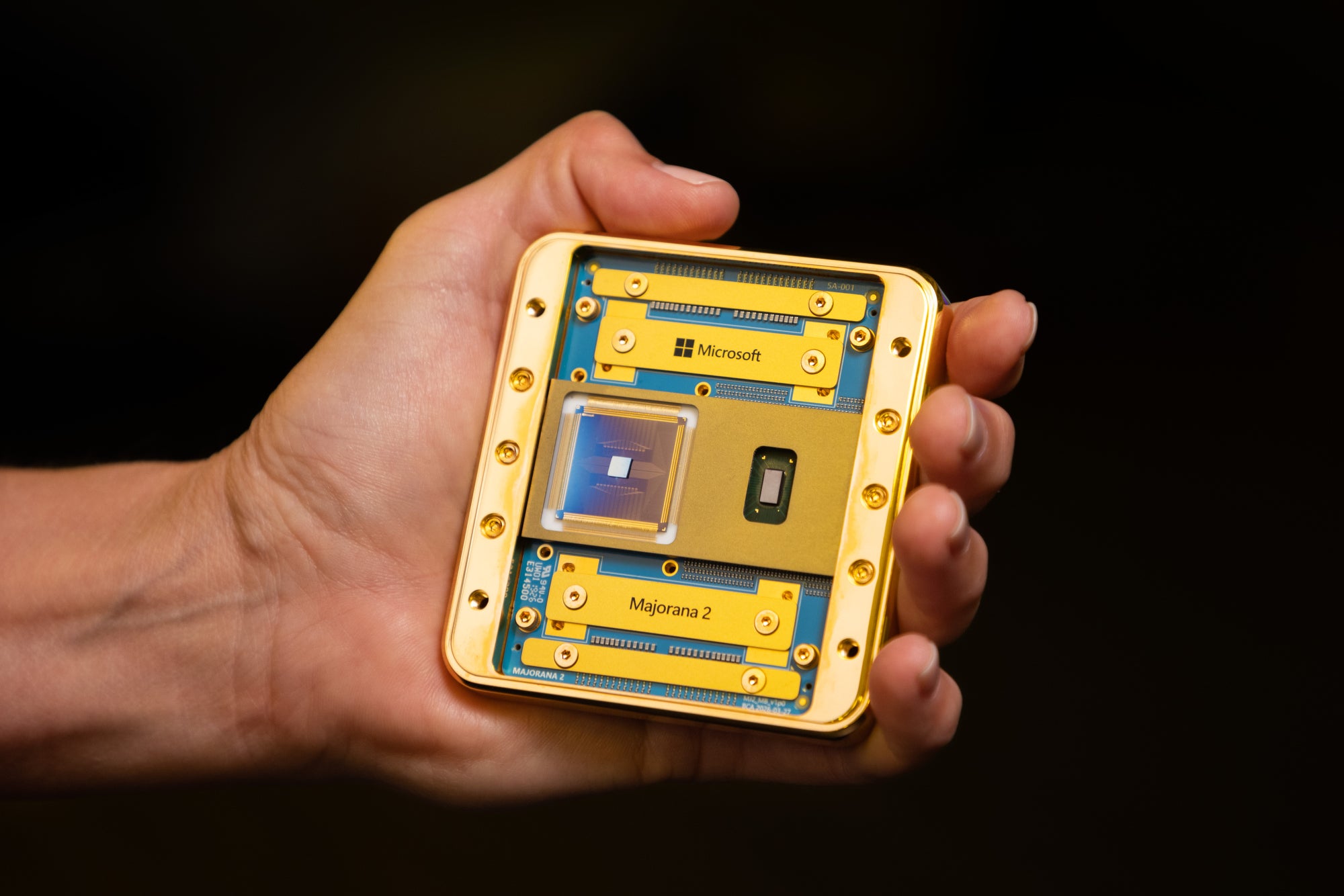
A formal rebuttal published in Nature on June 24 calls the foundational physics behind Microsoft's Majorana 1 chip into question. University of St Andrews physicist Henry Legg, writing in Nature's Matters Arising section, argues the Topological Gap Protocol Microsoft used to claim a topological superconducting state is flawed at its core. The protocol, he writes, produces results that depend on measurement choices rather than actual physics and is likely to label ordinary electronic effects as topological behavior. He also found software errors in Microsoft's analysis code and transport measurements omitted from the public record. His conclusion: Microsoft has not demonstrated the basic physics needed for even a single topological qubit. University of Pittsburgh physicist Sergey Frolov, who helped expose Microsoft's two prior Majorana retractions in 2018 and 2021, called the original paper scientifically worthless and said it likely needs retraction. Microsoft VP for Quantum Hardware Chetan Nayak published a reply in Nature: "We stand by our results and our roadmap." Nothing has been retracted.
Topological qubits are theorized to be far more stable than the conventional superconducting qubits used by Google and IBM because their quantum state is encoded in the topology of the system rather than a fragile physical configuration. Microsoft staked its entire quantum computing strategy on this approach. Two earlier Majorana-related Nature papers from Microsoft were retracted in 2018 and 2021.
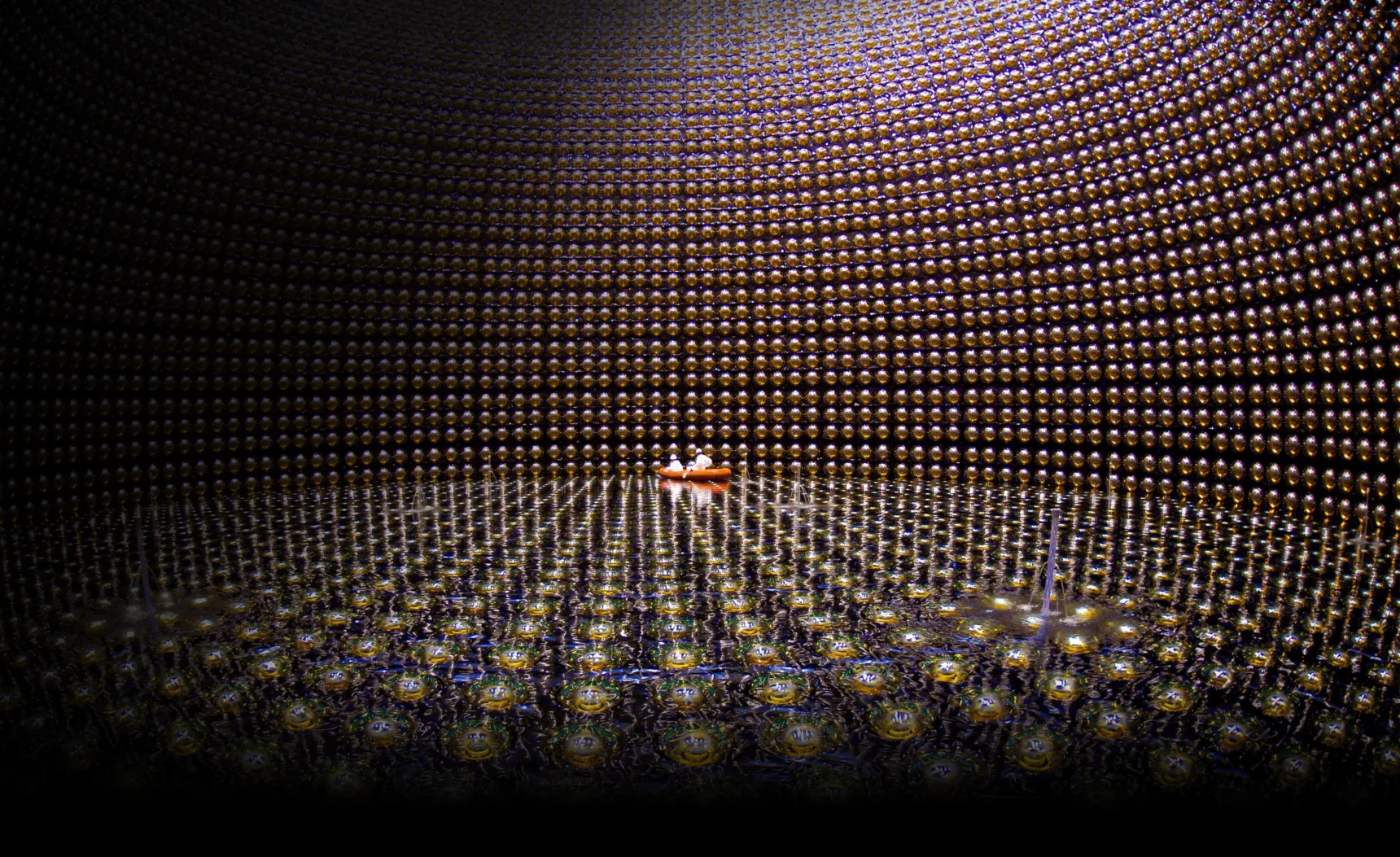
Physicists have built some of the most extreme experiments in science around a single frustrating problem: neutrinos, particles so light and non-reactive that a trillion pass through your body every second without touching anything. Catching one requires enormous detectors. IceCube strings 5,000 light sensors 2.5 kilometers into Antarctic ice to catch the faint blue glow of a rare collision. Super-Kamiokande in Japan holds 50,000 tons of ultrapure water in a tank the size of a 15-story building, ringed by thousands of light detectors. China's JUNO detector, the world's largest, began collecting data in June 2026 after launching in August 2025 and is producing the most precise measurements of neutrino oscillation on record. A Mediterranean experiment called KM3NET, suspended at 3,500 meters depth between Sicily and southern France, detected the highest-energy cosmic neutrino ever recorded. IceCube produced the first neutrino map of the Milky Way and traced extragalactic neutrinos back to supermassive black holes, identifying sources that light-based astronomy cannot reach.
Wolfgang Pauli proposed neutrinos in 1930, calling it a terrible thing because the particle seemed undetectable. They were first experimentally confirmed in 1956. Decades later, detectors found far fewer solar neutrinos than theory predicted. The resolution was that neutrinos change type in flight, a process called oscillation, which proves they have mass. That discovery contradicted the Standard Model and earned the 2015 Nobel Prize in Physics.
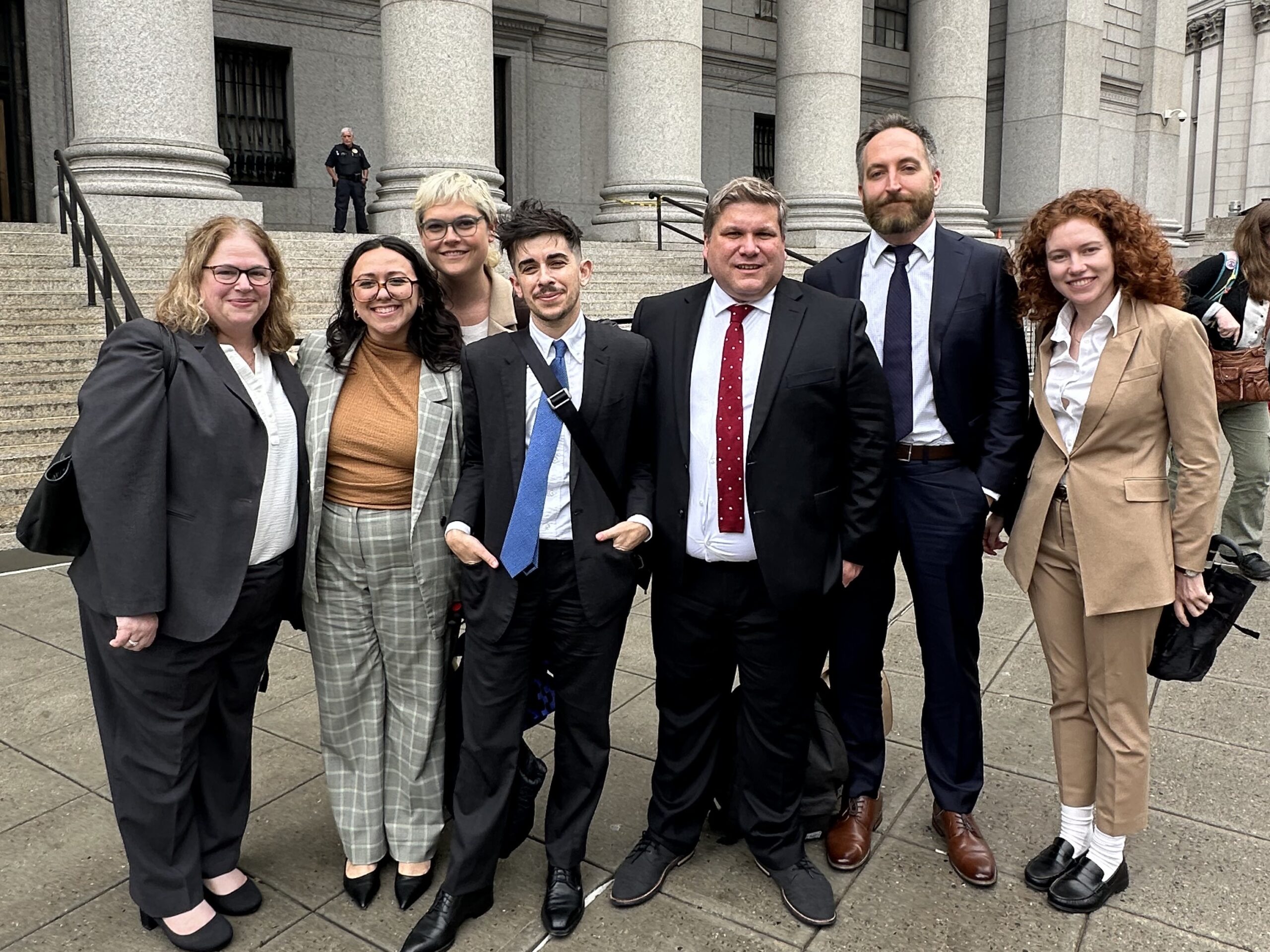
A federal judge in New York issued a temporary restraining order on June 24 blocking the Justice Department from enforcing sweeping grand jury subpoenas demanding six years of records for every patient under 18 treated for gender dysphoria at NYU Langone and Mount Sinai hospitals. US District Judge Katherine Polk Failla provisionally certified a class of all affected patients. Her key language: she could not conceive of a crime requiring "the breadth of disclosures in the subpoena." The DOJ had demanded identifying information and complete records from January 2020 through May 2026 for all such patients, from initial consultation through most recent treatment, as part of a broader criminal investigation into gender-affirming care for minors. At least eight other federal courts have blocked similar subpoenas in the same campaign. A preliminary injunction hearing is set for July 8. Plaintiffs in the case are represented by Lambda Legal, the ACLU, and the NYCLU.
The Trump administration has pursued medical records from hospitals, clinics, and insurance providers in multiple states, using criminal grand jury subpoenas rather than administrative process after earlier courts blocked administrative demands. New York state doctor-patient privilege law provides some of the strongest privacy protections in the country. The case is Coe v. Blanche.
Postmaster General David Steiner told the Senate Homeland Security Committee on June 24 that the US Postal Service plans to refuse delivery of mail and absentee ballots in any state that will not hand over its voter rolls to the federal government. A proposed USPS rule, flowing from Trump's March 2026 executive order, requires state election officials to submit a list of voters who requested mail ballots at least 30 days before those ballots go out. When Senator Gary Peters asked directly whether USPS would still deliver election mail if a state refused to share voter data, Steiner replied: "Under our proposed regulation, no." Senator Margaret Hassan called the plan "blatantly illegal." Oregon, which runs all elections by mail, is among the most exposed states. Multiple federal lawsuits are already before the courts; a Massachusetts judge recently allowed pro-voting groups and Democratic attorneys general to proceed with challenges, finding the rule would disrupt November's midterms if allowed to take effect.
US elections are run by states, not the federal government. The Trump administration has sought voter roll data from multiple states under a separate executive order requiring states to share registration lists with a new federal commission. A federal appeals court ruled last week that Michigan does not have to comply with that order. The USPS proposal creates a separate enforcement lever: withhold ballot delivery from any state that refuses.
A leaked audio recording from an internal Accenture meeting reveals that non-technical employees, not software engineers, are driving the biggest surge in enterprise AI costs. Accenture's agentic AI strategy lead Justice Kwak described the pattern at the meeting: ordinary workers using AI tools to convert PDFs to PowerPoint slides and similar tasks are chewing through token budgets faster than companies anticipated. Uber burned through its entire company-wide AI tool budget within four months and capped employee access to tools including Claude Code and Cursor. GitHub switched to per-token billing to create cost visibility and friction for heavy users. The underlying problem is the shift from flat monthly subscriptions to token-based pricing. Companies that deployed AI tools across entire workforces found the cost structure bore no resemblance to their original projections. The term circulating in enterprise technology circles is "tokenpocalypse."
AI language models charge per token, roughly a word or subword fragment. Early enterprise AI pricing used flat monthly subscriptions similar to SaaS software, making costs predictable. As models became more capable and usage spread beyond developers to entire workforces, providers shifted to consumption-based billing. A company with thousands of employees running AI tools throughout the workday can accumulate millions of dollars monthly in token charges, a cost many finance teams did not model.