Iran's military command declared the Strait of Hormuz closed on Saturday morning, blaming violations of the Islamabad Memorandum of Understanding signed June 17. The MOU, a 14-point ceasefire framework brokered by the US and Iran, committed Iran to 60 days of toll-free passage through the strait in exchange for the US ending its naval blockade. Iran cited two violations: US conduct it frames as a breach of the agreement, and Israel's continued airstrikes on Lebanon during the ceasefire period. The strait carries about 21 million barrels of oil daily, one-fifth of global petroleum consumption. Oil prices had risen from around $65 a barrel before the conflict to above $126, and the closure is expected to push them higher. Iranian negotiators had been scheduled to leave for Switzerland on Saturday for implementation talks; the closure announcement arrived before they departed. Vice President JD Vance described the closure claim as "unconfirmed."
The Islamabad MOU was the first formal agreement between the US and Iran since the conflict began in late February, when US and Israeli strikes on Tehran triggered a broader regional war. Iran had closed the strait during earlier fighting and charged up to $2 million per vessel before the MOU set terms for reopening it.
Israel and Hezbollah agreed to a renewed ceasefire Thursday evening, brokered by the US, Qatar, and Iran, after Israeli airstrikes killed 47 people in southern Lebanon that day, the second-deadliest toll since the conflict expanded in March. By Saturday morning, fighting had resumed: Israeli airstrikes killed at least 20 more people, and the Israeli military said Hezbollah had fired on its troops in southern Lebanon. Iran cited the Israeli strikes on Lebanon as one of its stated reasons for announcing the Strait of Hormuz closure. Vice President JD Vance had already canceled a trip to Switzerland for deal-signing ceremonies because of Thursday's escalation. Tehran has made a Lebanon ceasefire a condition of any final US-Iran agreement, but Hezbollah leader Naim Qassem rejected the June 4 framework that preceded Thursday's deal, demanding full Israeli withdrawal first. Since March, the conflict has killed more than 3,400 people in Lebanon and displaced over one million.
Israeli strikes and Hezbollah counterattacks have killed more than 3,400 people and displaced over one million in Lebanon since March 2026, when the fighting expanded as part of the broader US-Iran conflict. Hezbollah, the Iranian-backed armed group that controls much of southern Lebanon, has rejected multiple ceasefire proposals that do not include a full Israeli withdrawal. Iran's funding of Hezbollah is one reason the US-Iran memorandum of understanding signed June 17 did not address the Lebanon front.
Poland stripped Ukrainian President Volodymyr Zelensky of the Order of the White Eagle, the country's highest state honor, after Ukraine named a new military unit after the Ukrainian Insurgent Army, known by its Ukrainian acronym UPA. Polish President Karol Nawrocki called the decision "outrageous" and "incomprehensible," saying the UPA was "responsible for the brutal crimes committed against citizens of the Republic of Poland during World War II." Poland accuses the UPA of killing about 100,000 ethnic Poles in the Volhynia region of what is now western Ukraine between 1943 and 1945. Ukraine regards the UPA as national liberation fighters who resisted Soviet and Nazi occupation. Ukrainian Foreign Minister Andrii Sybiha responded by returning an award he had received from Poland in 2022, and said "no president of another country will dictate our history to us." Polish Prime Minister Donald Tusk warned the dispute "delights" Vladimir Putin. Nawrocki also warned that Ukraine must "honestly confront difficult chapters of its own history" to advance its EU membership bid.
The Order of the White Eagle was awarded to Zelensky in 2023 by Poland's previous president, Andrzej Duda. Poland is one of Ukraine's most important political backers and has taken in millions of Ukrainian refugees since Russia's full-scale invasion in 2022. Poland holds formal veto power over EU accession decisions, giving Nawrocki's threat real weight.
The Supreme Court struck down a federal law banning any person who uses or is addicted to a controlled substance from owning a firearm, ruling 9 to 0 on Wednesday that the statute lacks a valid historical precedent. The case, United States v. Hemani, involved Ali Hemani, a Texas resident who used marijuana every other day and kept a Glock 9mm at home. He was prosecuted under 18 U.S.C. § 922(g)(3), a provision of the Gun Control Act of 1968. Justice Neil Gorsuch, writing for the majority, applied the Bruen test, which requires any gun restriction to have a historical analogue from the founding era, and found that early American laws targeting habitual drunkards were too different in scope and procedure to count. The ruling directly affects marijuana users in the 26 states where cannabis is now legal. Hunter Biden was convicted under this same statute before his father pardoned him; legal experts note Biden's case involved admitted addiction rather than the casual use at issue in Hemani, making the ruling's direct application to his circumstances less clear.
The Bruen test, established by the Supreme Court in 2022, requires gun regulations to correspond to historical analogues from the founding era rather than contemporary public safety rationales. The ruling affects not just marijuana users but anyone charged under the statute, including users of other controlled substances who are not simultaneously armed.
A benchmark comparison published this week found that OpenAI's GPT-5.5 hallucinated on 86 percent of tested queries while GLM-5.2, an MIT-licensed open-weights model from Zhipu AI (智谱), a Beijing-based AI lab, hallucinated on only 28 percent. The tests ran on OpenRouter at high reasoning effort with a coding-assistant system prompt. DeepSeek V4 Pro, the third model in the comparison, posted the highest hallucination rate at 94 percent. GLM-5.2 has 753 billion total parameters with 40 billion active and costs $4.40 per million output tokens, compared to $30 per million for GPT-5.5. On long-horizon coding benchmarks, GLM-5.2 outperformed GPT-5.5 on SWE-bench Pro (62.1 versus 58.6) and FrontierSWE (74.4 percent versus 72.6 percent). The comparison attracted more than 370 upvotes on Hacker News, where commenters debated whether the methodology would generalize across different query types.
GLM stands for General Language Model, a family developed by Zhipu AI, a spin-off from Tsinghua University. Open-weights models release their parameters publicly under licenses like MIT, allowing anyone to run, modify, or serve them. Accuracy on factual queries matters especially for coding assistants, where a plausible but incorrect answer can introduce bugs without obvious warning signs.
Astronomers using the James Webb Space Telescope found two nearby brown dwarfs that had been misidentified as extremely distant, early galaxies in a region called the Bullet Cluster. Brown dwarfs are dim, cold objects too small to sustain the nuclear fusion that powers stars; both imposters are located within the Milky Way. The standard method for finding very distant galaxies, called the dropout technique, works by looking for objects that vanish from images taken through a filter blocking a specific wavelength of light. At extreme distances, the universe's expansion shifts a galaxy's light redward until it disappears from a short-wavelength filter. The two brown dwarfs, designated Bullet-BD1 and Bullet-BD2, mimicked that signature. Spectroscopic follow-up unmasked them. Bullet-BD2 measured a temperature of about 27 degrees Celsius, near room temperature, making it one of the coldest brown dwarfs on record. The discovery shows the dropout technique can misfire when dim foreground objects in our own galaxy mimic the signals of things far beyond it.
Brown dwarfs form like stars but lack enough mass to ignite hydrogen fusion, leaving them as slowly cooling objects. The James Webb Space Telescope, launched in 2021 and fully operational since 2022, observes in infrared light, which makes it well-suited to find both extremely distant galaxies and cold nearby objects that glow in infrared.
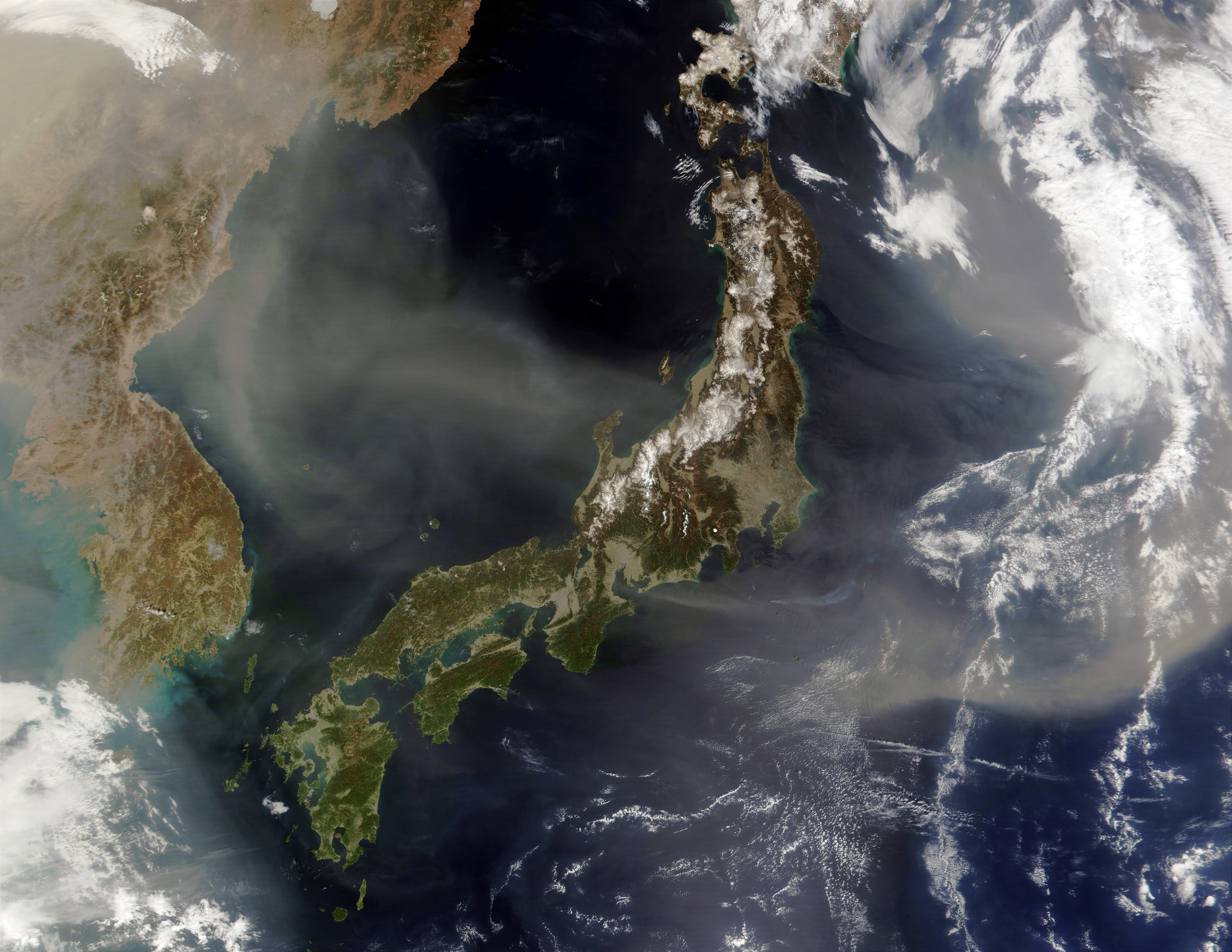
New research published in the journal Science found that the 2011 Tohoku-Oki earthquake, a magnitude 9.0 disaster that killed more than 18,000 people, shifted the Japanese mainland by 5 to 6 millimeters across an area six to seven times larger than the main rupture zone. The mechanism is a class of seismic waves called ScS waves, which travel down through the mantle, reflect off Earth's iron core, and return to the surface around 15 minutes later. Sunyoung Park, a geophysicist at the University of Chicago, led the study. Park's team found that these core-reflected waves carried enough energy to gradually displace the land surface over the 100 to 200 seconds of the earthquake's main slip, affecting regions far outside the zone of direct seismic shaking. The area moved was 6 to 7 times the size of the rupture zone itself, a previously unrecognized source of dynamic earthquake triggering. The finding expands the understood footprint of very large earthquakes and could change how scientists model distant displacement from future megaquakes.
The 2011 Tohoku-Oki earthquake triggered a tsunami that caused the Fukushima Daiichi nuclear disaster, Japan's worst nuclear accident. ScS waves, which reflect off Earth's core, are standard tools in seismology for studying the planet's interior. The earthquake's seismic waves registered on instruments as far away as South America.
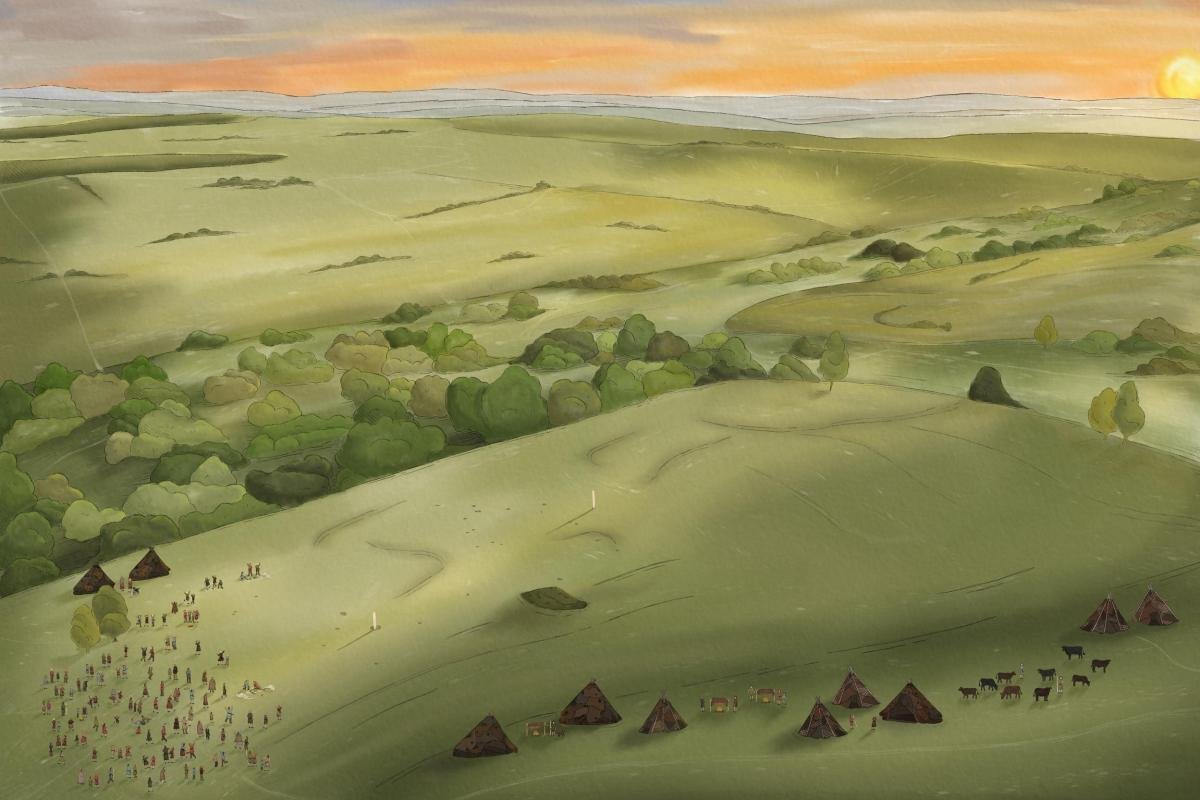
Excavations at a site called Bulford, located about 5 kilometers from Stonehenge in Wiltshire, England, have revealed what researchers describe as a ritual precursor to the famous stone monument, built around 2950 BCE, about 500 years before Stonehenge was completed. The Bulford site contains 48 pits and two positions for wooden poles placed 120 meters apart, aligned to within one degree of the summer solstice sunrise and winter solstice sunset. Pottery fragments, animal bones, and charcoal from the site show that people gathered there for ritual purposes. Lead researcher Phil Harding, of Wessex Archaeology, interprets the alignment as evidence that the astronomical calendar held religious significance in this region five centuries before Stonehenge's stones were set. A peer-reviewed publication is expected later in 2026. The analysis appears as Stonehenge draws its annual summer solstice crowd. Today marks the 2026 solstice, the same astronomical moment that shaped ritual life at Bulford five thousand years ago.
Stonehenge's stone circle in Wiltshire, southwestern England, was built in phases between about 3000 BCE and 1500 BCE. The site's orientation toward the summer solstice sunrise has been recognized since the 18th century and draws tens of thousands of visitors each year. Stonehenge was designated a UNESCO World Heritage Site in 1986.
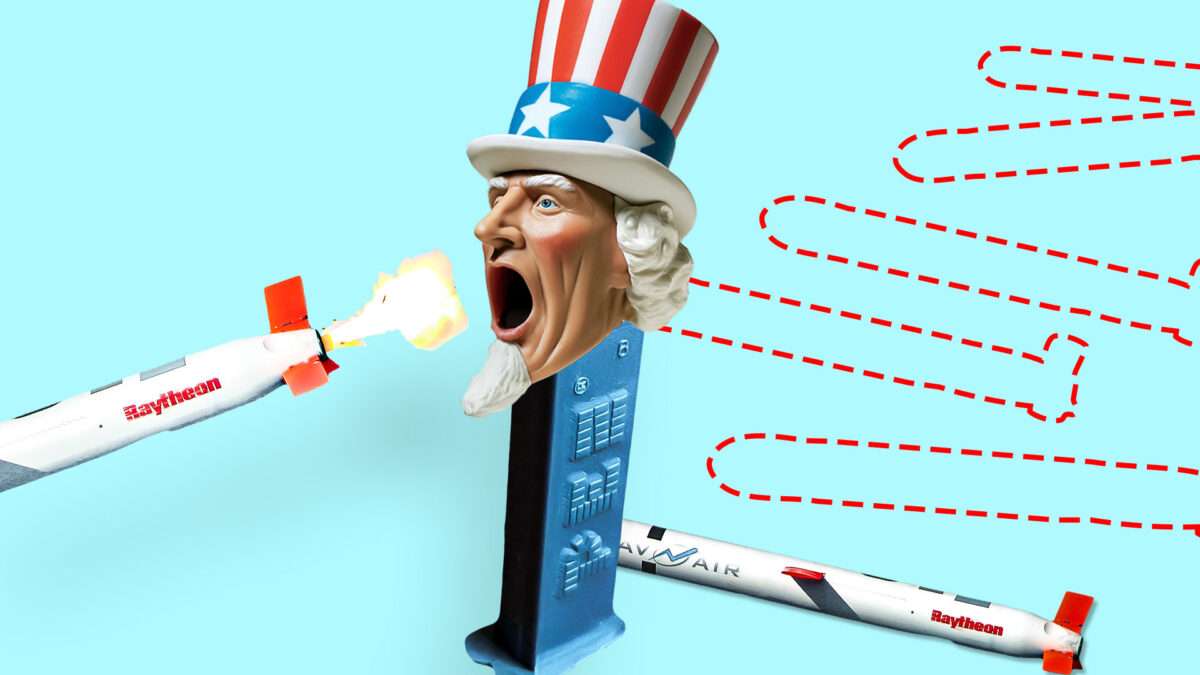
During the Iran conflict, the United States expended about 25 percent of its JASSM cruise missile inventory, and US-allied forces in the region burned through interceptors at rates that will take years to replace, according to a report by Matthew Petti in Reason. The underlying cost asymmetry drove the depletion: PAC-3 interceptor missiles cost about $4 million each and the US produces fewer than 1,000 per year, while Shahed-136 drones of the type used throughout the conflict cost between $4,000 and $7,000 each, and a single Russian factory produces 5,500 per month. Israel's Arrow interceptor stockpile fell to double digits within 16 days of peak fighting. JASSM stocks will not be replenished until mid-2027; air defense ammunition will take two additional years; Tomahawk cruise missile replacements have been pushed to the 2030s. Petti argues that the imbalance has created new vulnerabilities in Taiwan arms commitments and Ukraine ammunition supply chains, and that the US needs a defensive strategic posture rather than continued offensive operations that drain high-value interceptor stocks.
JASSM, the Joint Air-to-Surface Standoff Missile, is a long-range precision cruise missile the US relies on for strikes against defended targets. Arrow interceptors are Israeli-made air defense missiles designed to stop ballistic missiles at high altitude. The Iran conflict is the first sustained combat exchange where the US and its allies used large quantities of advanced precision munitions continuously over weeks.
The Iran memorandum of understanding signed June 17 represents "one of the worst foreign policy and national security blunders in American history," argues Andrew C. McCarthy, a former federal prosecutor and three-time Trump voter, in National Review. McCarthy calls Trump's second term "the worst presidency of my lifetime" while wrestling with a question he says he can no longer dismiss: whether the "binary choice" argument he and others used to justify voting for Trump over Democrats was a form of self-deception. The piece examines what it means to have bet on a candidate to prevent the scenario that then arrived. McCarthy does not renounce his past votes, but he traces the distance between the leverage the US held after its military strikes on Iran and the concessions Trump ultimately accepted on Iran's nuclear program, its missile development, and its regional proxy groups. The essay arrives the same day Iran announced another closure of the Strait of Hormuz, raising new questions about whether the deal is already unraveling.
The Islamabad MOU, signed June 17, is a 14-point framework committing Iran to curb nuclear enrichment in exchange for US sanctions relief and an end to the naval blockade. Conservative critics, including many who supported Trump's 2024 campaign, say the deal abandoned the leverage created by the military strikes earlier this year.