Israeli forces captured Beaufort Castle, a 900-year-old fortress on a ridge above the Litani River, as ground operations against Hezbollah expanded deeper into southern Lebanon on Sunday. The IDF also widened evacuation orders to all areas south of the Zahrani River, signaling a push beyond the previous Litani River demarcation. Prime Minister Netanyahu called the capture a "dramatic change" and said Israel is "taking the initiative on all fronts." Hezbollah fired some 25 projectiles toward Israeli border communities, and Lebanon's health ministry reported 13 hospital staff injured in an airstrike near Tyre. France requested an emergency UN Security Council meeting, with its foreign minister calling the prolonged occupation a "major mistake." The castle holds deep symbolic weight: Israeli forces fought for it in 1982, and its recapture marks a significant escalation in a conflict that has seen daily Israeli advances.
Beaufort Castle was built by Crusaders in the 12th century and has been contested in multiple wars. Israel's current ground operation began after Hezbollah intensified drone and missile attacks. The Litani River had been the unofficial boundary of Israeli operations until recent days.
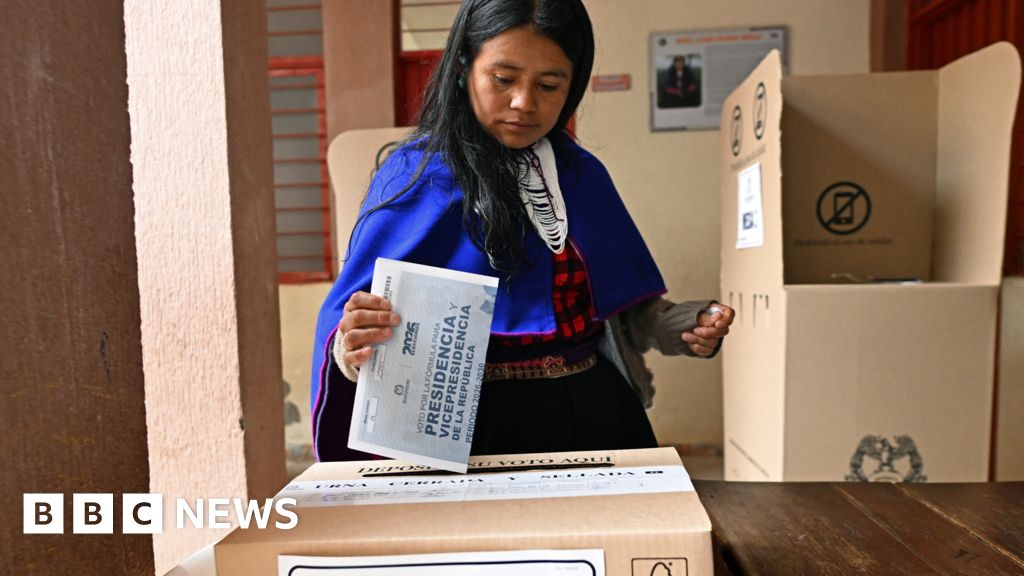
Colombians voted Sunday in a presidential election likely headed to a June 21 runoff, with leftist Iván Cepeda, right-wing outsider Abelardo de la Espriella, and center-right Paloma Valencia vying to succeed Gustavo Petro. Cepeda, backed by Petro, promises to continue "total peace" negotiations with armed drug-trafficking groups, though talks have stalled and violence has surged. De la Espriella, a lawyer who admires Trump and El Salvador's Bukele, campaigns on an "iron fist" security crackdown and restoring the US security alliance. Valencia, who replaced a candidate assassinated last summer, touts reducing the state and eliminating wealth taxes. The Red Cross says armed conflict affected civilians at the highest level in a decade. Authorities relocated a polling station after a drone attack injured a soldier, and over 400,000 security personnel were deployed. The outcome will shape Colombia's approach to drug gangs and its alignment with Washington.
Petro, Colombia's first leftist president, cannot run for reelection. His tenure saw public feuds with Trump over drug policy and US intervention. The "total peace" strategy sought negotiated settlements with armed groups, but many talks collapsed, leading to renewed violence.
The Federal Communications Commission is exploring new content ratings that would flag TV shows depicting or discussing gender identity, arguing parents need more transparency. In an April public notice, the FCC said current ratings sometimes label transgender-inclusive programming as appropriate for children without alerting parents. Free speech groups warn the move exceeds the agency's legal authority and would violate the First Amendment by stigmatizing an entire group. The Future of Free Speech, in comments filed with the FCC, called it "viewpoint targeting." The existing TV ratings system was created voluntarily by broadcasters in 1998 under the Telecommunications Act of 1996; the FCC acknowledged it lacks direct authority to impose new labels. Critics also note the proposal's vagueness could invite arbitrary enforcement. The commission is now soliciting public comment on possible changes to the ratings system.
The TV Parental Guidelines were established after Congress threatened regulation. They include age-based ratings (TV-Y to TV-MA) and content descriptors for violence, sex, language, and suggestive dialogue. The FCC's current inquiry marks the first attempt to add a category tied to a specific identity group.
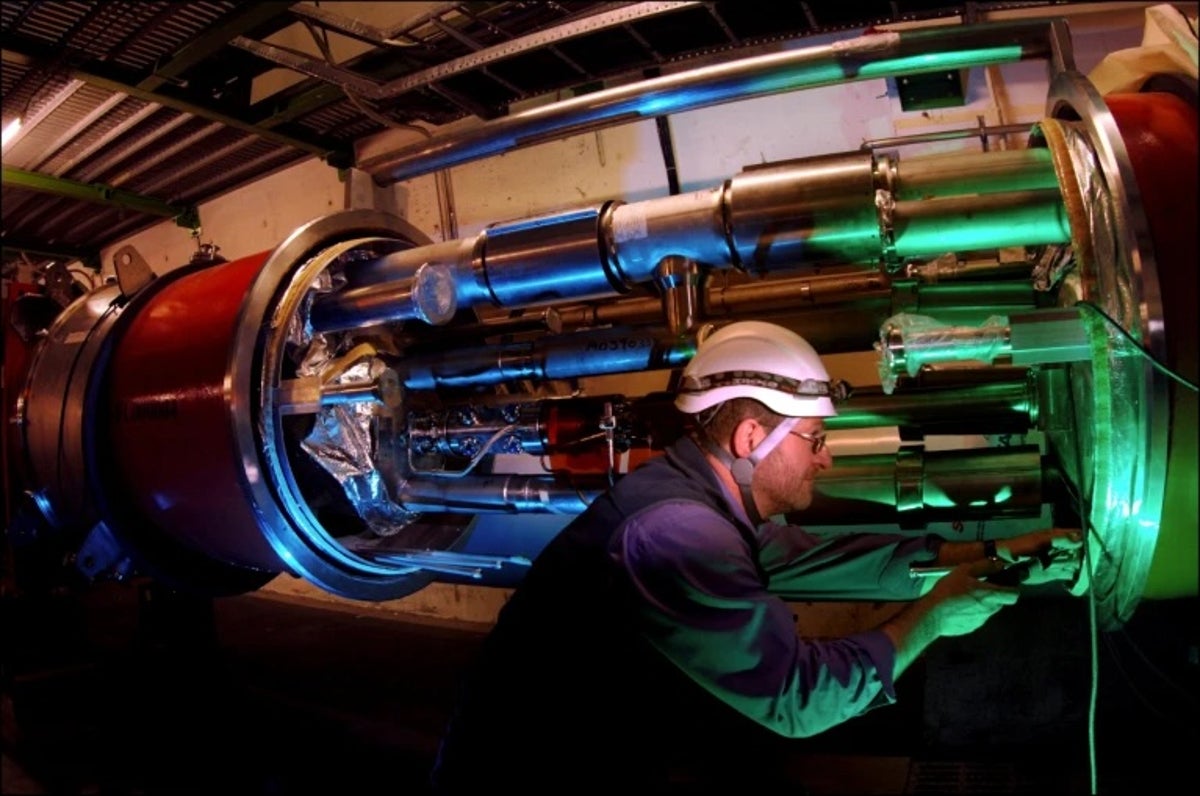
Physicists at CERN's LHCb experiment have strengthened evidence for a deviation from the Standard Model in rare decays of B mesons. The analysis, accepted in Physical Review Letters, examined how often a B meson decays into a kaon and two muons, and the angles at which those particles emerge. The results disagree with Standard Model predictions at a significance of about 4 sigma—roughly a 1-in-16,000 chance of being a statistical fluke. The decay, nicknamed a "penguin" decay, involves a quantum loop where a bottom quark temporarily transforms into virtual particles, including potentially heavy undiscovered ones. Because the decay is extremely rare (one in a million B mesons), new physics signals are less likely to be drowned out. The anomaly has been accumulating since 2015 and is one of the last persistent hints that the Standard Model may be incomplete.
The Standard Model of particle physics describes known particles and forces but cannot explain dark matter or gravity. Most previous anomalies, like a discrepancy in the W boson mass, evaporated under scrutiny. The LHCb detector specializes in studying particles containing bottom quarks to search for indirect signs of new physics.
Kane Parsons' horror film "Backrooms" earned $38 million on its opening Friday and is projected to reach $90 million for the weekend, shattering A24's previous opening record of $25.5 million for "Civil War." The movie, made for an estimated $10 million, also outperformed the opening day of "The Mandalorian and Grogu" ($33.7M). The success marks another win for YouTube-born filmmakers: Parsons originally built the Backrooms universe through a viral creepypasta series on the platform. While reviews are not as ecstatic as for fellow low-budget breakout "Obsession," the film is drawing largely positive notices. The result cements a pattern of internet-native creators translating online audiences into theatrical box office, upending traditional Hollywood assumptions about what drives ticket sales.
The Backrooms originated as an internet creepypasta about an endless maze of yellow, fluorescent-lit rooms. Parsons, a teenage filmmaker, expanded it into a YouTube series that garnered millions of views. A24 acquired the film rights, betting that the online fanbase would show up in theaters.
The Trump administration plans to appeal a court order requiring refunds of over $166 billion in tariffs imposed under the International Emergency Economic Powers Act, which the Supreme Court invalidated. The government argues that only businesses that filed lawsuits should get their money back, not all importers who paid the illegal levies. Ilya Somin, a law professor who helped litigate the case, writes that this position illustrates why universal injunctions are sometimes necessary: forcing thousands of small businesses to sue individually would waste time and money, and delay refunds while taxpayers foot the interest bill. A refund system had already begun issuing payments after the Court of International Trade's March ruling. Somin notes that even full refunds cannot compensate consumers who paid higher prices or businesses that lost sales during the tariff period.
The Supreme Court struck down Trump's IEEPA tariffs as unlawful. The Court of International Trade then ordered refunds to all affected importers. The administration initially set up a refund system but now seeks to limit payouts to litigants, citing the Supreme Court's skepticism of universal injunctions in a 2025 case.
A growing body of research shows that high temperatures impair animal brains. Southern pied babblers in South Africa, tested with a transparent barrier hiding mealworms, solve the puzzle on cool days but keep pecking uselessly when temperatures soar. A study of nearly 70,000 dog bite reports across eight US cities found bites were 10% more likely on 90°F days than 60°F days. Wild chamois in the Italian Apennines become more aggressive as heat shrinks food supplies. The cognitive effects mirror findings in humans: hotter school years lower test scores, and violent crime peaks in summer. With climate change making heat waves more frequent, scientists warn that muddled thinking could ripple through ecosystems—if pollinators forget which flowers to visit or birds fail to find food for their young, already stressed species face greater risk.
Previous research documented that hot animals spend less time foraging and more time panting or seeking shade. Human studies dating to the 19th century linked heat to increased violence, and modern work shows declines in decision-making and memory. The new animal cognition studies extend these findings across species.
High-bandwidth memory (HBM) has become a critical component in AI hardware, stacking memory layers vertically and placing them close to processors to deliver data at extreme speeds. Micron, the largest US memory maker, briefly topped a $1 trillion market cap this week as demand surged. But even HBM's 2.8 terabytes per second of bandwidth cannot keep up with the ballooning size of AI models; capacity remains one to two orders of magnitude short of what large language models need. The bottleneck affects both training and inference, leaving expensive GPUs idle while waiting for data. The supply chain is also concentrated in Asia, with SK Hynix and Samsung dominating, making domestic HBM production a national security concern. Columbia's Keren Bergman and UC San Diego's Hadi Esmaeilzadeh describe the physics limits that make memory the central constraint on advanced AI.
Traditional memory chips sit on a circuit board separate from the processor, limiting bandwidth. HBM uses through-silicon vias to connect stacked layers directly to the processor, like adding lanes to a highway. Micron's HBM4 chips are designed for Nvidia's next-generation Vera Rubin GPUs.
Dutch authorities seized servers and took offline a botnet controlling more than 17 million devices, in an operation by the national police and the National Cyber Security Center. The botnet was linked to ASOCKS, a Russia-based residential proxy service that routes traffic through compromised devices to hide users' locations. Such proxies enable DDoS attacks, phishing, and web scraping while making malicious traffic look like ordinary domestic internet use. The takedown followed a tip from a security researcher. In 2024, security firm Human found evidence that a botnet called Proxylib was connected to ASOCKS, with 28 Google Play apps enrolling 190,000 devices without consent. The NCSC warned that residential proxies make cybercrime mitigation harder because attacks appear to come from local IP addresses.
Residential proxy networks rent out access to ordinary people's internet connections, often without their knowledge. Devices get enrolled through malicious apps or unpatched vulnerabilities. The Dutch operation is one of the largest botnet takedowns in recent years.
German startup MicroAGI is offering free two-hour home cleanings in New York City through its Shift app, sending professional cleaners who wear cameras to capture first-person footage for robot training. The company says it uses on-device machine learning to blur faces and personal information before uploading. The app also pays people $20 per hour to record everyday tasks with a headstrap. MicroAGI claims it already pays tens of thousands of contributors across 15 countries and collected over $5 million in payments in early 2026. The free cleaning offer requires payment information and charges a fee for cancellations within 24 hours. Privacy experts question whether anonymization is sufficient to prevent homes from being identified in training datasets, and the terms of service disclaim liability for property damage or injury.
Several startups now pay people to record daily activities for robot training data, betting that human demonstration video will teach AI to perform physical tasks. MicroAGI's Shift app is one of the most aggressive, using free services as a hook to collect in-home footage.