Lu Jianwang, a 64-year-old community leader in Manhattan's Chinatown, was convicted this week of acting as an unauthorized foreign agent for China. Prosecutors said he ran an overseas police station from a glass-paned office above a ramen store, taking orders from Chinese officials to monitor critics abroad. The conviction came days after California politician Eileen Wang pleaded guilty to posting propaganda for Beijing. Both cases highlight China's expanding efforts to control diaspora communities through covert influence operations. China has denied operating such stations, calling them volunteer service centers. At least 100 similar facilities have been reported across 53 countries. Lu faces up to 30 years in prison.
Overseas police stations first drew international attention in 2022 when human rights groups documented their spread. China claims they assist citizens with administrative tasks, but Western governments say they harass dissidents and pressure expatriates to return home for prosecution.
John Gruber dismantles Steven Levy's Wired argument that Apple must launch a "killer AI product" to survive. Levy claimed AI agents will soon replace app-based interfaces, with cars arriving unprompted and phones becoming obsolete. Gruber calls this "pure fever dream high-on-the-hype fantasy." Apple's hardware chief John Ternus correctly stated that Apple ships experiences, not technologies. The iPod succeeded because it delivered music, not because it showcased MP3 codecs or 1.8-inch hard drives. Gruber argues Levy mistakes AI's genuine potential to enhance existing products for a fantasy of wholesale interface replacement. The error mirrors early cloud computing hype, where broad claims obscured concrete applications.
Steven Levy has covered technology since the 1980s and wrote the definitive early history of the Macintosh. His recent Wired piece framed Apple's leadership transition as requiring an AI breakthrough comparable to the 2007 iPhone launch.
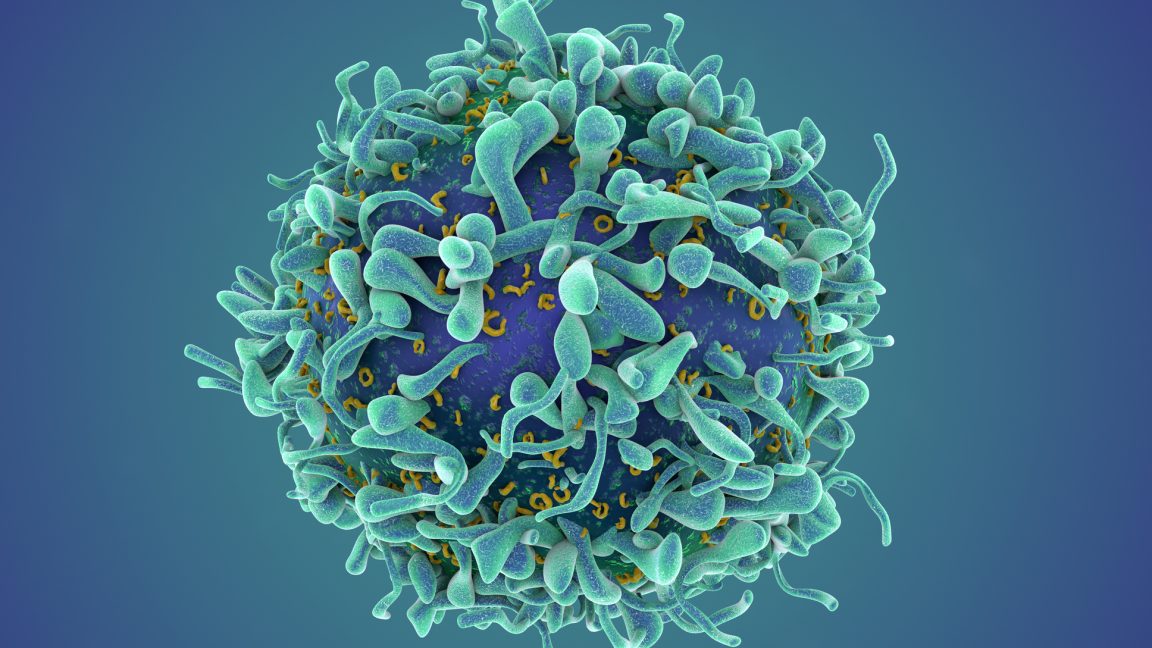
CAR T cell therapy, approved in 2017 for leukemia, is now entering hundreds of clinical trials for autoimmune conditions including multiple sclerosis, lupus, and Graves' disease. The treatment extracts a patient's T cells, engineers them to recognize and destroy B cells, then reinfuses them. In cancer, this eliminates malignant B cells. In autoimmunity, it targets the same cells that produce self-attacking antibodies. Jan Janisch-Hanzlik, a 49-year-old MS patient in Nebraska, became the first trial participant after her symptoms forced her from nursing work toward wheelchair dependence. The hope is a complete immune system reset. Risks include dangerous inflammatory responses and uncertain duration of benefit.
CAR T stands for Chimeric Antigen Receptor T-cell therapy. B cells normally produce antibodies against pathogens, but in autoimmune disease they mistakenly target the body's own tissues. Eliminating them could halt this self-attack, though patients would need monitoring for infections.
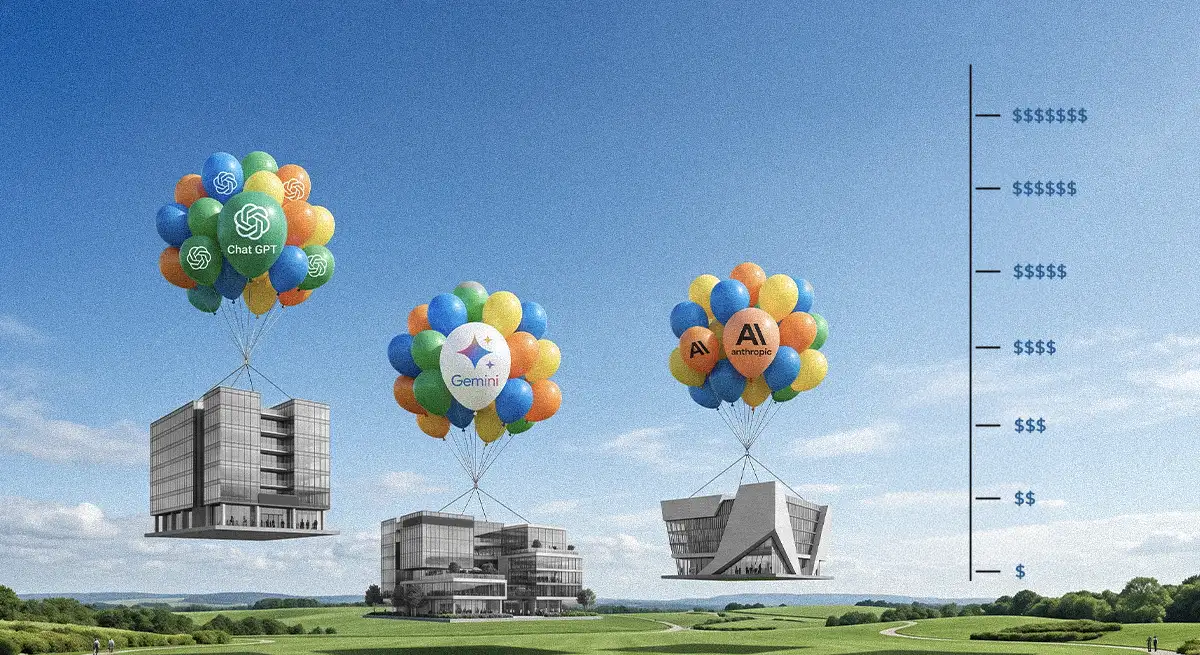
AI labs are running unprecedented loss-leader programs, selling enterprise services far below cost to capture market share. Anthropic's $20 Claude Pro subscription covers usage that would cost $200-400 at API rates. Microsoft reportedly lost over $20 per user monthly on GitHub Copilot, with power users burning $80 in compute on $10 subscriptions. OpenAI's VP has called unlimited plans unsustainable, comparing them to "unlimited electricity." The author warns that companies building workflows on these subsidized prices face catastrophic cost corrections. When pricing adjusts to reflect actual compute costs, organizations without migration plans will confront bills dwarfing current SaaS spending.
Loss-leader pricing is common in platform competition, but AI compute costs are structurally different from traditional software. GPUs and energy costs scale linearly with usage, unlike near-zero marginal cost software distribution.
NVIDIA researchers released SANA-WM, a 2.6 billion parameter open-source world model capable of generating one-minute 720p video sequences. World models simulate physical environments and predict future states, a capability seen as essential for advanced AI agents. Most prior world models produced low-resolution or short clips. SANA-WM's scale and output quality represent a significant technical advance. The open-source release allows researchers to inspect, modify, and build on the architecture. The project emerged from NVIDIA's research division rather than its commercial product teams, suggesting the release prioritizes academic and developer adoption over immediate revenue.
World models differ from text-to-video generators by maintaining internal state about object persistence, physics, and causality. This makes them more suitable for robotics training and interactive simulation than pure video synthesis.
The Musk v. Altman trial concluded with lawyers attacking each other's credibility. Altman testified that Musk sought to control OpenAI's for-profit arm, claiming Musk suggested his children inherit that control if he died. Musk's lawyer Steven Molo countered by highlighting testimony from four former OpenAI executives and board members that Altman had lied to them, the behavior that briefly cost him his CEO role in 2023. Molo also pressed Altman on personal investments in companies that do business with OpenAI, including a nuclear energy firm. OpenAI's lawyer Sarah Eddy argued Musk sued too late and seeks to sabotage a competitor to his xAI company. The jury begins deliberating Monday.
Musk co-founded OpenAI in 2015 as a nonprofit, donated approximately $50 million, and left in 2018. He now seeks to unwind OpenAI's 2025 restructuring into a public benefit corporation and claims up to $134 billion in damages.
Proteins extracted from 400,000-year-old Homo erectus teeth in China reveal genetic evidence of interbreeding with Denisovans, published in Nature this week. Researchers led by Qiaomei Fu at Beijing's Institute of Vertebrate Paleontology analyzed enamel from six specimens across three sites including Zhoukoudian, famous for 1920s Peking Man discoveries. They identified two amino acid variants shared among all six teeth. One variant at position 273 matches Denisovan specimens from Siberia and Taiwan, suggesting gene flow between the species. This marks the first genetic evidence of H. erectus-Denisovan contact. H. erectus ranged from Africa to Java over 1.9 million to 100,000 years ago, overlapping with other human relatives across Eurasia.
Ancient proteins survive longer than DNA in fossil specimens, opening genetic analysis to samples previously considered too old. H. erectus was the first human relative to leave Africa, establishing populations across Asia.
Nocturnal bull ants in Australia navigate using a lunar compass that tracks the moon's changing position through time compensation, researchers report in Current Biology. Cody Freas at the University of Toulouse found the ants calculate elapsed time since leaving their nest to predict where the moon should be, adjusting their heading accordingly. When held in darkness long enough for the moon to shift significantly, the ants veered off course upon release. This marks the first documented case of time-linked lunar navigation in insects. The ants combine this with solar cues at dawn and dusk to maintain orientation as moon visibility varies through the lunar month. Other nocturnal creatures including sand hoppers and moths use lunar position, but without the temporal correction mechanism.
Time compensation in solar navigation is well-studied in bees and ants, but lunar movement is more complex. The moon orbits Earth roughly 13 times faster than the sun appears to move, requiring more rapid calculation adjustments.
A private conference convenes Saturday at Uber's San Francisco headquarters bringing together Iranian diaspora tech leaders to discuss Iran's future. Attendees include Uber CEO Dara Khosrowshahi, Prologis CEO Hamid Moghadam, former HyperLoop CEO Shervin Pishevar, and Reza Pahlavi, son of the Shah deposed in 1979. The 2,000-person waitlist suggests significant interest among the diaspora. The agenda includes sessions on strategic rebuilding, future technology, and internet infrastructure. Pahlavi has positioned himself as a potential transitional leader to democratic rule, though he states he would not seek elected office. The meeting occurs while Iran retains 70% of its pre-war missile inventory and controls the Strait of Hormuz, making any near-term political transition improbable.
Reza Pahlavi, 64, has lived in exile since the 1979 revolution. He advocates for a secular democratic Iran but lacks organized political support inside the country. The tech diaspora gathering reflects long-term positioning rather than immediate political opportunity.
Frederick Vanbrabant argues that AI code generation cannot accelerate software development because the bottleneck lies upstream in requirements clarification, not implementation speed. Developers have always been slowed by vague feature requests, not typing speed. AI shifts this burden: instead of developers interpreting incomplete specifications, product experts must now write exhaustive detailed prompts. Vanbrabant compares this to classic process optimization literature, noting that adding resources to the wrong stage worsens throughput. The real constraint is communication between domain experts and implementers. Organizations hoping AI eliminates this friction will find the work simply relocated, not removed. The essay draws on re-readings of The Toyota Way and The Goal to frame why optimization efforts often target visible but non-critical stages.
Eliyahu Goldratt's The Goal introduced "theory of constraints" manufacturing principles in 1984. The Toyota Way documents how Toyota's production system identifies and eliminates waste through continuous improvement rather than local optimization.