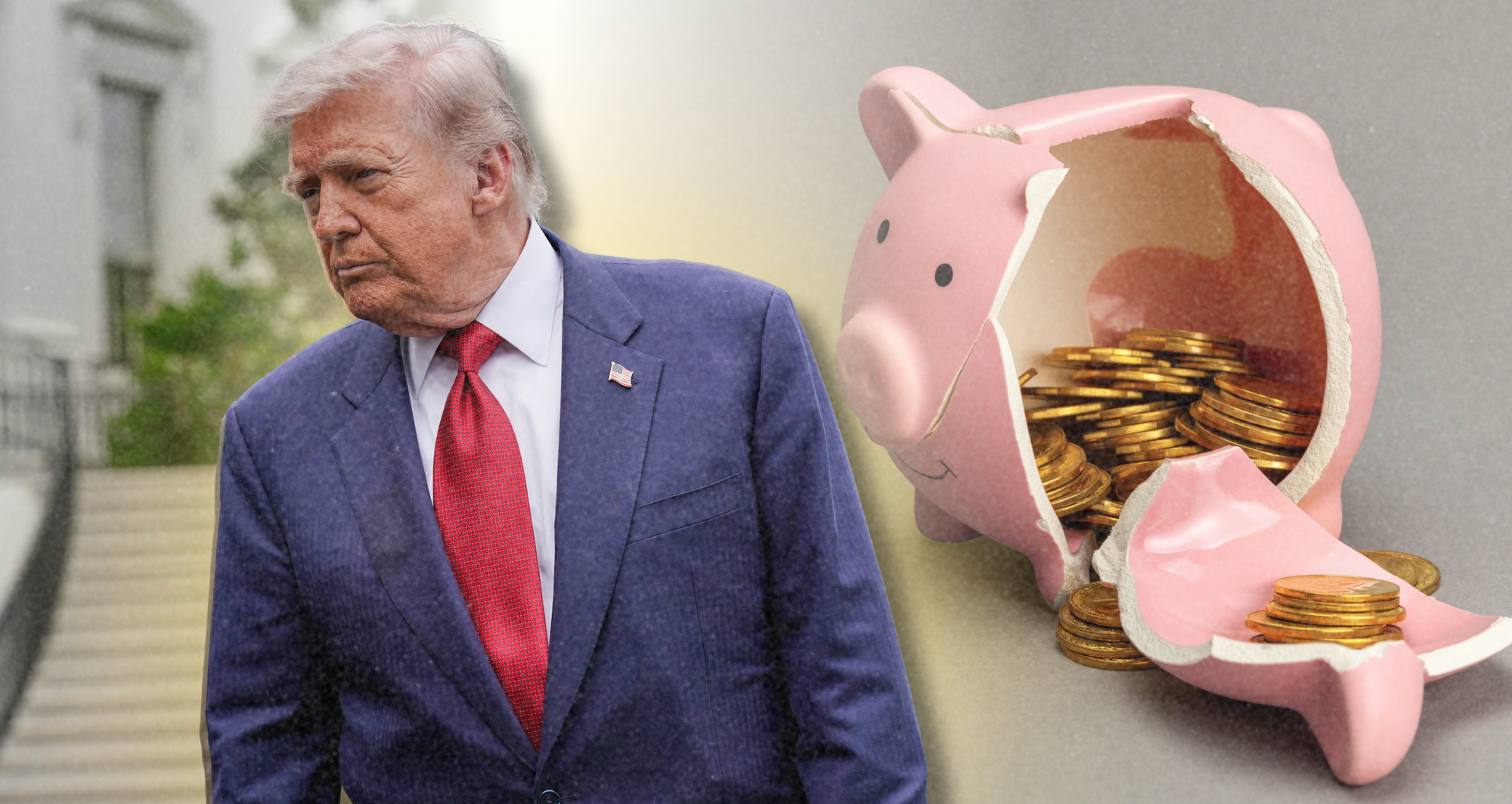
US consumer prices rose 3.8% in the year to April, the fastest rate since May 2023, driven almost entirely by surging energy costs from the war in Iran. Gasoline prices hit their highest level since July 2022 at $4.50 per gallon after the Strait of Hormuz closure disrupted oil shipments. The inflation spike makes Federal Reserve rate cuts unlikely this year and may force incoming chair Kevin Warsh toward hikes instead. Real wages have turned negative for the first time in three years, with paychecks growing 3.6% against 3.8% price increases. The timing complicates President Trump's midterm positioning after he campaigned on cutting inflation.
The Consumer Price Index measures average change in prices over time for urban consumers. The Federal Reserve targets 2% inflation and adjusts interest rates to achieve it. Kevin Warsh, a former Fed governor and Trump appointee, replaces Jerome Powell as chair.
MIT physicists have developed a method to detect dark matter by analyzing gravitational waves from colliding black holes. When black holes spiral through dense dark matter regions before merging, the gravitational waves they emit carry subtle imprints of that invisible matter. The team screened 28 signals from LIGO-Virgo-KAGRA data and found one candidate, GW190728, showing possible dark matter signatures. The technique offers a new observational channel for the substance that makes up 85% of matter in the universe but interacts only through gravity. The researchers stress this is not a confirmed detection but a screening tool for follow-up study.
Dark matter does not emit, absorb, or reflect light, making it invisible to telescopes. Its existence is inferred from gravitational effects on visible matter. Gravitational waves are ripples in spacetime predicted by Einstein and first detected in 2015.
MIT researchers created a fabrication method called "implosion carving" that shrinks 3D photonic structures to 1/2,000 of their original size, achieving features below 100 nanometers. This resolution beats the diffraction limit of light, enabling devices that can bend and manipulate visible light for optical computing. The technique uses lasers to carve vacancies in a hydrogel, then shrinks the material to nanoscale dimensions. The team demonstrated a working device that performs digit classification, with potential applications in high-speed imaging and information processing. Optical chips could offer energy-efficient alternatives to semiconductor electronics.
Photonic computing uses light rather than electrons to process information, promising lower energy consumption and higher speeds. Existing fabrication methods could not achieve the sub-100-nanometer resolution needed for visible light manipulation.
eBay's board rejected a $55.5 billion unsolicited takeover bid from GameStop, calling it "neither credible nor attractive" and questioning how the smaller retailer would finance the deal. GameStop had claimed $20 billion in debt financing from TD Securities. eBay, worth roughly four times GameStop's market value, cited operational risks, leadership structure concerns, and governance issues in its rejection letter. GameStop CEO Ryan Cohen had threatened to take the proposal directly to shareholders if the board refused. eBay has struggled against Amazon and Temu competition but reported rising profits under its turnaround plan.
GameStop became a "meme stock" in 2021 when retail investors coordinated purchases to squeeze short sellers, causing extreme price volatility. Ryan Cohen, Chewy founder, became GameStop chairman and later CEO, pivoting toward digital assets and collectibles.
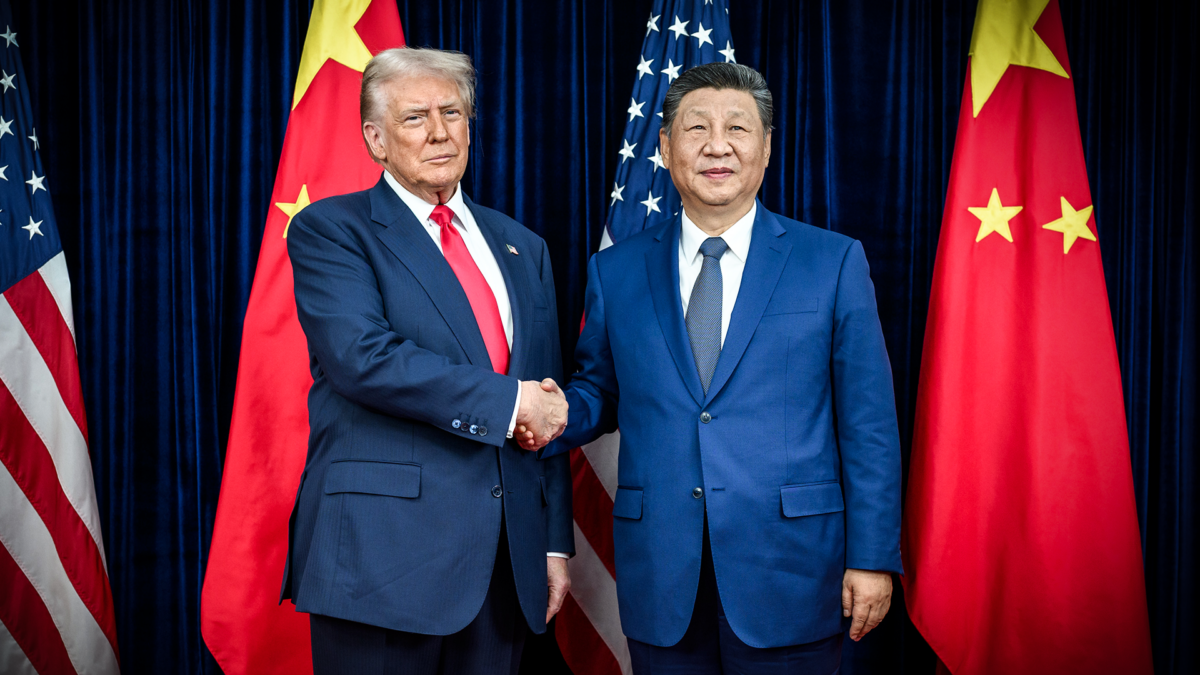
China's AI sector has reduced dependence on American chips just as trade talks begin. DeepSeek now runs on Huawei processors, cutting reliance on Nvidia hardware that US export controls targeted. The timing gives Beijing leverage: Trump granted Nvidia permission to sell H200 chips to China two months after his last Xi meeting, yet Commerce Secretary Howard Lutnick confirmed none have actually shipped. Professor Alejandro Reyes argues Trump needs a foreign policy victory more than Xi needs concessions, weakening the US negotiating position. The parallel inflation spikes in both countries—3.8% in the US, rising costs in China—mean neither leader enters talks from strength.
The US-China trade war began in 2018 with tariffs on hundreds of billions in goods. Export controls on advanced semiconductors escalated in 2022-2023. DeepSeek's R1 model, released January 2025, demonstrated competitive performance at lower training costs.
Amazon employees are using an internal AI tool called MeshClaw to automate unnecessary tasks solely to inflate their token consumption metrics. The company set targets for over 80% of developers to use AI weekly and began tracking token usage on internal leaderboards, creating perverse incentives. Some workers run agents overnight to maximize statistics despite Amazon's claim that these metrics won't affect performance reviews. Staff report managers monitor the data closely. The behavior mirrors similar patterns at Meta. Security concerns persist about granting AI agents broad permissions to act on users' behalf without adequate oversight.
AI tokens are units of data processed by large language models, typically counted for billing and usage tracking. Amazon plans $200 billion in capital expenditure this year, mostly for AI infrastructure. MeshClaw was inspired by OpenClaw, a viral open-source tool from February 2026.
Ninety percent of Europe's internet traffic passes through the Red Sea, where Houthi attacks and anchor-dragging incidents have repeatedly severed submarine cables. The US-Israel war in Iran has now closed the Persian Gulf alternative, forcing a search for new routes. The European Union has designated Polar Connect a "Cable Project of European Interest," funding preliminary work on a 2 billion euro cable across the North Pole linking Scandinavia to Asia. A route survey is planned for this summer. The project aims to bypass Middle East choke points entirely, though cable repair in Arctic conditions presents its own challenges.
Submarine cables carry 99% of international data traffic. The Red Sea contains over a dozen cables in a narrow passage. Repair requires specialized ships and months of negotiation in conflict zones. The GIUK Gap between Greenland, Iceland, and the UK is a strategic maritime choke point.
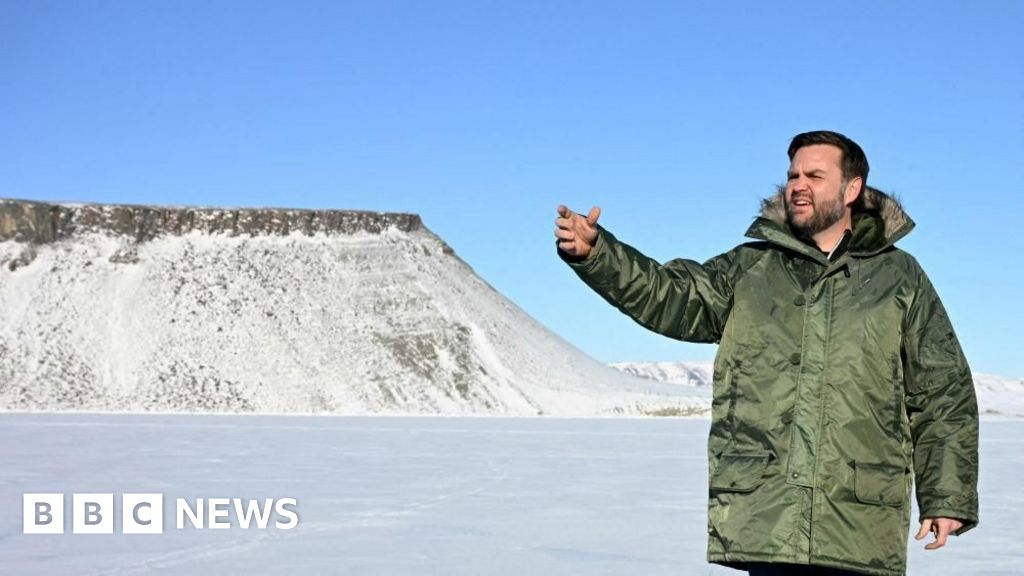
The US and Denmark are negotiating to open three new military bases in southern Greenland, with talks progressing since January despite Trump's public threats to seize the territory. State Department official Michael Needham leads a small working group that has met at least five times. The bases would focus on surveillance of Russian and Chinese maritime activity in the GIUK Gap. US officials have floated designating the facilities as sovereign American territory. Denmark has not formally agreed and maintains its opposition to any seizure, but confirms ongoing diplomatic discussions. The negotiations operate below the public radar while the administration focuses on the Iran war.
Greenland is a semi-autonomous territory within the Kingdom of Denmark. The US already operates Thule Air Base in northern Greenland. Trump stated in January 2026 that the US should "own" Greenland to prevent rival powers from establishing presence there.
The Trump administration is advancing a plan to push Americans toward private retirement accounts managed by major financial firms, following intensive lobbying from asset managers including Charles Schwab. The proposal would automatically enroll workers in investment products, diverting contributions from Social Security toward Wall Street. Financial experts warn this privatizes the social safety net and exposes vulnerable populations to market risk, particularly as the administration cuts other federal benefits. Private equity firms appear excluded due to their high fees. Schwab, a Republican megadonor, has promoted the plan to Congress as a "generational boost to U.S. savings."
Social Security faces long-term solvency challenges due to demographic shifts. Automatic enrollment in private retirement accounts has been proposed in various forms since the 2000s. Charles Schwab founded his brokerage firm in 1971 and has been a major Republican donor for decades.
3D printer manufacturer Bambu Lab threatened legal action against an open-source developer who created a fork of OrcaSlicer enabling cloud-free printing. The fork used Bambu Studio's own upstream code to bypass the company's server infrastructure, which routes all print jobs through Bambu's cloud by default. Bambu publicly accused the developer of impersonation attacks and security risks without publishing their full correspondence. The company relies on open-source software—Bambu Studio itself forks PrusaSlicer, which forks slic3r—yet uses legal pressure to suppress community modifications that reduce vendor lock-in. The incident highlights tensions between open-source licensing and corporate control of hardware ecosystems.
OrcaSlicer is a popular open-source fork of Bambu Studio. AGPL licensing requires sharing source code for network-interacting software. Bambu printers in default mode upload all print files to company servers, raising privacy and ownership concerns.