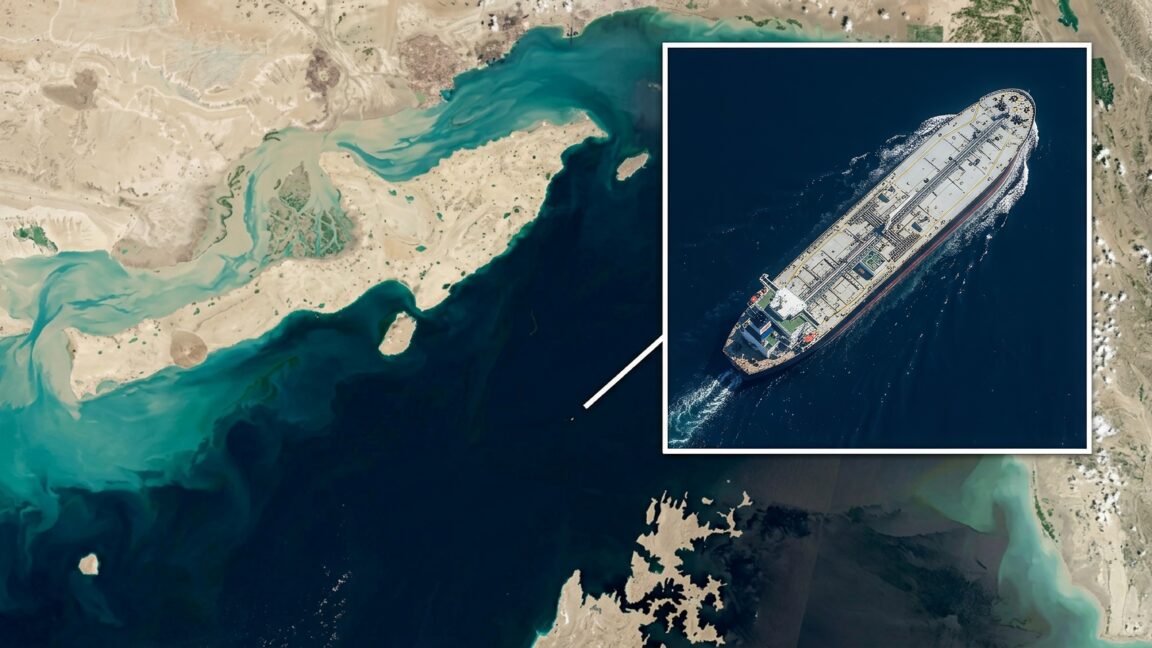
The State Department announced sanctions Friday targeting more than a dozen individuals and entities across the Middle East and China, accusing them of propping up Iran's war effort. Three Chinese entities allegedly provided satellite imagery of US facilities in the Middle East to Tehran. The sanctions come as the Trump administration prepares for a May 14-15 summit with Xi Jinping, with the Iran crisis complicating Washington's negotiating position. The move signals continued pressure on Beijing over its support for Tehran even as both sides seek to manage broader trade tensions.
The sanctions target alleged procurement networks that supply Iran with technology for missiles and drones. Satellite imagery of US military installations would represent a significant intelligence assistance to Tehran.
Vladimir Putin used his annual Victory Day speech in Moscow's Red Square on Friday to justify Russia's war in Ukraine, calling it a "just" fight against an "aggressive force" armed and supported by NATO. The parade was dramatically scaled back for security reasons, with no armored vehicles or ballistic missiles for the first time in years—officials cited the "current operational situation" with tanks needed at the front. The remarks came during a three-day ceasefire announced by President Trump, which Russia's defense ministry later accused Ukraine of violating. Foreign attendance was sparse compared to last year's 80th anniversary, with Slovak Prime Minister Robert Fico the only EU representative.
Victory Day commemorates the Soviet defeat of Nazi Germany, with 27 million Soviet citizens dead. Putin has increasingly used the holiday to link World War II sacrifices to his Ukraine invasion narrative.
via Ars Technica, The Wall Street Journal, Bloomberg, The Washington Post, Politico
President Trump has signed off on a plan to remove FDA Commissioner Marty Makary, though the decision is not final, according to multiple reports citing administration sources. The planned ouster follows a tumultuous year marked by DOGE cuts, personnel drama, and disputes over vaccine approvals, gene therapy decisions, and abortion pill oversight. Trump reportedly scolded Makary last weekend for slow-walking approvals of flavored vapes from manufacturer Glas; the FDA authorized menthol, mango, and blueberry flavors on Tuesday after presidential pressure. Top officials view Makary as struggling to manage the agency while clashing with other health officials, including Secretary Robert F. Kennedy Jr.
Makary's removal would add to growing vacancies across health agencies. The CDC currently lacks a director, and there is no surgeon general. The FDA has seen high-level departures amid the administration's restructuring push.
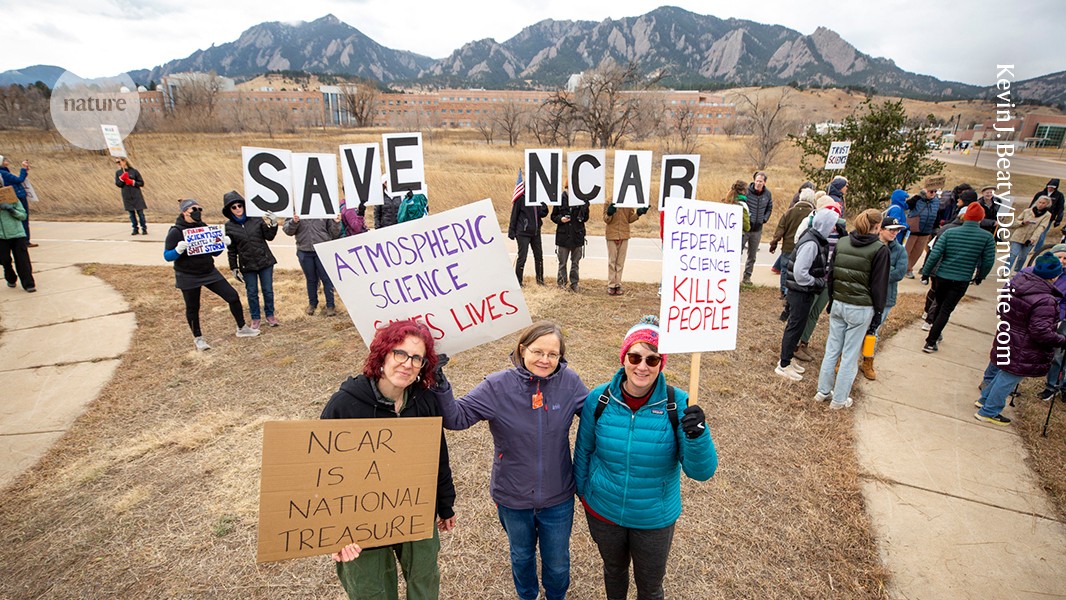
The University Corporation for Atmospheric Research sued the Trump administration in federal court Thursday to block the dismantling of the National Center for Atmospheric Research in Boulder, Colorado. UCAR alleges the National Science Foundation moved illegally to transfer NCAR's supercomputing center in Cheyenne, Wyoming to other institutions before completing required public comment periods. Documents show the NSF decided to transfer stewardship on February 12, a month before its March 13 comment deadline. UCAR's lawyer called the process a "sham." The NSF's attorney argued no final decision has been made. Judge R. Brooke Jackson said he would rule promptly; a decision for UCAR would freeze the transfer.
NCAR's models underpin modern atmospheric science and AI weather prediction research. The administration alleges the center promotes "climate alarmism." UCAR represents approximately 130 universities.
Researchers at the Friedrich Miescher Institute have developed uterine organoids that regenerate after simulated menstrual shedding, revealing how the endometrium repairs itself without scarring. The team treated hollow spherical structures of epithelial cells with estrogen and progesterone, then withdrew the hormones and mechanically broke down tissue to mimic menstruation. They found luminal surface cells—not deep stem cells as previously thought—drive renewal through expression of the gene WNT7A. Removing WNT7A compromised growth and survival. The findings, published April 28 in Cell Stem Cell, could inform therapeutic strategies for tissue renewal, wound healing, and gynecological diseases like endometriosis.
The endometrium uniquely regenerates monthly without scarring, but the mechanism was poorly understood due to invasive sampling requirements. Organoids allow controlled experimentation on this process.
US export controls on advanced semiconductors are accelerating China's development of alternative AI capabilities rather than containing them, argues this National Review analysis. The piece contends that restricting access to Nvidia chips has pushed Chinese firms like Huawei to build competitive domestic alternatives and forced algorithmic efficiency innovations that reduce hardware dependence. Meanwhile, American labs face regulatory constraints and safety review requirements that slow deployment. The author warns that Washington's strategy risks ceding long-term technological leadership by assuming hardware advantages will persist while underestimating Chinese engineering adaptation. The policy debate turns on whether containment or competitive acceleration better serves US interests.
The Biden and Trump administrations have both restricted AI chip exports to China. Chinese firms have responded with chip design advances and software optimizations to maintain model training capabilities.
US employers cited artificial intelligence as the primary driver of layoffs for the second consecutive month in April, according to a Challenger Gray & Christmas report released Thursday. Companies announced 83,387 job cuts, up 38 percent from March though down 21 percent year-over-year. AI-driven restructuring accounted for the largest share of cuts by stated cause. The trend marks a notable shift in corporate justification for workforce reductions, moving from economic conditions to technology substitution. The data comes as the Trump administration pursues policies to accelerate AI deployment while facing questions about labor market disruption. Economists debate whether these cuts represent permanent structural change or transitional adjustment.
Previous months showed AI cited in roughly 5,000 job cuts. The April figure represents a significant acceleration in explicit AI attribution, though total layoffs remain below historical recession levels.
Eight passengers on the Dutch-flagged MV Hondius have contracted Andes virus hantavirus, with three dead, in an outbreak that began during a voyage from Argentina that started April 1. The ship, now carrying 147 passengers and crew, is en route to the Canary Islands for controlled disembarkment. Health officials emphasize this is not COVID: hantavirus requires close contact for human-to-human transmission and does not spread through aerosols. The Andes strain has up to 50 percent fatality but limited transmissibility. Thirty former passengers who disembarked at Saint Helena are being monitored across 12 countries including six Americans. WHO and European health authorities assess public risk as extremely low.
Andes virus is endemic in parts of Argentina and Chile, typically spread by rodents. Human-to-human transmission is rare and requires prolonged close contact, distinguishing it from respiratory pandemic threats.
The Trump administration eliminated funding in 2025 for a pilot project studying Andes virus transmission mechanisms, the same strain now confirmed in the MV Hondius cruise ship outbreak. The research was conducted through the West African Center for Emerging Infectious Diseases, one of ten Centers for Research in Emerging Infectious Diseases network sites shuttered after the National Institutes of Health deemed the work "unsafe." The Argentina-based pilot award, approximately $100,000 of an $8.3 million program, aimed to understand how hantavirus passes from rodents to humans and whether aerosol transmission occurs. Six US states are now monitoring for potential cases from exposed passengers.
The CREID network studied zoonotic viruses with pandemic potential. The administration's cuts to infectious disease surveillance have drawn criticism from virologists who say the work was not demonstrably unsafe.
Journalist and artist Jakub Gornicki has released Bottleneck, a free browser game that puts players in the role of maritime coordinator managing 2,000 ships stranded by the Strait of Hormuz closure. Players select which vessels pass daily, balancing US and Iranian relations, Gulf State stability, UN food program needs, and energy security. Each choice carries trade-offs: prioritizing oil shipments pleases Washington but erodes UN trust; avoiding Iranian tolls risks escalation. The 15-20 minute game incorporates 125 verified news articles and real shipping data from Windward Maritime Intelligence and Lloyd's List. Gornicki built it in 17 days using AI-assisted coding, aiming to make the ongoing crisis tangible through interactive consequence rather than passive consumption.
The Strait of Hormuz normally sees 130 ships daily. The game simulates March 3 to April 13, 2026, with outcomes including famine countdowns, desalination collapse, and empty shelves even in best-case scenarios.